

What to wear coasteering: UK kit for your first session
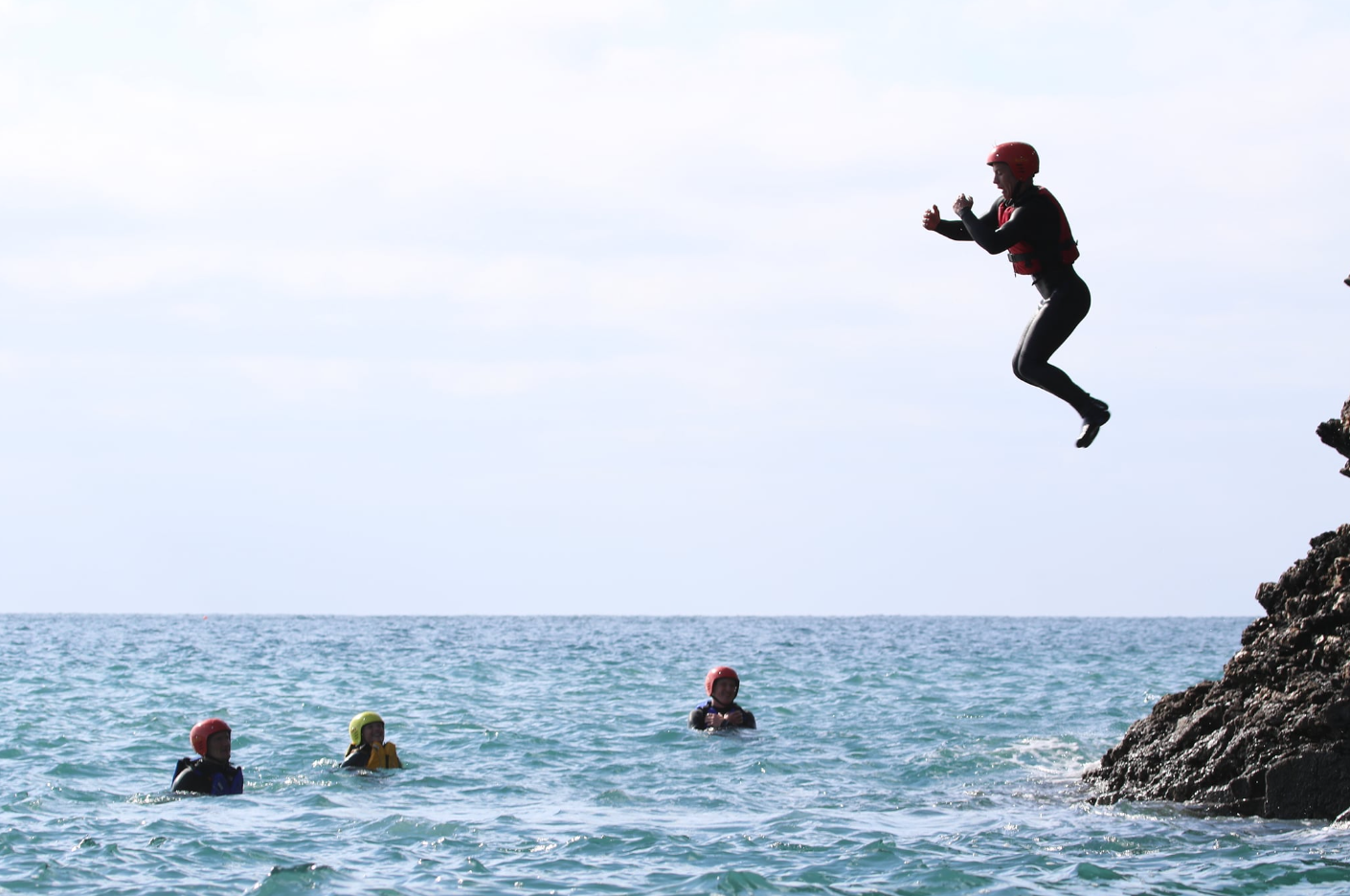
Coasteering is a guided mix of scrambling, swimming, and optional cliff jumps along the tide line. You will be wet for most of the session, so dress for cold sea water, use the kit the centre provides and bring a full dry change for afterwards.
This guide covers what to wear coasteering in the UK when you book with adventuro. It complements our canyoning kit guide for freshwater ghylls. At the coast, you also need a buoyancy aid, awareness of swell and shoes that grip on seaweedy rock.
Before you zip up, check you have swimwear or synthetics under the neoprene, shoes that will stay on in a jump and no valuables in your pockets.
Browse coasteering adventures →
What to wear coasteering: the short answer
Plan for full immersion in the sea, not the beach forecast. On a typical guided session, you wear a centre wetsuit, helmet and buoyancy aid (BA), plus old trainers or water shoes unless the listing says otherwise. Bring swimwear or a thin synthetic base layer, a towel, warm clothes for afterwards and footwear if the operator asks you to supply it.
| You wear (typical) | Centre often supplies |
|---|---|
| Swimwear or quick-dry base layer under the suit | Full wetsuit (often 5 mm on UK coasts) |
| Old trainers with grip, or centre boots | Helmet and buoyancy aid |
| Optional rash vest under the suit in spring | Sometimes gloves or hood; check the listing |
| Complete dry change in the car | Group safety kit and guide radios |
Choosing between coast and canyon? Our canyoning vs coasteering guide can help you decide. The wetsuit advice is similar, but coasteering adds tidal timing, salt and abrasive rock that quickly wears smooth soles.
What your guide usually provides
Most beginner coasteering sessions on adventuro include the key kit: wetsuit, helmet, BA and qualified leadership on a route matched to the tide. Centres such as open group coasteering at Mousehole Harbour (from £50, 3 hours) or ‘The Coasteer’ from Fistral Beach, Newquay (from £45, 3 hours) expect you to wear swimwear underneath, not jeans or a hoodie.
Footwear varies. Some operators provide neoprene boots, while others ask you to bring old trainers with decent tread. Check the listing. Coasteering at Stackpole Quay, Pembrokeshire (from £45, 2 hours) is a west-Wales example of an equipment-included taster. Coasteering in North Devon at Baggy Point, Croyde (from £40) shows that from-prices can be lower outside peak Cornwall dates.
Footwear and grip on barnacle rock
Coasteering footwear must stay on your foot, drain and grip wet granite and barnacles. Dedicated water shoes work, but old trainers are fine for most first sessions if you accept they will get scraped and may never fully dry. Avoid flip-flops, sliders and smooth gym soles: they slip on algae and can float away on the first swim.
Socks: thin neoprene or synthetic socks under boots reduce rubbing. Cotton sports socks bunch up and can cause blisters. If the centre provides boots, follow the briefing advice.
Cuts and barnacles: even with shoes, you may scrape your shins. Trim your toenails and avoid open sandals. This is not a beach walk.
Seasonal layers: summer sun vs spring chill
Air temperature can mislead. A warm July day can still mean 12 to 16°C sea water on many UK coasts, enough for cold water shock if you take an unexpected plunge. Dress for the water, then add sun protection on clear days.
| Season | What changes for you |
|---|---|
| Summer (June to August) | Lighter base layer under the suit; sunscreen on neck and ears; still pack a fleece for after |
| Spring and autumn | Thin synthetic leggings under the suit; hat and warm joggers for the car park |
| Windy or overcast days | Wind chill on wet neoprene after exits; prioritise dry clothes in a waterproof bag in the boot |
Sessions are tide-led. Operators may move the meeting point or reschedule in heavy swell. This is for safety, so keep your dry kit ready either way.
What to leave ashore
Bring
- Swimwear or synthetic base layer (no cotton)
- Towel and full dry change including underwear, socks, and trainers for the drive home
- Old trainers if the listing says you supply footwear
- Reusable water bottle and a snack for after
- Sport strap for glasses if you must wear them; ask the centre about contact lenses before booking
Leave at home
- Jeans, hoodies and cotton leggings under the wetsuit
- Jewellery and watches that cannot be removed easily
- Phones and keys in pockets; use a locked car or centre locker
- Brand-new trainers you care about; salt and barnacles are abrasive
Common mistakes
- Cotton under the wetsuit: it holds water against your skin and chills you on windy exits
- Loose buoyancy aid over a bulky jacket: zip the BA snug over appropriate layers
- Assuming flip-flops are fine because the meet point is a beach
- No warm layer after: avoidable shivering after the session
- Treating coasteering like pool swimming: you need grip, impact protection and a guide who reads tide and swell
Ready to book
Cornwall has the most half-day tasters. Pembrokeshire and Devon are good alternatives if your holiday is further west or north. Read the kit section on each listing, then check tide windows when you book.
Browse coasteering → · Compare venues in our best coasteering in Cornwall guide · Planning a digital detox weekend? See phone-free outdoor activities in Cornwall.
More kit guides: canyoning · kayaking · paddleboarding · wild swimming
A portion of adventuro bookings supports conservation through our partnership with Rewilding Britain.
FAQs
Do I need my own wetsuit for coasteering?
Usually no on a guided UK session. Centres supply a full wetsuit and size it at the briefing. Bring swimwear or a thin synthetic layer to wear underneath. Buying your own suit only pays off if you surf or coast regularly outside booked days.
What shoes should I wear coasteering?
Old trainers with a grippy sole, dedicated water shoes or centre-issued boots, as specified on the listing. Smooth soles slip on wet rock. Flip-flops and sandals are not suitable for the activity itself.
Can I wear glasses while coasteering?
Ask the centre before you book. A secure sport strap is essential because spray and impacts are likely. Many participants wear contact lenses and keep spares in the car. Helmets fit more easily without bulky frames.
Is the kit different from canyoning?
Mostly the same wetsuit and helmet, but coasteering adds a buoyancy aid for sea swimming and routes shaped by tide and swell. Barnacle abrasion and salt matter more than in a shaded ghyll. For full canyon kit, including abseils, read what to wear canyoning.
What should children wear?
Same core kit as adults: centre wetsuit, helmet, and BA where provided, with swimwear underneath and warm dry clothes sized for them after. Minimum ages vary by route and provider; confirm on the listing before you travel.