
Lighter, Stronger Fabrics in Paragliding: A Closer Look
Right, this is a bit of a nerdy one for you.
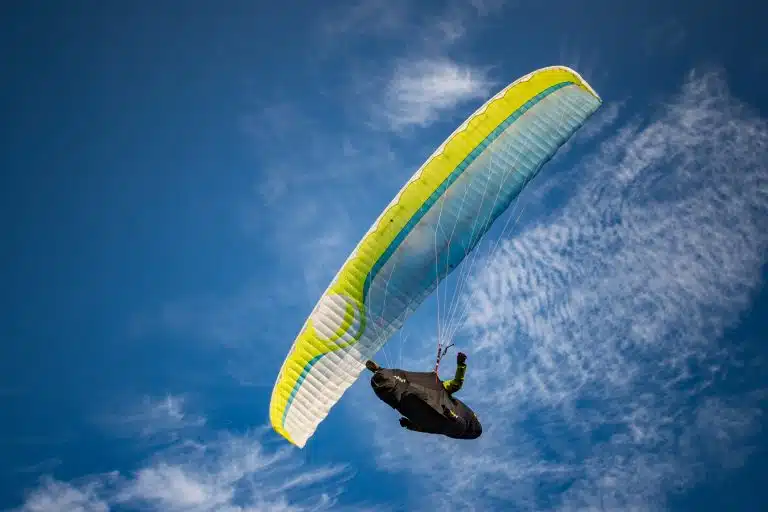
One of the most pivotal advancements in paragliding equipment is the development of lighter and stronger fabrics. These materials form the very essence of paragliding wings and harnesses, and improvements here have a profound effect on the sport’s accessibility, performance, and safety. Let’s delve into what’s happening in this space and how it’s pushing the boundaries of what’s possible.
Revolutionary Textile Engineering
At the forefront of fabric innovation are materials that utilize ultra-high-molecular-weight polyethylene (UHMWPE), such as Dyneema or Spectra. These fibers are renowned for their exceptional strength-to-weight ratio – a key quality that is vital in the airborne sports industry. They are crafted through advanced processes like gel spinning, where fibers are drawn from a solution, resulting in a material that is up to 15 times stronger than steel but with a fraction of the weight.
Ripstop Techniques and Weaves
Modern paragliding fabrics are not just about the materials themselves but also how they’re woven together. Ripstop techniques involve a reinforcing pattern that integrates thicker threads at regular intervals in a crosshatch pattern. This construction method is crucial in preventing small tears from expanding, ensuring that the fabric can withstand the rigors of repeated use while being subjected to the forces of nature.
Coating Advancements
The durability of paragliding fabrics is also enhanced through advanced coatings. Silicone and polyurethane coatings are commonly used for their waterproofing and UV-resistant properties. However, new nano-coatings are emerging, offering superior hydrophobic characteristics without compromising the fabric’s breathability or adding unnecessary weight.
Environmental Considerations
As the industry moves forward, there’s also a focus on reducing environmental impact. This includes both the selection of sustainable raw materials and the adoption of eco-friendly manufacturing processes. Some manufacturers are exploring the use of recycled fabrics or those derived from renewable sources to craft paragliding wings and harnesses. Our friends are at Rewilding Britain will be happy.

Impact on the Sport
The implications of these fabric innovations are vast. Lighter gear means easier handling on the ground, less physical strain during take-offs and landings, and the ability to carry equipment over long distances or to remote launch sites without undue effort. For the pilot in the air, it translates to enhanced responsiveness, a broader range of flying conditions, and increased flight time due to the efficiency of lighter materials.
Furthermore, stronger fabrics extend the lifespan of paragliding equipment, making the sport more sustainable both environmentally and economically. They hold up better against the elements, maintain performance characteristics over time, and provide a better investment for pilots.
Check out some of our other blogs on paragliding:
- Best places in the UK to paraglide
- What is Speedflying: Bring out your inner Ethan Hunt
- How Much Does It Cost to Paraglide: A Pilot’s Perspective
- Paragliding vs. Skydiving: Up in the Air?
- Master Paragliding: An Inside Look at Pilot Training
- Is Paragliding Safe? A Data-Driven Perspective
- Soaring High: The Best Paragliding Spots on Earth
- Do You Need to Be Fit for Paragliding and All Your Other Questions Answered!
- From Freefalls to Thermals: How Skydiving Brought Me to Paragliding
- Joining the Paragliding Community: Clubs and Groups in the UK
- Lighter, Stronger Fabrics in Paragliding: A Closer Look
- How to Take Care of Your Paragliding Equipment
- Innovations in Paragliding – What’s New and What’s Next