
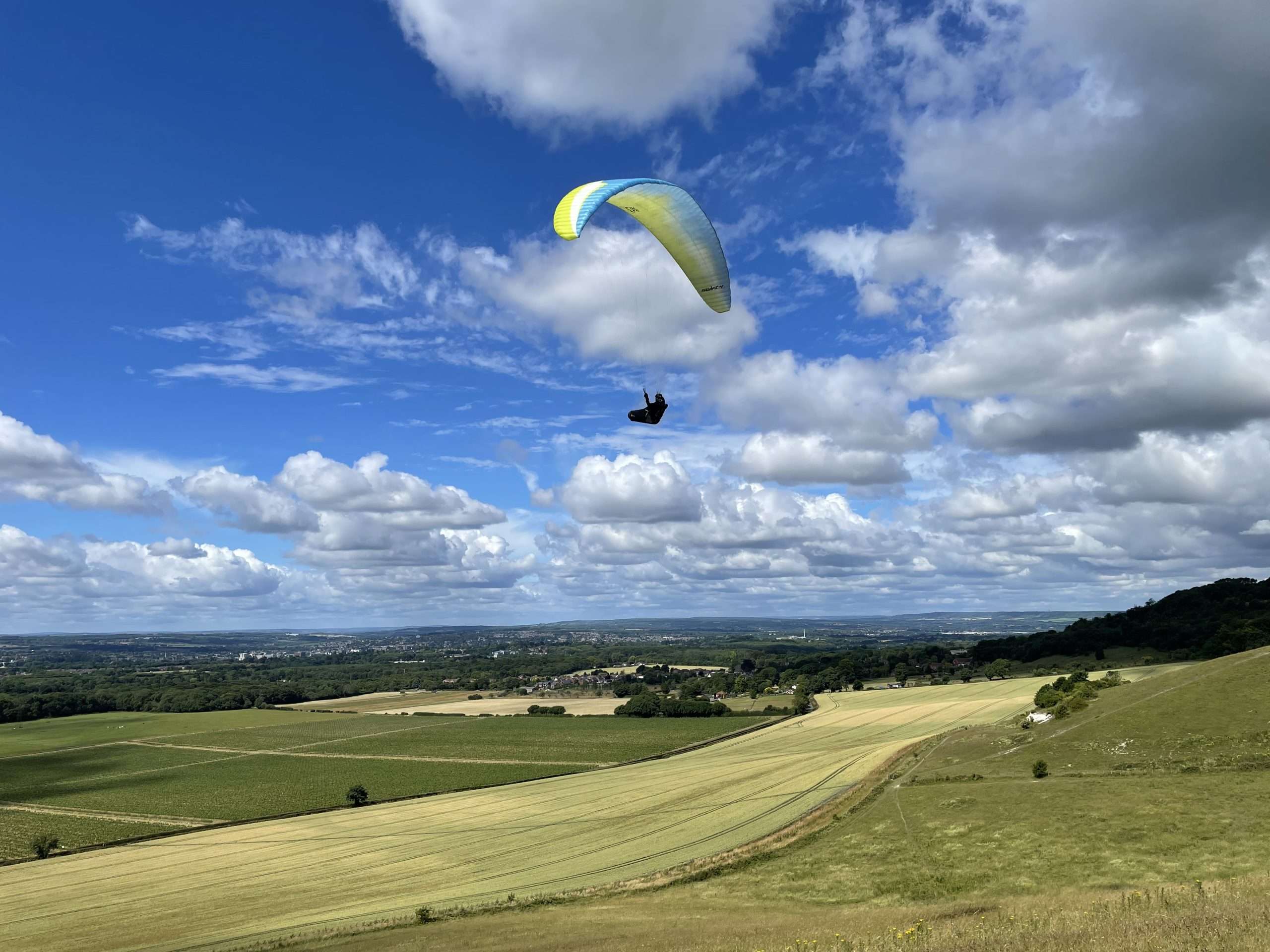
Is paragliding safe? The risks and how a first flight is managed
27 July 2023 · 8 min read · Max Hayward
Is paragliding safe?
Paragliding is not risk-free. It is an aviation activity in which a poor decision, unsuitable conditions or a mistake close to the ground can have serious consequences. A first tandem flight is a very different proposition from learning to fly alone: the pilot decides whether conditions are suitable, manages the launch and landing, and can postpone the flight when they are not.
That is the useful answer for someone considering a first flight. Do not try to turn an old accident-rate figure into a personal safety guarantee. The BHPA technical manual is explicit that hang gliding and paragliding carry a danger of injury. Good training, appropriate kit and conservative decisions reduce risk. They do not remove it.
What does the research say about paragliding accidents?
There is useful research, but no single number that describes every country, operator or type of flight. A frequently cited 2015 study examined 242,355 flights in the Fethiye region of Turkey between August 2004 and September 2011. It recorded 64 accidents involving 82 people, including 18 deaths. That works out at about 26 recorded accidents and seven deaths per 100,000 flights in that dataset.
The detail matters. The study drew on hospital, judicial and accident records in one tourist flying area, so the authors warned that incidents without a hospital or judicial record may not have been captured. It included both solo and tandem flights, and it is now more than a decade old. Its most useful finding for a first-time customer is not a universal percentage: recorded accidents were significantly more common in solo than tandem flights, and the authors highlighted weather, judgement and training as important factors. Read the full peer-reviewed study before using the figures for anything beyond that context.
Those figures should not be compared directly with skydiving, driving or parasailing statistics. The exposure, supervision, equipment, time period and definitions of an incident differ. A cross-sport comparison can look precise while answering the wrong question.
What makes a tandem first flight safer than learning alone?
On a tandem flight, you are a passenger with a qualified pilot. You should receive a briefing, follow the pilot's instructions during launch and landing, and accept that the plan may change or stop if the conditions do not suit the site.
The important distinction is responsibility. A first-time passenger does not need to decide whether a cycle of thermals is building, whether a launch is safe, or whether the landing area is workable. An experienced pilot does. If the answer is no, a cancellation is the right result.
| If you are booking... | The sensible expectation |
|---|---|
| Your first flight | A tandem experience with a briefing and a pilot who makes the final weather call |
| A solo course | Structured training, gradual progression and no expectation that you will fly independently straight away |
| A holiday for qualified pilots | A trip matched to your logged experience and current wing, with local conditions taken seriously |
For a first experience, browse a tandem paragliding flight in the South Downs. If you are already training or returning to the sport, a guided paragliding holiday in Algodonales is for a different level of decision-making. Read the listing rather than relying on a blog for weight limits, medical considerations, meeting points or what is included.
What are the main risks in paragliding?
The serious risks are concentrated around conditions, judgement and the moments close to the ground. Launches and landings demand commitment and attention. Stronger wind, turbulence, changing weather and a site that is wrong for the pilot's experience can reduce the margin for error quickly.
Equipment matters, but it is not a substitute for judgement. The UK Civil Aviation Authority's guidance on hang gliding and paragliding activity places responsibility for flight safety on the operator or sponsor. For a customer, the practical implication is simple: choose a properly run experience and let the pilot cancel when the conditions require it.
Do not compare one sport's published accident percentage with another sport's and call that a verdict. Different studies count different populations, dates, exposure and outcomes. A decade-old figure cannot tell you whether tomorrow's site, weather or operator is suitable.
What should you check before booking a paragliding experience?
Check the facts that affect your booking, not a generic promise that paragliding is safe.
- The experience is tandem and beginner-friendly. If it is your first time, the listing should say that clearly.
- The operator controls the go/no-go decision. Weather-dependent activity is normal. A centre that will not fly in unsuitable conditions is doing its job.
- Your weight, age and health information fit the listing. Ask the centre directly about anything the booking page does not answer.
- You understand the landing. It is often the part that needs the most precise instruction. Wear the footwear the centre asks for and listen during the briefing.
- You can be flexible. Do not book paragliding as the one fixed event in a tightly packed trip. Wind and weather may move the slot or stop the flight.
The CAA identifies the British Hang Gliding and Paragliding Association as the UK governing body for the activity. For a UK flight, checking the centre's current credentials and site arrangements is more useful than relying on reviews or social clips alone.
Can paragliders fly in bad weather?
No sensible operator flies just because a booking is in the diary. Wind strength and direction, turbulence, rain, visibility and how conditions are changing through the day all matter. A forecast that looks acceptable in a town can be unsuitable at a hill launch.
Rain is not a minor inconvenience for a paraglider. A wet canopy changes how the wing behaves, and a reputable pilot will not treat that as a problem to push through. The same applies to gusty or strengthening wind. If your pilot postpones, you have not lost a flight. You have avoided a bad one.
Is a paraglider collapse something a first-time passenger should worry about?
It is a real part of the sport's risk vocabulary, but it is not a reason to self-diagnose conditions from the passenger seat. Wings, training and route choice are selected to give the pilot an appropriate margin. A first-time tandem customer should focus on following the briefing, running when asked at launch, keeping their legs up when asked for landing, and telling the pilot about any concern before take-off.
Solo pilots learn active flying, wing behaviour and recovery as part of a staged training pathway. That is exactly why a tandem flight is the right first experience rather than a shortcut into independent flying.
What should you wear and bring?
Wear trainers or walking shoes with a secure sole, trousers that let you run a few steps, and layers for the temperature at the launch rather than the car park. Avoid loose scarves and footwear that can fall off. Bring sunglasses if the centre recommends them, and leave loose valuables behind.
The centre supplies the specialist kit. Confirm what is included, whether photos or video are optional extras, and what happens if weather prevents a flight. Those details vary by experience.
The honest bottom line
Paragliding can be a well-managed first adventure when you book a suitable tandem flight, give the centre accurate information and accept its decision about the weather. It remains an activity with real consequence. Anyone promising otherwise is not helping you make a good decision.
If you want to try it, choose a beginner-friendly tandem experience, leave time in your itinerary for weather, and let the pilot call it.
FAQs
Is paragliding safe for a first-time passenger?
It can be a sensible first flying experience when it is a beginner-friendly tandem flight run by an appropriate centre. You are not learning to make aviation decisions on day one. The pilot manages the flight and should postpone it if the conditions are unsuitable. Read the listing's requirements and ask the centre about anything personal to you.
Is paragliding safer than skydiving?
They are different activities with different equipment, operating environments and ways of measuring risk. Published comparisons often use incompatible data, so they do not answer whether your own flight is appropriate. For a first booking, focus on the centre, the pilot, the conditions and whether you are comfortable with a weather-dependent plan.
Can I go paragliding if I am nervous?
Yes, provided the centre says the experience is suitable and you are happy to follow the briefing. Tell the pilot that you are nervous before launch. They can explain the take-off and landing clearly, but they should never pressure you to go ahead. You can decide not to fly before launch.
What happens if the weather is unsuitable?
The centre may delay, reschedule or cancel the flight. That is normal in an activity driven by wind and site conditions. Check the booking terms before paying, keep some flexibility in your plans and do not treat a weather cancellation as a sign that the centre is unreliable.
Book these adventures
Ready to get out there? Book one of these trips on adventuro.