
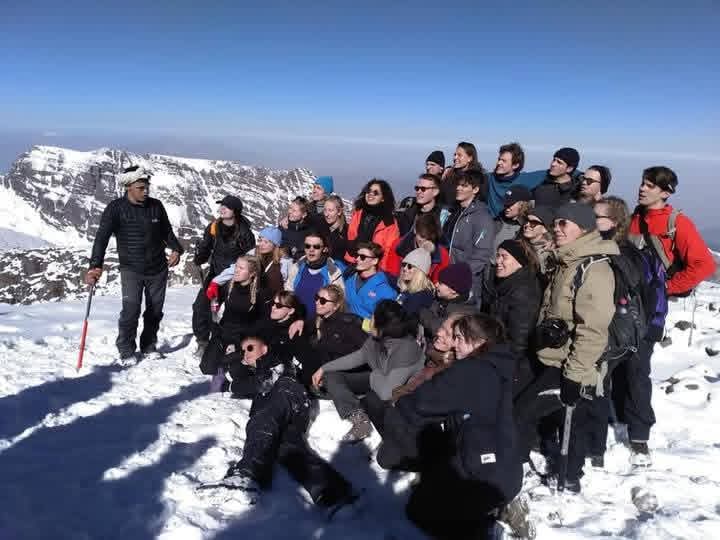
Hiking in Morocco: what the High Atlas is really like
7 September 2026 · 8 min read · adventuro
What is hiking in the High Atlas like?
The High Atlas is the most accessible big mountain range in North Africa. Toubkal, the highest peak at 4,167 m, is a two-day non-technical trek from a village roughly two hours' drive from Marrakech. No ropes, no crampons in summer, no mountaineering background needed. You walk up a steep rocky path, sleep in a refuge, and walk to the top before dawn.
What surprises people is the contrast rather than the difficulty. You can be drinking mint tea in a Marrakech riad in the morning and at 3,207 m in a stone refuge that evening. If you are still building the city side of the trip, Marrakech Travel Shop's winter day-trip guide is a useful read for what still runs when the mountains are cold. Two things need planning around on the trek itself: a licensed guide is legally required, and the altitude is real.
| What people assume | What it is like |
|---|---|
| It is a climb | A steep walk. No technical skills needed from June to September |
| You can do it independently | A licensed guide is mandatory and checked at police checkpoints |
| Fitness is the main hurdle | Altitude is. Fit people get turned back by it |
| It will be blazing hot | Marrakech is. At 3,000 m plus it is cold at night, year round |
| Remote wilderness | Working villages, terraced fields, mules and mountain refuges |
Do you need a guide to climb Toubkal?
Yes, and this is the single rule to plan around. Since 2018, following a serious incident near Imlil, Moroccan authorities have required every trekker on the Toubkal summit route to be accompanied by a licensed local guide. It applies to all nationalities and all experience levels, and there is no exemption for experienced mountaineers.
It is enforced rather than nominal. Royal Gendarmerie checkpoints sit at three points on the route, typically just outside Aroumd, at Sidi Chamharouch, and again at the Toubkal Refuge. They check your passport and your guide's official licence. Without a licensed guide you are turned back at the first post, so there is no version of this worth chancing.
Two useful details:
- Valley walking is different. The village paths around Imlil, the walk to Aroumd and the popular Sidi Chamharouch shrine route are not policed in the same way. The rule bites on the high summit route inside the national park. For a lower-elevation Atlas day from Marrakech, see Ourika Valley day trip on Marrakech Travel Shop.
- Uncertified guides will not get you through. However knowledgeable someone is, the checkpoint checks for a national mountain-guide card. Book through an operator or the official Bureau des Guides in Imlil, and ask to see the card.
If you book a trip that includes a guide, all of this is already handled and you will not think about it again.
How hard is the altitude?
Harder than the walking. At 4,167 m the air holds roughly 40 percent less oxygen than at sea level, which is high enough for acute mountain sickness to be a real possibility, especially on the standard two-day itinerary.
Here is the profile that causes it. Most trekkers start at Imlil (1,740 m), gain about 1,470 m to sleep at the Toubkal Refuge (3,207 m), then climb a further 960 m to the summit the next morning. That is quick by altitude-medicine standards, because the body's main adaptation takes weeks, not days.
Acute mountain sickness shows up as a headache first, often with nausea, poor appetite, dizziness and fatigue beyond what the effort explains. It is not a fitness problem and being strong does not protect you.
What helps:
- Add a day if you can. A three-day version with an acclimatisation night meaningfully cuts the risk, and is worth it if you live at sea level or have not been above 3,000 m.
- Go slowly and drink plenty. A steady plod summits more people than a fast push that falls apart at 3,800 m.
- Eat and sleep at the refuge, even if you do not feel like either.
- Know the rule about descending. The only reliable fix for worsening altitude sickness is going down. A licensed guide will make that call, and the right response is to listen.
- Check your travel insurance. Many standard policies exclude trekking above 3,000 or 4,000 m. Read the terms and upgrade if you need to.
If you are thinking about altitude medication, that is a conversation with a travel clinic or your GP rather than a blog.
When should you go?
June to September is the straightforward window for a non-technical summit: clear paths, no snow on the standard route, and no need for crampons or an ice axe. This is also when Marrakech is at its hottest, which makes the mountains a relief rather than a hardship.
Roughly mid-December to early April is a winter mountaineering season. Snow and ice on the summit route mean crampons, an ice axe and the skills to use them. It is a different trip with different prerequisites.
Spring and autumn are the shoulder seasons and often the nicest walking: cooler days, green valleys in spring, stable clear air in autumn. Conditions on the summit route can be mixed, so take your guide's read on it.
What are the villages and refuges like?
This is a lived-in landscape, not empty wilderness. The valleys are Amazigh (Berber) country, with terraced fields, walnut groves, irrigation channels and villages built into the hillsides. The first language in the mountains is usually Tashelhit rather than Arabic or French, and mountain guides generally work in English too.
A few things worth knowing:
- Mules carry the luggage on most organised treks, along with the food. Muleteers and a cook are standard on multi-day trips, which is why they cost less than the equivalent in Europe.
- Refuges are dormitories. The Toubkal Refuge at 3,207 m is run by the Club Alpin Français du Maroc, is basic and communal, and fills up in peak season.
- Village stays are homestays in character. Simple rooms, shared meals, tea, and a genuine welcome. Bring modest layers, especially outside the tourist towns.
- Tea is not optional. Sweet mint tea is how conversations start. Accepting it is the polite move.
- Tipping guides, cooks and muleteers is expected at the end of a trek and is usually not included in the price. Ask your operator what is normal. Barbaro-run day trips publish the same kind of detail in what is included on Marrakech excursions.
- The dirham is a closed currency. Get cash on arrival rather than before you fly, and carry small notes for tips and village purchases.
If you want… do this
| If you want… | Do this |
|---|---|
| North Africa's highest summit on a short trip | Two-day Toubkal climb from Marrakech |
| The mountains without the altitude | A two-day village trek at lower elevation |
| The best chance of summiting | Add a third day for acclimatisation |
| Cooler walking and clear views | Go in spring or autumn |
| Winter mountaineering | December to April, with crampons, axe and the skills for both |
Two ways to do it
Both of these run from Marrakech with transport, a licensed English-speaking guide, a cook and mules included, which is what makes the High Atlas such good value.
2-Day Mount Toubkal Climb: Hiking in Morocco
From £110 (checked 3 October 2026) · 2 days · High Atlas Mountains · Max group 10 · Moderate to high fitness · Round-trip transport from Marrakech, English-speaking guide, Berber cook, accommodation, mules and muleteers included
2-Day Atlas Mountains Guided Trek with Village Stay
From €200 (checked 3 October 2026) · 2 days · High Atlas Mountains · Max group 12 · Moderate, 5 to 6 hours walking a day · Marrakech hotel pick-up, all meals, overnight in a traditional Berber village, mules and sleeping bags if needed
Keep reading
- Hiking in Romania: bears, forests and what to expect
- UK access rights: where you can walk, camp and paddle
- Sahara vs Agafay: which desert day fits your trip (Marrakech Travel Shop)
- Agafay temperatures and sunset times by month (Agafay Visit)
- Browse hiking in Morocco →
FAQs
Can you climb Toubkal without a guide?
No. Since 2018 a licensed local guide has been mandatory on the summit route inside Toubkal National Park, and it is checked at Gendarmerie checkpoints near Aroumd, at Sidi Chamharouch and at the refuge. There is no exemption based on experience. Valley walks around Imlil are a different matter and can be done independently.
Do you need climbing experience for Toubkal?
Not from June to September. The standard route is a steep, rocky walk with no ropes, ice axe or crampons required, so hill-walking fitness and a head for loose ground are enough. Winter is a genuine mountaineering objective and needs the equipment and skills to match.
How fit do you need to be to climb Toubkal?
Fit enough for a long day on steep ground at altitude: roughly 5 to 6 hours up to the refuge, then 3 to 4 hours of climbing followed by a 5 to 7 hour descent. Regular hill walking is good preparation, though altitude affects people regardless of fitness.
Is Morocco cold in the mountains?
Yes, at height. Marrakech can be very hot in summer while the Toubkal Refuge at 3,207 m is cold at night year round, and the pre-dawn summit push is the coldest part of the trip. Pack proper layers, a hat and gloves even in August.