
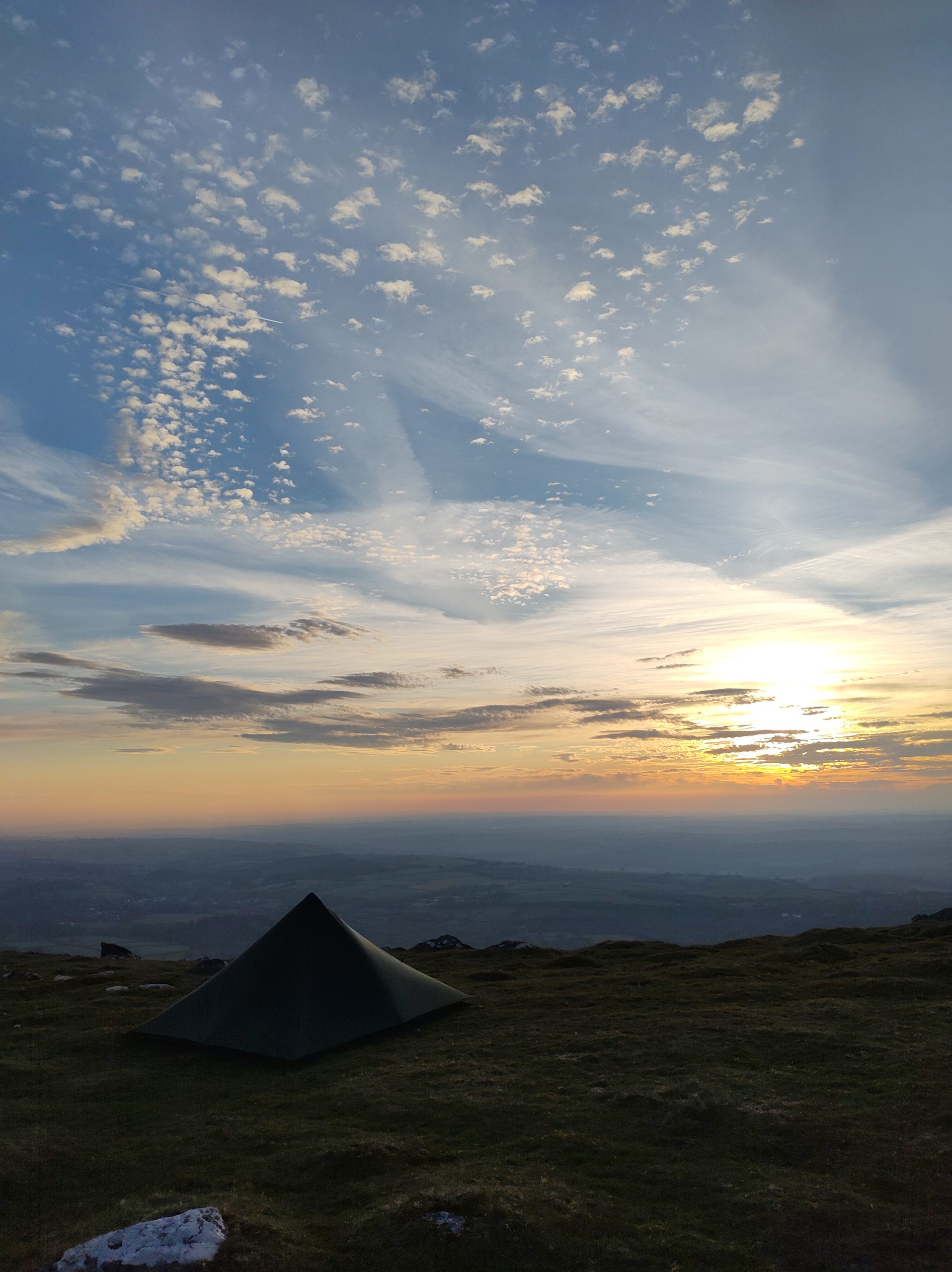
UK access rights: where you can walk, camp and paddle
7 September 2026 · 9 min read · adventuro
Where are you allowed to walk, camp and paddle in the UK?
Access rules in the UK are not one system, they are four. Scotland has broad statutory access rights that include wild camping. England and Wales have a narrow right to walk on mapped open land, which explicitly excludes camping. Dartmoor is the single exception in England and Wales where wild camping is a legal right. Rivers are a separate question again, and most of them carry no public right of navigation at all.
This catches out competent, well-meaning people constantly. Here is what the law says, so you can plan a trip without guessing.
| Where | Walking | Wild camping |
|---|---|---|
| Scotland | Broad statutory right on most land | Yes, under the Scottish Outdoor Access Code |
| Dartmoor commons | Yes, on foot and horseback | Yes, the only statutory right in England and Wales |
| Rest of England and Wales | On rights of way and mapped open access land | No, needs the landowner's permission |
| Non-tidal rivers | Bank access usually private | Needs permission, even where you may paddle |
Why is Dartmoor the exception?
Because of one sentence in a 1985 Act, and a court case that went all the way to the top. Section 10(1) of the Dartmoor Commons Act 1985 says the public "shall have a right of access to the commons on foot and on horseback for the purpose of open-air recreation".
The question was whether "open-air recreation" includes pitching a tent. Landowners Alexander and Diana Darwall argued it did not. The High Court agreed with them in January 2023, the Court of Appeal overturned that in July 2023, and in May 2025 the Supreme Court dismissed the appeal unanimously in Darwall v Dartmoor National Park Authority [2025] UKSC 20.
The reasoning is worth knowing, because it explains why this has not spread elsewhere:
- "Open-air recreation" is used without qualification, so it naturally includes camping.
- The words "on foot and on horseback" describe how you get there, not what you may do once you arrive.
- The restrictions in the 1949 National Parks Act cover things like damaging land or obstructing watercourses, and do not mention camping.
So the right is real, but it rests on wording specific to Dartmoor. It is also subject to byelaws: the National Park Authority still regulates where you can pitch, so check its current camping map rather than assuming the whole moor is open.
What are the rules in Scotland?
Scotland has the most generous access rights in the UK, established by the Land Reform (Scotland) Act 2003. You have a right of responsible access to most land and inland water, and that includes wild camping. The conditions come from the Scottish Outdoor Access Code, which asks that wild camping is:
- Lightweight, done in small numbers, and for no more than two or three nights in one place.
- Well away from buildings, roads and historic structures.
- Not in enclosed fields of crops or farm animals.
There is one significant exception to know about. In Loch Lomond and The Trossachs National Park, seasonal Camping Management Byelaws apply from 1 March to 30 September in designated Camping Management Zones along the busiest lochshores. Inside those zones during that window you need to book a campsite or buy a camping permit, which costs a few pounds per tent per night and can be booked up to four weeks ahead. The zones cover less than 4 percent of the park, and from October to February they do not apply at all.
Does open access land mean you can camp?
No, and this is the most common misunderstanding in England and Wales. The Countryside and Rights of Way Act 2000 gives a public right of access on foot to land mapped as open country (mountain, moor, heath and down) plus registered common land. That right is for walking.
Schedule 2 of the same Act lists what the right does not cover, and paragraph 1(s) names camping directly, alongside organised games, hang-gliding and paragliding. Open access land is a right to walk, not a right to sleep.
Two things worth adding:
- The scope is small. The statutory right to roam covers roughly 8 percent of England, and about 77 percent of that is in the north.
- Tolerance is not a right. In parts of the Lake District and Eryri, discreet camping above the highest fell wall is widely tolerated in practice. That is a custom that depends on people behaving well, not a legal entitlement, and it can be withdrawn.
If you want a guaranteed-legal night out in England, the options are Dartmoor, a campsite, or land where you have the owner's permission. A guided trip is the fourth option, because the operator already holds the permissions.
Can you paddle any river?
No. Most non-tidal rivers in England and Wales carry no confirmed public right of navigation, which means paddling them depends on the riverbed owner's permission or a local access agreement.
The River Wye is one of the exceptions, which is why it is such a popular canoe trip. A statutory public right of navigation runs from Hay Town Bridge downstream for around 100 miles to the Severn Estuary, with the Environment Agency as navigation authority from Hay to Bigsweir Bridge and the Gloucester Harbour Trustees on the tidal stretch below. You do not need a waterways licence to paddle the Wye.
Three caveats that matter in practice:
- A right of navigation is not a right to the bank. Other than at accepted public launch points, you need the landowner's permission to put in or take out, and permission again to camp or picnic on the banks.
- Upstream of Hay is disputed, and access there runs on negotiated arrangements with riparian owners rather than a public right.
- Below Bigsweir the river is tidal and can be dangerous, particularly below Tintern. It is not beginner water.
The simplest fix is to book with an operator that runs a set route with its own launch, landing and shuttle. That removes the access question entirely.
What does responsible wild camping look like?
The same everywhere, whatever the legal position:
- Arrive late, leave early. One night in one spot.
- Small groups and small tents. Pitch out of sight of roads, houses and busy paths.
- No open fires. Use a stove. Fire damage is what gets access rights removed.
- Take everything out, including food waste and toilet paper.
- Camp away from livestock and crops, and never block a gate or track.
- Go high and away from water sources where you can, and never camp in a field with animals in it.
If you want… do this
| If you want… | Do this |
|---|---|
| A legal wild camp in England | Dartmoor, or a guided trip with permissions in place |
| Wild camping with the fewest restrictions | Scotland, following the Outdoor Access Code |
| A first wild camp without the planning | Book a guided overnight with kit provided |
| To paddle without sorting access | Pick a river with navigation rights, like the Wye, and use an operator's launch |
| A big UK mountain objective | The National Three Peaks, guided, with transport handled |
Trips where the access is already sorted
Each of these runs on established permissions, so you are not the one negotiating with a landowner.
2-Day Hiking & Camping Experience: Wild Camp Dartmoor Adventure
From £150 (checked 3 October 2026) · 2 days · Princetown, Dartmoor · Ages 18+ · Max group 12 · Guides, tent and a morning wild dip included. Bring your own sleeping bag, mat and food
3-Day Guided National Three Peaks Challenge
From £450 (checked 3 October 2026) · 3 days · Ben Nevis (1,345 m), Scafell Pike and Yr Wyddfa · 23 to 25 miles walking · Max group 10 · Mountain Leader guide, transport between the mountains and Saturday breakfast included
Full-Day Self-Guided Canoe Trip on the River Wye
From £50 (checked 3 October 2026) · 6 to 8 hours · Lucksall to Ross-on-Wye (19 miles) or Hereford to Hoarwithy (17 miles) · Max group 16 · Canoe, waterproof storage and shuttle transport included · Children from age 4 with adult ratios
Keep reading
- Hiking in Romania: bears, forests and what to expect
- Hiking in Morocco: what the High Atlas is really like
- What to wear for hiking
- Browse UK adventures →
We partner with Rewilding Britain to protect wild places at home. Responsible camping is what keeps these rights, and the tolerated customs alongside them, in place.
FAQs
Is wild camping legal in the UK?
It depends where. Scotland has a statutory right of responsible access that includes wild camping, under the Land Reform (Scotland) Act 2003. Dartmoor is the only place in England and Wales with a legal right to wild camp, confirmed by the Supreme Court in May 2025. Everywhere else in England and Wales you need the landowner's permission.
Can you wild camp in the Lake District or Eryri?
Not as a legal right. Discreet camping above the highest fell wall is widely tolerated in both, but that is custom rather than entitlement and depends on campers leaving no trace. Formally, camping is excluded from open access rights by Schedule 2 of the Countryside and Rights of Way Act 2000.
Do you need a licence to canoe on the River Wye?
No. The Wye does not require a waterways licence, and a statutory public right of navigation runs from Hay Town Bridge down to the Severn Estuary. What you do need is permission to launch and land anywhere other than accepted public access points, which is why most people use an operator's shuttle.
How much of England has a right to roam?
Roughly 8 percent, covering land mapped as open country (mountain, moor, heath and down) and registered common land under the Countryside and Rights of Way Act 2000. About 77 percent of that is in the north of England. Campaigners are pressing to extend it, but the 8 percent figure is the current position.