We partner with Rewilding Britain to help protect our natural spaces for future adventures.
All centres are vetted for safety and quality. Your adventure is in good hands with adventuro.
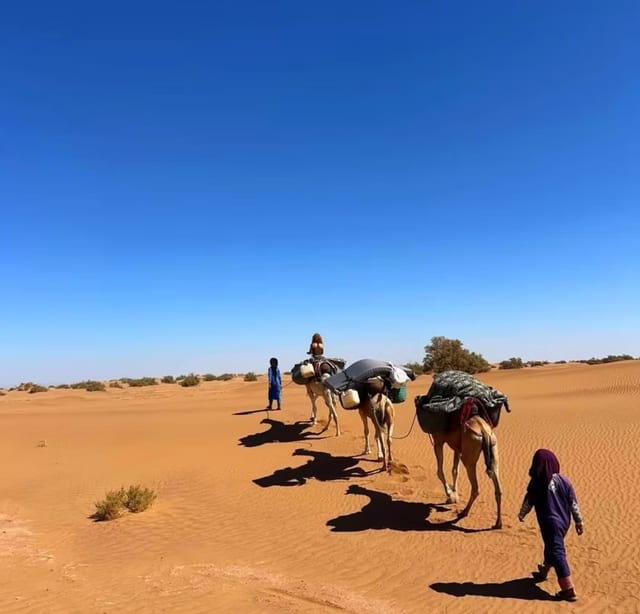
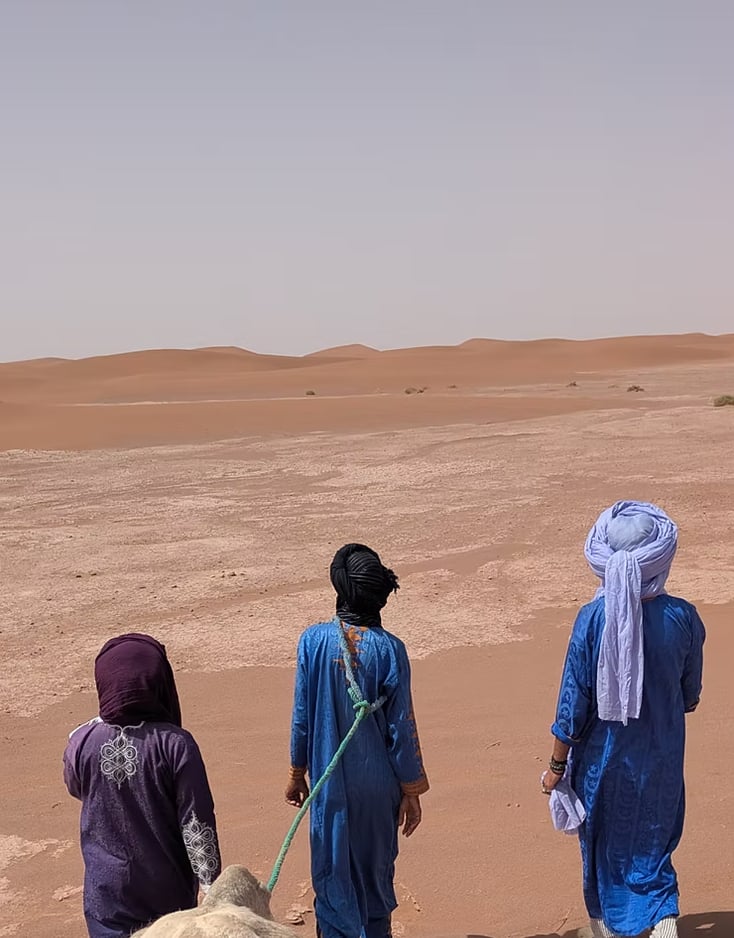
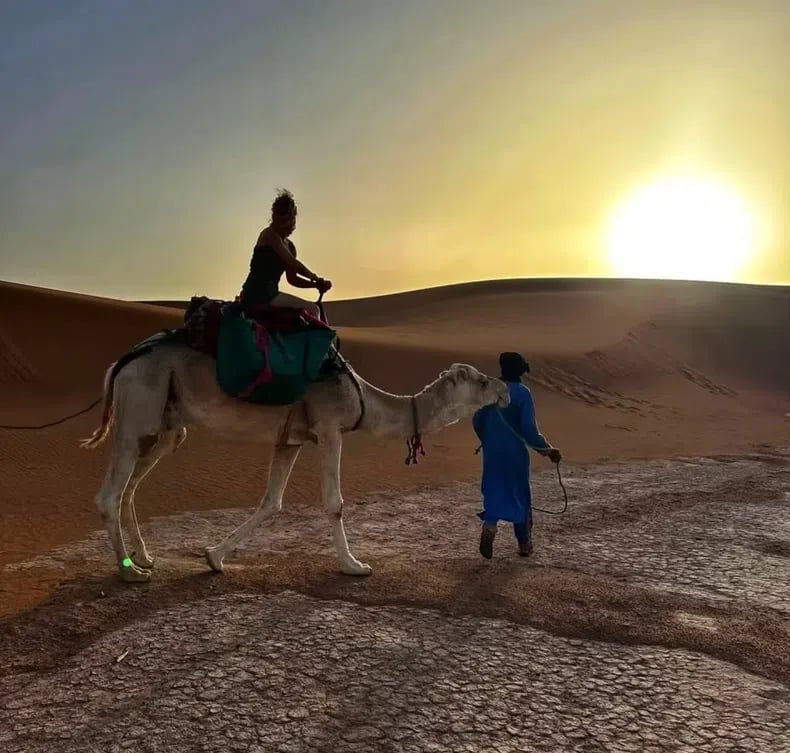
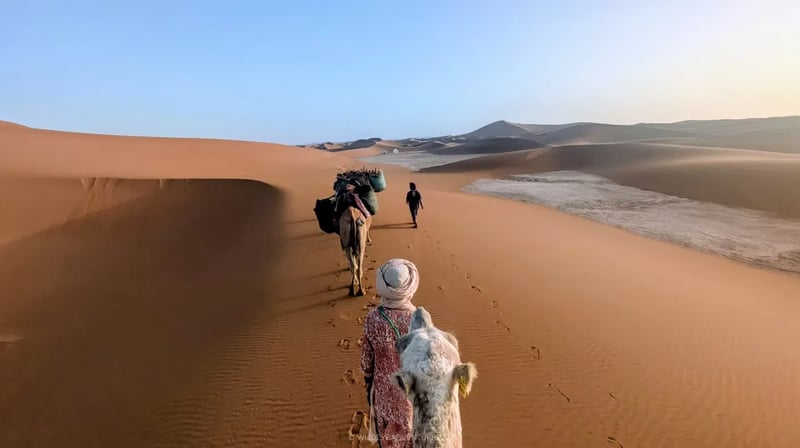
Step beyond everyday routines and experience the Sahara alongside nomadic guides whose families have travelled these lands for generations. Over nine days, the expedition blends walking and camel travel, shared desert living and cultural practices, creating a grounded and authentic connection to Morocco’s vast desert interior.
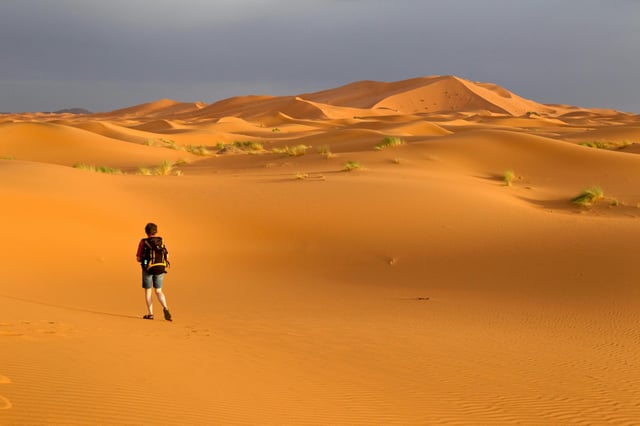
Life on this expedition follows the natural rhythm of the desert rather than the clock. Days begin early to take advantage of cooler temperatures, with steady morning walks across open plains and dunes before resting during the hotter hours. Camels travel alongside the group, carrying equipment and offering the option to ride when needed. Meals are freshly prepared by nomadic hosts, with time each day to pause, hydrate and take in the scale and quiet of the landscape.
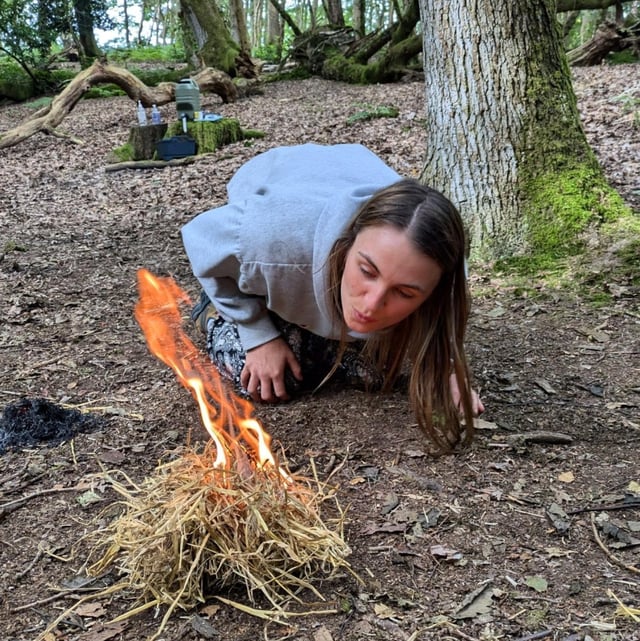
Learning comes naturally through shared experience. Along the way, guides demonstrate traditional desert practices such as fire-making, sand bread baking, water awareness and navigating by the land. Evenings slow the pace further, gathering around the fire for food, mint tea, music and stories, followed by nights under open skies where the absence of light pollution reveals vast constellations and the Milky Way in full clarity.
City life and wild desert living are carefully balanced. Time in Marrakech at the start and end of the journey allows space to settle in, reflect and enjoy Moroccan culture, while the days in the Sahara Desert offer simplicity, space and a deeper sense of perspective shaped by movement, silence and shared routines.
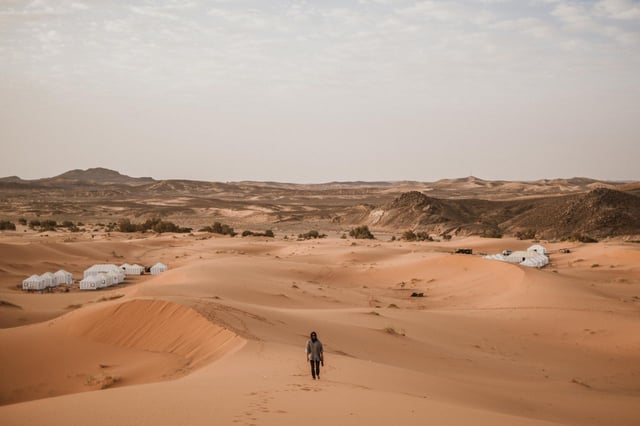
The expedition takes place in a remote region of Morocco, close to the Algerian border, where long stretches of sand dunes and open plains create a sense of scale and isolation. The terrain is largely flat, making it well suited to long-distance trekking supported by camels, with dunes rising higher as the journey progresses deeper into the desert.
Marrakech acts as both the starting and finishing point, offering a contrast between urban life and the desert interior. The Medina’s historic streets, markets and architecture provide cultural context before and after time spent in the Sahara, helping frame the experience as both a physical journey and a cultural one.
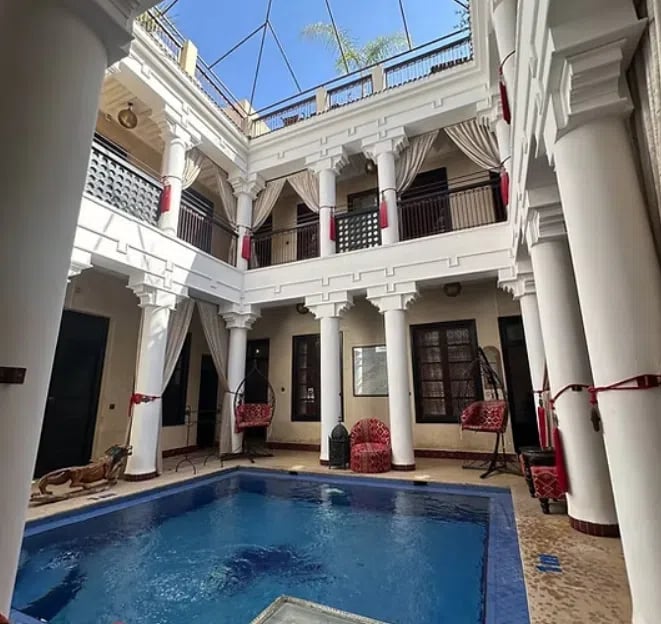
Accommodation is designed to ease the transition from city to desert and back again. The first and final nights are spent in a traditional riad in Marrakech, located on a quiet street within walking distance of the Medina. Rooms include private bathrooms, air conditioning and access to shared facilities such as a pool and hammam, offering comfort and rest between travel days.
The first night in the desert is spent in fixed desert accommodation with proper beds, showers and toilets, allowing time to adjust before heading deeper into the Sahara. From day three onward, nights are spent camping in remote desert locations. Foam mattresses are provided, and many guests choose to sleep out in the open beneath the stars. Communal shelters are set up at each camp for shade, meals and protection in case of wind or rare desert rain, keeping conditions safe and comfortable while maintaining a simple, traditional way of living.
Reasonable fitness and good general health are required, as daily walks of 25–30km take place during the cooler morning hours. The pace is steady with regular breaks, and camels are available if you need a rest, but participants are encouraged to walk as much as they comfortably can.
Comfort with simple living is important. Facilities become very limited once trekking begins, and days are shaped by natural conditions rather than strict schedules. An adaptable mindset and willingness to disconnect from modern conveniences will help you get the most from the experience.
The expedition is shaped by experienced environmental educators and desert guides who value depth over speed and learning through lived experience. Their approach focuses on respect for the land, cultural exchange and helping participants build a personal connection with the environments they travel through.
Years of working in wild landscapes inform how the journey is paced and supported, balancing challenge with care. By travelling alongside nomadic hosts and following traditional routes, guests gain insight into a way of life shaped by resilience, simplicity and deep knowledge of the natural world.
Operated by Wildeye Adventures, a partner of adventuro.
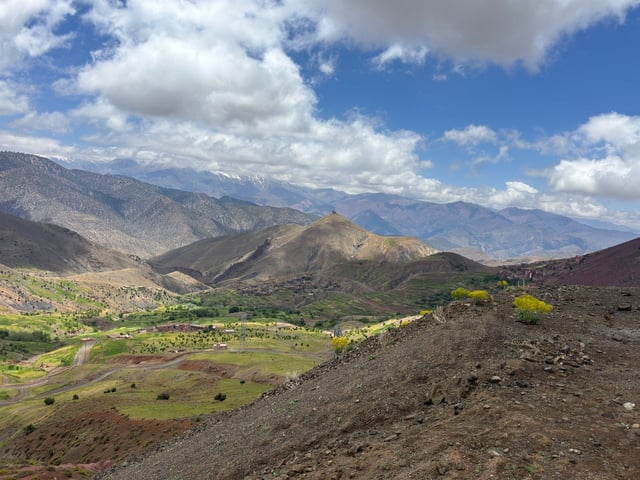
Central & Atlas Mountains, Morocco
From €800
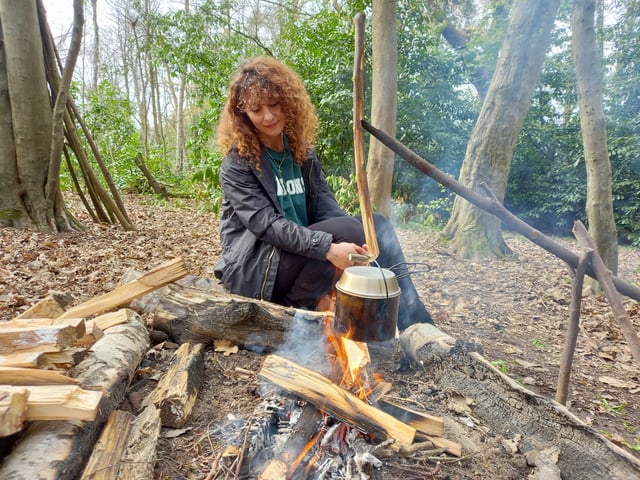

London, United Kingdom
From £25