
We partner with Rewilding Britain to help protect our natural spaces for future adventures.
All centres are vetted for safety and quality. Your adventure is in good hands with adventuro.
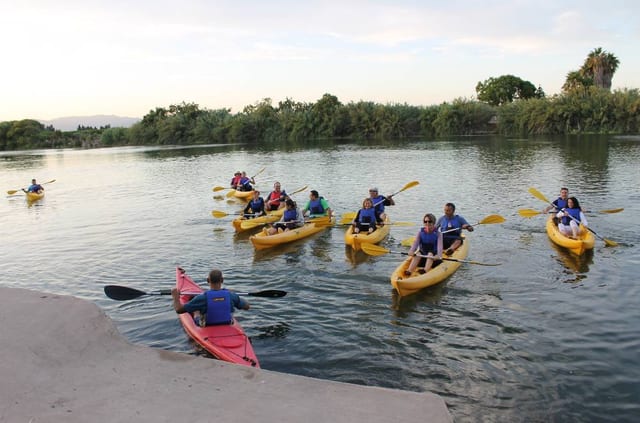
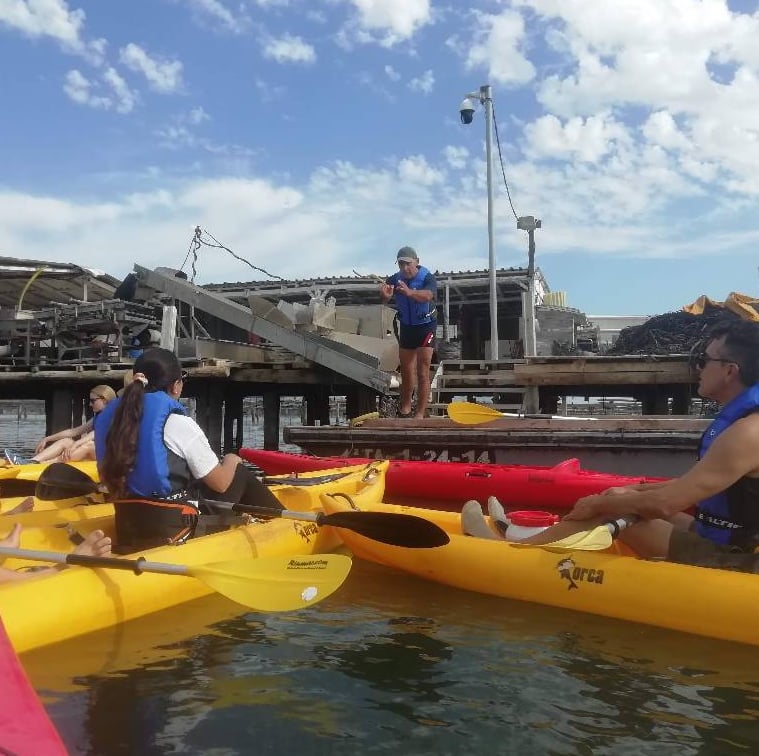


This combined kayak and bike route offers a varied way to experience the lower reaches of the Ebro Delta, blending time on the water with relaxed cycling. The journey moves from wide river channels into quieter canals before finishing with an easy ride through rice fields and riverside paths. It’s a well-balanced half-day activity that shows how land and water shape this area.
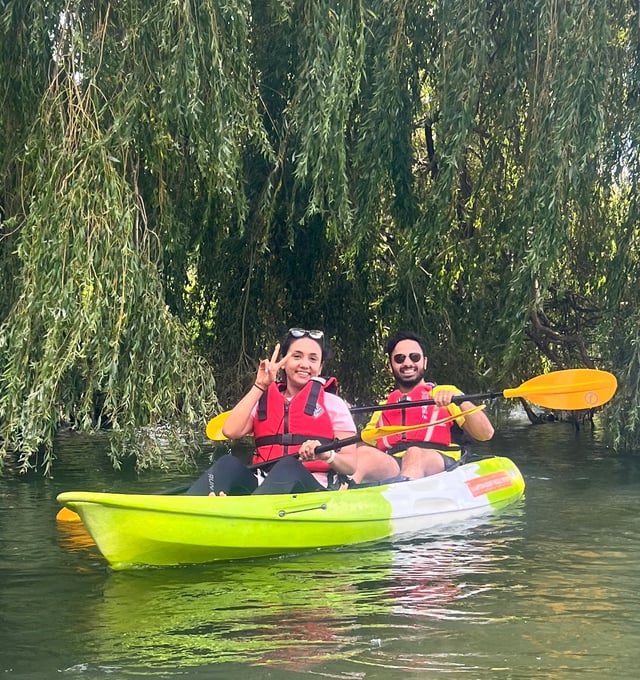
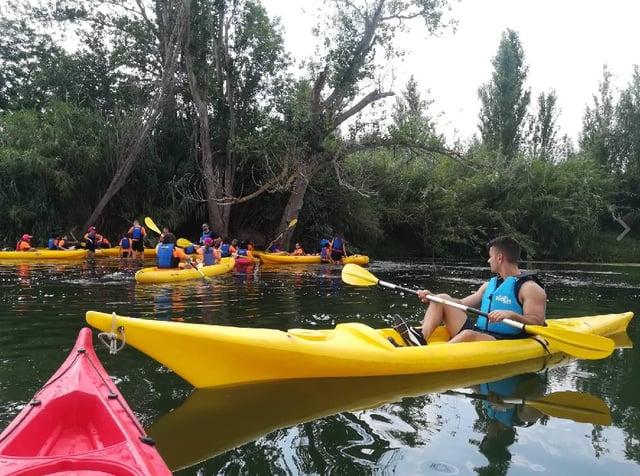
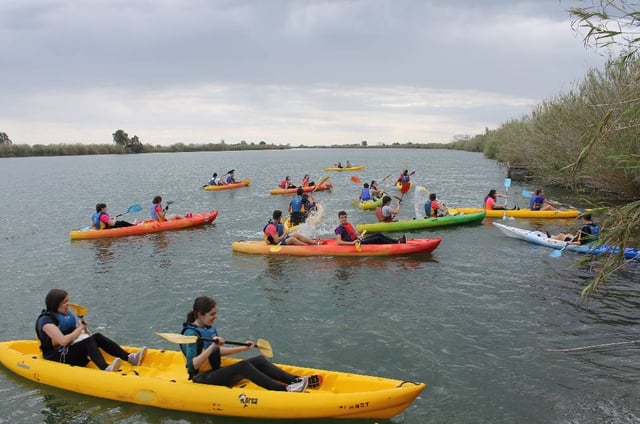
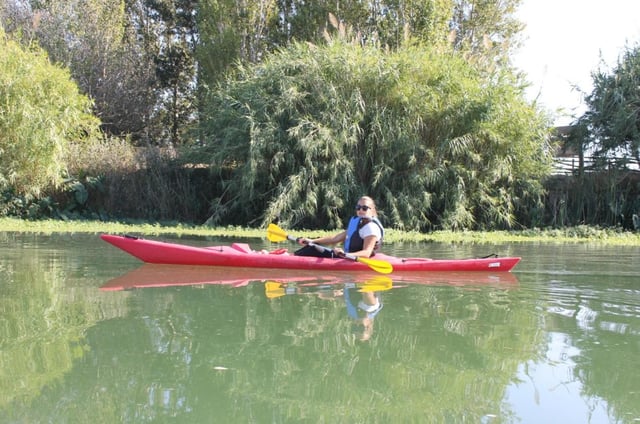
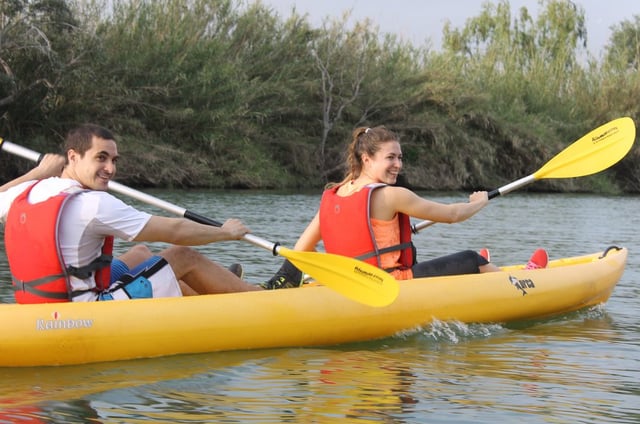
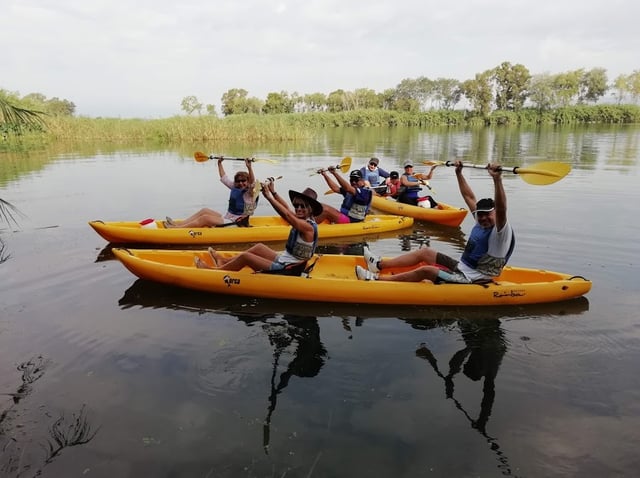
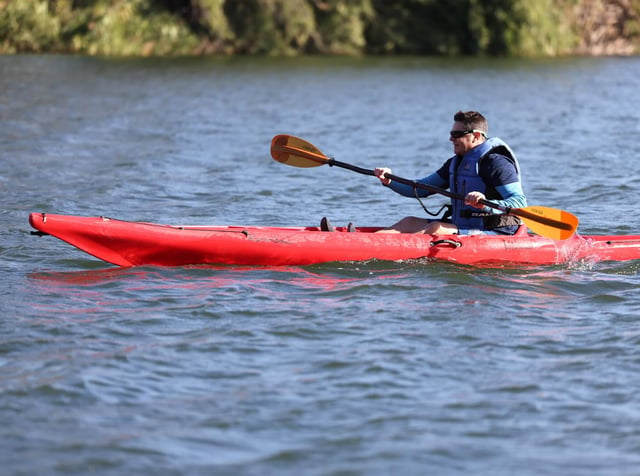
Setting off from the river pier, the first section is paddled by kayak along the final stretch of the Ebro. The river here feels broad and calm, bordered by riparian forest where birds and other wildlife are often visible close to the water’s edge. As you progress downstream, the route naturally draws you towards the Gola de Migjorn, a narrower canal branching off from the main river that immediately changes the feel of the paddle.
Once inside the canal, the surroundings become more enclosed and quieter, with gentle bends that make distances hard to judge at first glance. Buda Island stays close on one side, adding to the sense of being between river and sea, before the channel finally opens near the beach and the Mediterranean. Here the kayaking section ends, and the transition to cycling begins.
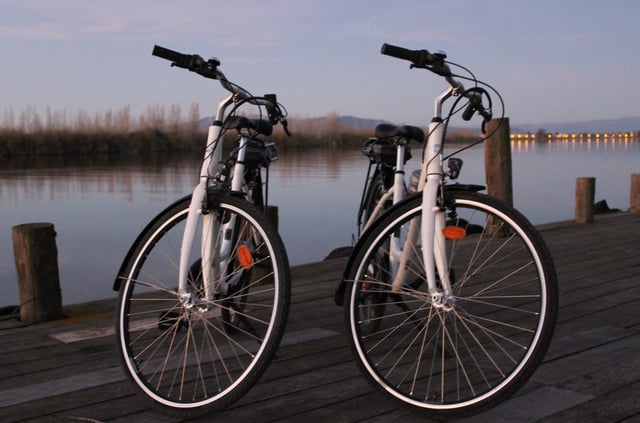
Bicycles are provided at the end of the kayak route, allowing you to continue the journey on land. The cycle follows canals and dirt tracks, passing rice fields and sections of riverside woodland before joining the riverside promenade at Sant Jaume d'Enveja. The final stretch is an easy, unhurried ride back towards the starting point, offering a relaxed finish after time spent on both water and land.
The route takes place in the heart of the Ebro Delta, an area shaped by river channels, coastal lagoons and agricultural landscapes. Starting and finishing near Deltebre, the activity links some of the delta’s most characteristic environments in one continuous loop.
Along the way, the route skirts Buda Island, one of the delta’s most important natural areas, before returning through quieter inland paths and river walks. The mix of water and cycling routes keeps the experience varied without covering large distances.
A basic level of fitness is required, as the activity combines several hours of gentle paddling with an easy cycle ride. Participants should be confident sitting in a kayak and able to cycle comfortably on flat terrain.
No previous experience with combined activities is needed, as instructions are given before setting off. The route is best suited to older teenagers and adults who enjoy being active outdoors for an extended period.
This route has been designed to show two sides of the delta in one outing, rather than focusing on a single activity. By combining kayaking and cycling, the experience feels varied and engaging without being rushed.
Equipment provision and transitions are handled smoothly, allowing you to focus on the route itself. The emphasis is on a steady pace, clear navigation, and showcasing the contrasts between river, canal, coast, and farmland.
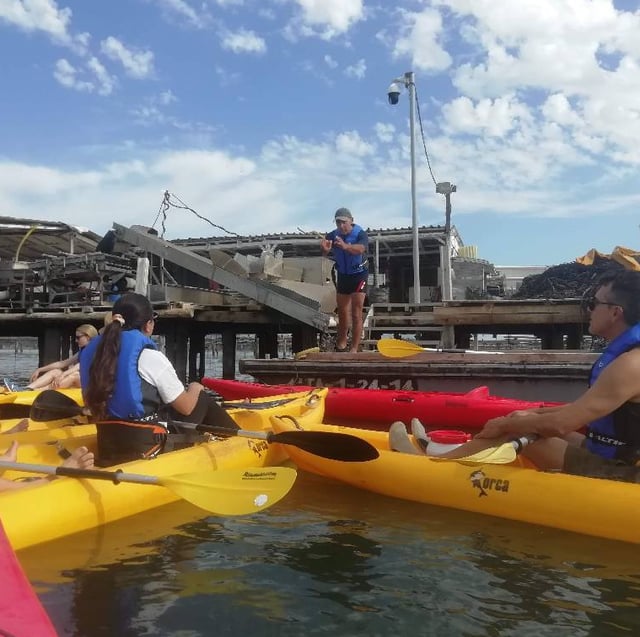
Before setting off, staff provide a detailed briefing explaining the kayak route, the canal section, and how the transition to cycling works. You’ll also be shown where bicycles are collected and how the return section is completed, so the flow of the route is clear from the start.
Once underway, the route is followed independently, allowing you to move at a comfortable pace and stop to take in the surroundings. Support is always available if needed, but the overall feel is relaxed rather than closely supervised.
The kayaking takes place on calm river and canal waters with no technical challenges such as rapids or strong currents. Distances are manageable, and the pace is designed for enjoyment rather than speed, making it suitable for those with little or no kayaking experience.
Regular breaks can be taken if needed, and the route benefits from sheltered sections that reduce exposure to wind. Anyone comfortable sitting in a kayak and paddling steadily should find this section achievable.
Cycling follows flat terrain along canals, dirt tracks and riverside paths, with no steep climbs or demanding sections. The ride is intended as a gentle continuation of the journey rather than a fitness-focused challenge.
After time on the water, many people enjoy the change of movement and perspective. The cycling distance is balanced so it feels comfortable even after completing the kayak section.
No prior experience is required for either activity. The kayak briefing covers basic paddling technique and safety, while the cycling section uses straightforward routes that are easy to follow.
As long as you can ride a bike confidently and are comfortable being active for several hours, you should feel well prepared for the route.
Clothing suitable for getting wet is recommended, especially for the kayaking section. Lightweight sportswear, a hat, and sun protection are strongly advised during warmer months.
Footwear that can handle both water and cycling, such as trainers or water shoes, works best. Bringing a light layer can also be useful if conditions change.
Small items can be taken along, but anything that must stay dry should be protected. Waterproof containers are available separately and are strongly recommended for phones, wallets and keys.
If you plan to use your phone during the activity, a waterproof case is essential, as conditions on the water can change quickly.
At the end of the kayaking section, staff will be waiting with bicycles ready for use. There is time to adjust the bike, have a drink, and take a short break before continuing.
This transition point is planned to be straightforward, ensuring the route flows smoothly without long waiting times or confusion.
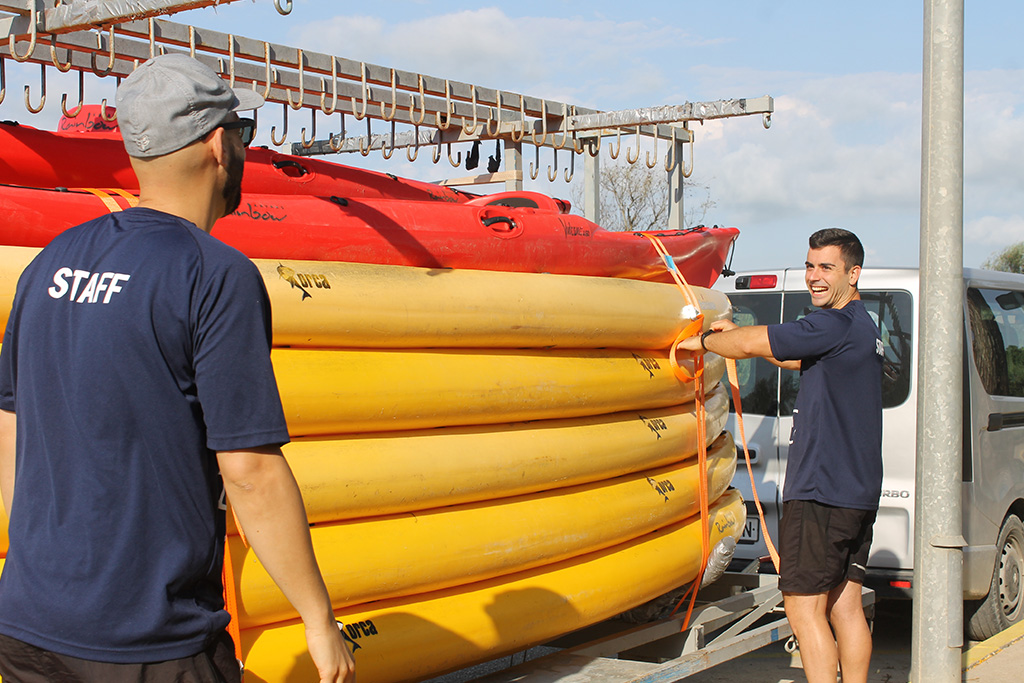
À propos du centre
Embarcador de Sant Jaume d'Enveja
Géré par Riu a l'Ebre, partenaire de adventuro.
Surrey, East and West Sussex, United Kingdom
À partir de £35

Surrey, East and West Sussex, United Kingdom
À partir de £30
Surrey, East and West Sussex, United Kingdom
À partir de £35

Surrey, East and West Sussex, United Kingdom
À partir de £50
Cataluña (Catalonia), Spain
À partir de €25
Cataluña (Catalonia), Spain
À partir de €25