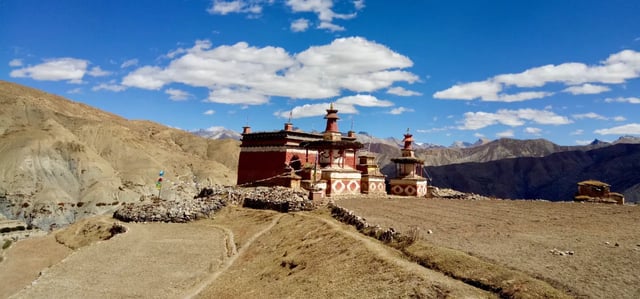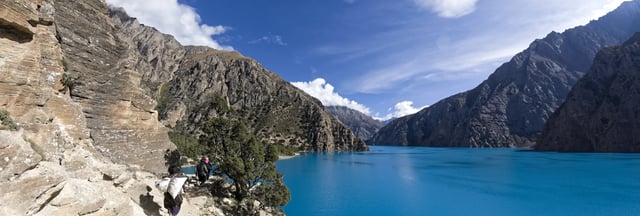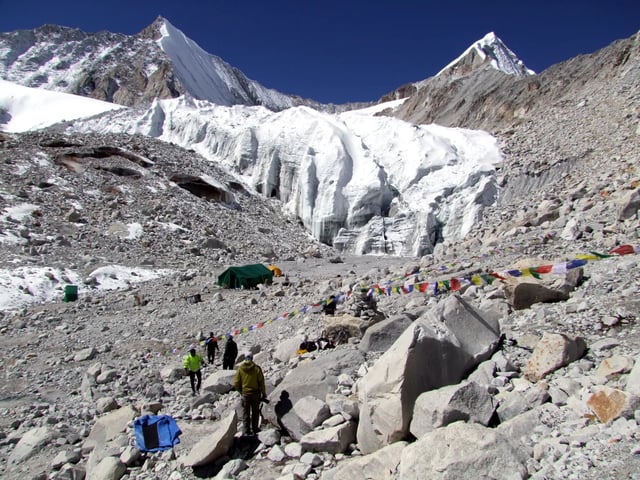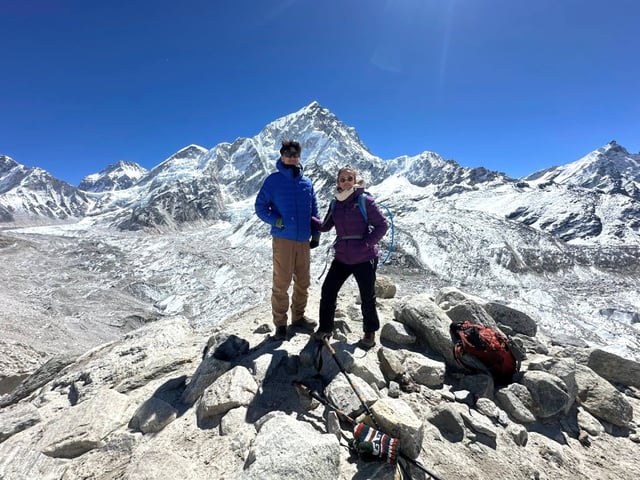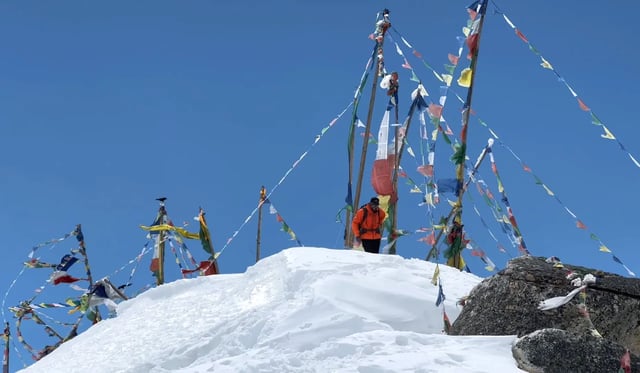
Pikey Peak sits in lower Solukhumbu, reached by road from Kathmandu toward Dhap or Jiri rather than a Lukla flight. You walk through Sherpa, Rai, and Tamang villages with quieter trails and teahouse nights. Junbesi monastery lanes, farm terraces, and the Dhap roadhead give this trek a village character in lower Solu.
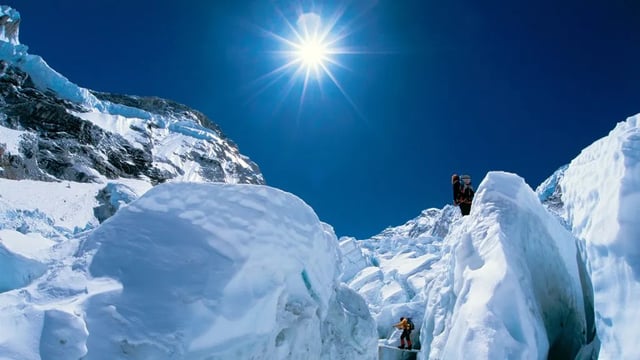
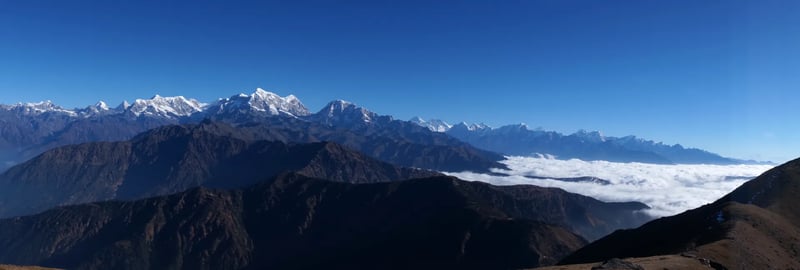
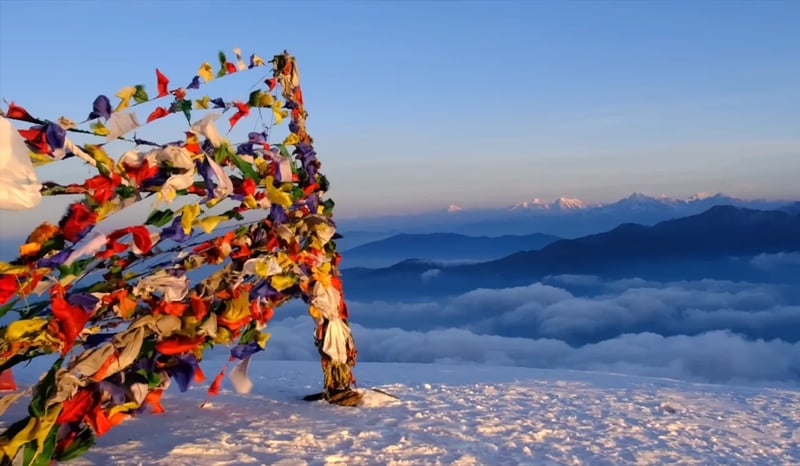
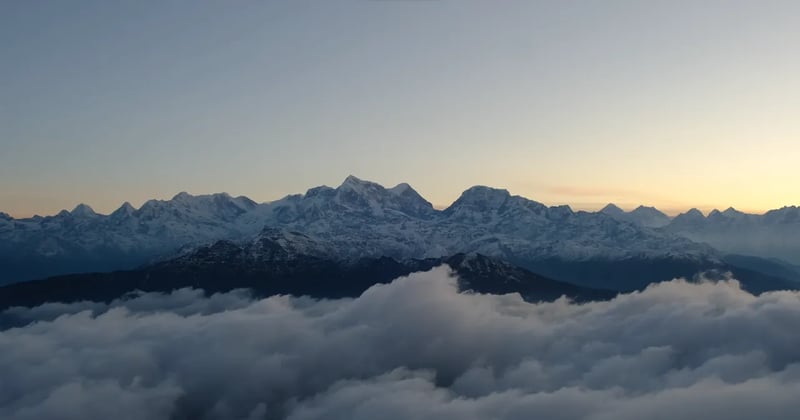
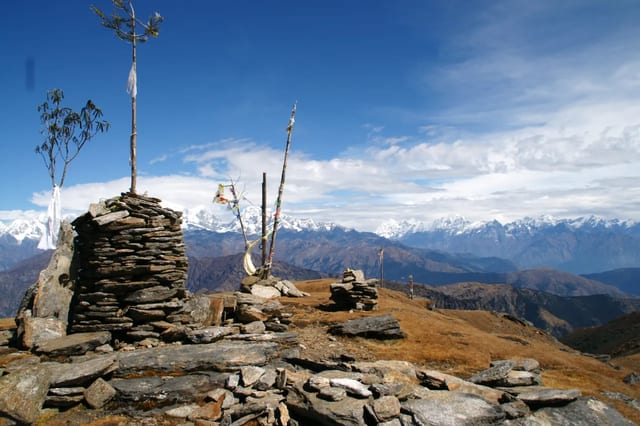
The summit ridge at about 4,065 m opens Everest, Gaurishankar, and Kanchenjunga on a clear morning. You descend through rhododendron and farmland back to the roadhead. A 4,065 m dawn on Pikey, with Everest and Kanchenjunga both in view, is the reason people book this hill.
Bhagwat started as a porter in 1998, became a licensed guide, studied tourism in Nepal and the UK, and still leads groups when he can, including on this Solu ridge. You'll leave Kathmandu by road toward Dhap or Jiri, so the briefing covers jeep timing and Solu lodge lists. Our office confirms rooms in Jhapre and at Pikey Base Camp before you walk.
Your guide knows the 4,065 m summit start and which dawn is worth the dark climb for Everest, Gaurishankar, and Kanchenjunga. We'll walk Sherpa, Rai, and Tamang villages through Junbesi on quieter teahouse paths. The finish is toward the Phaplu roadhead after the rhododendron descent.
We will send our office representatives to Tribhuvan International Airport in Kathmandu City to receive you. They will arrive before your landing and wait at the airstrip terminal. After you land in Nepal, you will see them at the terminal holding a sign with our company’s name so that you can recognize us easily without any confusion.
They will greet you with a broad smile and, as a token of their respect and hospitality, hang a garland around your neck. They would take care of all the necessary processes, ensuring a simple and trouble-free arrival. After that, they will assist you in gathering your bags and loading them into our private car.
They will drive you to the Thamel area, where you will stay in a three-star standard hotel for three nights in the capital city. Thamel is a vibrant, lively place in Kathmandu, filled with many foreigners from different nations walking on the streets. This short drive will take about 30 minutes if there is less traffic.
This is the second day of your 9-day Pikey Peak Trek excursion. On this day, you would go and tour Kathmandu Valley. We would commence our day with a great first meal of the day at your hotel. Our business car will be waiting in the hotel foyer to fetch us for the Kathmandu Valley trip.
We will first visit Basantapur ( Kathmandu Durbar Square ), just 10 to 15 minutes away from the Thamel area. There are many key attractions and activities that you can do in Basantapur. This place is a lively mix of modern life and history. The main attractions of Basantapur are Hanuman Dhoka Palace, Kumari Ghar, Taleju Temple, Bhairav Statue, and so on.
Then we drive to Pashupatinath temple, a famous religious site dedicated to Lord Mahadev (Shiva) on the banks of the Bagmati River. We will then go to Boudhanath Stupa. You can feel the tranquility here, and there are numerous monks circling the stupa, spinning prayer wheels.
This is day 3 of your Pikey Peak Trek journey. We would awake in time and get ready for a long drive to Dhap Bazaar. We depart from Kathmandu City after having a mouth-devouring breakfast in the hotel. We will go to Dhap Bazaar in our company’s vehicle so that you can have a comfortable travel experience.
During this picturesque drive, you will see views of lush green valleys, terraced farmlands, hills, small villages, and extensive mountain views. You will also experience Nepal’s rural life and meet courteous villagers. Our private vehicle will stop at different locations for breaks and lunch. You can also cherish the spectacle of these locations and capture snapshot for memories.
We will arrive in Dhap Bazaar after a seven to eight-hour trip from Kathmandu City. Dhap Bazaar, located at an elevation of 2850 meters, also serves as an entry point to several hiking adventure areas. There are many lodges and restaurants in this place offering the required facilities.
Today, you will start your hike from Dhap Bazaar to Jhapre by passing through Sigane Village on this fourth day of the Pikey Peak Trek trip. Dhap Bazaar is also the starting point of your short trekking journey. We will walk after breakfast. We will walk following the path that will take us to Sigane Village.
You will also witness a glimpse of rural life and friendly local people. During your hiking, you will be showered with views of beautiful landscapes that will make you feel like you are in absolute heaven. After passing the Sigane Village, we will hike toward the Jhapre Village, 2920 meters above sea level. The trek gradually uphill from the Sigane Village.
Keep in mind to drink a lot of water to remain hydrated. We stroll through several hamlets, forests, rolling hills, and farmlands. After walking four to five hours from the Dhap Bazaar, we will eventually reach the Jhapre Village.
Your fifth day of this journey will be exhilarating and adventurous as you will be reaching the Pikey Peak Base Camp. We will immediately depart from the Jhapre Village after having our first meal of the day. We will traverse through dense jungles, swift-flowing streams, and small charming villages. Today’s trek to Pikey Peak Base Camp will be more rugged land as we ascend higher.
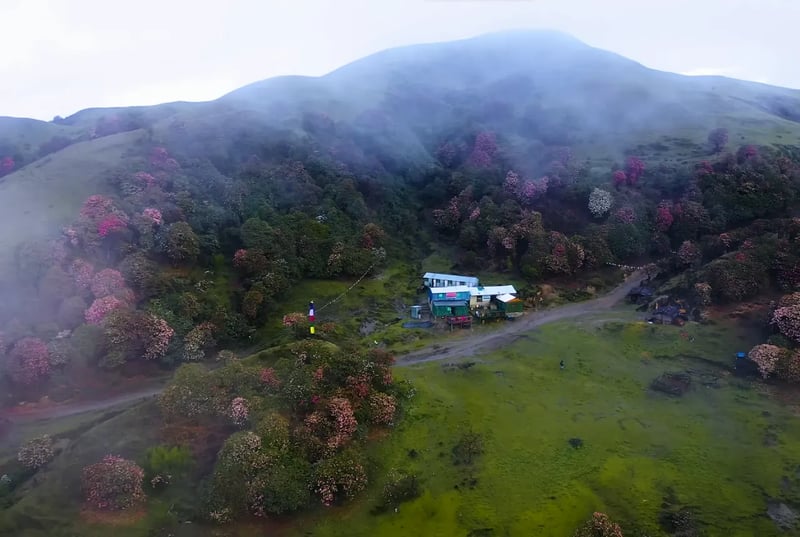
However, you will be treated to jaw-dropping mountain peaks like Mt. Everest, Lhotse, Makalu, Number, Khatanga, Thamserku, Kanchenjunga, and many more, which will turn your Pikey Peak Trek Difficulty into a rewarding trek. We will reach Pikey Peak Base Camp after hiking for five to six hours. This base camp sits at 3640 meters, or 11942 feet, above ocean level.
This camp can also be considered as the beginning point to summit Pikey Peak at a height of 4065 meters. You will not find a lot of teahouses and lodges here.
Junbesi will be our stop on the Pikey Peak Trek trip today. We will rise early in order to witness the dawn over the snow-covered Himalayas from the Pikey Peak Base Camp. After a satisfying breakfast, we wouldmove from the base camp and go to Junbesi Village. The trail to Pikey will be steep.
Today's trekking itinerary will be far more rigid than the previous days. After a few hours of walking from Pikey Peak Base Camp, we will finally reach Pikey Peak, the highest point on our fantastic journey at 4065 meters. You will have a feast with your eyes after getting to the summit of Pikey Peak. All your exhaustion will be healed after this tough climb by the remarkable natural wonders seen from Pikey Peak.
The vistas of Mt. Everest, Lhotse, Kanchenjunga, Makalu, Thamserku, and many other snow-capped peaks are.
On day 7 of the Pikey Peak Trek Itinerary, we will leave this serene Junbesi Village after breakfast for the vibrant town of Phaplu. We will take paths filled with green valleys and beautiful rhododendron forests, which will be a very enjoyable trekking day. Along the way, we would traverse through lovely villages in the Everest region. The trail to Phalpu Village becomes gentler as we move downhill.
You can also see the farmers working in the fields and grazing yaks, which adds more charm to this trekking journey. Although this is a return trekking journey, the trek would still be and exciting, showering you with unbelievably beautiful landscapes. We will reach Phaplu after hiking from the Junbesi Village for four to five hours. The town has many lodges and shops, which make it even more lively and engaging.
You can also purchase commemorative to tack on home or gifts for your family members. We will spend one final night in this town in the Everest region.
Today will be the last day of your presence in the Everest region on this Pikey Peak Trek Itinerary. We will leave this lively Phalpu town after breakfast. We will catch a plane to Kathmandu from Phaplu Airport (PPL), a small domestic airport. You can witness the awe-inspiring views of the snow-covered peaks, green valleys, and other natural wonders from the window of a plane.
We will arrive at Tribhuvan Airport from Phalpu in about 35 to 40 minutes. Our company’s vehicle will be waiting at the airport terminal to drive us to your 3-star hotel in Thamel. You can then unwind and refresh in your hotel space, to have some well-deserved rest. Then, after recuperating, you can explore other major attractions in Kathmandu that you did not see on the second day of your walk to Pikey Peak.
Later in the late evening, we will organize a special goodbye dinner in a typical Nepalese restaurant where you can delight in cultural dances, music, and local dishes. It will be one of the most outstanding evenings in your whole journey to share and talk about the memories of this journey.
Your Pikey Peak Trek Itinerary journey comes to an end on this ninth day. Our company delegates will escort you to the airstrip, helping you with all your luggage. It is best you leave 2 to 3 hours before your flight schedule so that you won’t be late due to heavy traffic in Kathmandu city.
As you board your flight, you will take more than photos and souvenirs home. You will be taking memories and those amazing moments during your Pikey Peak Trek itinerary. We hope you have a safe flight to your home.
You can write us a letter about your experiences with us on this journey.
Most guests fly into Tribhuvan International Airport in Kathmandu. Share your arrival time ahead of travel so a Thamel hotel transfer can be arranged, or make your own way to the meeting hotel.
Pre-trek briefings usually take place in Kathmandu before the Lukla flight or helicopter sector. Allow extra days after the trek in case mountain flights are postponed by weather.
Twin or double rooms in a comfortable Kathmandu hotel cover your first nights and your return from the trail, with breakfast on those city stays when included in the package. Briefings happen at the hotel, and airport collection from Tribhuvan is available when flight times are shared in advance.
Family-run teahouses or lodges line the route with twin beds and a shared dining room. Rooms get simpler and colder as you climb, with shared bathrooms common at higher villages. Hot water, Wi-Fi, and charging are paid at the lodge when offered.
Spring from March to May and autumn from September to November usually bring the clearest views and stable walking conditions on this route. Winter is quieter but colder at altitude, while monsoon months bring cloud and wet trails at lower elevations.
Shoulder weeks need an honest weather call before high passes or dawn viewpoints. Monsoon cloud sits lower on the hills while winter brings ice on steps above village level.
You should be comfortable walking several hours a day on uneven paths with a daypack, including steady uphill sections as you gain height. Hill training and longer weekend walks in the months before travel help your legs and lungs on uphill trail days.
Hill training, stair climbing, and longer weekend hikes in the months before travel help your legs and lungs, even when acclimatisation days are built into the route. Break in boots before you fly and carry a light daypack on practice walks.
Guided trekking with licensed leaders, lodge nights on the trail, meals as described for walking days, and permits for the regions crossed are included when they are part of this trip. Domestic flights, porters, and airport transfers apply only when they are part of this trip.
Domestic flights, road transfers, porter support, and airport transfers apply only when they are part of this trip. Permits for the regions you cross are arranged in Kathmandu or Pokhara when included.
International flights to Nepal, visa fees, compulsory travel insurance, personal trekking clothing, snacks and drinks outside included meals, and tips for crew are not covered. Hot showers, Wi-Fi, and battery charging in lodges are usually paid locally when offered.
Charges for hot showers, Wi-Fi, or battery charging in lodges are paid locally when offered unless your trip notes say otherwise. International flights, visa fees, and personal insurance stay outside the trek package.
Pickup can be arranged from Tribhuvan International Airport or your hotel in Thamel when you share flight times ahead of travel. The pre-trek briefing is usually held at the hotel before the Lukla flight or helicopter sector.
Allow buffer days after the trek in case mountain flights move. Thamel hotels are the usual meet point; drivers need flight numbers to meet you at the international terminal.
Guides set a steady pace and watch for headache, nausea, or dizziness as you gain height. Weather can shift daily plans, so your guide keeps a steady pace with regular breaks.
Tell your guide early if symptoms appear so tomorrow's stage can shorten or descent can start before conditions worsen. Trail conditions are checked each morning before the group moves.
Mountain weather can delay or postpone Lukla flights even in peak season, and Ramechhap diversions happen when the airstrip is congested. Your crew would rather wait for a safe window than rush marginal weather.
Build buffer days after the trek for international connections, and follow crew advice if schedules change or flights shift to Ramechhap. Allow a little extra time after the trek before international flights home in case mountain roads or flights move.
Sagarmatha National Park and Khumbu municipality permits apply in the Everest region. The team arranges paperwork in Kathmandu or Pokhara when you provide passport copies and trek dates.
Keep copies in your daypack for checkpoint stops. Your crew would rather wait for a safe window than rush marginal weather.
Families join when children can manage the daily hours and terrain on this specific route. Pace and daily hours can be adjusted on private departures, though that may extend the calendar.
Ask our Kathmandu team if you are planning with younger walkers. Private departures can shorten daily hours, though that may add a day or two to the calendar.
Comprehensive travel insurance that covers trekking to the highest altitude on your itinerary, medical evacuation, and helicopter rescue when applicable is essential. Many standard policies exclude high altitude by name.
Read the wording before you travel so you can adjust cover if trekking above 5,000 metres is not named. Many standard policies exclude high altitude by name, so read the wording before you fly.
We partner with Rewilding Britain to help protect our natural spaces for future adventures.
All centres are vetted for safety and quality. Your adventure is in good hands with adventuro.
About the centre
Kathmandu
You'll travel with a Kathmandu-based team that plans treks, peak climbs, helicopter flights, motorbike journeys, and cultural trips across Nepal, Tibet, and Bhutan. Routes range from classic teahouse walks and high passes to luxury lodge itineraries and longer expedition-style climbs, with departures shaped around how you want to pace the mountains.
Licensed guides and office staff train regularly on mountain safety and guest care. Porters are insured, fairly paid, and equipped for the trail, with sensible load limits on lodge routes. We work with remote communities through sustainable tourism, including support for education in village areas, so your booking helps local people as well as your own adventure.
Operated by Himalayan Adventure Treks & Tours, a partner of adventuro.