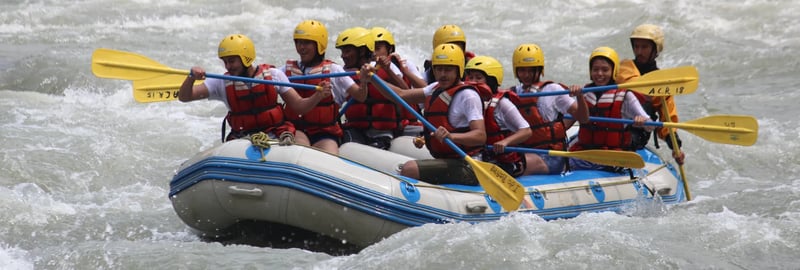
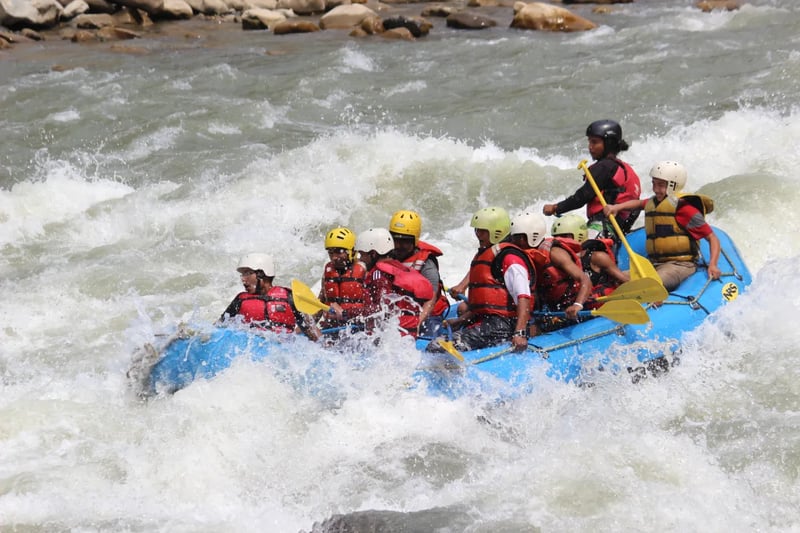
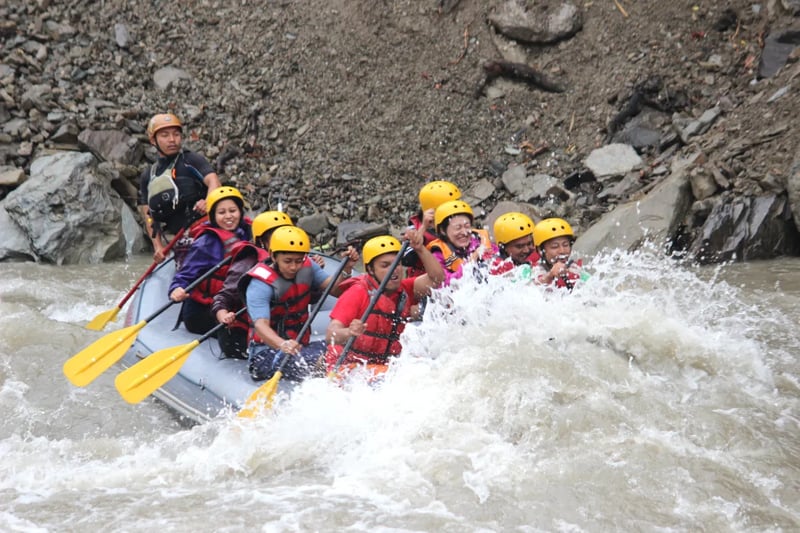
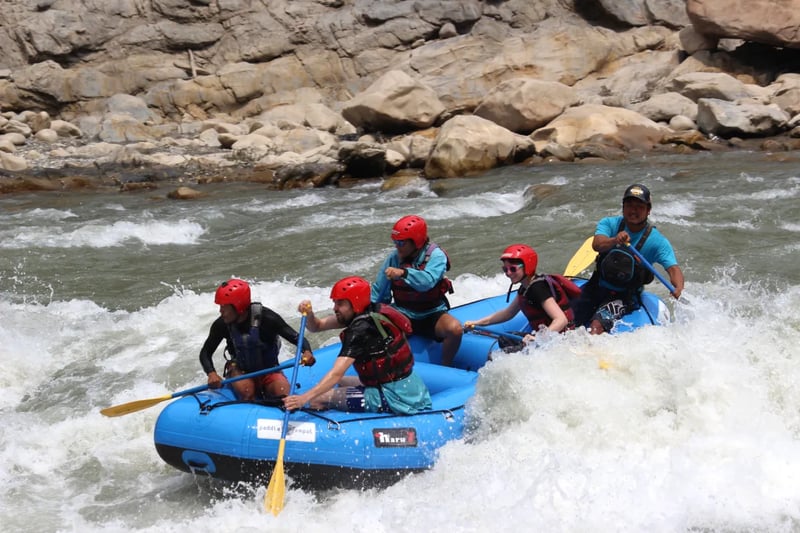
The overnight Trishuli adds a beach or lodge camp after the first day’s rapids, with dinner by the river and a second paddle in the morning. You hear the current all night and start the next set of waves already warm. A village walk at Buttar sits between dinner and the second paddle.
Kit stays in camp drybags. The drive back to Kathmandu or Pokhara comes after the second river section. Dinner by the current and drybags in camp make the night feel like part of the river, not a roadside stop.
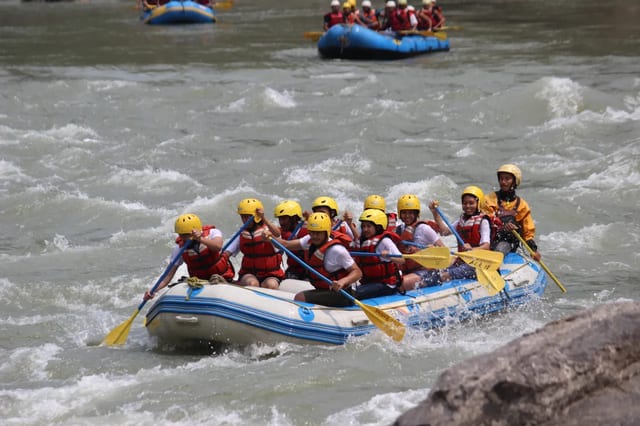
Your river leader has more than sixteen years on the Trishuli and runs NRS expedition rafts with a safety kayak, helmets, life jackets, and dry bags already on the bank. We'll brief paddle commands at Charaudi, then split the white water across two sessions so you are not rushed through Ladies Delight, Upset, and Surprise. Photos and video come from the guide at the take-out so you can keep your hands on the paddle.
After the afternoon rapids you'll stay in a riverside safari tent or resort room, with dinner, a shower, and time around the campfire. The next morning we walk through Buttar Village for a couple of hours before breakfast, then send you on toward Kathmandu, Pokhara, or Chitwan. Client funds sit behind a security deposit at the Ministry of Tourism, and the daily plan can shift if water or weather asks for a later start.
Your adventurous journey begins with an early morning drive from Kathmandu/Pokhara/Chitwan. The drive takes approximately 3-4 hours, passing through scenic landscapes, green hills, terraced fields, and elegant villages along the Prithvi Highway. Upon arrival at the rafting point, you will meet the rafting crew.
After the safety instructions and briefing, our adventurous rafting journey begins. Rafting to Morning Session (3-4 hrs).
Early Morning Calmness and Village Exploration. Wake up with the murmuring of birds and the soothing sounds of the Trishuli River.
Enjoy the beautiful views and surroundings with a sip of hot coffee or tea. Upon that, we will take a short village walk, where you can explore traditional houses, farming, and the daily lifestyle and culture of the villagers.
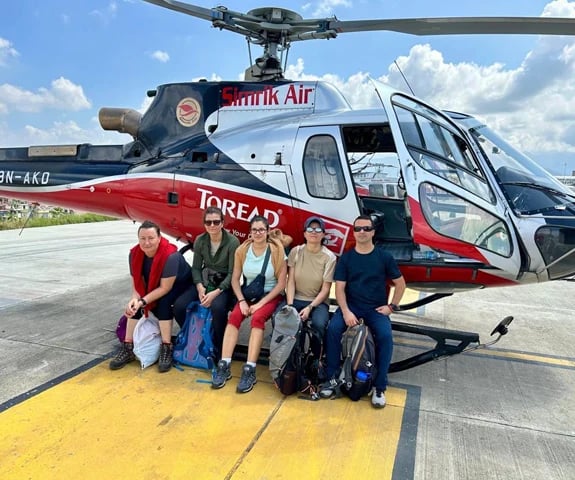
Fly into Tribhuvan International Airport in Kathmandu unless the itinerary uses another regional hub. Airport or hotel pickup can be arranged when you share arrival details ahead of travel.
Briefings cover road or domestic travel to the trailhead. Build buffer time before onward international flights in case mountain weather shifts the schedule.
Twin or double rooms in a comfortable Kathmandu hotel cover your first nights and your return from the trail, with breakfast on those city stays when included in the package. Briefings happen at the hotel, and airport collection from Tribhuvan is available when flight times are shared in advance.
Family-run teahouses or lodges line the route with twin beds and a shared dining room. Rooms get simpler and colder as you climb, with shared bathrooms common at higher villages. Hot water, Wi-Fi, and charging are paid at the lodge when offered.
Stable trekking weather most often falls in pre-monsoon spring and post-monsoon autumn. Monsoon cloud sits lower on the hills while winter brings ice on steps above village level.
If your dates sit in winter or monsoon, pack rain and cold layers and accept that flight or pass days may move by a day when safety requires it. Weather can shift daily plans, so your guide keeps a steady pace with regular breaks.
You should be comfortable walking several hours a day on uneven paths with a daypack, including steady uphill sections as you gain height. Hill training and longer weekend walks in the months before travel help your legs and lungs on uphill trail days.
Hill training, stair climbing, and longer weekend hikes in the months before travel help your legs and lungs, even when acclimatisation days are built into the route. Break in boots before you fly and carry a light daypack on practice walks.
Guided trekking with licensed leaders, lodge nights on the trail, meals as described for walking days, and permits for the regions crossed are included when they are part of this trip. Domestic flights, porters, and airport transfers apply only when they are part of this trip.
Domestic flights, road transfers, porter support, and airport transfers apply only when they are part of this trip. Permits for the regions you cross are arranged in Kathmandu or Pokhara when included.
International flights to Nepal, visa fees, compulsory travel insurance, personal trekking clothing, snacks and drinks outside included meals, and tips for crew are not covered. Hot showers, Wi-Fi, and battery charging in lodges are usually paid locally when offered.
Charges for hot showers, Wi-Fi, or battery charging in lodges are paid locally when offered unless your trip notes say otherwise. International flights, visa fees, and personal insurance stay outside the trek package.
Hotel meet in Thamel is typical; send flight numbers so pickup can meet you at the international terminal. Allow a little extra time after the trek before international flights home in case mountain roads or flights move.
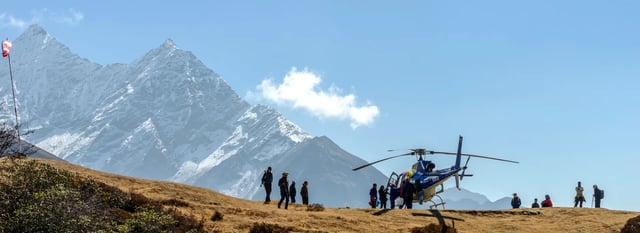
Rest day buffer after the trek helps if Lukla or helicopter sectors slip by a day. Trail conditions are checked each morning before the group moves.
Guides set a steady pace and watch for headache, nausea, or dizziness as you gain height. Your crew would rather wait for a safe window than rush marginal weather.
Tell your guide early if symptoms appear so tomorrow's stage can shorten or descent can start before conditions worsen. Thamel hotels are the usual meet point; drivers need flight numbers to meet you at the international terminal.
Jeep or bus days to the remote trailhead are arranged when they are part of your package. Your guide confirms departure times at briefing.
Motion sickness medicine helps on winding mountain roads. Shoulder weeks need an honest weather call before high passes or dawn viewpoints.
National park or restricted-area permits apply depending on the valleys you cross. The team arranges paperwork in Kathmandu or Pokhara when you provide passport copies and trek dates.
Keep copies in your daypack for checkpoint stops. Your crew would rather wait for a safe window than rush marginal weather.
Families join when children can manage the daily hours and terrain on this specific route. Pace and daily hours can be adjusted on private departures, though that may extend the calendar.
Ask our Kathmandu team if you are planning with younger walkers. Private departures can shorten daily hours, though that may add a day or two to the calendar.
Comprehensive travel insurance that covers trekking to the highest altitude on your itinerary, medical evacuation, and helicopter rescue when applicable is essential. Many standard policies exclude high altitude by name.
Read the wording before you travel so you can adjust cover if trekking above 5,000 metres is not named. Many standard policies exclude high altitude by name, so read the wording before you fly.
We partner with Rewilding Britain to help protect our natural spaces for future adventures.
All centres are vetted for safety and quality. Your adventure is in good hands with adventuro.
About the centre
Kathmandu
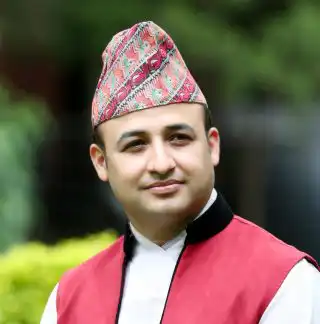
You'll travel with a Kathmandu-based team that plans treks, peak climbs, helicopter flights, motorbike journeys, and cultural trips across Nepal, Tibet, and Bhutan. Routes range from classic teahouse walks and high passes to luxury lodge itineraries and longer expedition-style climbs, with departures shaped around how you want to pace the mountains.
Licensed guides and office staff train regularly on mountain safety and guest care. Porters are insured, fairly paid, and equipped for the trail, with sensible load limits on lodge routes. We work with remote communities through sustainable tourism, including support for education in village areas, so your booking helps local people as well as your own adventure.
Operated by Himalayan Adventure Treks & Tours, a partner of adventuro.