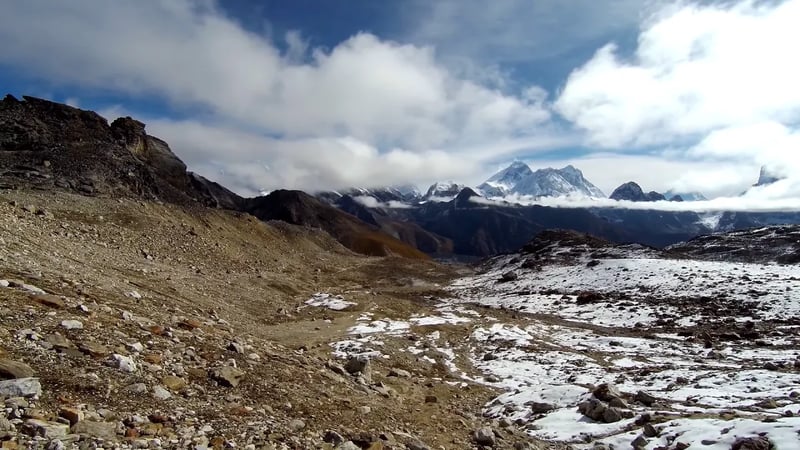
Kongma La, Cho La, and Renjo La link Chhukung, Everest Base Camp, Gokyo, and the Bhote Koshi in one demanding Khumbu circuit. You fly to Lukla, climb through Namche, and take rest days before each 5,000 m col. Chhukung, Gokyo, and the Bhote Koshi sit on one demanding Khumbu loop with a rest before each col.
Glacier approaches, frozen lakes, and long descent days are the character of the trip. Licensed guides set turn-around times on pass mornings so you still reach Gokyo Ri or Kala Patthar when weather allows. Each 5,000 m col has its own glacier approach and a viewpoint on the far side; that is the draw of the three passes.
We are licensed with Nepal's Ministry of Culture, Tourism and Civil Aviation and the Nepal Tourism Board, so Kongma La, Cho La, and Renjo La sit on one permitted Khumbu circuit. You'll fly to Lukla, climb through Namche, and rest in Dingboche and Chhukung before the first 5,000 m col. Our Kathmandu office files Sagarmatha paperwork and the mountain-flight window before you pack.
Your guide sets turn-around times on the Kongma La glacier approach to Lobuche and on the Cho La crossing toward Gokyo. We'll share the next pass morning each evening so a weather hold can shift without guesswork. You finish over Renjo La to Marlung after Gokyo Ri when the window allows.
You land at Kathmandu, the capital city of Nepal, at Tribhuvan International Airport. Upon landing, our team from the our team welcomes you and takes you to the hotel in the city. Kathmandu is located at 1,402 m (4,600 ft), and it is the first place where you can see the culture and hustle of Nepal.
Once checked into the hotel, you are able to take a rest and relax after your trip. Later in the day, you are introduced to your trekking guide, who has a briefing session on the Everest Three High Passes Trek. Your guide will check your equipment, make sure you have a flight to Lukla, and answer any last-minute questions you may have about the trek.
Relax throughout the evening, drink as much water as you can, and get ready to have a good adventure tomorrow.
This day begins with a picturesque mountain flight to Lukla. The airstrip at Lukla is small and is located at 2,860 m (9,383 ft), and is the point where your trek starts. Once you have met the porter team and arranged the loads at Lukla, you start walking on the DudhKosi River valley.
The road is mild and predominantly downhill, and it is better to warm up your legs on this day. On your way, you are going to encounter colored prayer wheels, mani stones, and even little villages. Your walk is supported by the peace of the river.
In a few hours of light walking, you arrive at the village of Phakding, at 2,610 m (8,563 ft). Here you stay in a warm lodge, have a pleasant dinner, and sleep.
Today, you go along the Dudh Koshi River in pine forests and Sherpa villages. The path cuts across a number of long suspension bridges adorned with prayer flags. Slowly, the road starts ascending towards the gate leading to Sagarmatha National Park.
Upon inspection of permits, you proceed to trek through a picturesque valley. The last part is an uninterrupted hike up to Namche Bazaar at 3,446 m (11,306 ft). Today, the altitude increase is great, and this means that your guide will insist on a steady and gradual pace.
The main trading center of the Khumbu region is Namche, which has the form of a natural amphitheater. Once at the lodge, you can rest or do a little walk within the village and have a view of the mountains within it.
This is a significant acclimatization day to get your body to adjust to a higher altitude. You hike up after breakfast, out of Namche, to the well-known Hotel Everest View. This place is located at approximately 3,880 m (12,730 ft) and provides one of the first clear views of Mount Everest.
During clear days, you may also observe mountains such as Ama Dablam, Lhotse, and Thamserku. Once you have admired the scenery, you proceed to Khumjung village at 3,790 m (12,434 ft), comprising a serene Sherpa village that has a monastery and old-fashioned stone houses. You take up some time in the village and get to know some culture there.
In the afternoon, you walk down to Namche Bazaar again later in the afternoon and this gives your body time to adjust as your body sleeps at a relatively lower level.
When you leave Namche Bazaar, you take a picturesque trailthat ascends softly up the mountainside. When it is clear, the route provides wonderful views of Everest, Lhotse, and Ama Dablam. Some hours later, the path leads down to a steep hill to the Dudh Koshi River at 3,250 m (10,663 ft).
From the river, you start on a gradual increase through rhododendron and juniper forests to Tengboche. Mule caravans and yaks oftentimes trail. After some time, you come to Tengboche village, which is 3,860 m (12,664 ft).
The village is also known for the Tengboche Monastery, which is the biggest monastery in the Khumbu region. You can also go to the monastery and attend evening prayers if you come at the right time. The beauty of the surrounding environment and the calmness of the place make it a memorable experience.
You then start down, after breakfast, from Tengboche, through a wooded path, to the Imja Khola River. Landscape is gradually transformed to have fewer trees and a more open Alpine landscape. You go through small villages along the way, like Pangboche with its 3,985 m (13, 074 ft) elevation and being one of the oldest Sherpa settlements in the area.
This path then runs off across broad valleys and fields bordered by stone walls where they grow barley and potatoes. On sunny days, the beautiful peak of Ama Dablam stands out in the skyline. It is a gradual hike, but several hours later, you are in the village of Dingboche at 4,360 m (14,304 ft).
Dingboche is a village located in a broad valley with mountain ranges, and offers a perfect site to acclimatize to high altitude.
The other acclimatizing day is today, and it will assist your body to become accustomed to the rising altitude. At 4,360 m (14,304 ft),Dingboche, a day here will make the higher parts of the trail safer and more comfortable. You have a little hike in the morning, to one of the ridges or to a viewpoint above the village.
This walk enables you to elevate to greater heights and then come down to sleep again at a lower elevation, assisting in acclimatization. The views of peaks like Ama Dablam and Island Peak are wide and can be seen around the ridges. You go back to Dingboche so that you can have lunch and rest.
During the afternoon, you might go sightseeing in the village, rest at the lodge, and get ready for the next few high-altitude trekking days.
Now you walk to Chhukung, a small village in a dramatic valley of the glaciers. The path continues to ascend slowly, accompanied by open scenery and massive hills. Chhukung has an elevation of 4,730 m (15,518 ft) and boasts magnificent scenery of the mountains and glaciers.
Once in the village and having a brief rest, you start the trek to the Chhukung Ri, which is a common viewpoint summit. The ascent is quite steep and needs to be paced because the elevation is very high. Finally, you arrive at the top of Chhukung Ri 5,546 m (18,196 ft), where one can see the Himalayas in every direction.
The top has a view of Island Peak, Makalu, and various glaciers.
This day is among the most difficult and the most rewarding days of the trek. You get up early morning, and you start the climb to the Kongma La Pass. It is a rocky, steep trail, and the high altitude requires slow and cautious movement.
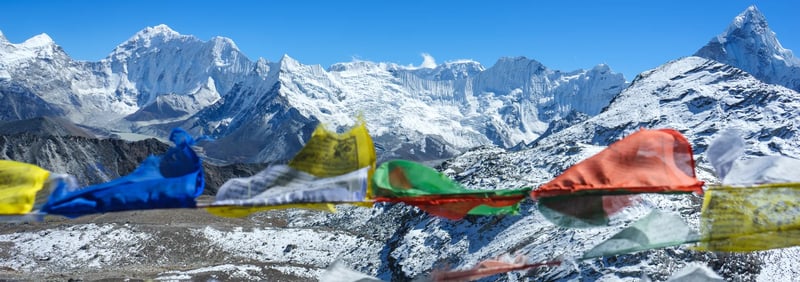
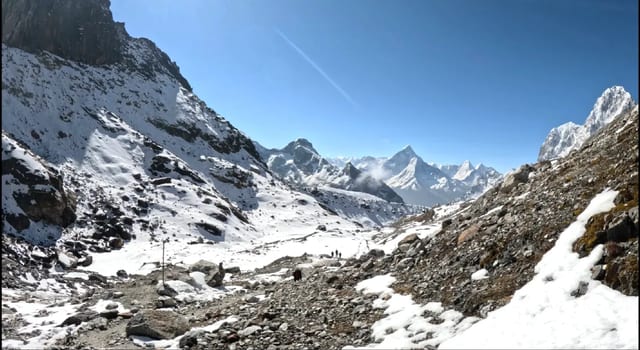
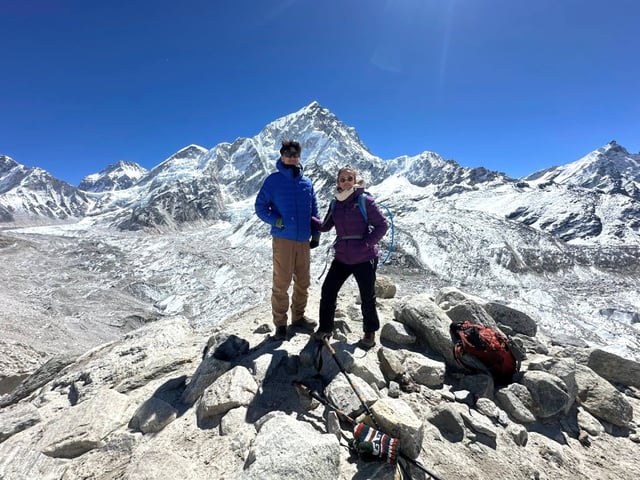
After several hours of continuous ascending, you arrive at the summit of Kongma La Pass at 5,528 m (18,136 ft). The views of the glaciers, ice-filled valleys, and the Himalayan surrounding peaks are dramatic and can be viewed from the pass. When you have had enough sightseeing, you then start a gradual slide down through the rocks.
The path ultimately reaches Khumbu Glacier and goes to the Lobuche village at 4,940 m (16,207 ft). This is a tedious day that offers you some of the most impressive mountain scenery of the whole trek.
You are walking all day today up the rocky stages on either side of the Khumbu Glacier. The scenery turns rugged towards Gorakshep at 5,164 m (16,942 ft). Upon arrival, you have lunch and have a short rest, then you move on to Everest Base Camp.
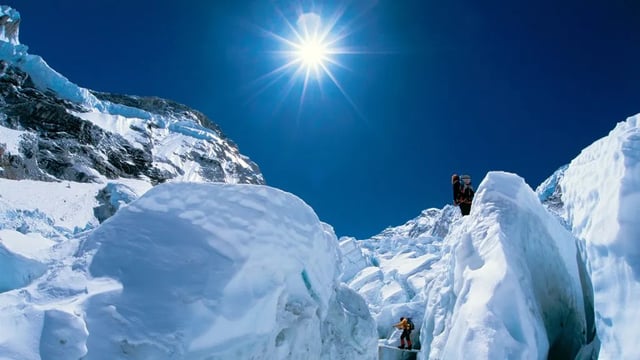
The route takes the path along the rim of the glacier with spectacular scenery of ice groups and neighboring mountains. To take a walk up here, one has to take their steps carefully and gradually. Then, you arrive at Everest Base Camp 5,364 m (17,598 ft), which is a popular tourist spot where mountaineers train to climb the summit.
You are taking photos, and you are in a strong mountain mood. Having spent some time there, you come back to Gorakshep for the night and have a nice meal at the lodge.
You get up before sunrise and get ready to climb a difficult ridge, Kala Patthar. The mountain path takes one to a viewpoint of 5,545 m (18,192 ft), one of the best places to view Mount Everest and other surrounding peaks in the early morning light.
You see the beautiful sunrise, and you come down to Gorakshep at 5,164 m (16,942 ft) to have breakfast. You carry on with your trekking later on to Dzongla.
The road is through mountainous slopes and glacial landscapes with extensive mountain views. The breathing is also tough, and that is why your guide should recommend a steady and slow pace.
It is one of the most exquisite days of the trek. You leave Dzongla and start climbing to the Cho LaPass. The path is steep and climbs rocky mountains and at parts traverses icy surfaces, hence caution is necessary.
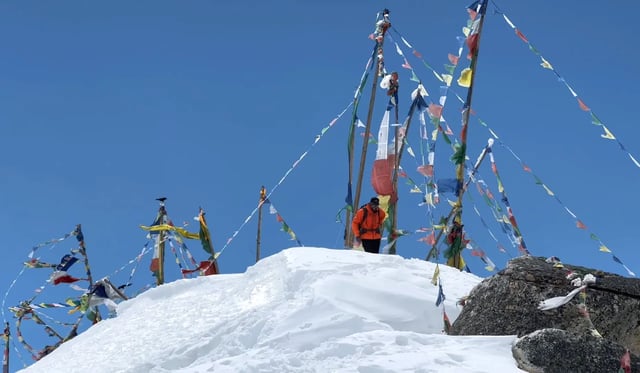
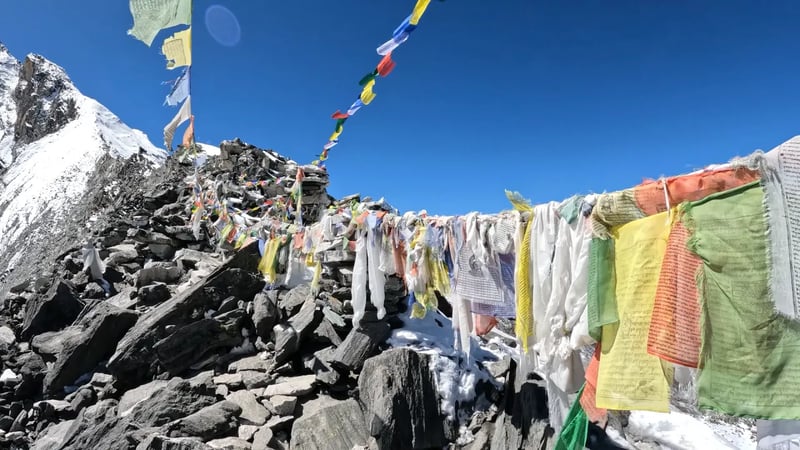
The higher you go, the more dramatic the views are. You arrive at Cho LaPass, 5,368 m (17,611 ft), and there are colorful prayer flags. It is a good place to have a beautiful view of other peaks and glaciers.
Having clicked some photos and taken a short rest, you start the descent to Thangnag Kharka. The road passes glacial terrain and is then joined by a valley settlement at 4,700 m (15,420 ft). Being exhausted after a hard and tiring day, you rest at the lodge and have a warm meal.
The journey on this day is shorter and gives your body time to rest after your arduous pass crossing. Leaving Thangnag Kharkaat 4,700 m (15,420 ft), the path passes along a broad valley, and the glaciers and rocky hills can be seen. The trail goes across the Ngozumpa Glacier, which is the biggest glacier in the Himalaya.
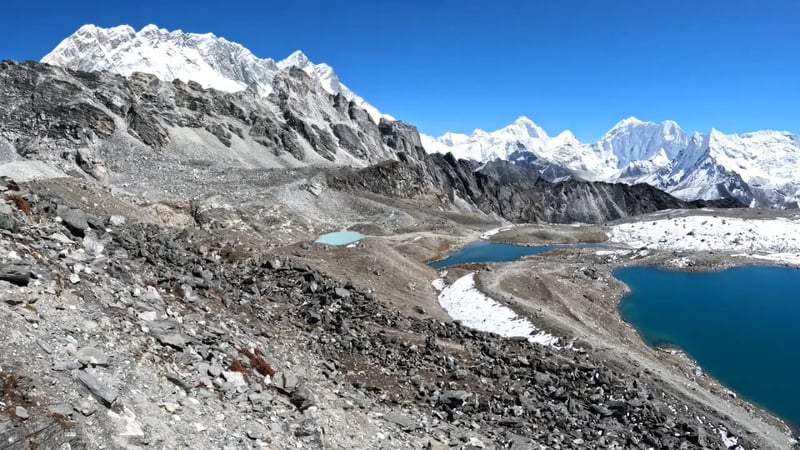
To cross the glacier, one has to take consistent strides on uneven surfaces. Once across, the path slowly ascends to the Gokyo Valley. Then, shortly, you are at the smooth turquoise waters of Gokyo Lake at 4,800 m (15,748 ft).
The snow-capped mountains all around and the calm atmosphere make for a very special atmosphere. You spend the afternoon by the side of the lake in the peaceful mountain setting.
It is an exploration and acclimatization day in the beautiful valley of Gokyo. In the morning, you ascend Gokyo Ri, a renowned viewpoint which overlooks the lake. It is not an easy route, andit will pay off in views at the summit, which is 5,357 m (17,575 ft).
From the top, one can see Everest, Lhotse, Makalu, Cho Oyu, and the long Ngozumpa Glacier. You then go back to the Gokyo village at 4,800 m (15,748 ft) after savoring the panoramic views and having breakfast. Later on, in the afternoon, you can walk around the quiet turquoise lakes around, the fourth and the fifth Gokyo lakes, provided time and weather permit.
This leisurely day allows the body to rest and yet see the beauty of the Himalayas.
You start early, as we have the last high pass on the trail today. The path ascends evenly up from Gokyo to Renjo La Pass. The higher you go, the better the view of Gokyo Lakes and other peaks around.
After some time, you are on the summit of Renjo La Pass at 5,360 m (17,585 ft). It is here that you can view Everest and numerous other Himalayan mountains that spread out on the horizon. When you are done resting and taking photos, you start the long descent to the valley of Marlung.
The air is less dense as you go down, and walking is less difficult. The trail crosses small stone houses and yak pastures, and then at 4,210 m (13,812 ft), you arrive at Marlung village, where you stay the night.
You are going down through the Bhote Koshi valley today. The path cuts across small Sherpa villages and mountain scenery. You lose the rocky alpine landscape, and as you walk further down, trees and greenery start appearing once more, much to your relief after several days of rocky mountain top landscape.
You go through the valley pathway with stops in villages like Thame at 3,820 m (12,533 ft), which is a typical Sherpa village of cultural significance to the Khumbu region. After a few hours of walking, the well-known town of Namche Bazaar comes into view. Namche is located at 3,446 m (11,306 ft) and provides nice accommodations, bakeries, and stores.
When you have arrived at your lodge, you can have a rest, a warm meal, and congratulate yourself on this great milestone of the trek.
This is the last day of your Everest Three High Passes Trek in the Everest region. You have left Namche Bazaar and follow along the old paths through the bushes and small hamlets. The trail passes over some suspension bridges adorned with prayer flags over the Dudh Koski river.
On the route, there are villages, like Phakding, at 2,610 m (8,563 ft), where you can have lunch and take a rest. The trail then proceeds with mild ascending and descending up and down pine forests and by the sides of rivers. You eventually get back into Lukla at 2,860 m (9,383 ft), where your trek started.
During the evening, you come together with your guide and porters to celebrate the completion of the Everest Three High Passes Trek and have a farewell dinner together.
You have breakfast in Lukla, after which you walk to the tiny mountain airport and wait to be picked up for your flight back. The flight is a short one that takes you to Kathmandu at 1,400 m (4,593 ft) from Luklaat 2,860 m (9,383 ft).
During the flight that takes approximately 35 minutes, you get to enjoy great aerial views of the hills, rivers, and the Himalayan peaks. Once you land in Kathmandu, you are driven to your hotel, where you can rest and enjoy the comforts of the city.
A special farewell dinner is arranged in the evening, where the achievement of your trek is celebrated. You eat traditional Nepali food, cultural music and dance and share tales of your adventure in the mountains.
Today is the last day of a journey in the Himalaya. You head out of Kathmandu after breakfast at your hotel. You can utilize the free time to relax or take a small walk around the area, depending on your flight schedule.
We then take you to Tribhuvan International Airport for your departure. On the way back, you will be able to think about the amazing experience you had in the Everest region. Exquisite villages, glaciers, Himalayan views and high mountain passes: you will never forget these memories for the rest of your life.
The Everest Three High Passes Trek comes to an end today, but the experience and inspiration will last long after you leave Nepal.
Most guests fly into Tribhuvan International Airport in Kathmandu. Share your arrival time ahead of travel so a Thamel hotel transfer can be arranged, or make your own way to the meeting hotel.
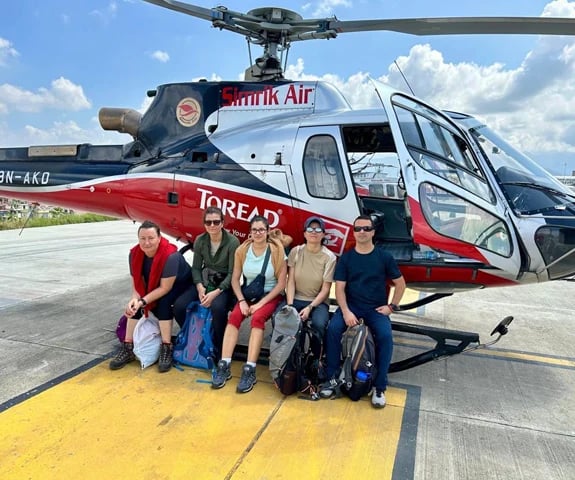
Pre-trek briefings usually take place in Kathmandu before the Lukla flight or helicopter sector. Allow extra days after the trek in case mountain flights are postponed by weather.
Twin or double rooms in a comfortable Kathmandu hotel cover your first nights and your return from the trail, with breakfast on those city stays when included in the package. Briefings happen at the hotel, and airport collection from Tribhuvan is available when flight times are shared in advance.
Family-run teahouses or lodges line the route with twin beds and a shared dining room. Rooms get simpler and colder as you climb, with shared bathrooms common at higher villages. Hot water, Wi-Fi, and charging are paid at the lodge when offered.
March to May rhododendron bloom and October to November crisp air are peak windows for this itinerary. July and August mean leeches and cloud on lower slopes; December to February can ice steps above village level.
Your guide reads the forecast before long cols or sunrise hikes. Shoulder weeks need an honest weather call before high passes or dawn viewpoints.
You should be comfortable walking several hours a day on uneven paths with a daypack, including steady uphill sections as you gain height. Hill training and longer weekend walks in the months before travel help your legs and lungs on uphill trail days.
Hill training, stair climbing, and longer weekend hikes in the months before travel help your legs and lungs, even when acclimatisation days are built into the route. Break in boots before you fly and carry a light daypack on practice walks.
Guided trekking with licensed leaders, lodge nights on the trail, meals as described for walking days, and permits for the regions crossed are included when they are part of this trip. Domestic flights, porters, and airport transfers apply only when they are part of this trip.
Domestic flights, road transfers, porter support, and airport transfers apply only when they are part of this trip. Permits for the regions you cross are arranged in Kathmandu or Pokhara when included.
International flights to Nepal, visa fees, compulsory travel insurance, personal trekking clothing, snacks and drinks outside included meals, and tips for crew are not covered. Hot showers, Wi-Fi, and battery charging in lodges are usually paid locally when offered.
Charges for hot showers, Wi-Fi, or battery charging in lodges are paid locally when offered unless your trip notes say otherwise. International flights, visa fees, and personal insurance stay outside the trek package.
Share your Tribhuvan arrival time ahead of travel for a Thamel hotel transfer, or make your own way to the meeting hotel in the capital. Thamel hotels are the usual meet point; drivers need flight numbers to meet you at the international terminal.
Briefings cover Lukla bag weight, porter duffle limits, and what to wear on the mountain flight. Weather can shift daily plans, so your guide keeps a steady pace with regular breaks.
The itinerary builds rest days and climb-high, sleep-low hikes where the route requires them. Your crew would rather wait for a safe window than rush marginal weather.
Tell your guide early if symptoms appear so tomorrow's stage can shorten or descent can start before conditions worsen. Trail conditions are checked each morning before the group moves.
Mountain weather can delay or postpone Lukla flights even in peak season, and Ramechhap diversions happen when the airstrip is congested. Allow a little extra time after the trek before international flights home in case mountain roads or flights move.
Build buffer days after the trek for international connections, and follow crew advice if schedules change or flights shift to Ramechhap. Monsoon cloud sits lower on the hills while winter brings ice on steps above village level.
Sagarmatha National Park and Khumbu municipality permits apply in the Everest region. The team arranges paperwork in Kathmandu or Pokhara when you provide passport copies and trek dates.
Keep copies in your daypack for checkpoint stops. Your crew would rather wait for a safe window than rush marginal weather.
Families join when children can manage the daily hours and terrain on this specific route. Pace and daily hours can be adjusted on private departures, though that may extend the calendar.
Ask our Kathmandu team if you are planning with younger walkers. Private departures can shorten daily hours, though that may add a day or two to the calendar.
Comprehensive travel insurance that covers trekking to the highest altitude on your itinerary, medical evacuation, and helicopter rescue when applicable is essential. Many standard policies exclude high altitude by name.
Read the wording before you travel so you can adjust cover if trekking above 5,000 metres is not named. Many standard policies exclude high altitude by name, so read the wording before you fly.
We partner with Rewilding Britain to help protect our natural spaces for future adventures.
All centres are vetted for safety and quality. Your adventure is in good hands with adventuro.
About the centre
Kathmandu
You'll travel with a Kathmandu-based team that plans treks, peak climbs, helicopter flights, motorbike journeys, and cultural trips across Nepal, Tibet, and Bhutan. Routes range from classic teahouse walks and high passes to luxury lodge itineraries and longer expedition-style climbs, with departures shaped around how you want to pace the mountains.
Licensed guides and office staff train regularly on mountain safety and guest care. Porters are insured, fairly paid, and equipped for the trail, with sensible load limits on lodge routes. We work with remote communities through sustainable tourism, including support for education in village areas, so your booking helps local people as well as your own adventure.
Operated by Himalayan Adventure Treks & Tours, a partner of adventuro.