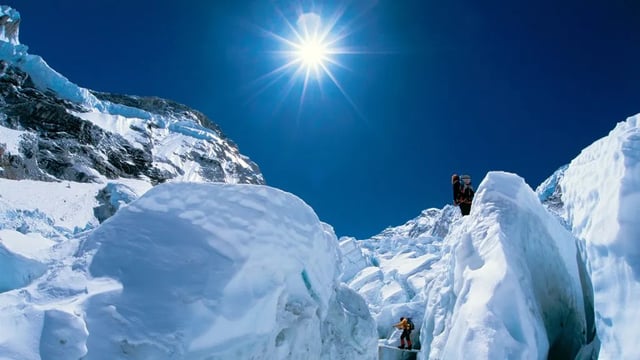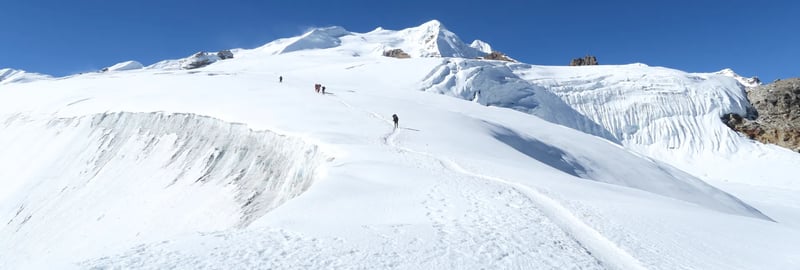
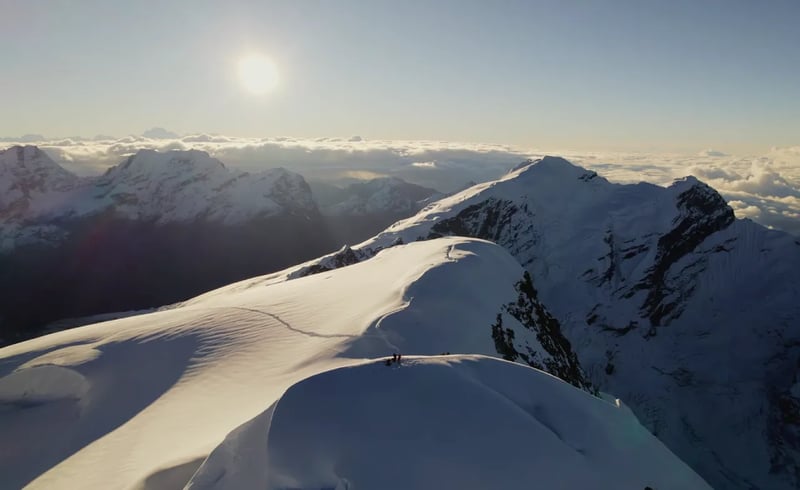
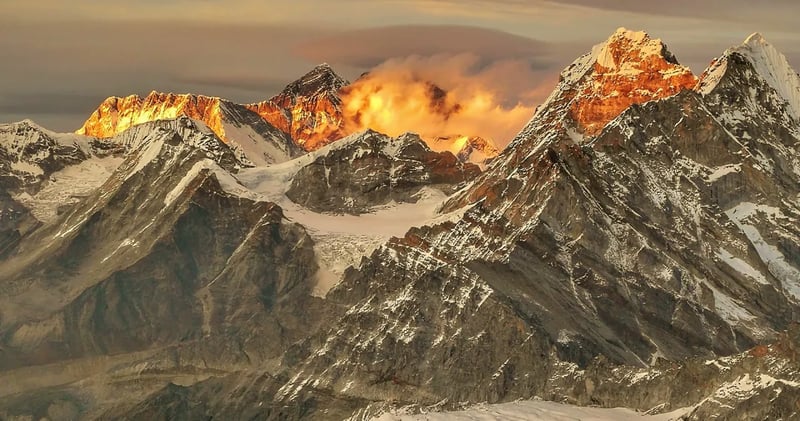
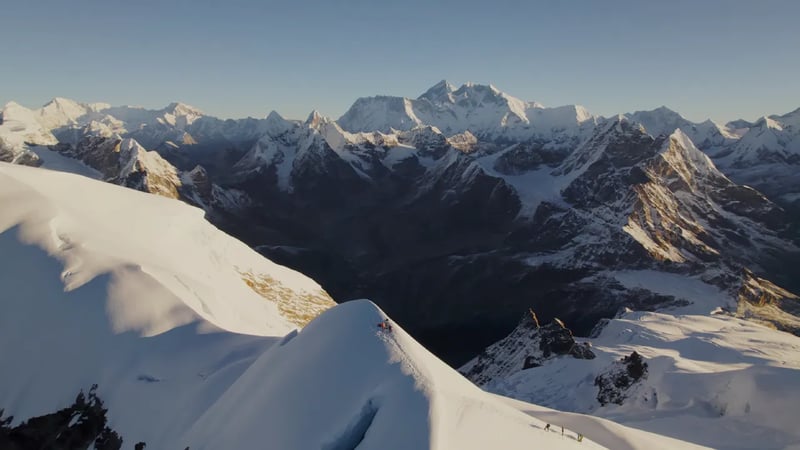
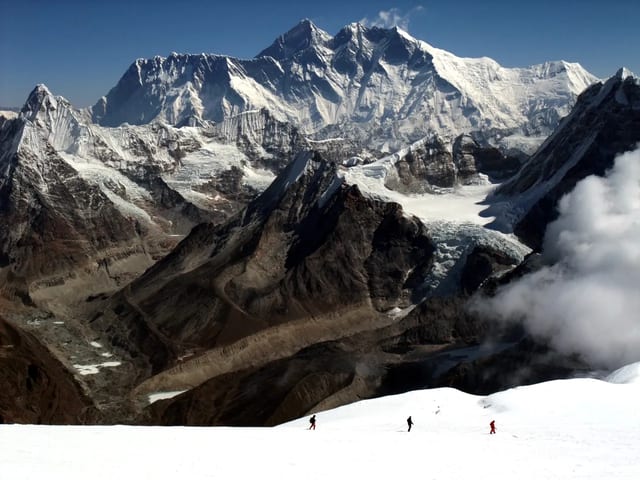
Mera Peak is reached via Lukla, Paiya, Panggom, and the Hinku valley to Khare and high camp, a longer wilderness approach than the main Khumbu trail. The central summit is a 6,000 m ski-slope of snow with Everest, Makalu, and Kanchenjunga on the horizon. The Hinku wilderness, Khare, and a midnight start on Mera’s snow slope open Everest, Makalu, and Kanchenjunga together.
Guides run glacier travel and a midnight start. You return down the Hinku and fly from Lukla after the summit day. This is the 6,000 m peak with the widest Himalayan horizon, reached through the Hinku wilderness to Khare.
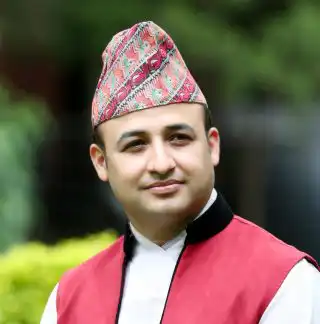
Bhagwat started as a porter in 1998, is a licensed guide, studied tourism in Nepal and the UK, and still leads groups when he can. On this Mera calendar your climbing sirdar trains you at Khare on crampons, jumar, and ice axe before the Mera La crossing. You'll fly to Lukla, then walk Paiya, Panggom, and the Hinku valley to Khare with Makalu Barun permits already filed.
High camp sits after the 5,415 m pass, and the midnight start aims at Mera Central around 6,461 m. We'll brief the Ramechhap diversion when Lukla flights shift, then share a daily plan if snow closes Zatrwa La on the walk out. The Hinku lodge list is booked from Kathmandu so Kothe and Thaknak nights are not left to chance.
Tashi Delek from one of the most remarkable Asian cities of Kathmandu. After a meet-and-greet program at TIA, our appointed correspondent will drive you through the exciting streets of the capital to your pre-booked hotel. Please gather your energy and take some moments to relieve yourself from the possible jet lag.
Our Mera Peak climbing program will begin only after all our participating climbers arrive at the hotel. You can utilize this time to get acclimatized to the new air of Kathmandu and walk around the hotel to get to know its wonderful locals.
In the morning, you will drive with our tour guide to see the religious aspects of Kathmandu. Pashupatinath temple, the Swayambhunath, and Boudhanath will immerse you in their saintly atmosphere. Then, you will drive to the old part of Kathmandu to its Durbar Square and see its rich legacy.
Now the afternoon will be devoted to the trip preparation. Our guide will inspect your gear to ensure you have everything you need, and will also assist you in purchasing or renting any items that may be lacking. ***Please retire early and get sufficient sleep as much as you can as we may have to initiate our journey at midnight.
It is because, during the peak trekking and mountain climbing season, flights to Lukla are often transferred from Kathmandu Airport to Ramechhap Airport to ease the traffic congestion at TIA.
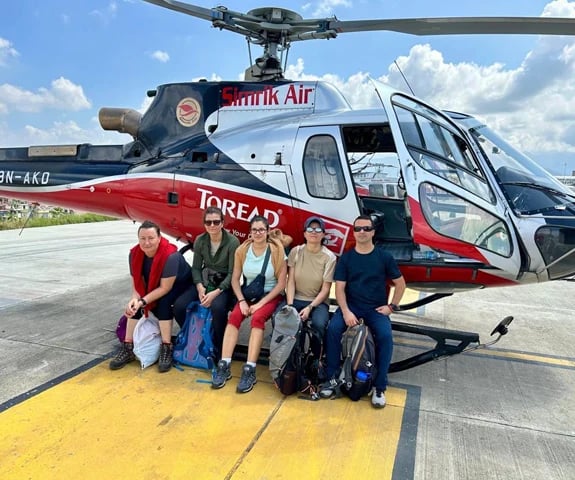
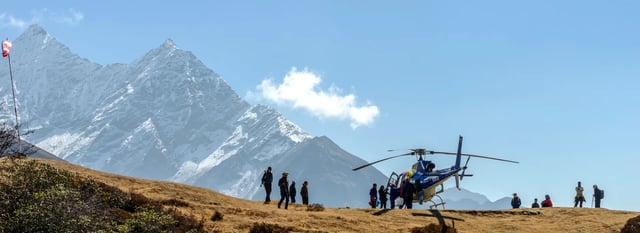
Get ready to experience one of the most beautiful yet mountain flights across the Manaslu, Kanchenjunga, and Everest to reach the Sherpa city of Lukla. The legendary Lukla Airport, also referred to as Tenzing-Hillary Airport offers such a landing experience that will rest in your memory for a long time.
As soon as you step off the aircraft, the enormous 6187 m high Kongde Ri along with the friendly faces of our Sherpa crew will greet you. After organizing your luggage, we will then set off towards our first mountain shelter at Paiya.
We will initiate our journey at daybreak and move down gently from Paiya towards the calm and clean waters of Paiya Khola. Here we will meet our first metal bridge suspended high in the air that will walk us over the khola and lead us to the ever-rising trail towards the 3081 m high Khari la Pass.
The beautiful profile of Khumbila Himal (5761 m), Gyanchung Kang (7952 m), along with Tham Danda (2344 m) can be admired from here. The trail will now follow a zigzagging route that ascends until we reach Lenjikharka.
We will now take the beautiful path full of lush vegetation, especially the rhododendron forests, the most emblematic flower of Nepal while below, the river of milky water, the Dudh Koshi will keep following us until we arrive at Panggom. From this village, we can clearly see the Everest trail that starts from Jiri.
Our great day of trekking starts with a climb to Panggom La Pass (3175 m). It will be about 4/5 hours of trekking (up and down the pass) during which we will have our first view of Mera Peak and Numbur Peak (6958 m). We will now make a steep descent from the pass and meet yet another lengthy steel bridge spanning over the graceful Hinku Khola.
Naulekh Peak (6240 m) will keep sparkling as we proceed towards Sibuje (2770 m). From here, we will continue up the forested river valley to Ningsow where we will sleep in a shelter that may not have many comforts but which will allow us to gather a unique experience in the middle of nature.
We will start our day with a steep climb to a refuge called Ramailo Danda which stands at 3120 m altitude. True to its name, it certainly offers incredibly views of the Mera Himal along with 6367 m Kusum Kanguru.
We will get down from the ridge and descend onto a winding path that rises and falls frequently, leading us to the serene Tama Khola. We will once again cross the bridge and walk gently for about 30 minutes to reach 4G Danda, a delightful spot for a cup of tea.
The expansive green scenery, filled with bamboo and rhododendrons will then advance us forward to Chhatra Khola. From here on, we are officially inside the nature reserve of Makalu Barun National Park.
Our upward journey will continue for approximately one hour and forty-five minutes through the lush rhododendron forests and moss carpets till we reach the gentle incline. It will be followed for the next three to four hours until we arrive at Taktor. Hinku Khola will serenely flow beside us as we travel toward the charming hamlet of Tashing Dingma.
Next, our adventure will take place on the expansive bridge arching the Sanu Khola. A two to three more hours of gentle walk and we will be in the enchanting realm of Kothe.
Today, we will see the gradual disappearance of the forest as we ascend to greater heights. We will deliberately take the gentle pace today so we can adapt to the 4000 m elevation that we will be reaching today at Thaknak.
Our faithful companions Hinku Khola will once again be guiding us till we make it up to the higher grasslands of Drangka situated west of Hinku Khola. Here, we may even meet a few shepherds and their cozy little houses made from natural materials such as wood and leaves.
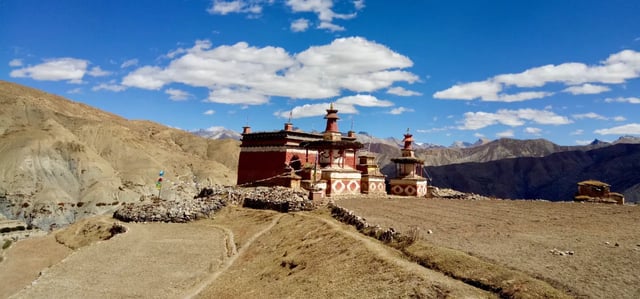
As we progress, we will stumble upon the lonely old town of Gondishung. A little further, we will discover the small Buddhist sanctuary of Lungsumgba built in a cave.
We have yet another acclimating walk today as the day of our Mera peak attack is approaching. After Thaknak, we will take on a steady uphill journey that will last for around half an hour.
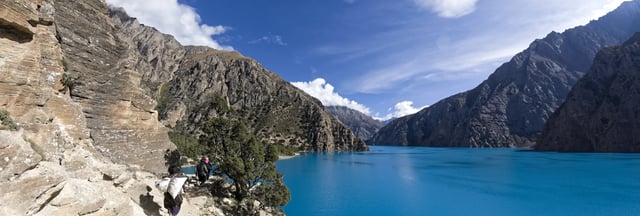
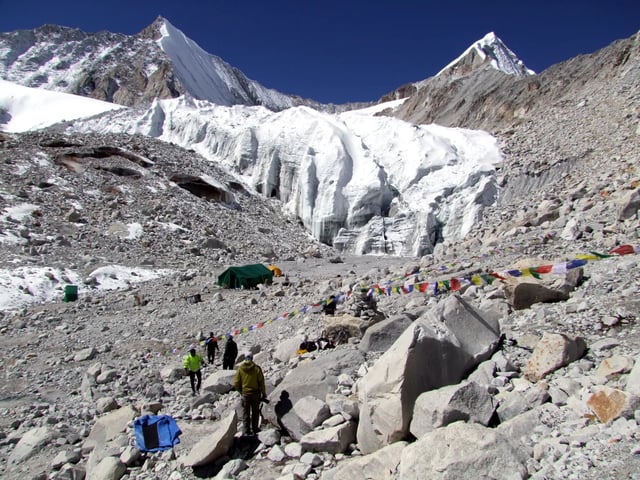
We have reached the shore of the Sabai Tsho Tal to the 4463 m high glacial lake which will no doubt be etched in our mind for a very long time. Now, treading very carefully, we will walk by the side edge of the Kharka Glacier which will lead to the vertical climb of another remarkable Hinku Nup Glacier.
Today we have a very well-deserved rest day at Khare which we will take advantage of by practicing our safety and progression techniques. Our guide will once again check the gear, and then show us the proper technique to walk on crampons, ropes, railings, and the proper technique of using the ice axe, jumar, and ascenders.
After the training, we may go for a little practice of our skill by climbing the ridge at 5300 m not far from the camp. Mera La Pass and Mera Peak to our two upcoming challenges will be right next to us.
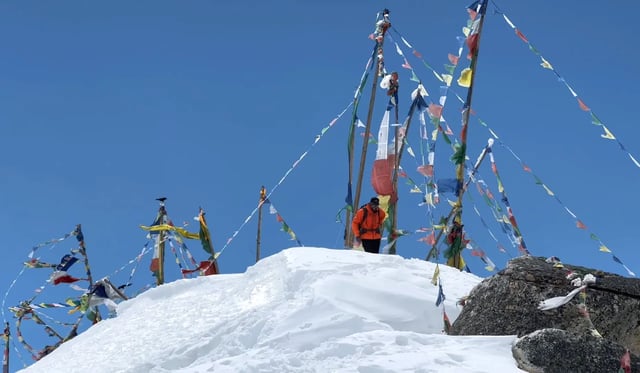
We will start from Khare with the intention of reaching the high camp of Mera Peak after about six to seven hours of trekking. The path ahead will be not an easy feat, it will be steep, it will be challenging, slippery, and sharply upward which will lead us atop Mera La Pass (5415 m).
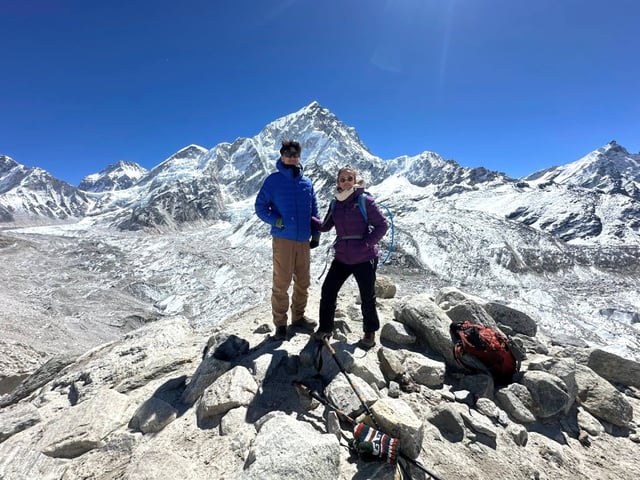
En route, we will start to see the figures of Lhotse, Makalu, and Everest. Some climbers often choose to set up their camp about 100 m below the Pass but it will necessitate an extra cold night inside the cold tent.
So we will bypass this option and progress forward through the Mera and Naule Glaciers to arrive at Mera High Camp. Our crew will quickly set up the warm tents for us, in the meanwhile we will gaze at the framework of Makalu, Everest, Lhotse, Pumori, Ama Dablam, Nuptse, Baruntse, Chamlang, Kusum Khangkaru, and Cho Oyu that will momentarily distract us from the biting cold.
Finally, the long-anticipated day of our Mera Peak climbing itinerary is here. In the early morning hours of around 3 am, we will leave our warm sleeping bags and put on our down jackets, warm boots, harnesses, crampons, and headlamps. After all our team members are ready, we will set on in the faint glow of our headlamps.
At first, there will be a sharp vertical ascent which we will tackle with the rope. Remember, we need to maintain a safe distance from one another. If there is clear weather, certainly a gaze at the sky is worth it as we can see countless shining stars as if already celebrating our success.
Slowly, the sun also start to emerge from the east, helping us to tackle the treacherous icy terrain that leads to the ridge.
We will proceed down to Thaknak following the same route we previously took and then advance to Kothe. We will still have the outstanding view of Mera still following us.
Truly, it really was an extraordinary experience, in the evening, we will celebrate with a toast to our successful climb of Mera.
After the long snowy and icy terrain, we will be returning to the lush monsoon forest today and once again will be breathing the oxygen-rich air. Traversing the western side of the Hinku Valley, we will take the route that ventures through the pine forests. Here and there, we can see some clearings where we can still observe the Mera now increasingly getting farther and farther.
After a descent of nearly 2000 m, we will be in Taktor where we will be in a familiar tea house for a lunch break. Now, turning right, our path will ascend one more time through the grassy and rocky landscape.
One last climb of our Mera Peak climbing itinerary awaits us today. In the morning, we will begin our climb up the Naulekh Himal ridge.
The steeper trail along the rugged terrain will not stop inclining leading us to the 4600 m high enormous pass of Zatrwa La. Cho Oyu, Numbur, Kongde, Kusum Kanguru and other majestic Himalayan outlines decorate the skyline as we take on the long descent to Chutanga.
Lukla is now a three-hour journey away, where a long-awaited hot shower and a comfortable bed in the guesthouse await us. In the evening, we will part ways with our porters and celebrate what we hope is a successful expedition together.
We will travel back to Kathmandu from Lukla through a local flight. If the flights to Kathmandu are unavailable, we will land at Ramechhap Airport and drive for about 4 hours to our hotel in Kathmandu where we can once again indulge in complete comfort.
You can enjoy the leisurely afternoon or engage in shopping, soothing massage, or continue to explore the city. In the evening, we will gather for dinner at an excellent restaurant, where we can reflect on the pleasant experiences of our journey.
Depending on the schedule, you will take one last look at Nepal and its Himalayas and then depart to land in your home.
Fly into Tribhuvan International Airport in Kathmandu unless the itinerary uses another regional hub. Airport or hotel pickup can be arranged when you share arrival details ahead of travel.
Briefings cover road or domestic travel to the trailhead. Build buffer time before onward international flights in case mountain weather shifts the schedule.
Twin or double rooms in a comfortable Kathmandu hotel cover your first nights and your return from the trail, with breakfast on those city stays when included in the package. Briefings happen at the hotel, and airport collection from Tribhuvan is available when flight times are shared in advance.
Family-run teahouses or lodges line the route with twin beds and a shared dining room. Rooms get simpler and colder as you climb, with shared bathrooms common at higher villages. Hot water, Wi-Fi, and charging are paid at the lodge when offered.
March to May rhododendron bloom and October to November crisp air are peak windows for this itinerary. July and August mean leeches and cloud on lower slopes; December to February can ice steps above village level.
Your guide reads the forecast before long cols or sunrise hikes. Shoulder weeks need an honest weather call before high passes or dawn viewpoints.
You should be comfortable walking several hours a day on uneven paths with a daypack, including steady uphill sections as you gain height. Hill training and longer weekend walks in the months before travel help your legs and lungs on uphill trail days.
Hill training, stair climbing, and longer weekend hikes in the months before travel help your legs and lungs, even when acclimatisation days are built into the route. Break in boots before you fly and carry a light daypack on practice walks.
Guided trekking with licensed leaders, lodge nights on the trail, meals as described for walking days, and permits for the regions crossed are included when they are part of this trip. Domestic flights, porters, and airport transfers apply only when they are part of this trip.
Domestic flights, road transfers, porter support, and airport transfers apply only when they are part of this trip. Permits for the regions you cross are arranged in Kathmandu or Pokhara when included.
International flights to Nepal, visa fees, compulsory travel insurance, personal trekking clothing, snacks and drinks outside included meals, and tips for crew are not covered. Hot showers, Wi-Fi, and battery charging in lodges are usually paid locally when offered.
Charges for hot showers, Wi-Fi, or battery charging in lodges are paid locally when offered unless your trip notes say otherwise. International flights, visa fees, and personal insurance stay outside the trek package.
Share your Tribhuvan arrival time ahead of travel for a Thamel hotel transfer, or make your own way to the meeting hotel in the capital. Thamel hotels are the usual meet point; drivers need flight numbers to meet you at the international terminal.
Briefings cover Lukla bag weight, porter duffle limits, and what to wear on the mountain flight. Weather can shift daily plans, so your guide keeps a steady pace with regular breaks.
Guides set a steady pace and watch for headache, nausea, or dizziness as you gain height. Trail conditions are checked each morning before the group moves.
Tell your guide early if symptoms appear so tomorrow's stage can shorten or descent can start before conditions worsen. Your crew would rather wait for a safe window than rush marginal weather.
Jeep or bus days to the remote trailhead are arranged when they are part of your package. Your guide confirms departure times at briefing.
Motion sickness medicine helps on winding mountain roads. Allow a little extra time after the trek before international flights home in case mountain roads or flights move.
National park or restricted-area permits apply depending on the valleys you cross. The team arranges paperwork in Kathmandu or Pokhara when you provide passport copies and trek dates.
Keep copies in your daypack for checkpoint stops. Monsoon cloud sits lower on the hills while winter brings ice on steps above village level.
Families join when children can manage the daily hours and terrain on this specific route. Pace and daily hours can be adjusted on private departures, though that may extend the calendar.
Ask our Kathmandu team if you are planning with younger walkers. Private departures can shorten daily hours, though that may add a day or two to the calendar.
Comprehensive travel insurance that covers trekking to the highest altitude on your itinerary, medical evacuation, and helicopter rescue when applicable is essential. Many standard policies exclude high altitude by name.
Read the wording before you travel so you can adjust cover if trekking above 5,000 metres is not named. Many standard policies exclude high altitude by name, so read the wording before you fly.
We partner with Rewilding Britain to help protect our natural spaces for future adventures.
All centres are vetted for safety and quality. Your adventure is in good hands with adventuro.
About the centre
Kathmandu
You'll travel with a Kathmandu-based team that plans treks, peak climbs, helicopter flights, motorbike journeys, and cultural trips across Nepal, Tibet, and Bhutan. Routes range from classic teahouse walks and high passes to luxury lodge itineraries and longer expedition-style climbs, with departures shaped around how you want to pace the mountains.
Licensed guides and office staff train regularly on mountain safety and guest care. Porters are insured, fairly paid, and equipped for the trail, with sensible load limits on lodge routes. We work with remote communities through sustainable tourism, including support for education in village areas, so your booking helps local people as well as your own adventure.
Operated by Himalayan Adventure Treks & Tours, a partner of adventuro.