
We partner with Rewilding Britain to help protect our natural spaces for future adventures.
All centres are vetted for safety and quality. Your adventure is in good hands with adventuro.


Thirteen days cover the same Budhi Gandaki country as the longer circuit: Machha Khola after the Thamel briefing, then Jagat, Deng, Namrung, Syala, Samagaun, Samdo and Dharmasala. Walking is often five to seven hours on gorge path and high pasture. Larkya La is still the high point, with an early start and a long drop to Bhimthang and Tilche before the road return via Besisahar.
Pass day still starts early, but there is one fewer spare night if weather or a tired day slows the group. Restricted-area paperwork is filed in Kathmandu before you leave. Teahouse nights and porter support stay in place, walking-day meals are included, and the pass approach needs a tighter walking rhythm than the fourteen-day version.
Conservation and restricted-area permits, the road transfers and a licensed leader are arranged as one circuit, not as add-ons on the trail. Briefing time goes through the shorter calendar and what happens if the pass needs an extra night. Small-group guiding stays with you from Machha Khola to the drive out.
Poor conditions on the col mean waiting, not pushing. Porters, lodge bookings and the Besisahar exit are handled from Kathmandu so the walking days stay focused. If a lodge is full or the pass needs a hold, that decision is made on the mountain.
Long drive into the Budhi Gandaki valley to Machha Khola (about 869 m) where the trek begins.
Road journeys in Nepal can be long and winding; secure daypacks, carry snacks, and expect photo stops at river valleys or hill viewpoints. Motion sickness tablets help if you are sensitive.
Meet your trekking crew at the roadhead, confirm bag labels for porters, and have lunch or tea before the first walking day when the schedule allows.
The Budhi Gandaki gorge begins in earnest as you walk from Machha Khola toward Jagat. Waterfalls, suspension bridges, and Gurung hamlets set the Manaslu rhythm.
Manaslu country feels quieter than the busiest Annapurna or Everest routes. Respect local customs around gompas and mani walls.
Carry rain gear even when mornings look clear; the gorge can stay damp after overnight showers.
The trail stays close to the river through forest and terraces toward Deng. Villages grow more Tibetan in character as you gain height.
Long gorge days reward a steady pace and frequent water breaks. Lunch is usually in a riverside teahouse.
Tell your guide about any blister or knee niggle early so tomorrow's stage can be adjusted.
You walk at a comfortable pace, with tea stops and altitude checks along the way.
Walking pace stays steady with breaks for water, snacks, and photos. Lunch is usually in a teahouse en route; dinner and breakfast are at the lodge where you sleep, often dal bhat or hot noodle dishes.
Carry rain gear and layers in your daypack even when mornings look clear. Tell your guide about headaches, nausea, or knee pain early so tomorrow's stage can be adjusted if needed.
Samagaon (Samagaun) is the cultural heart of the circuit, with a wide valley, monastery, and views straight to Manaslu. Lodge nights here usually include an acclimatization hike.
Manaslu country feels quieter than busier trails, with Tibetan-influenced villages and long valley walks.
Use the evening to rest and hydrate. Your guide outlines the Pungen Gumba or similar hike if tomorrow is a rest day.
Rest day at Samagaun with optional hike toward Manaslu Base Camp (4,800 m) for acclimatization.
Manaslu country feels quieter than busier trails, with Tibetan-influenced villages and long valley walks.
Use the evening to rest and hydrate. Your guide outlines the Pungen Gumba or similar hike if tomorrow is a rest day.
A shorter valley walk leads to Samdo, a border village with views toward Tibet. This is a useful acclimatization night before Dharmasala and Larkya La.
Respect local customs around gompas and mani walls. The air is thinner; keep the pace easy.
Pass days demand early starts later in the week. Trust the crew if they add a rest day here.
A short climb to Dharmasala (Larkya Phedi) puts you under the pass. Lodges are basic; eat well, hydrate, and prepare layers for a very early start.
Pass days start early while snow is firm and storms are less likely. Pack snacks, gloves, and sun protection; the ridge can feel windy even when valleys below are calm.
Your guide sets the turn-back time before you leave camp. If snow, ice, or symptoms appear, the team may wait, reroute, or add a rest day rather than push the col in unsafe conditions.
Cross Larke Pass (5,106 m) from Dharmasala to Bhimthang on the published pass day.
Pass days start early while snow is firm and storms are less likely. Pack snacks, gloves, and sun protection; the ridge can feel windy even when valleys below are calm.
Your guide sets the turn-back time before you leave camp. If snow, ice, or symptoms appear, the team may wait, reroute, or add a rest day rather than push the col in unsafe conditions.
You walk at a comfortable pace, with tea stops and altitude checks along the way.
Walking pace stays steady with breaks for water, snacks, and photos. Lunch is usually in a teahouse en route; dinner and breakfast are at the lodge where you sleep, often dal bhat or hot noodle dishes.
Carry rain gear and layers in your daypack even when mornings look clear. Tell your guide about headaches, nausea, or knee pain early so tomorrow's stage can be adjusted if needed.
Jeep and bus connections from Tilche back to Kathmandu to finish the thirteen-day loop.
Road journeys in Nepal can be long and winding; secure daypacks, carry snacks, and expect photo stops at river valleys or hill viewpoints. Motion sickness tablets help if you are sensitive.
Meet your trekking crew at the roadhead, confirm bag labels for porters, and have lunch or tea before the first walking day when the schedule allows.
Kathmandu meeting, briefing, and road transfer to the trailhead as on the fourteen-day route. Plan flexible international departures after day thirteen.
Prior multi-day trekking experience is strongly recommended for this pace.
Return from Besisahar lands you back in a Thamel twin or double with a private bathroom, the same standard as the night before the Machha Khola drive. Airport collection is available when flight times are shared. City time is for kit and permit copies before the long road day.
Beds are limited on this restricted trail, so lodge space is held from Kathmandu even though there is one fewer spare night than the fourteen-day circuit. Family-run teahouses, shared dining rooms and increasingly basic rooms toward Dharmasala and Bhimthang are the pattern. A warm bag is essential. Hot water and charging, when they exist, are paid locally.
You still cross Larkya La and walk the same gorge and village country, but spare nights are fewer, so walking stages feel longer on average.
Choose this pace only if you already handle consecutive big hill days. If you want more rest around Samagaon, the fourteen-day circuit is the kinder calendar.
Yes. The high col remains the heart of the circuit, with the same weather calls and turn-back rules as on the longer itinerary.
Guides will wait or add a night if snow, ice, or symptoms make the alpine start unsafe. Reaching the prayer flags in good order matters more than the clock.
Restricted-area and conservation permits are arranged in Kathmandu before the drive to Machha Khola, using your passport copies and dates.
You cannot start the Budhi Gandaki walk without those papers. The briefing includes a document check so nothing is missing at the first checkpoint.
This calendar is for experienced trekkers who are happy with long gorge days and an early pass morning, then a long descent toward Tilche.
Train on consecutive weekends with a pack. If you are unsure, send a short note on recent trips through Adventuro Chat and we will be honest about the pace.
Spring and autumn give the best mix of pass conditions and village lodge warmth. Deep winter and monsoon are harder on this tighter timetable.
Shoulder weeks can work for strong groups. Ask us about snow reports for your month so you are not surprised by ice on Larkya La.
High-altitude trekking and helicopter evacuation cover is essential, including the pass day above 5,000 metres.
Carry printed details. Restricted-area language should be clear, and your guide needs an emergency number that works from a Nepali phone.
Teahouse rooms stay simple throughout, and near the pass they can feel basic, with shared dining stoves and limited washing water.
If weather forces a camp-style night close to Larkya La, the crew will explain it early. A warm bag and head torch make those evenings far easier.
Yes, on a guided departure with the required restricted-area staffing. A single guest can still start when dates and permits line up.
Private dates for two or more are possible when lodge space allows. Message Adventuro Chat with your month and we will check the road and permit timing.
Trek days are full board as per your confirmation, with breakfast and dinner at the lodge and lunch along the river or in a pass-side teahouse.
Carry snacks for the Larkya La morning when you start before kitchens open. Tell us dietary needs before Kathmandu so the cook and lodges can plan.
We meet in Kathmandu for the briefing, then drive to Machha Khola. Airport or Thamel pickup is arranged when you share arrival times.
The road day is long and winding. Motion sickness tablets and a light lunch stop help if you are sensitive on hill highways.
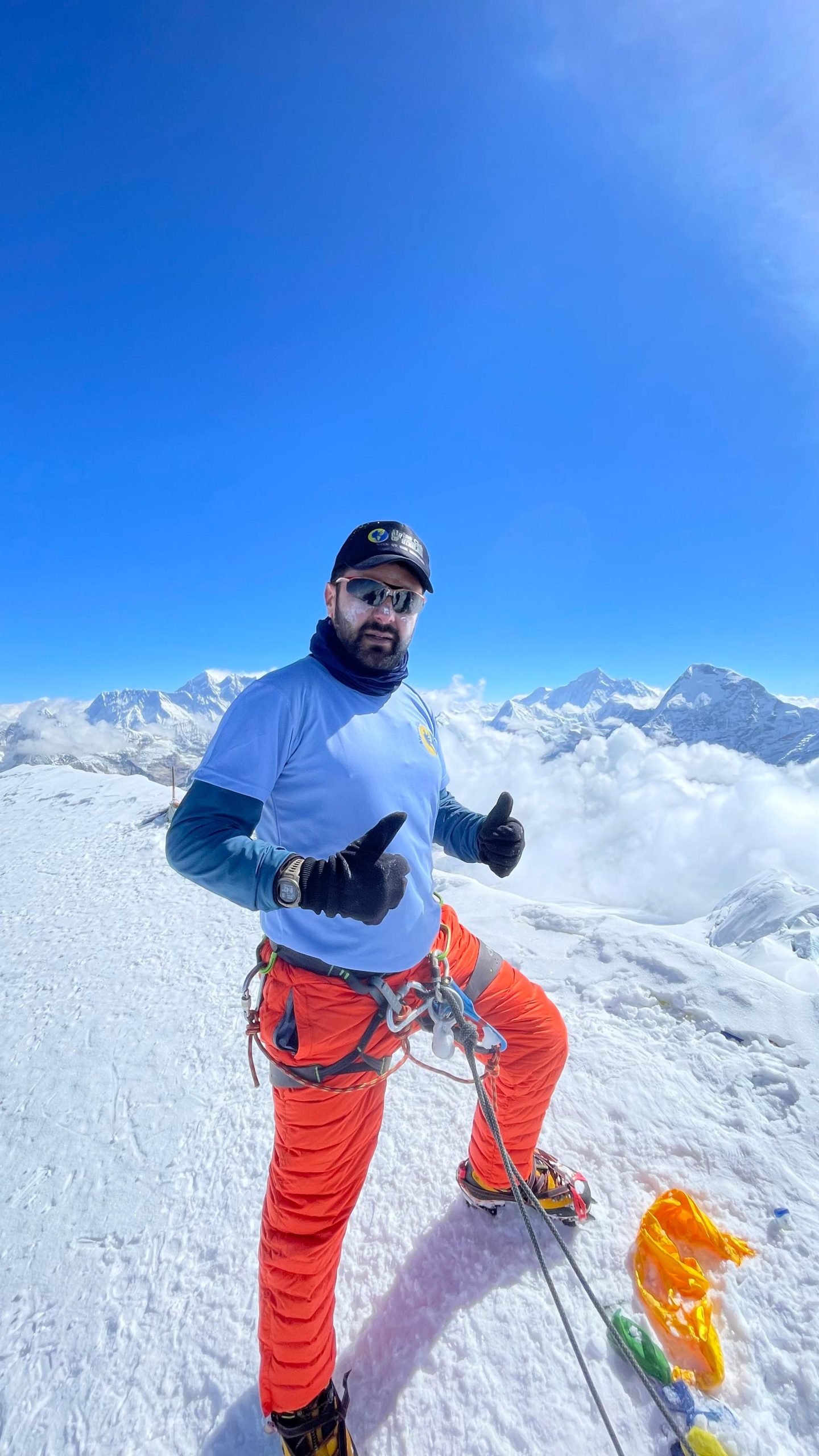
Over het centrum
Kathmandu
We are a Kathmandu-based team of licensed trekking and mountaineering guides who lead small groups through the Everest, Annapurna, Manaslu, and peak-climbing routes of Nepal. Every itinerary is built around steady acclimatization, reliable local logistics, and tea-house or lodge nights that keep you comfortable after long days on the trail.
From your arrival briefing in Thamel to the flight to Lukla or the roadhead for western circuits, we handle permits, domestic connections, porter support, and experienced lead guides who know these valleys season by season. Whether you are aiming for a classic base camp, a high pass, or a summit attempt, we focus on safety briefings, realistic pacing, and warm Sherpa hospitality so you can enjoy the journey as much as the destination.
Uitgevoerd door Alpine Club of Himalaya, een partner van adventuro.


