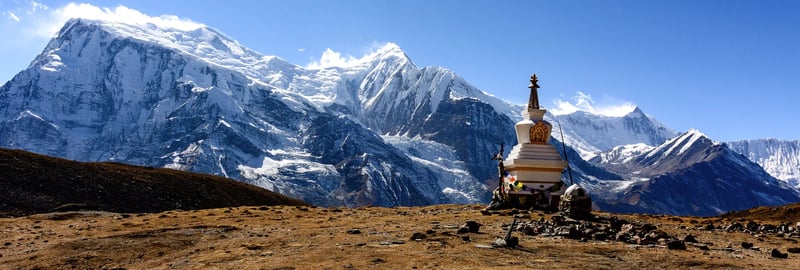
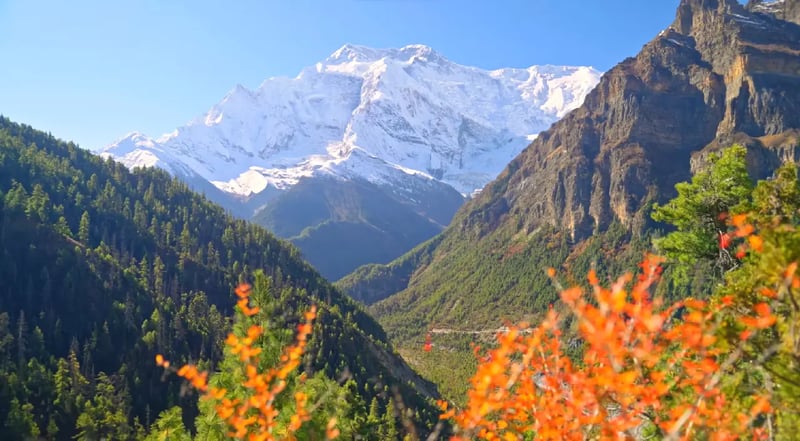
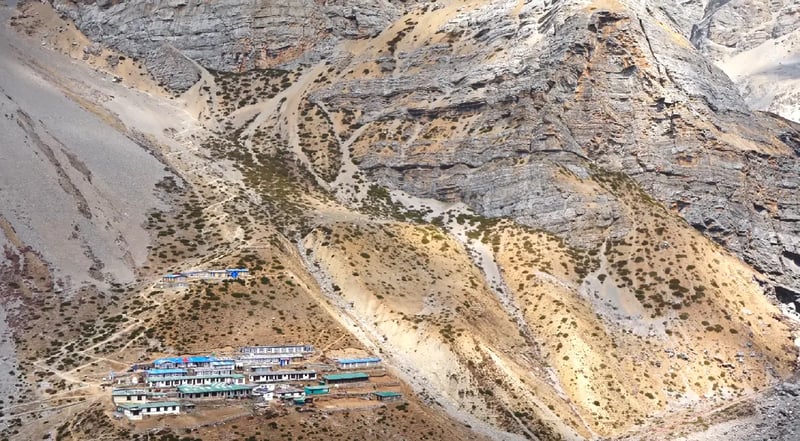
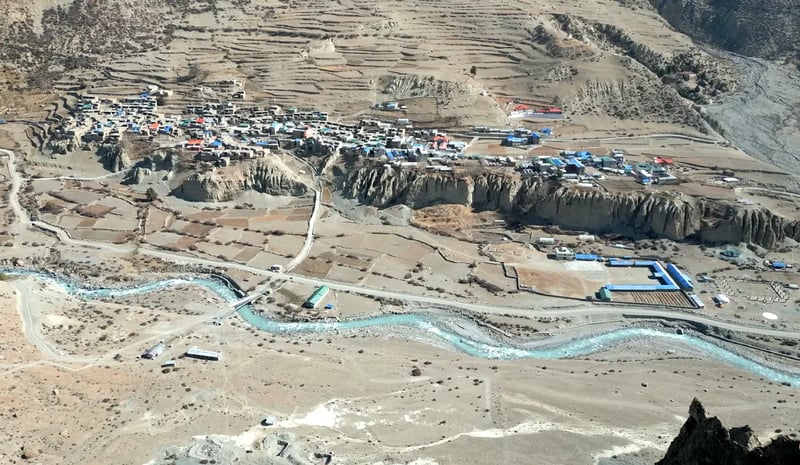
A semi-circuit walks the Marsyangdi through Pisang and Braga to Manang, then crosses Thorong La toward Muktinath and the Kali Gandaki. You still get the high-desert rim and Gangapurna views on a shorter calendar than the classic loop. Pisang, Braga, and Manang still give you the Marsyangdi high desert and Gangapurna views.
Manang rest, the pass morning, and a jeep or flight from Jomsom keep the finish efficient. Teahouses change from green valley lodges to dry-side rooms as you cross the massif. Thorong La, Muktinath’s waterspouts, and a Jomsom jeep or flight close the shorter loop.
A security deposit is held with the Ministry of Tourism for guest protection, and our crews are insured while they are on duty. You'll drive Kathmandu to Besisahar and on to Dharapani, then walk Chame, Pisang, and Manang with a Gangapurna rest day before Yak Kharka and Thorong Phedi.
We'll time Thorong La so Muktinath is the planned crossing, then take you on to Pokhara rather than walking the Kali Gandaki to Nayapul. Our office keeps this shorter circuit on one desk so the pass morning is treated as the high point, not an optional skip.
On the first day of the Annapurna Semi Circuit Trek, we arrive at Tribhuvan International Airport in Kathmandu around midday. No trekking happens today, you just clear immigration, collect your bags, and meet our representative outside the terminal. A private transfer waits for you; thus ride to the hotel for the night takes 30 minutes. Motorcycles weave through gaps as the roads are quite busy in Kathmandu. Your hotel room is simple and clean.
Air conditioning hums softly as you enter the room and prepare to rest. You should check your gear and see if you have anything missing. We confirm tomorrow’s early departure, the guide will give you the details. Altitude gain. We eat a light meal at the hotel, most likely Dal bhat and tea, before heading to bed.
Tomorrow we drive six hours to Besisahar, so we need to rest. We recommend trekkers pack their daypack with sunscreen, a hat, a water bottle, and snacks. We leave our unnecessary heavy packs at the hotel.
Day 2 of the Annapurna Semi Circuit Trek takes you from Kathmandu to Besisahar by road. You leave early, usually before dawn, to avoid traffic. The drive covers about 170 kilometers and lasts six to seven hours. Roads are narrow and winding, with trucks, buses, and livestock sharing the route. You pass through terraced hillsides, small villages, and rivers cutting through deep gorges.
The terrain shifts from the flat Kathmandu Valley to the rising foothills of the Himalayas. As you climb, the air cools, and the greenery thickens. Rice fields give way to maize and millet after we cross the Trishuli River on a sturdy bridge. The river churns white with meltwater, a distinct view for most. The bus stops for lunch in Mugling, a busy junction where the Prithvi Highway meets the road to Pokhara.
You arrive in Besisahar as the sun drops behind the hills. The town sits at the edge of the Annapurna region. It is the last real town before the trail begins.
The following day of the Annapurna Semi Circuit Trek takes you from Besisahar to Dharapani, a 16-kilometer drive that lasts about two to three hours. You start on a wide road, but soon leave it behind for narrow trails climbing steadily through terraced fields and small villages. The path winds past waterfalls, bamboo groves, and stone houses with red-tiled roofs. You cross the Marshyangdi River twice on suspension bridges; one is long and sways slightly underfoot. The trail gains 1000 meters in elevation, mostly steadily, with no steep scrambles.
You pass through Chaurikharka and Bahundanda, where locals sell boiled eggs and tea from open-air stalls. The air cools as you rise above the valley floor. By late afternoon, you reach Dharapani, a quiet village with basic teahouses and views of snow peaks to the north. Most trekkers rest here after a full day of walking. The trail is well marked, often crowded with porters and other hikers.
No technical gear is needed, just wear good boots and carry enough water. The descent into the river gorge early in the day feels long and the final climb out feels harder. But Dharapani welcomes you with warmth, hot meals, and quiet nights.
The 4th day of the Annapurna Semi Circuit Trek starts at Dharapani at 1860 meters. You hike 13 kilometers to Chame at 2675 meters. The trail climbs steadily through rhododendron forests and rocky switchbacks. We cross the Marsyangdi River on a suspension bridge near Koto. After that, the path narrows and hugs the mountainside with steep drop-offs.
The air grows thinner as we go up and pass small villages where stone houses and prayer flags mark the route. A few teahouses offer tea and dal bhat. Most trekkers take six to seven hours to complete this trek, featuring an elevation gain of about 815 meters. No major descent is en route. The climb tests your lungs but rewards you with views of Annapurna South and Hiunchuli.
You enter Manang District at Chame, the town sits in a wide valley and has more amenities than earlier stops. Hot showers are available and internet connectivity is also provided. You will sleep here at 2675 meters and build endurance for higher altitudes ahead. The trail is well marked and our local guides know the route like the back of their hands. Follow their pace and don't shy away from resting when tired.
On day 5 of the Annapurna Semi Circuit Trek, you leave Chame at sunrise. The trail climbs steadily through dense rhododendron forests where snow-capped peaks appear between the trees. You cross a wooden bridge over the Marsyangdi River from where the path widens into a gentle ridge. You pass small stone prayer wheels and mani walls carved with Buddhist mantras. We then enter a quieter valley.
The village of Pisang appears below you, its rooftops lined with dried corn and barley. The trek takes about six hours and you cover about 14 to 16 kilometers. You gain 650 meters in elevation and there are no steep drops or technical sections. The trail is well marked with red and white flags while the locals sell basic food and tea at small stalls. You stop for lunch near a chorten.
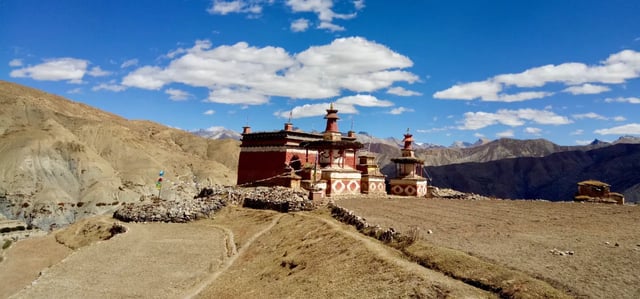
After lunch, the wind picks up as you approach Pisang. The village sits on a high terrace, featuring stone houses with turquoise windows. A monastery overlooks the valley, and the view of Annapurna II and Ngadi Himal becomes clear by afternoon.
The trail covers about 12 kilometers and takes five to six hours to complete on average. You start at 3100 meters and climb steadily to 3540 meters. The elevation gain of day 6 of the Annapurna Semi Circuit Trek is 440 meters. You leave Pisang’s stone houses and enter a narrow valley as the path winds beside the Marsyangdi River, then climbs away from it.
You pass through high-altitude scrubland, and the trees thin out as we gain elevation. You then cross two small suspension bridges over rocky streams. The trail turns rocky and steep in places. You see prayer flags fluttering on ridges.
Herdsmen with yaks pass the route we trek, with their bells ringing in the wind. You stop for tea at a teahouse near Ngawal. There, the view opens up, including Gangapurna, Annapurna II, III, IV, and other peaks that loom ahead. You reach Manang just before afternoon, and stone and wood houses line the street where shops sell dried meat and wool blankets.
Day 7 of the Annapurna Semi Circuit Trek is a rest day designed for acclimatization. You start in Manang at 3540 meters and hike to Gangapurna Glacier Lake at 3440 meters. The trail is gentle and steady. You walk for about 1 hour, covering a distance of roughly 3 kilometers round-trip.
The elevation loss is minimal, just 100 meters, but the thin air makes every step count. You leave Manang on a wide, well-trodden path. The trail climbs slowly through scattered juniper trees. The sky clears as you move higher, and soon enough, you see Gangapurna’s icy face ahead, a wall of blue-white ice framed by rock.
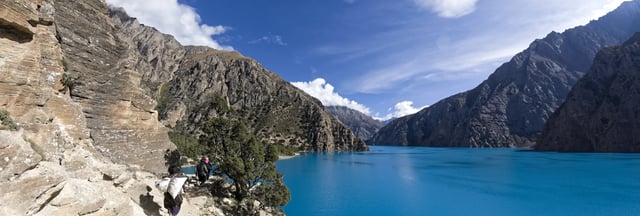
The lake sits at the base of the glacier and the water is turquoise from glacial silt. Ice chunks float like shattered glass, and silence fills the valley.
Leaving Manang, the trail climbs steadily through rocky slopes and sparse alpine scrub. We walk about 10 kilometers over 5 to 6 hours. By the end of the trek, the elevation rises from 3540 meters to 4050 meters. Just a steady ascent with no technical passages. The path winds past small stone walls and prayer flags fluttering in thin air.
Animals graze on hardy grasses as the ground turns rocky. The wind picks up and you can feel the altitude. You reach Yak Kharka as shadows stretch long across the valley. The village has a few teahouses, stone houses with low ceilings, and chortens. The warmth inside the teahouses comes from wood stoves.
You see no trees nearby, only dust, rock, and sky. This is high Nepal, there are no rivers here, not much greenery, just silence and space. Tonight you sleep at 4050 meters above sea level.
The next day on the Annapurna Semi Circuit Trek, we have to walk 6 kilometers to Thorong Phedi, reaching 4450 meters. The trail climbs steadily over 5 to 6 hours, traversing rocky and narrow trails with no trees. We pass small prayer flags nailed to wooden poles. The air keeps getting thinner with every step.
Soon enough, breathing becomes deliberate, you have to take longer breaths to get enough oxygen in your system. Altitude sickness waits for anyone who rushes. The trail rises through scree slopes while loose gravel shifts under boots. If you notice, no one talks much on this part of the trail, as they focus gravely on the trail.
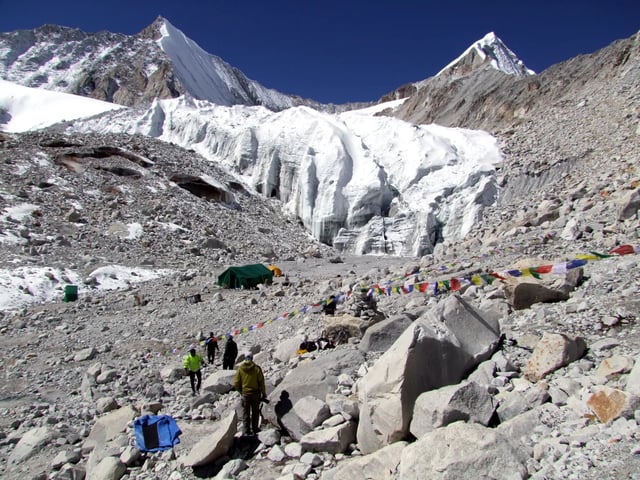
Thorong Phedi is a cluster of stone lodges, you are highly unlikely to get hot showers there. Just warm tea and sleeping bags are what you need to spend he night. We sleep here at 4450 meters and tomorrow, we climb Thorong La Pass, reaching 5416 meters above sea level. This is the final night before the highest point.
This day on the Annapurna Semi Circuit Trek begins before dawn at Thorong Phedi. You start climbing on a narrow, rocky trail that switchbacks up the ridge toward Thorong La Pass. The air is thin and each step demands focus. The sun rises over the Annapurna range as you reach 5000 meters.
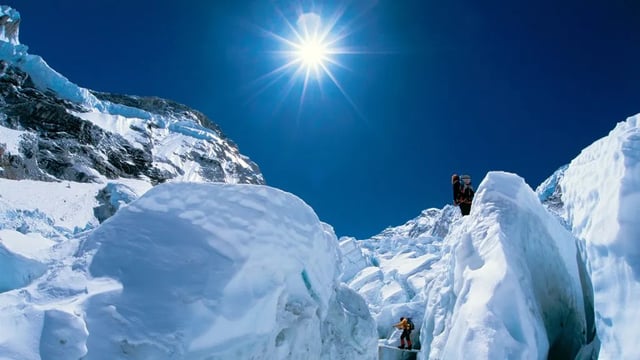
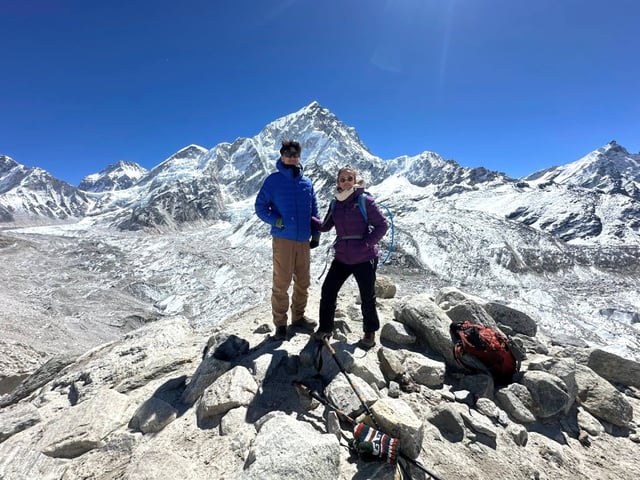
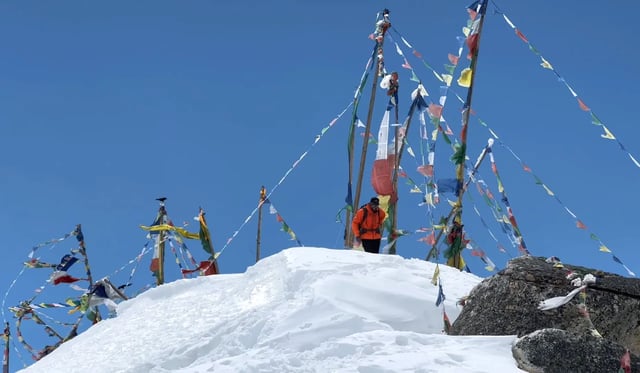
The wind bites your skin and snow dusts the path as you pass prayer flags frozen in place. At 5416 meters, the pass opens to a vast, silent plateau, a scene you will remember for years. You stand above the clouds while distant peaks like Annapurna I and Dhaulagiri dominate the horizon. The descent begins immediately and the trail drops sharply over loose scree and ice patches.
You lose 1500 meters in elevation and by midday, you reach Muktinath at 3850 meters. The total walk takes six to eight hours and the distance is about 15 to 18 kilometers. Few trekkers complete this without breathlessness. Oxygen levels are 50 percent lower than at sea level.
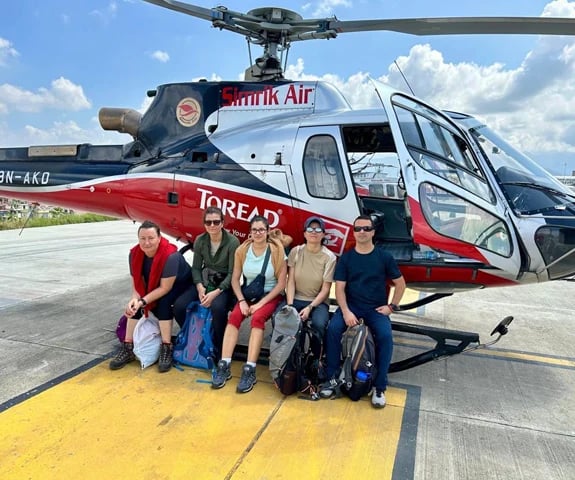
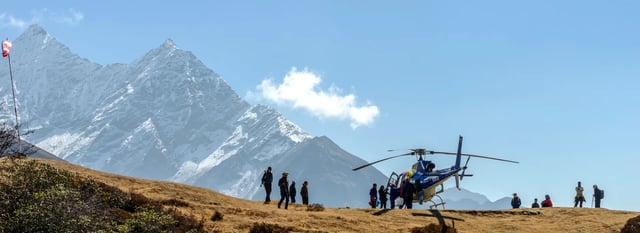
The following day on the Annapurna Semi Circuit Trek itinerary, we drive down to Pokhara, 822 meters above sea level. The journey covers 195 kilometers and takes 9 to 10 hours. The road winds through the Kali Gandaki River valley and you pass through Jomsom, Tukuche, and Tatopani. The descent is steady, your ears pop as altitude drops.
The landscape shifts from high desert to green terraces and villages grow denser. Stone houses give way to wooden homes with tin roofs. You see farmers tending maize and wheat, rivers swell with glacial melt. Buses and jeeps share the narrow road as dust hangs in the air.
Some travelers nap while most stare out the window. The scenery changes every hour or so, and we cross multiple bridges over roaring rivers.
The trekking days of the Annapurna Semi Circuit Trek are gone, what remains are just drives. Today, you drive from Pokhara to Kathmandu, the route follows the Prithvi Highway, a well-maintained national road that cuts through Nepal’s mid-hills. We leave Pokhara at eight in the morning, and the drive covers 200 kilometers.
It takes seven to eight hours to drive from Pokhara to Kathmandu. You pass through scenic valleys and terraced farms, cross rivers like the Seti and Kali Gandaki. You climb from 822 meters in Pokhara to 1400 meters in Kathmandu.
The ascent is very gradual; no hiking is needed, and no altitude gain needs to be managed. You just sit in a private vehicle or shared tourist bus. Windows roll down for fresh air, but dust flies when trucks pass, so keep your hand ready to close the windows.
This is the final day of the Annapurna Semi Circuit Trek, you leave Kathmandu after you pack your gear one final time. We will have you check out of your hotel after breakfast, and drop you off at the airport.
Your driver waits outside with the door open. You ride to Tribhuvan International Airport in silence as you reminisce about the memories you made on the trek.
Most guests fly into Tribhuvan International Airport in Kathmandu. Share your arrival time ahead of travel so a Thamel hotel transfer can be arranged, or make your own way to the meeting hotel.
Many departures include a road transfer to Pokhara before walking starts from Nayapul or a nearby trailhead. Allow a little extra time after the trek before international flights home.
Twin or double rooms in a comfortable Kathmandu hotel cover your first nights and your return from the trail, with breakfast on those city stays when included in the package. Briefings happen at the hotel, and airport collection from Tribhuvan is available when flight times are shared in advance.
Family-run teahouses or lodges line the route with twin beds and a shared dining room. Rooms get simpler and colder as you climb, with shared bathrooms common at higher villages. Hot water, Wi-Fi, and charging are paid at the lodge when offered.
Stable trekking weather most often falls in pre-monsoon spring and post-monsoon autumn. Monsoon cloud sits lower on the hills while winter brings ice on steps above village level.
If your dates sit in winter or monsoon, pack rain and cold layers and accept that flight or pass days may move by a day when safety requires it. Weather can shift daily plans, so your guide keeps a steady pace with regular breaks.
You should be comfortable walking several hours a day on uneven paths with a daypack, including steady uphill sections as you gain height. Hill training and longer weekend walks in the months before travel help your legs and lungs on uphill trail days.
Hill training, stair climbing, and longer weekend hikes in the months before travel help your legs and lungs, even when acclimatisation days are built into the route. Break in boots before you fly and carry a light daypack on practice walks.
Guided trekking with licensed leaders, lodge nights on the trail, meals as described for walking days, and permits for the regions crossed are included when they are part of this trip. Domestic flights, porters, and airport transfers apply only when they are part of this trip.
Domestic flights, road transfers, porter support, and airport transfers apply only when they are part of this trip. Permits for the regions you cross are arranged in Kathmandu or Pokhara when included.
International flights to Nepal, visa fees, compulsory travel insurance, personal trekking clothing, snacks and drinks outside included meals, and tips for crew are not covered. Hot showers, Wi-Fi, and battery charging in lodges are usually paid locally when offered.
Charges for hot showers, Wi-Fi, or battery charging in lodges are paid locally when offered unless your trip notes say otherwise. International flights, visa fees, and personal insurance stay outside the trek package.
Thamel hotel meet after airport pickup is standard; confirm whether briefing is in Kathmandu, Pokhara, or both. Allow a little extra time after the trek before international flights home in case mountain roads or flights move.
Trailhead transport from Pokhara is timed so you reach Nayapul in daylight when possible. Trail conditions are checked each morning before the group moves.
Guides set a steady pace and watch for headache, nausea, or dizziness as you gain height. Your crew would rather wait for a safe window than rush marginal weather.
Tell your guide early if symptoms appear so tomorrow's stage can shorten or descent can start before conditions worsen. Thamel hotels are the usual meet point; drivers need flight numbers to meet you at the international terminal.
Road transfer from Kathmandu to Pokhara and a short drive to Nayapul or another start point are common when transport is included. Your guide confirms departure times at briefing.
Motion sickness medicine helps on winding mountain roads. Shoulder weeks need an honest weather call before high passes or dawn viewpoints.
Annapurna Conservation Area Permit and TIMS registration apply on this route. The team arranges paperwork in Kathmandu or Pokhara when you provide passport copies and trek dates.
Keep copies in your daypack for checkpoint stops. Your crew would rather wait for a safe window than rush marginal weather.
Families join when children can manage the daily hours and terrain on this specific route. Pace and daily hours can be adjusted on private departures, though that may extend the calendar.
Ask our Kathmandu team if you are planning with younger walkers. Private departures can shorten daily hours, though that may add a day or two to the calendar.
Comprehensive travel insurance that covers trekking to the highest altitude on your itinerary, medical evacuation, and helicopter rescue when applicable is essential. Many standard policies exclude high altitude by name.
Read the wording before you travel so you can adjust cover if trekking above 5,000 metres is not named. Many standard policies exclude high altitude by name, so read the wording before you fly.
We partner with Rewilding Britain to help protect our natural spaces for future adventures.
All centres are vetted for safety and quality. Your adventure is in good hands with adventuro.
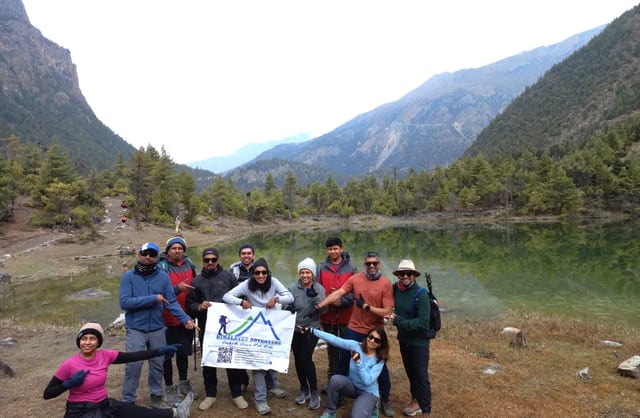
About the centre
Kathmandu
You'll travel with a Kathmandu-based team that plans treks, peak climbs, helicopter flights, motorbike journeys, and cultural trips across Nepal, Tibet, and Bhutan. Routes range from classic teahouse walks and high passes to luxury lodge itineraries and longer expedition-style climbs, with departures shaped around how you want to pace the mountains.
Licensed guides and office staff train regularly on mountain safety and guest care. Porters are insured, fairly paid, and equipped for the trail, with sensible load limits on lodge routes. We work with remote communities through sustainable tourism, including support for education in village areas, so your booking helps local people as well as your own adventure.
Operated by Himalayan Adventure Treks & Tours, a partner of adventuro.