Ready to find a course or session?
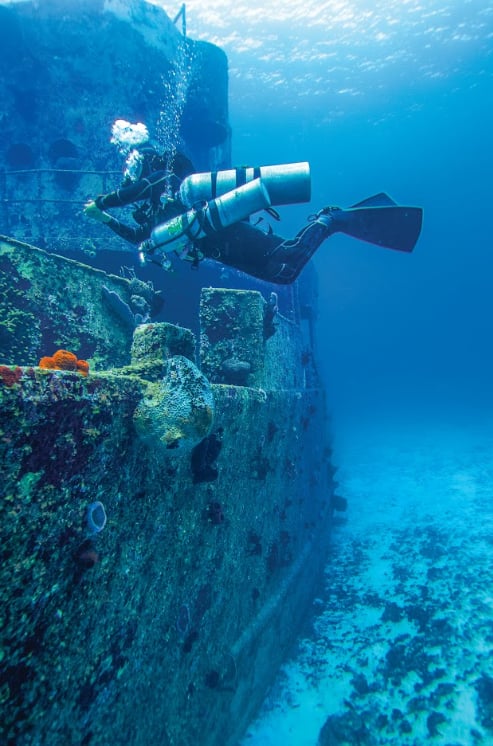
Sidemount Diver puts your cylinders along your hips instead of mounting them on your back. Cave divers pioneered the configuration for tight passages, and recreational divers now use it for comfort, streamlining and easier valve access, especially if a heavy twinset aggravates shoulders.
PADI teaches sidemount as a recreational specialty: rigging harnesses and bands, routing regulators, managing gas in one or two cylinders and staying trim without looking like you are wrestling a pair of steel sausages. Expect knowledge development, confined-water drills and three open water dives where buoyancy and hose management feel unfamiliar at first.
Most programmes run over two or three days with pool work before open water. The first session feels awkward for almost everyone, and by the third dive many students say their back thanks them. You will still get wet, adjust bungees twice, and wonder why you did not try sidemount years ago. That is normal, and your instructor has untangled the same hose routing on day one many times before.
Assessment is practical across confined and open water sessions.
Quick answers about this qualification. For anything else, use live chat or browse bookable activities below.
Find activitiesA configuration where one or two cylinders mount along your sides instead of on your back. Regulators route from hip-mounted valves rather than behind your head.
It started in cave diving and spread to recreational divers who prefer the comfort and valve access.
Open Water Diver or equivalent, with reasonable comfort in the water. Recent diving experience helps.
If you have been dry for years, book ReActivate first. Leave a comment when you book with your certification details if you trained outside PADI.
Most centres need two to three days for knowledge development, confined water and three open water dives.
Weekend workshops are popular with UK clubs. Holiday centres may compress scheduling if the group arrives prepared.
Centres usually provide rental harnesses and cylinders for training. Buying your own rig later makes sense if you commit to sidemount long term.
Ask which systems the centre uses. Adjustment time on unfamiliar hardware eats into training dives.
No. This PADI specialty is recreational. Technical divers often use sidemount, but you do not need tech credentials to take the course.
Further technical courses are separate if you want decompression and overhead environment training.
Common reasons include back comfort, easier valve checks, flexible cylinder handling on shore dives and personal preference for trim.
It is not automatically better than back mount; it is a tool that suits some bodies and dive styles.
Yes, if you are certified as an Enriched Air Diver and the centre supplies appropriate cylinders. Nitrox is not a core part of the sidemount specialty unless offered as an add-on.
Leave a comment when you book if you want nitrox cylinders for training dives.
Fifteen years old with Open Water certification. This is higher than many PADI specialties because of equipment complexity.
Centres may set additional experience expectations for younger divers near the minimum age.
Standard dive kit if you have it, warm clothes for long pool sessions and patience for the first rigging attempts.
Centres provide sidemount harnesses and cylinders for training in most cases.
Dive sidemount recreationally where your centre and insurance allow. Explore Wreck Diver or photography specialties with a configuration many find easier in tight spaces.
Technical sidemount programmes from TDI or other agencies are a separate path if you want staged decompression training.
adventuro lists PADI centres offering Sidemount Diver at quarries, coasts and specialist facilities. Compare harness rental, cylinder fees and pool access.
Leave a comment when you book if you have back or shoulder issues and want an instructor experienced in fitting sidemount for comfort.