Certification

Certification
Ready to find a course or session?
PADI Search and Recovery Diver teaches you to find lost objects underwater and bring them up without turning a fun dive into a tangled mess. Masks, tools, boat anchors and the occasional wedding ring really do get dropped on reefs and quarry bottoms. This specialty gives you search patterns, lift-bag technique and team coordination so you are useful when someone asks, "Can anyone find my GoPro?"
eLearning is typically two to four hours at home. The in-water portion usually runs over one to two days with four open water dives. Search patterns feel tedious in a pool until you use them on a silty bottom with three metres visibility. That is when the repetition pays off.
You need Advanced Open Water Diver, or Open Water with Underwater Navigator specialty. Leave a comment when you book if your navigation is rusty.
Search and Recovery Diver is assessed on four open water dives, not in a classroom exam.
Quick answers about this qualification. For anything else, use live chat or browse bookable activities below.
Find activitiesIt is a PADI specialty covering four open water dives focused on underwater search patterns and recovering objects with a lift bag. You learn systematic searching rather than random finning hoping to get lucky.
Useful for club divers who get asked to find dropped kit on every quarry weekend.
Advanced Open Water Diver is the usual route. Open Water divers may enrol if they already hold PADI Underwater Navigator Specialty.
Leave a comment when you book with your certification cards if you trained abroad or with another agency.
eLearning is typically two to four hours at home. Four training dives usually fit into one to two days depending on the centre and site logistics.
Some holiday courses spread dives across a relaxed week. UK quarries may compress into a weekend.
No separate written exam like a school test. You complete PADI eLearning knowledge reviews and demonstrate search and recovery skills on four open water dives.
The assessment is practical: patterns and lift-bag work until your instructor is satisfied.
An inflatable bag used to lift objects from the bottom with controlled buoyancy. Your instructor teaches attachment, partial inflation and ascent technique to avoid rapid uncontrolled rises.
Never inflate one without training. That is why this specialty exists.
Patterns are designed for low visibility when you cannot simply look around. Compass and line work matter more as viz drops.
Pairing with Underwater Navigator helps if compass skills are weak.
Training uses manageable objects under instructor supervision. Real-world recoveries must respect size, entanglement risk, environmental rules and your experience limits.
Heavy or culturally sensitive objects may need professional salvage, not a holiday specialty dive.
Usual dive kit, slate or wet notes for recording search areas, and a reel or line if your centre asks you to own one for the course.
Good buoyancy saves silt-ups that ruin searches for everyone behind you.
Volunteer on club search dives, help buddies recover dropped gear, and stack specialties toward Master Scuba Diver if you complete the other ratings.
Many students pair this with Deep Diver when searches happen on deeper sites.
Twelve years old with junior diver depth and supervision limits. Some centres set a higher minimum if they feel recovery drills are too demanding for younger divers.
Ask when you book if you are certifying a teenager.
adventuro lists PADI centres offering Search and Recovery Diver on quarries, coasts and holiday reefs. Compare whether lift bags, boat fees and eLearning are included.
Training in silty UK quarries builds honest search habits early.
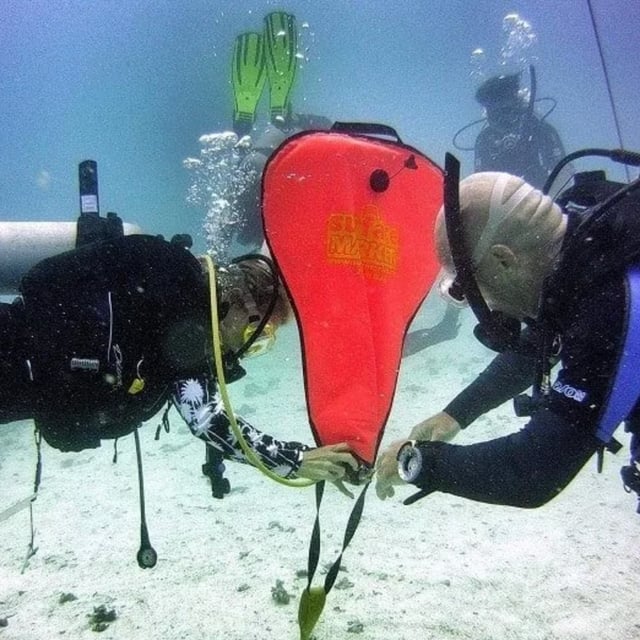
Learn structured search patterns and lift-bag recovery across four dives in Dubai or Fujairah. Build practical underwater problem-solving skills. From 820 AED.
From Dhs 820
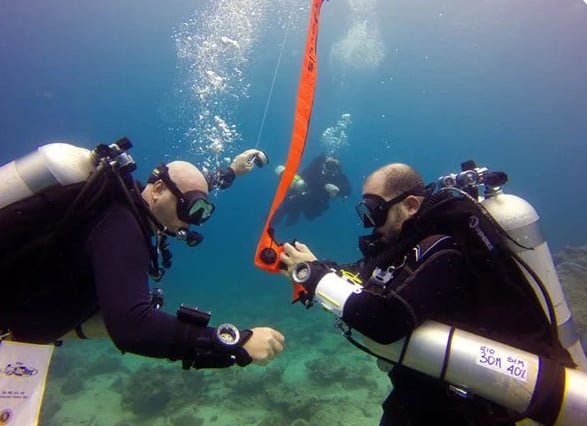
Master underwater search and recovery with the PADI Search & Recovery Specialty course at Littlehampton Marina. Learn lift bag techniques and search patterns. £275.
From £ 275