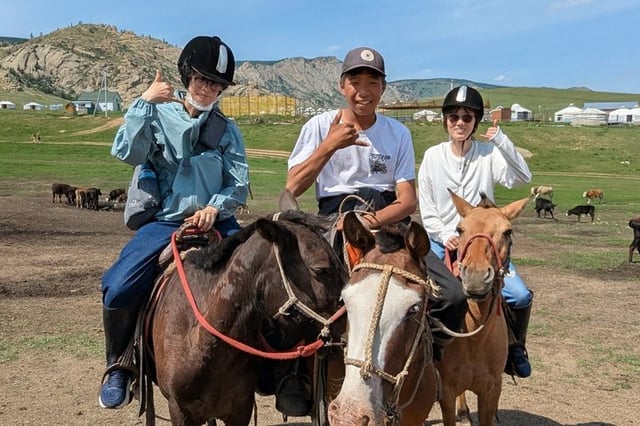
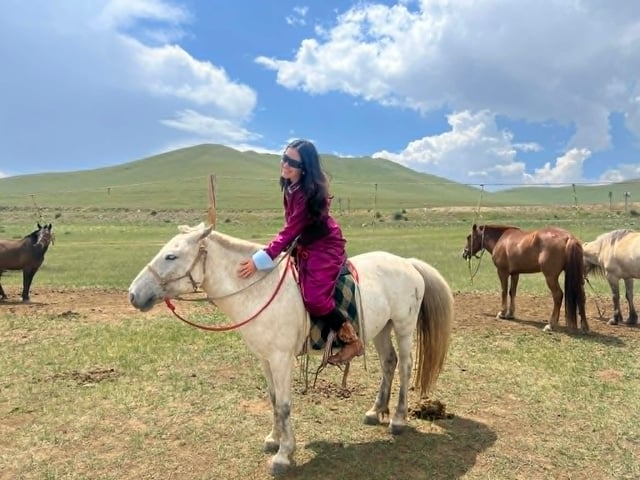
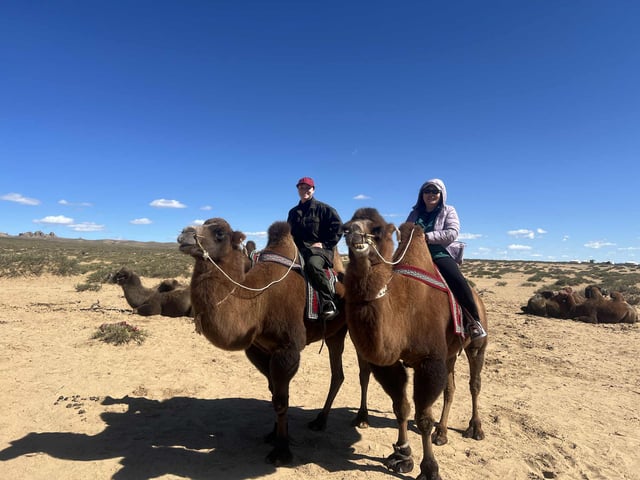
Central Mongolia is the default first itinerary. The capital has the country's main airport, museums and gear shops, and within two hours you can be in Gorkhi-Terelj among granite outcrops and white ger camps. Most classic horse circuits head west through Töv aimag and into Övörkhangay, where Kharkhorin and the Erdene Zuu monastery anchor the historic Orkhon Valley routes.
Drivers and guides usually travel as a team with a support jeep that carries luggage, food and spare fuel. That matters on horse treks, because you ride lighter while the vehicle meets you at the next camp. If you are prone to saddle soreness, bring padded trousers and speak up early so the guide can shorten a riding day.
Naadam in July brings horse racing and wrestling to towns across the region, so roads near Ulaanbaatar can be busy that week. Outside festival dates the steppe still feels wide open, with white gers dotting valleys and herders moving stock to fresh pasture.
Capital fringe and the Orkhon
Day hikes and short rides from Ulaanbaatar and Töv, multi-day treks through Övörkhangay, and the road south through Govisümber towards the Gobi.
Terelj and monastery stops
Gorkhi-Terelj suits a first night out of the city, with turtle rock walks and short rides for children. Kharkhorin rewards a full afternoon for Erdene Zuu and the small museum before you saddle up for the Orkhon. Shops in Kharkhorin sell basic snacks, but operators still carry the main meals.
Getting there and where to stay
Most loops start with a hotel night in Ulaanbaatar, then ger camps each night on the steppe. Terelj has many tourist camps within reach of the city, while Orkhon Valley camps are simpler but closer to the riding routes.
Planning a central loop
Allow four to six nights for a horse loop with a night in Terelj at the start or end. July and August are busiest. Operators usually include ger accommodation, meals and a support vehicle.
Booking on adventuro
Use the Book here tab to compare meeting points and what is included in the price.