We partner with Rewilding Britain to help protect our natural spaces for future adventures.
All centres are vetted for safety and quality. Your adventure is in good hands with adventuro.
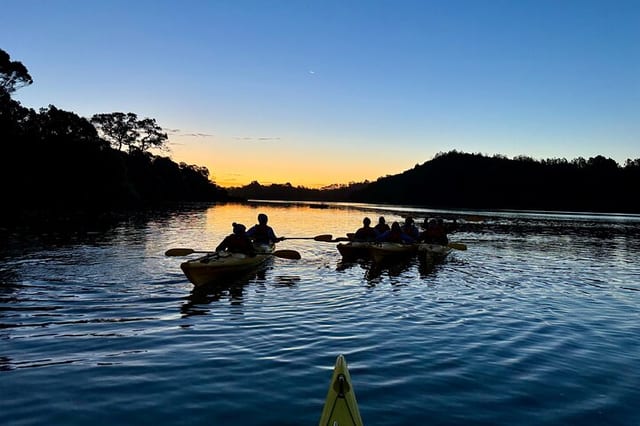
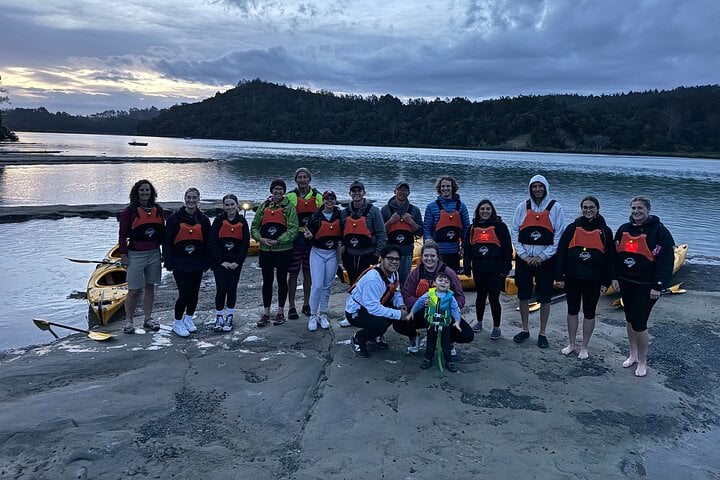
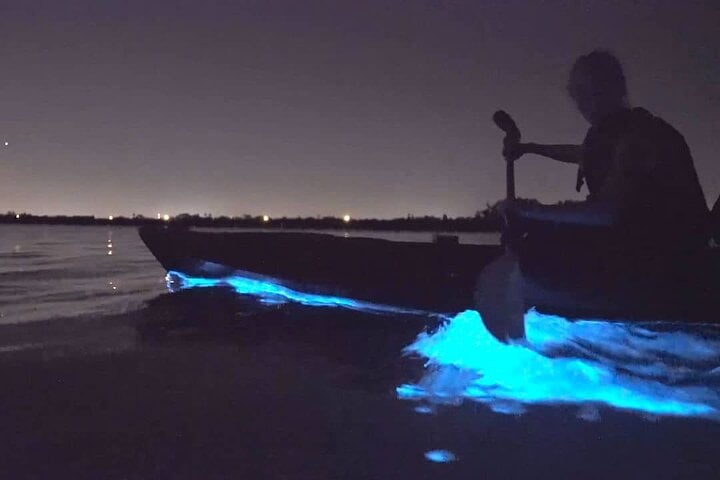
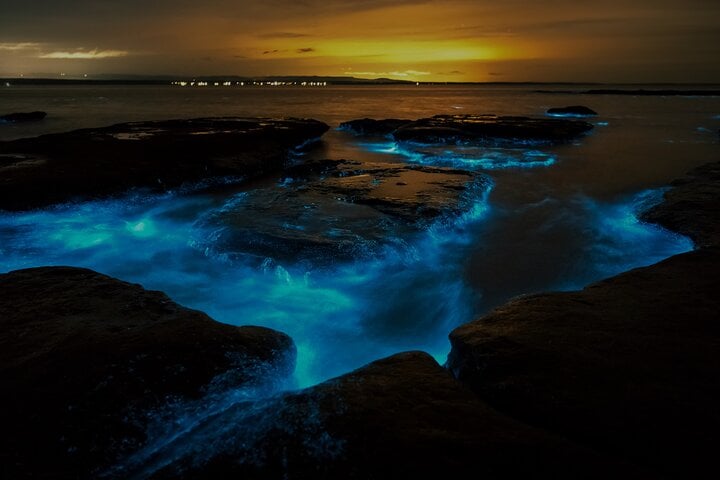
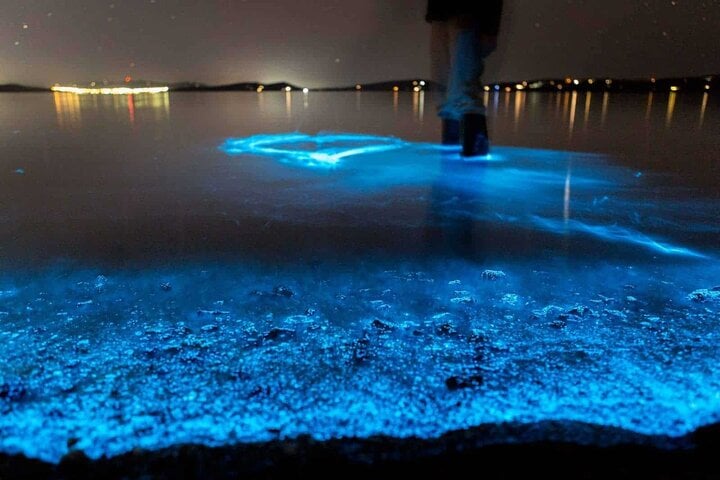
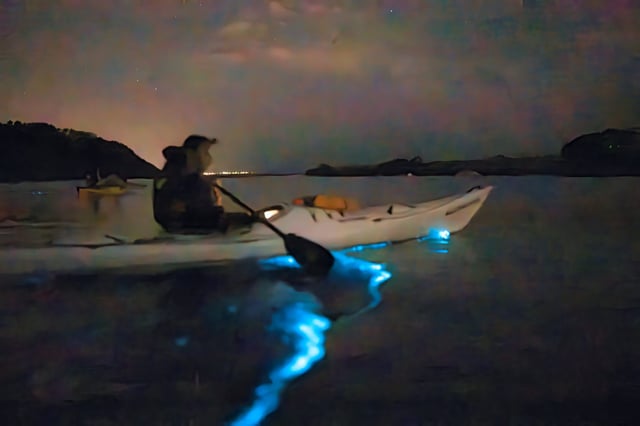
When darkness settles on the Okura estuary, stable kayaks carry you through calm water where bioluminescent plankton may glow around each paddle stroke. This two-hour night tour includes a thorough shore briefing in daylight before the group launches together.
Introductions at the Okura estuary launch include a plain-language overview of how rainfall, moon phase, wind, and recent temperature affect how bright dinoflagellates may appear. While daylight remains the group practises kayak entry, paddle grip, capsize recovery, and voice signals as lifejackets are fitted and everyone agrees how to stay within voice range once torches are dimmed.
Kayaks enter the water in a controlled line as natural light fades, then progress slowly through mangrove margins and open pools with pauses in still water to watch blue-green light trail each stroke when conditions cooperate. The session ends back at the launch with gear pack-down, a short science recap on why glow varies night to night, and time to warm up before leaving the north shore estuary.
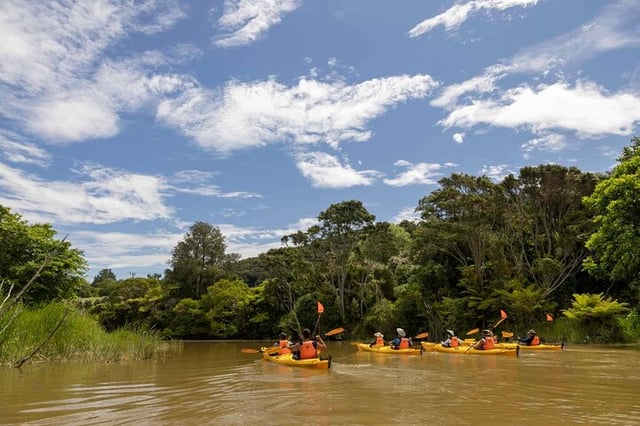
The Okura River estuary lies north of Auckland city, where native bush valleys meet tidal mudflats and mangrove forest not far from Long Bay and the Okura Bush walkway. Sheltered water and tree lines help block city glare on clearer nights, which improves the chance of seeing dinoflagellate light when plankton concentrations are high.
Self-drive guests use the estuary launch area at the river mouth; the landscape shifts from open tidal channels to narrower mangrove corridors that feel remote despite nearby suburbs. Birdlife such as herons and shore waders often appear on mudflats at dusk, adding a quiet natural soundtrack before full darkness.
Minimum age is thirteen. You should be comfortable sitting in a kayak at night and following voice signals from your guide when visibility is low, without relying on bright personal torches on the water.
Wear warm synthetic layers, a windproof shell, and footwear that can get wet at the launch. Bring a towel and optional change of clothes for after pack-down, and declare medical notes during the shore brief so guides can keep the group pace inclusive.
Okura estuary guides specialise in mangrove night paddles north of the city, with Qualmark-recognised safety standards for after-dark kayaking. Briefings cover capsize steps, voice signals in low light, and dimming torches so natural glow is easier to see when plankton are active.
Sit-on kayaks, paddles, and lifejackets are included, and coaches stay within voice range on sheltered tidal water. Expect plain-language science on dinoflagellates and why rainfall, moon phase, and temperature change brightness from night to night.
The evening begins at the Okura estuary launch with introductions and an overview of the paddle route. The welcome explains how moonlight, recent rain, and tide affect how bright bioluminescence may appear on the estuary.
You will hear the plan for the night, where toilets and parking are, and how the group stays together once head torches are dimmed. This is the time to declare medical notes or camera plans before gear issue.
Guides scan wind and cloud cover to confirm whether the published route still suits beginner night paddlers. If a short delay helps conditions, you will hear why before anyone enters a kayak.
Learn how to enter the kayak, hold the paddle, and communicate on the water at night. Lifejackets are fitted and adjusted so you can paddle comfortably for the full session.
Your guide demonstrates capsize recovery steps and shows how to regroup if you drift from the party. Questions about spectacles, dry bags, or clothing layers are welcome while it is still light enough to see clearly.
Once everyone demonstrates basic control at the shoreline, kayaks are carried to the launch point together. Listen for the launch order so the group enters the water in a controlled line.
Paddle slowly through calm water as natural light fades, watching for blue sparkles around your blade. The lead guide steers the group toward areas where plankton often concentrates while keeping everyone within voice range.
Still moments let you trail your hand through the water to see pinpoints of light when conditions cooperate. Guides explain the dinoflagellate lifecycle in accessible language without spoiling the quiet mood on the estuary.
Remember that intensity changes nightly. Even a faint glow can feel memorable when paired with mangrove silhouettes and a starry sky away from streetlights.
Return to the launch, help stow kayaks and paddles, and share impressions with the group. Guides remind you that bioluminescence is weather dependent and may vary in brightness from night to night.
A short debrief covers what to expect on a darker moon phase, and how to rinse clothing that picked up brackish spray. Ask about photos because flash can disturb other guests still on the water.
Once gear is accounted for, you are free to drive home or meet your shuttle. Take a moment to let eyes readjust to street lighting before you leave the carpark.
Wear warm quick-dry layers, a windproof jacket, and footwear that can get wet at the launch. Bring a filled water bottle, towel, and change of clothes for after the session.
Pack personal medication, a small dry bag if you carry a phone, and avoid bright torches on the water. Synthetic fabrics work better than cotton once spray and night air cool down.
Most guests join with little or no night paddling experience. Your guide covers kayak entry, paddle strokes, and voice signals on shore before anyone launches in low light.
Contact the team via Adventuro Chat if you are nervous about balance or darkness so we can suggest the best date or a private tier for your group.
Dress in warm layers you can move in, with a windproof shell and footwear that tolerates wet launches. Nights cool quickly on the estuary even after warm afternoons.
Bring a towel, optional change of clothes, and personal medication. Leave bright head torches in the car unless your guide asks for a red light for safety.
Self-drive guests meet at the Okura estuary launch in North Auckland at the time on your confirmation. Arrive early for parking and the pre-paddle brief while there is still ambient light.
Transport-inclusive sessions use an earlier pickup in central Auckland at the Auckland Sky Tower. Follow the map link on your confirmation if you are unsure which start applies to you.
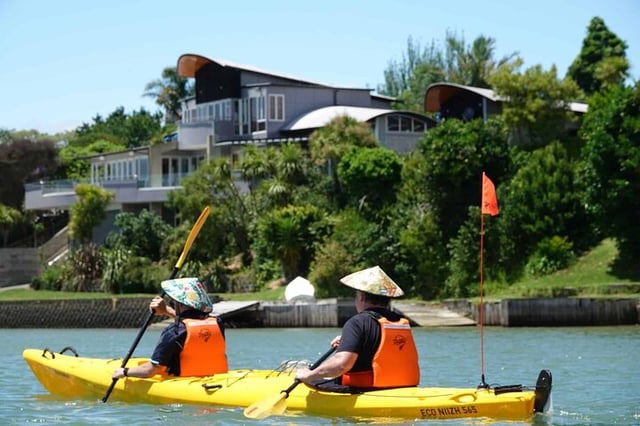
We provide stable kayaks, paddles, lifejackets, and safety kit for the estuary paddle. Guides adjust fit and explain capsize protocol before you leave shore.
Optional shuttle transport is chosen for your session and is not part of the self-drive package unless transport is included for your session.
Minimum age is thirteen years for night bioluminescence tours. Younger children cannot join because group ratios and insurance follow the published age limit.
Teenagers are welcome when they can follow guide instructions in the dark and stay with the group on the water.
Glowing plankton is a natural phenomenon that varies with rainfall, temperature, and moonlight. Calm, dark nights give the best chance, but brightness cannot be guaranteed.
Guides know local hotspots and will still run a safe, enjoyable night paddle if glow is faint. You will hear how conditions affect visibility during the shore brief.
Strong wind, heavy rain, or electrical storms can make night paddling unsafe on the estuary. We may reschedule or adjust launch timing when conditions are poor.
You will hear from us if weather forces a reschedule. Bring a waterproof layer and warm hat even when the evening forecast looks mild.
Private tiers for up to eight or sixteen guests may appear for your session on selected dates. Shared tours run with other guests unless you purchase a private rate.
Contact us through Adventuro Chat for special occasions so we can point you to the correct correct session type and start time.
Return transport from the Auckland Sky Tower is not included in the standard self-drive session. Select the transport-inclusive rate for your session if you need pickup.
Shuttle guests must meet the earlier time on their voucher, typically about one hour before the on-site start shown for self-drive bookings.
Eat lightly, hydrate, and use toilets before kit-up while daylight remains. Listen carefully to the night safety brief and ask questions if signals or capsize steps are unclear.
Secure glasses with a strap, tell your guide about medical needs, and keep your lifejacket fastened whenever you are on the water.

About the centre
Okura, Auckland
We run guided outdoor adventures across Auckland and wider New Zealand, from calm harbour paddles and glow-worm kayak evenings to full-day walks in regional parks. Sessions are led by experienced guides who focus on safety, local stories, and a genuine connection with the landscape, whether you are trying kayaking for the first time or joining a private tour with friends.
Every outing brings the kit you need on the water or the trail, with clear briefings before you set off and small groups so you are never lost in the crowd. Families, visitors, and locals book with us for hands-on time outdoors, and we tailor pacing to the weather and the people in your group.
Operated by Social Nature Movement, a partner of adventuro.