
We partner with Rewilding Britain to help protect our natural spaces for future adventures.
All centres are vetted for safety and quality. Your adventure is in good hands with adventuro.
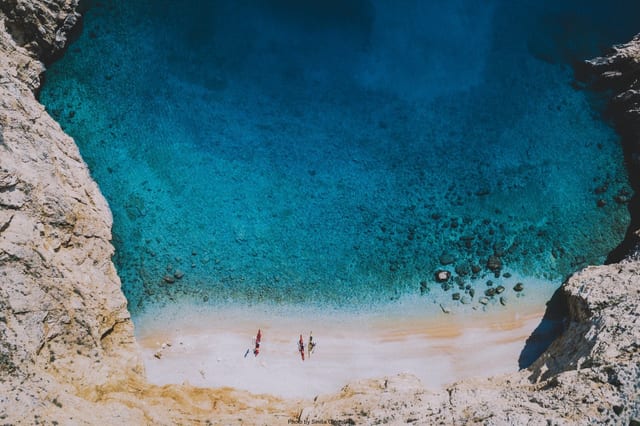
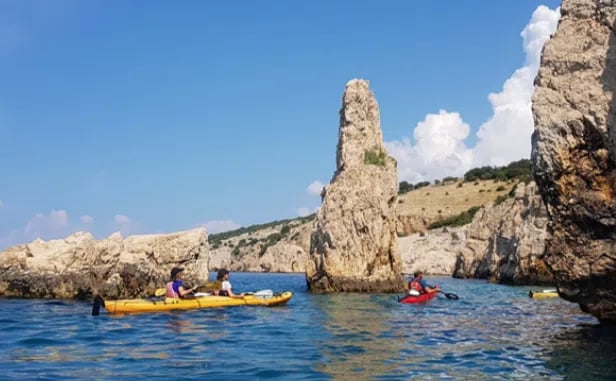
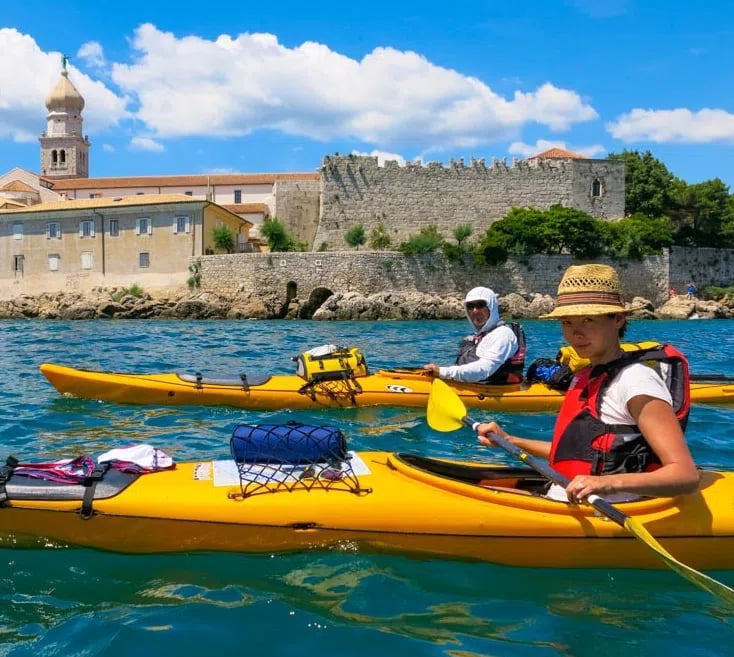


This expedition follows Croatia’s northern Adriatic coastline across a chain of islands where geological formations, wildlife habitats, and historic sites shape the journey. Over the course of a week, paddlers travel from Rab Island across remote channels and untouched shorelines toward Krk Island, covering approximately 110 kilometres by sea kayak.
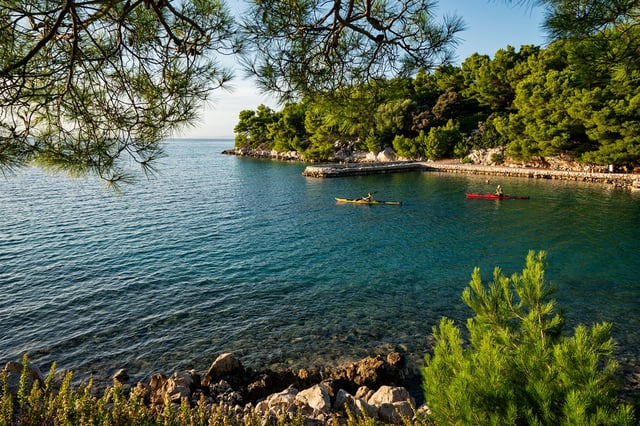
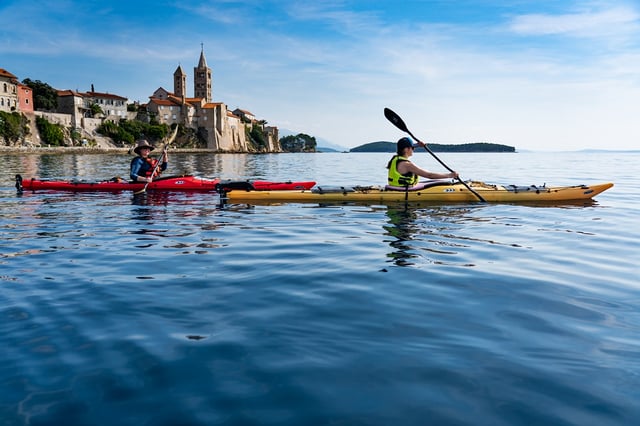
The route explores the dramatic cliffs of the Rab Geo-Park, the sandy shores of Lopar, the historic remains of former prison islands, and the protected wildlife habitats of Plavnik and Cres. Each day brings a different stretch of coastline, from caves and turquoise bays to quiet pebble beaches and forested coves, offering a varied and immersive paddling experience.
This guided sea kayaking expedition is designed for paddlers who want to travel through the Adriatic in a self-supported style, carrying equipment and camping along remote sections of coast. Over seven days, the group moves steadily north through a chain of islands known for their geological diversity and wildlife.
The journey begins on Rab Island before gradually progressing toward Krk Island, with daily paddling distances that balance exploration with steady forward progress. Stops along the way include protected reserves, historic island sites, quiet lagoons, and open crossings between islands.
Alongside the paddling, there is time to swim, explore caves, enjoy picnic lunches on quiet beaches, and camp in peaceful coastal locations. Evenings are spent preparing meals together and relaxing by the water, creating a simple but rewarding rhythm that suits this style of expedition travel.
Flexibility is an important part of the experience. Routes and daily plans may be adjusted depending on weather and sea conditions, allowing guides to choose the safest and most enjoyable sections of coastline each day.
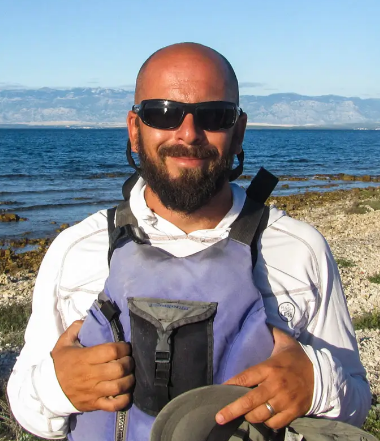
Guides on this expedition are experienced local paddlers who know the Adriatic coastline and weather patterns in detail. Their knowledge of the area allows the group to explore safely while discovering lesser-known locations such as hidden caves, quiet coves, and remote beaches that are rarely visited.
The small group size ensures a more personal and supportive atmosphere throughout the trip. With logistics, meals, and daily planning taken care of, participants can focus fully on paddling, exploring the coastline, and enjoying time outdoors.
Participants meet on Rab Island during the day at the designated meeting point. After arrival, accommodation arrangements are confirmed and there is time to settle in before the trip briefing.
In the evening the group gathers for dinner together, where guides introduce the expedition plan, safety procedures, and equipment packing for the week ahead. Early arrivals may choose to explore Rab’s old town streets, nearby beaches, or simply relax before the adventure begins.
Accommodation at your own expense.
Meals included: Dinner
The expedition begins with the first paddling day along the coastline of Rab’s Geological Park. After preparing kayaks and equipment, the group sets off along cliffs shaped by wind and sea over thousands of years.
Stops are made at beaches such as Mag Bay, known for its red gravel and unusual rock formations. Lunch is usually enjoyed on a quiet beach, with time for swimming before continuing along the coastline.
The day finishes at a remote beach campsite where the group sets up tents and prepares dinner together while overlooking the Velebit mountain range across the channel.
Meals included: Lunch, Dinner
After breakfast beside the sea, the route continues along the Rab coastline toward a series of caves and turquoise bays. One of the highlights is the Medova Buža cave system, where those comfortable in the water can swim through a tunnel entrance to explore the cave from inside.
Later in the day the scenery gradually changes as the paddling reaches the sandy peninsula around Lopar before crossing toward the island of St. Grgur. The island once held a political prison during the Yugoslav period, and remnants of the buildings remain visible among the landscape.
The evening is spent near the main prison bay where dinner is enjoyed while watching the sunset across the Adriatic.
Meals included: Breakfast, Lunch
The morning begins with a crossing toward Prvić Island, an uninhabited reserve known for its natural landscapes and quiet beaches. The coastline offers numerous coves where the group can stop for swimming and short breaks.
After exploring the island’s western shores, the route continues toward Krk Island. The day finishes in the bay of Stara Baška, where the group sets up camp close to the shoreline.
Nearby facilities provide a chance to refill water supplies and relax before dinner, with views across the water toward Rab and the islands already travelled.
Meals included: Breakfast, Lunch, Dinner
This is the longest paddling day of the expedition. The route first follows the Krk coastline toward the historic town of Krk, where the group takes a longer break to restock supplies and explore the harbour area.
From Krk town, an open crossing leads to Plavnik Island, a protected reserve and nesting area for griffon vultures. The cliffs of Plavnik provide ideal viewing opportunities as the birds glide above the coastline.
The group camps among the Holm oak forest on the island, enjoying dinner surrounded by quiet nature.
*The day’s route is chosen by the guide based on the group’s ability, weather conditions, and timing. As a result, the itinerary may change, including the possibility of paddling directly to Plavnik or staying overnight near the town of Krk.
Meals included: Breakfast, Dinner
The day begins by paddling along the cliffs of Plavnik while keeping watch for more vulture sightings. The route then crosses the narrow Krushia channel, one of the deepest areas of the Kvarner Bay.
Continuing toward Cres Island, the group reaches a stretch of coastline known for its pebble beaches and old stone fishing huts. The expedition also passes the 45th parallel, marking the halfway point between the Equator and the North Pole.
A beach campsite is chosen for the evening where dinner is prepared and the group spends a final night camping beside the sea.
Meals included: Breakfast, Lunch, Dinner
On the final morning the group makes a crossing back toward Krk Island before following the coastline west toward Valbiska ferry port.
After a final paddle along quiet beaches and rocky coves, the expedition concludes around early afternoon. Participants may continue travelling independently or return to Rab with the guides via ferry and vehicle transfer.
Meals included: Breakfast
The meeting point for the expedition is:
Banjol 341, Rab 51280, Croatia
Rab Island can be reached via ferry connections from the mainland or from Krk Island.
The closest airports are:
Rijeka Airport – approximately 110 km
Zadar Airport – approximately 138 km
Pula Airport – approximately 196 km
Zagreb Airport – approximately 205 km
For guests travelling without a car, Rab is also easily accessible from Rijeka. A fast passenger catamaran connects Rijeka and Rab, making the island convenient to reach for travellers arriving in Rijeka from Zagreb, Ljubljana, or Trieste. It is also possible to reach Rab by bus from Zagreb and Zadar. For added convenience, the tour organizer also offers airport pick-up services.
Accommodation during this expedition is beach camping along remote sections of coastline. Campsites vary depending on the day’s paddling distance and weather conditions but generally include pebble beaches or sheltered soil areas suitable for tents.
Camping locations are chosen for their safety and natural surroundings, often in quiet bays where the group can relax, swim, and prepare dinner together after the day’s paddling.
Camping equipment such as tents, sleeping bags, and mats is not included in the trip price, but rental options are available if needed.
Previous kayaking experience is recommended for this expedition due to the distances and open water sections involved. While the guides provide instruction and safety briefings, the trip is best suited to paddlers who already have basic boat control and paddling endurance.
If you have experience with kayaking, canoeing, or other paddle sports, you will usually adapt quickly to sea kayaks and the rhythm of multi-day travel.
This trip is designed for participants with a good level of fitness and some previous paddling experience. Daily distances typically range between 15 and 25 kilometres, with several open water crossings between islands.
Participants should feel comfortable paddling for several hours per day in open coastal conditions. The pace is steady and includes regular breaks for swimming, food, and exploration, but the expedition style means you should be prepared for full days outdoors.
Camping takes place on natural beaches or quiet coastal areas chosen by the guides for safety and comfort. These locations are typically remote and do not have developed facilities.
The experience is simple but rewarding, allowing participants to sleep beside the sea and enjoy quiet evenings away from busy towns.
Meals are prepared by the guides using fresh ingredients and expedition foods that are easy to transport in kayaks. Breakfasts usually include bread, fruit, cereals, and spreads, sometimes with eggs depending on the day’s location.
Lunch is normally served picnic-style on beaches with sandwiches, salads, and fruit. Dinners are warm meals prepared together at camp, often including pasta, rice dishes, vegetables, and locally sourced ingredients when possible.
Yes. Dietary requirements and allergies can usually be accommodated as long as they are communicated in advance during the booking process.
Participants will complete a medical and dietary form before the trip, allowing the guides to prepare meals that suit different needs while maintaining safety for those with allergies.
Weather conditions can influence sea kayaking routes, so the itinerary remains flexible. Guides constantly monitor wind and sea conditions and may adjust the paddling route or daily schedule to ensure safety.
These adjustments may include changing campsites, altering distances, or exploring sheltered coastlines instead of open crossings when necessary.
Guests arriving by car can usually park in a nearby free parking area, subject to availability. Some accommodation options also have parking spaces directly outside the property.
If these spaces are full, paid parking is available nearby, including a campsite parking area costing approximately €10 per day. Another option is a private neighbour’s parking area available for around €6 per day.
Participants can leave suitcases and larger bags safely at the Rab base before the expedition begins, free of charge.
At the end of the trip, these belongings can be transported by ferry and delivered to the finishing location on Krk Island if required.
Yes. Camping equipment can be rented for the duration of the expedition.
Typical rental options include single or double tents, sleeping bags, and foam mats. Participants are also welcome to bring their own inflatable sleeping mats if they prefer.
About the centre
Banjol
Operated by Sea Kayak Avanture, a partner of adventuro.
Primorsko-goranska, Croatia
From €999

Zadarska (Zadar), Croatia
From €2200

Primorsko-goranska, Croatia
From €1400
Vancouver Island and Coast, Canada
From £1150

Highlands & Islands, United Kingdom
From £1325


Leicestershire, Rutland and Northamptonshire, United Kingdom
From £200