
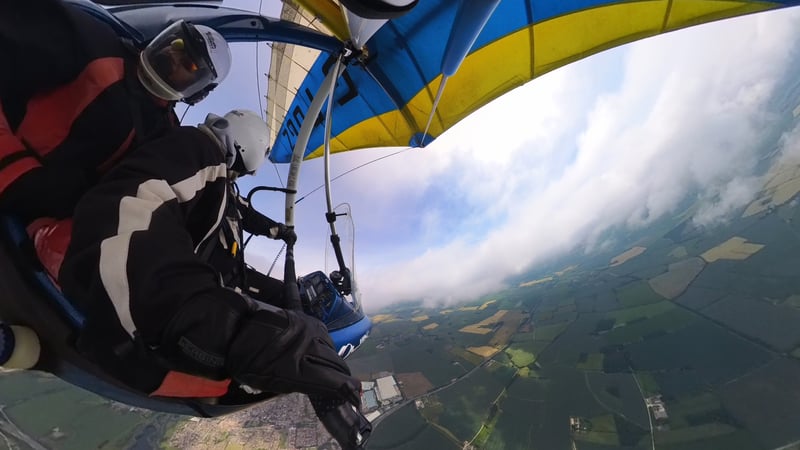
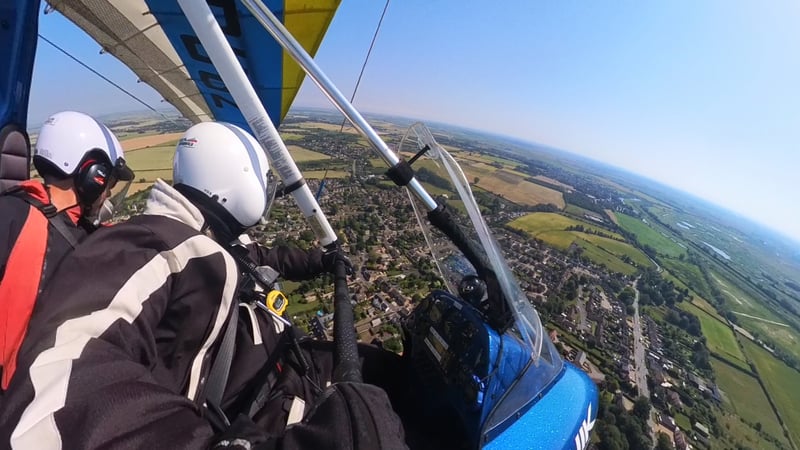
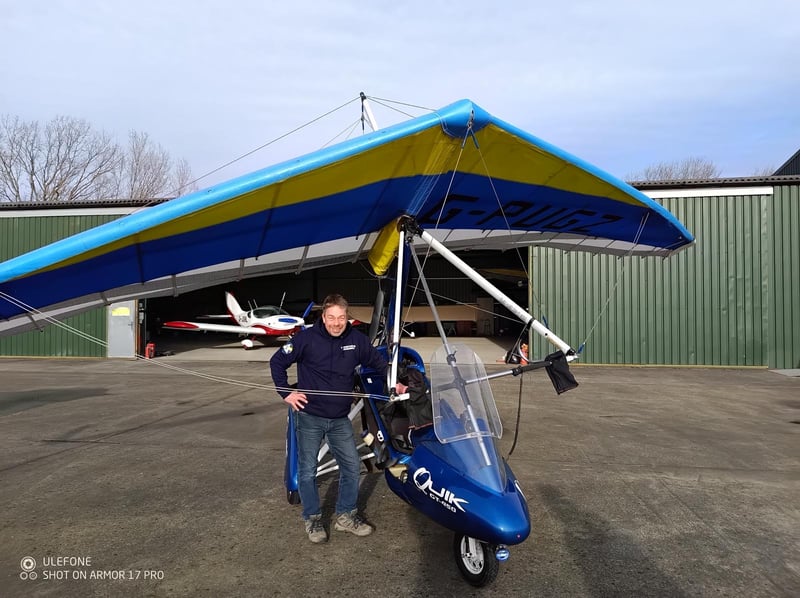
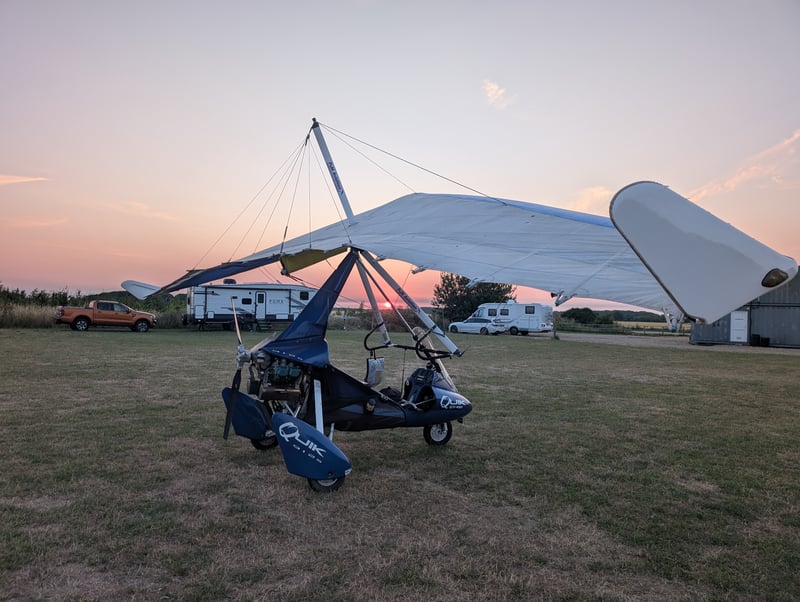
Work toward a National Private Pilot Licence (Microlights) with one-to-one flexwing training at Deenethorpe Aerodrome. Start with a trial hour, build skills on the school aircraft, then move onto your own microlight when you are ready for solo preparation and ground school.
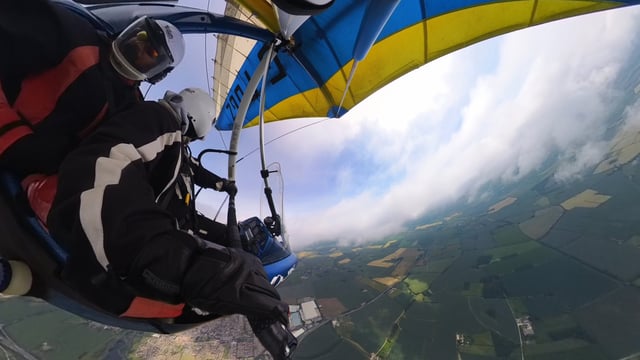
Most pilots begin with a one-hour introductory flight on the school flexwing: brief, hands-on time in the air, and a debrief with the instructor who can stay with you for the whole journey. From there you add hours at your own pace on the training fleet, in your own microlight when you have one, under supervised solo when you are ready, and in ground school for the theory behind the NPPL(M) exams.
UK rules ask for at least 25 flying hours including 10 solo, plus exams and a General Skills Test, but many people take longer because of weather, time between lessons, and individual learning speed. We only fly in suitable conditions and shift to another day when the sky is not safe, and flying regularly helps skills stick as you work toward carrying passengers on your licence.
Introductory Flight - Your first structured hour in the school aircraft: brief, hands-on flying, debrief. Ideal if you know you want to learn rather than just sightsee.
School Aircraft Training - Hourly lessons building take-off, landing, and general handling on the training fleet.
Own Aircraft Training - Hourly instruction in your microlight so you learn the aircraft you will keep flying.
Solo Supervision - Supervised solo time in your aircraft when your instructor agrees you are ready.
Ground School - Focused theory hours covering navigation, meteorology, air law, aircraft technical topics, and human performance ahead of exams.
Deenethorpe gives you long runways and open skies that suit training circuits, navigation exercises, and solo consolidation. It is a working microlight base, not an anonymous classroom, so you live and breathe real airfield life from day one.
There is parking for you and anyone who comes to watch, and the surrounding three counties offer varied scenery when you start cross-country work. Training here can run from first hour through exams without changing venue.
You must be at least 14 and under 105kg fully clothed. Introductory flights need no prior experience; the full licence path needs steady commitment to both flying and ground study.
Bring lace-up shoes or trainers and socks for open-cockpit flying. We provide flight equipment for training sessions; bring curiosity, patience with British weather, and a willingness to learn between lessons.
Instruction follows the British Microlight Aircraft Association syllabus with CAA-approved standards, delivered one-to-one so each hour targets what you personally need next. You are not locked into an opaque block of hours that runs out before you are exam-ready.
Training starts on the school aircraft and moves to your own ship when that saves you money and builds real ownership skills. You pay per lesson as you go, and the same aerodrome hosts everything from trial flight to General Skills Test prep.
Training flights take place at Deenethorpe Aerodrome, Corby, NN17 3AN. Use sat nav to the aerodrome postcode and follow airfield signage to the flying school parking.
On lesson days, arrive in good time for your briefing so you are not rushed before walk-around and kit checks.
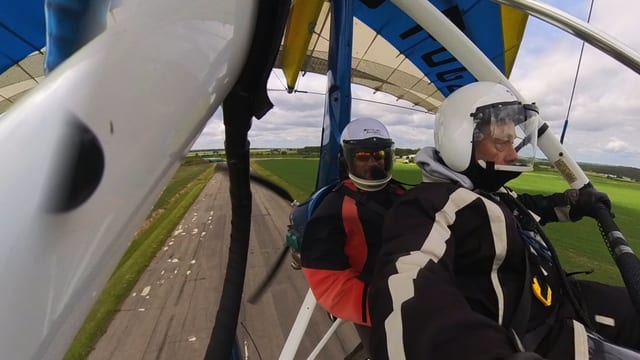
The introductory hour includes briefing, supervised hands-on flying in the school flexwing, and a debrief tailored to whether you want to continue training. All standard flight equipment for the lesson is provided.
It is a proper training session, not a sightseeing ride: you will work on basic control and awareness from the first minute you are airborne.
Regulations set a minimum of 25 flight hours, including at least 10 solo, plus ground exams and a General Skills Test with an oral exam. Those are legal floors, not promises that everyone finishes there.
Most students need more time because weather, gaps between lessons, and individual learning speed all play a part. We train until you are genuinely ready, not just until a package runs out.
Yes, and it is encouraged once you are handling the basics confidently. Training in your own aircraft builds familiarity with the machine you will solo and keeps long-term costs sensible.
Your instructor will say when you are ready for that step. Until then, the school fleet keeps things straightforward while you learn the fundamentals.
Trainees must be at least 14 and weigh no more than 105kg fully clothed, in line with UK microlight limits. Those rules apply to every flying hour, solo or dual.
No prior aviation experience is needed for the introductory flight. The full licence path suits people who can commit to regular lessons when the weather allows.
Not for your first hour. Many students have never touched an aircraft control before and learn from scratch here.
Experience in gliding, paramotoring, or other adventure sports can help, but it is not required. Consistent attendance matters more than any past hobby.
Ground school hits the subjects you must pass for an NPPL(M): air law, navigation, meteorology, human performance and limitations, and aircraft technical knowledge.
Sessions link theory to the flights you are doing so charts and weather reports feel useful, not abstract. Combine ground-school sessions with flying as you approach exams.
Yes, the aerodrome has viewing areas where people can watch circuits and enjoy the atmosphere. It is a nice way to share progress on big milestones such as early solos.
Guests stay on the ground during flying for safety. There is still plenty to see during briefings and landings.
Little and often beats occasional bursts. Students who fly more regularly usually need fewer total hours because skills stay fresh between sessions.
British weather will sometimes ground you anyway, so plan flexibly. When a good day appears, being free to grab it makes a huge difference to morale and progress.
An experience flight is for fun, views, and optional hands-on time without a syllabus goal. The introductory training hour is the first step on the NPPL(M) path with teaching aimed at skills you will repeat and refine.
Both last about an hour in the air but feel different on the ground because the briefing and debrief target different outcomes. Choose the experience activity for gifts; choose this training path when you want to learn to fly.
No. Everyone begins on the school flexwing while basic handling clicks into place. Many pilots train for a good while before buying their own microlight.
When you do acquire an aircraft, you can switch to own-aircraft lessons and later supervised solo sessions without leaving the same airfield or instructor team.
We partner with Rewilding Britain to help protect our natural spaces for future adventures.
All centres are vetted for safety and quality. Your adventure is in good hands with adventuro.

About the centre
Corby
Operated by Red Kite Airsports, a partner of adventuro.


Hampshire and Isle of Wight, United Kingdom
From £95
Hampshire and Isle of Wight, United Kingdom
From £350
Hampshire and Isle of Wight, United Kingdom
From £3500


Leicestershire, Rutland and Northamptonshire, United Kingdom
From £125