We partner with Rewilding Britain to help protect our natural spaces for future adventures.
All centres are vetted for safety and quality. Your adventure is in good hands with adventuro.
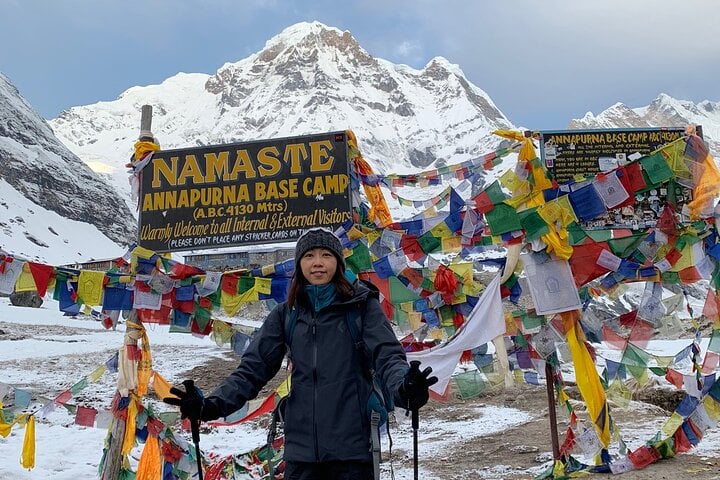
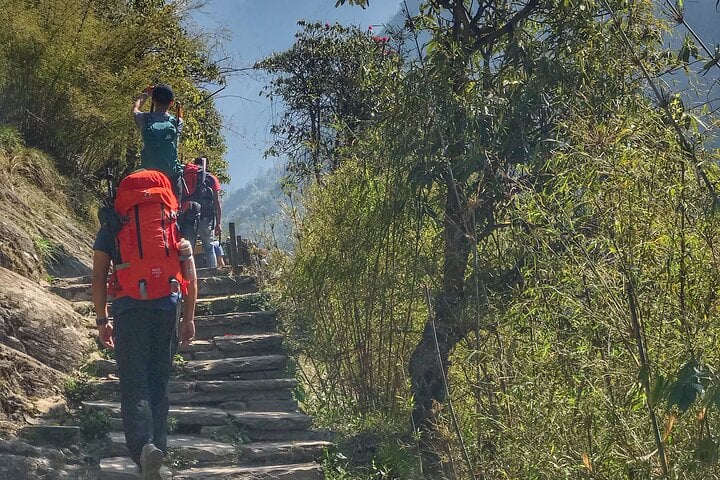
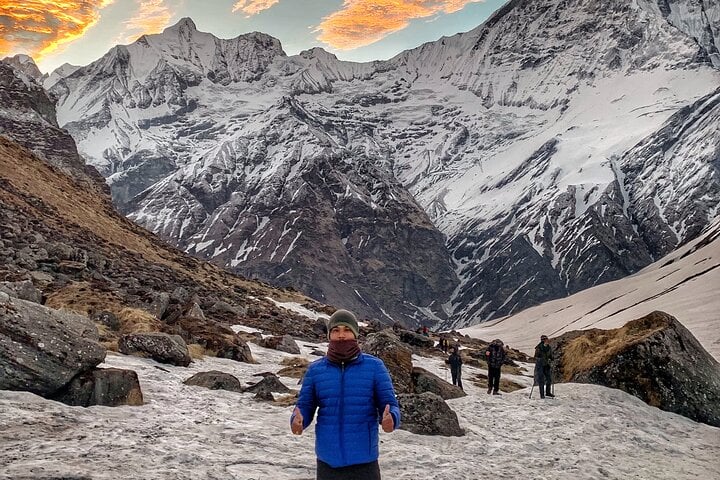
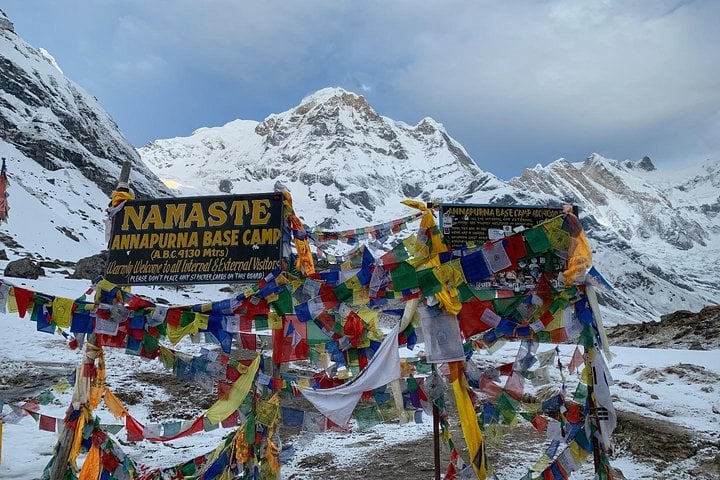
Walk the classic Annapurna Sanctuary approach from Pokhara through Gurung villages, rhododendron forest, and glacial valleys to Annapurna Base Camp, then retrace your steps with a celebration dinner back in Kathmandu. Licensed guides, porter support, teahouse nights, and internal flights link the capital to the trail so you spend your energy on the mountain paths.
After arrival in Kathmandu you meet your team, complete permit formalities, and fly to Pokhara before driving to the trailhead. Each trekking day covers roughly four to seven hours on stone steps and forest paths, with lodge nights in teahouses chosen for cleanliness and location.
The route climbs gradually through Chhomrong and the Modi Khola gorge toward Machhapuchhre Base Camp and Annapurna Base Camp at about 4,130 m, with a controlled descent afterward. A farewell dinner in Kathmandu on the penultimate evening rounds off the journey before airport transfers on your departure day.
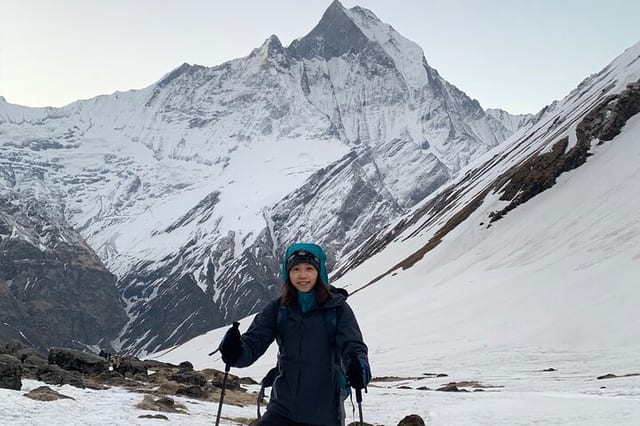
The Annapurna Sanctuary sits beneath the south face of Annapurna I, enclosed by a ring of peaks above the Modi Khola gorge. Oak and rhododendron forest gives way to alpine scrub as you climb, with Machhapuchhre dominating the skyline from Machhapuchhre Base Camp.
Pokhara provides a lakeside start and finish with views across Phewa Tal toward the Annapurna range. Gurung settlements such as Chhomrong show terrace farming and traditional houses away from the capital, while Kathmandu remains your international gateway at the beginning and end of the trip.
This is a moderate trek with sustained ascent above 3,000 m, so regular hill walking in the months before travel helps. Bring broken-in boots, layered clothing, a down jacket, rain protection, a sleeping bag suitable for teahouse nights, sun protection, and a personal first-aid kit with any prescription medicines.
Travel insurance must include helicopter evacuation cover for high-altitude trekking. Tell your guide immediately if you notice headache, nausea, or dizziness so the team can adjust pace or descend. Children join only with an adult who can keep pace on long walking days.
We coordinate airport greetings, lodge bookings, permits, flights, and guiding so your focus stays on the trail. Trek leaders set a steady acclimatisation pace and monitor group wellbeing on the key ascent days toward base camp.
Our on-the-ground team knows teahouse standards on this route and adjusts daily plans when weather or trail conditions require flexibility while keeping your sanctuary objective within reach.
Meet at Tribhuvan International Airport and transfer to your Kathmandu hotel. A trip briefing covers the trekking schedule, gear check, and permit formalities before your first overnight in the capital.
Take the short morning flight to Pokhara, then drive to the trailhead at Matkyu. Walk through oak and rhododendron forest beside the Modi River to Jhinu Danda, with optional hot springs nearby.
Climb to Chhomrong village, descend to the suspension bridge over Chhomrong Khola, then ascend again to Upper Sinuwa through mixed forest with widening mountain views.
Follow the valley through bamboo zones and steady uphill sections to Dovan and Himalaya Hotel, gaining altitude while the gorge walls close in around the river below.
Trek past Hinku Cave and Deurali to Machhapuchhre Base Camp, with open views of the fishtail peak and surrounding glaciers as the forest thins at altitude.
Start early for the two-hour push to Annapurna Base Camp at 4,130 m, then descend to Dhovan after time at the amphitheatre of peaks surrounding the sanctuary.
Continue downhill through Sinuwa and across the Chhomrong Khola bridge back to Chhomrong for a village night among Gurung terraces. The long descent rewards tired legs with warmer air and wider valley views as you drop below the tree line.
Retrace forest and stone steps to Matkyu, drive to Pokhara, and enjoy a free evening by the lakeside before your last mountain sunset. This is a chance to shower, recharge devices, and stroll the waterfront cafés.
Explore Pokhara highlights such as lakes and viewpoints, then fly or drive back to Kathmandu for a hotel night and farewell dinner with your trekking team. Celebrate the completed sanctuary route with local cuisine in the capital.
Enjoy a flexible day in Kathmandu for last-minute shopping, spa recovery, or optional cultural visits while your guide team remains on call for flight changes. Many guests use this buffer before international departures the following morning.
Transfer to Tribhuvan International Airport for your outbound flight according to ticket times. Airport assistance is available when included on your voucher, and we recommend arriving at the terminal early for peak-season queues.
On the trail you sleep in teahouse lodges with private or twin rooms and a shared dining hall where guides and porters gather each evening. Lodges are chosen for a clean bed, hot meals, and a sensible position on the route, though rooms become simpler and cooler as you climb toward Machhapuchhre Base Camp and Annapurna Base Camp.
Before and after the trek you stay in standard hotels in Kathmandu and Pokhara with en-suite rooms and easier access to shops and laundry. Bring a sleeping bag rated for cold teahouse nights even when blankets are provided, and expect shared bathrooms and limited hot showers higher on the mountain. Meals on trek follow the plan on your booking confirmation, usually breakfast, lunch, and dinner in the lodges unless your voucher states otherwise.
This is a moderate trek with several long days on stone steps and sustained ascent above 3,000 m. Regular hill walking or jogging in the months before travel helps, and previous multi-day hiking experience is useful though not mandatory.
Guides set a pace that supports acclimatisation. Tell us about past altitude experience so we can advise on rest days and hydration habits before you depart.
Annapurna Base Camp sits at about 4,130 m, with sleeping nights slightly lower on the way up and down. The route includes gradual height gain to reduce altitude risk compared with rushing the sanctuary.
If you feel symptoms of altitude illness, inform your guide immediately so the team can adjust the plan or descend as required. Never ignore headaches, nausea, or dizziness at altitude, as early descent is the safest response.
Nights on trek use teahouse lodges with basic private or twin rooms and shared dining areas. Kathmandu and Pokhara use standard hotels before and after the trail.
Lodges become simpler as you gain altitude, so expect cooler rooms and limited hot showers higher on the route. Sleeping bags add comfort on cold nights even when blankets are provided in teahouses.
The Kathmandu to Pokhara sector is included as part of this package, subject to airline schedules and weather. Road transfer may replace the flight if aviation is disrupted for safety reasons.
International flights to Nepal are not included unless your package states otherwise, and you should book those separately to align with the trek start date. Arrive in Kathmandu at least one day before the trek briefing when possible.
Annapurna Conservation Area permits and TIMS-style trekking registration are required for this route. Our team arranges standard permit processing when you provide passport details in advance.
Carry passport copies and extra photos for permit forms on arrival day. You may need to show permits at checkpoints along the trail, so keep them accessible in your day pack during hiking days.
The minimum age is five years, though families should realistically assess stamina for long walking days and altitude. Young children must be supervised at all times on bridges and steep steps.
We recommend a private family departure if you need a slower pace or extra rest days in the schedule. Guides can shorten daily stages only when the itinerary allows without compromising safety higher on the route.
Teahouses serve hearty dal bhat, noodles, and hot drinks on trek days. On trek we usually include breakfast, lunch, and dinner at the lodges, with more choice in Kathmandu and Pokhara.
Vegetarian and common dietary requests are usually possible if noted when you book. Boiled water or purification tablets help you stay hydrated between lodges without relying on bottled plastic on the trail.
Comprehensive travel insurance with helicopter evacuation cover is strongly recommended for any trek reaching base camp altitude. Standard policies without mountaineering or altitude clauses may not be valid.
Check policy wording for Nepal and trekking height limits before you purchase cover. Bring your policy emergency number and a printed summary for your guide in case assistance is needed on the mountain.
Spring and autumn offer the clearest views and most stable trails, while winter can be cold at base camp and monsoon months bring rain and leeches lower down. Your guide monitors daily conditions regardless of season.
Pack layers and rain protection even in peak season because mountain weather changes quickly. Trail mud and leeches are more common in summer, so gaiters and repellent are worthwhile if you travel in the wetter months.
Most trekking days cover roughly four to seven hours on the trail, with stone steps, forest paths, and gradual ascent as you move toward the sanctuary. Shorter acclimatisation days are built in where the route allows.
Your guide sets a steady pace with regular breaks for water, photos, and lunch. Tell the team early if you need a slower rhythm so daily stages stay comfortable for everyone in your group.
About the centre
Kathmandu
We are an independent adventure holiday operator based in Kathmandu, helping travellers explore Nepal through treks, cultural journeys, and well-planned outdoor experiences. Since 2018 we have focused on attentive service, clear communication, and itineraries that balance ambition with sensible pacing, whether you are joining a multi-day trek, a valley hike with an overnight stay, or a scenic flight toward the high Himalaya.
Our team arranges guiding, permits, accommodation, and practical logistics so you can concentrate on the trail, the views, and the moments that make a trip memorable. We work with individuals, families, and groups, and we draw on long-standing ties with local communities and registered travel associations across Nepal to keep every journey safe, respectful, and genuinely welcoming.
Operated by KJ Adventure Nepal, a partner of adventuro.