We partner with Rewilding Britain to help protect our natural spaces for future adventures.
All centres are vetted for safety and quality. Your adventure is in good hands with adventuro.
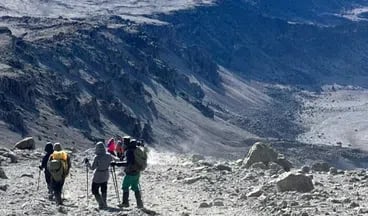
This six-day climb follows Kilimanjaro’s most direct southern approach, moving quickly from dense rainforest into steep ridge sections and high alpine terrain. The route is physically demanding from the outset, with sustained uphill sections that require steady pacing and consistent energy management throughout.
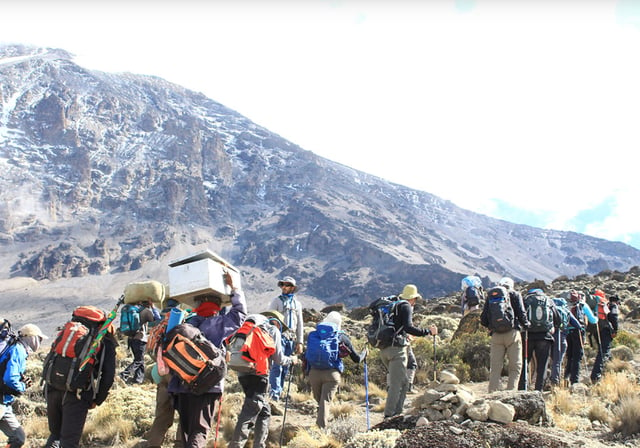
Expect a structured ascent supported by an experienced mountain team managing navigation, food, and safety across all camps. As altitude increases rapidly, recovery time at each stop becomes important, especially before the summit push which begins overnight and continues into the early morning hours.
Each climb is led by certified wilderness-trained guides with strong experience in steep, high-altitude terrain. Daily health checks, oxygen support, and careful pacing strategies are used to help manage the demands of rapid ascent routes like this one.
Alongside technical mountain support, each journey contributes to community-focused projects in the Moshi region. This includes support for health education initiatives, linking high-altitude adventure with practical local impact.
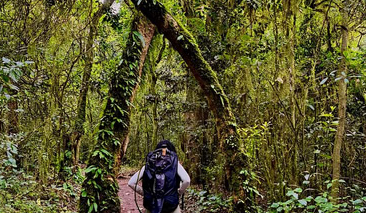
The trek begins at Umbwe Gate, where the trail immediately enters dense rainforest and climbs steeply from the outset. The route is narrow in places, with continuous elevation gain through humid forest conditions.
Umbwe Cave Camp is reached after a sustained climb, offering a basic but sheltered overnight stop. The focus is on rest and recovery after a physically demanding opening day.
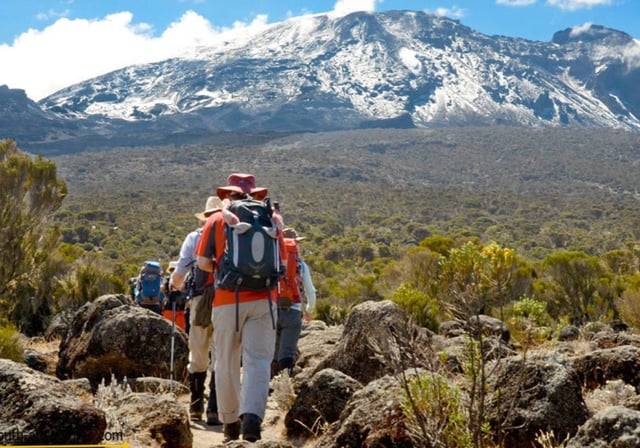
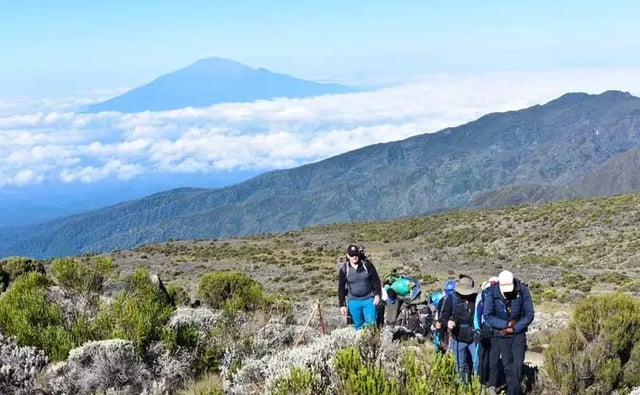
Leaving the forest behind, the route transitions into moorland with more open views across surrounding valleys. The path follows a steep ridge line, maintaining a strong upward gradient for much of the day.
As the landscape opens further, Barranco Camp is reached beneath towering rock formations. The evening is used for recovery and preparation for the next stage of ascent.
The day begins with the ascent of the Barranco Wall, a well-known rocky section requiring steady footing and careful movement. Once above the wall, the route continues across ridges and valleys with gradual elevation gain.
Karanga Camp is reached by mid to late afternoon, where time is spent resting and supporting acclimatisation. This stop plays an important role in preparing for higher altitude sections ahead.
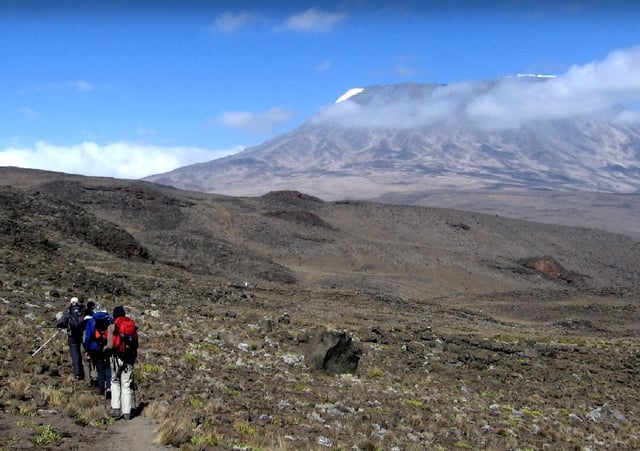
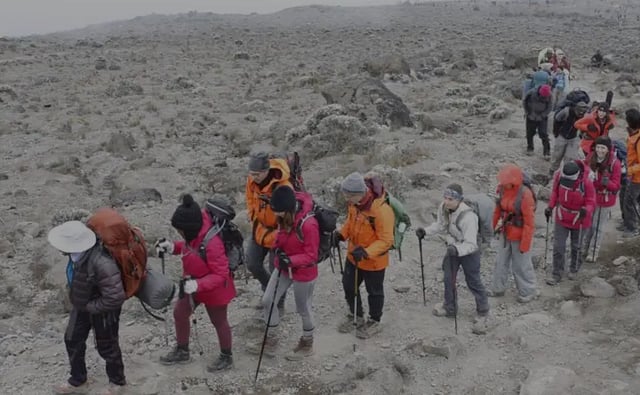
The terrain becomes increasingly barren as the trail enters alpine desert conditions. The climb continues at a steady pace with fewer natural features and more exposed ground.
Barafu Camp is reached in the afternoon, serving as the final base before the summit attempt. Early rest is prioritised in preparation for the midnight departure.
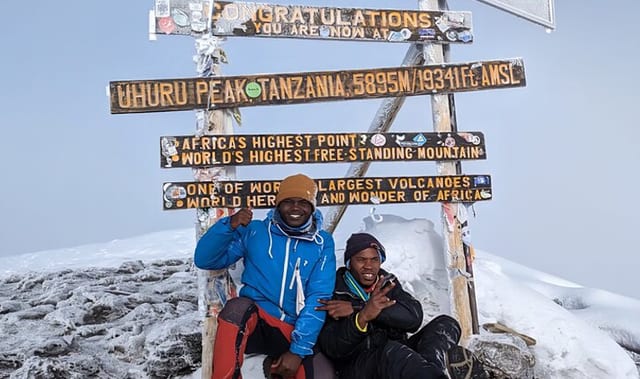
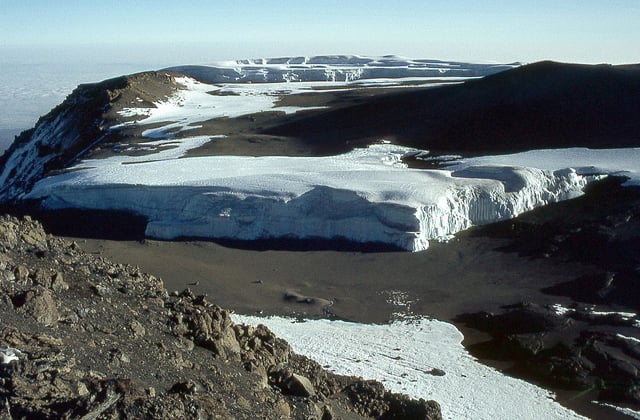
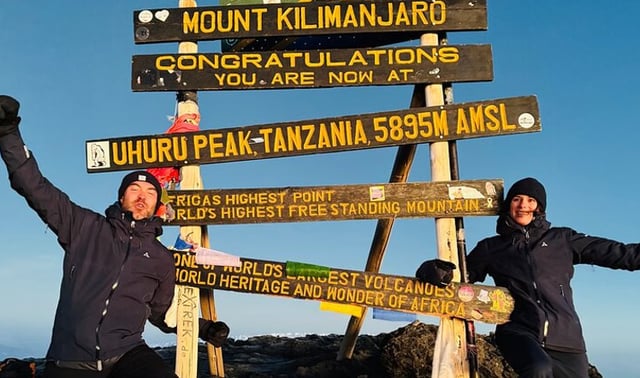
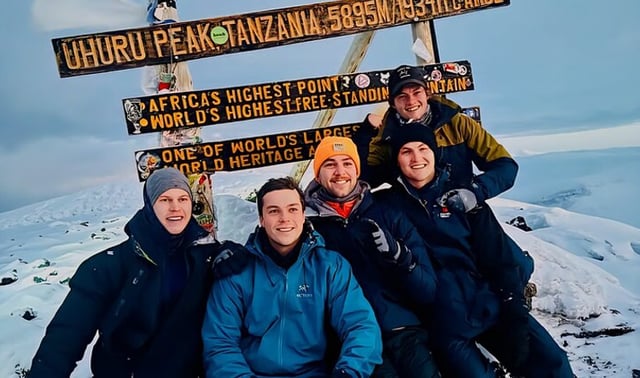
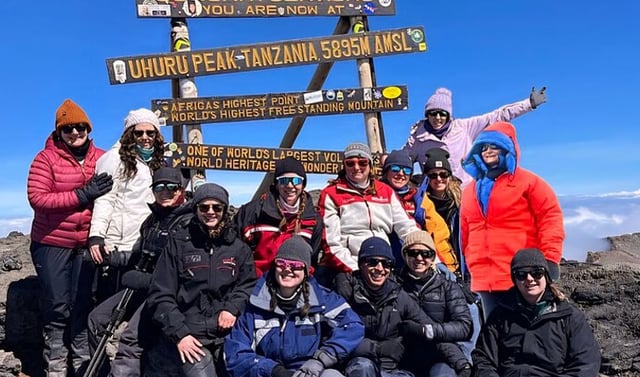
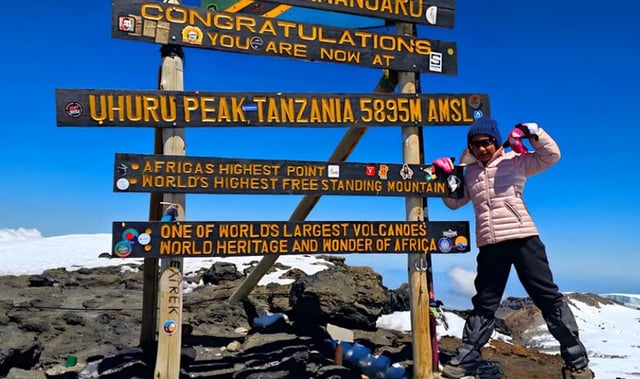
The summit attempt begins shortly after midnight, climbing steep scree slopes toward Stella Point before continuing to Uhuru Peak. Conditions are cold and demanding, with slow, steady progress essential throughout.
After a short stay at the summit, the descent begins back through higher camps before continuing down to Mweka Camp. This is the most physically demanding day, combining night ascent and long descent in a single effort.
The final stage descends through rainforest terrain, where air becomes warmer and oxygen levels noticeably increase. The path is steady and continuous, allowing time to recover after the summit effort.
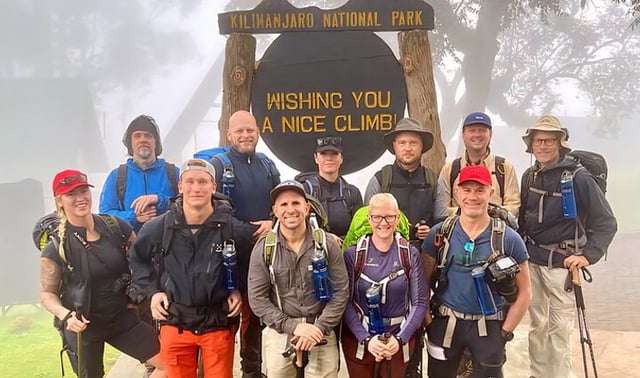
Arrival at Mweka Gate marks the end of the trek, where completion certificates are issued before transfer back to base accommodation or onward travel.
Accommodation consists of a combination of mountain camps and designated overnight stops positioned along the route. These provide basic shelter, sleeping arrangements, and communal meal areas for rest between trekking stages.
Conditions become more exposed at higher altitude, with colder temperatures and simpler facilities. Support crews manage equipment and camp setup, allowing focus to remain on recovery and progression.
This route is widely regarded as one of the most physically demanding due to its steep gradients and rapid elevation gain. There is less time for gradual acclimatisation compared to other routes.
It is best suited to those comfortable with sustained uphill trekking over multiple days in high-altitude conditions.
The ascent is more direct, meaning altitude is gained quickly over a shorter horizontal distance. This creates a more continuous climb rather than a gradual build-up.
The terrain includes steep forest sections, ridges, and exposed alpine zones earlier in the itinerary.
Daily health checks are carried out using pulse oximetry to monitor oxygen levels and physical response. Guides adjust pacing where needed to support safe progression.
Emergency oxygen is available, and descent is prioritised if symptoms become more serious.
Accommodation alternates between basic mountain camps and designated overnight stops along the trail. Facilities are simple and designed for rest rather than comfort.
Conditions become colder and more exposed at higher altitude, especially near summit staging points.
Meals are prepared by the support team and provided at each stop, focusing on energy and recovery. Food is designed to support sustained physical effort at altitude.
Water is treated where required, and regular hydration is encouraged throughout each day.
The summit push begins around midnight on day five, allowing ascent during colder, more stable conditions. This timing supports arrival at the summit around sunrise.
After a short stay at the top, descent continues immediately to lower camps.
About the centre
Moshi
Operated by Hillborn Organic Coffee, a partner of adventuro.
Kilimanjaro & Arusha, Tanzania
From $2800
Kilimanjaro & Arusha, Tanzania
From $2800
Kilimanjaro & Arusha, Tanzania
From $2600
Kilimanjaro & Arusha, Tanzania
From $2200
Kilimanjaro & Arusha, Tanzania
From $80