
Ready to find a course or session?
PSAI Expedition Trimix Diver is Level 2 of the PSAI trimix programme. It follows Trimix Fundamentals with expedition-level planning, gas management and deep open water training toward a certification depth of 75 m / 250 ft. You are not learning trimix from scratch here. You are refining the judgement, bailout discipline and team protocols that deep helium diving demands when profiles get long and margins get thin.
Centres run a multi-day expedition-level technical programme after confirming substantial logged trimix experience. Classroom work focuses on advanced staged decompression with helium bottom mixes, then you execute deep trimix dives under direct instructor supervision. Schedules flex with weather, gas blending and how quickly the team meets PSAI performance standards.
Think of Level 1 Trimix Fundamentals as learning the grammar. Expedition trimix is writing longer sentences without losing the plot. Divers who rush the gap between levels usually discover that depth exposes habits, good and bad, much less dramatically than any classroom lecture can explain.
Expedition Trimix Diver is assessed through theory, expedition-level planning and practical open water trimix dives. Your instructor signs off when you meet PSAI Level 2 standards to 75 m.
Quick answers about this qualification. For anything else, use live chat or browse bookable activities below.
Find activitiesIt is Level 2 of PSAI's trimix programme, qualifying expedition-level trimix dives with staged decompression to 75 m / 250 ft. You build on Trimix Fundamentals with deeper planning and execution standards.
This is not an entry helium course. Substantial logged trimix experience is expected before enrolment.
PSAI Trimix Fundamentals Diver or equivalent, plus substantial logged trimix dives your centre verifies. The gap between Level 1 and Level 2 exists so you build real-world helium experience.
Leave a comment when you book with your Level 1 certification date and deepest trimix profiles logged.
Expedition Trimix Level 2 certifies staged decompression trimix dives to 75 m / 250 ft within PSAI standards. Qualifying training dives demonstrate competence toward that ceiling under instructor supervision.
Certification depth is a training limit, not a target for every weekend dive afterward.
A multi-day expedition-level programme with theory and deep open water trimix dives. Exact length depends on centre logistics, helium availability and weather.
Deep trimix courses rarely finish on a rigid timetable. Buffer travel days are sensible, not pessimistic.
Level 1 establishes trimix to 60 m with core planning tools and problem protocols. Level 2 adds expedition-level planning culture and qualifies dives to 75 m after logged progression.
Skills overlap; depth, profile length and judgement expectations increase.
Centres assess equivalent trimix certifications and logbooks case by case. PSAI progression assumes Fundamentals-level training and experience before Expedition enrolment.
Bring full certification history and dive logs for crossover review rather than assuming automatic entry to Level 2.
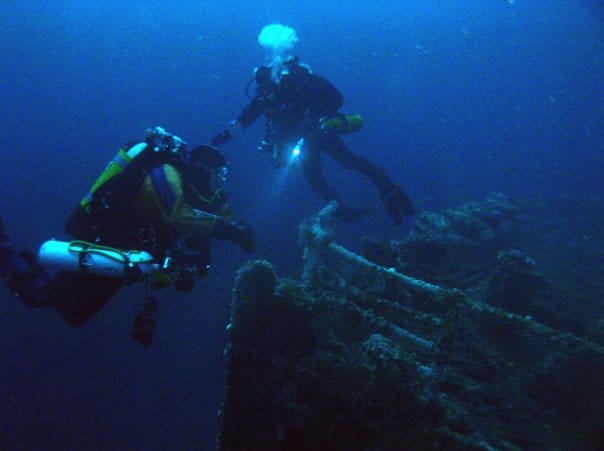
Helium-based bottom trimix with staged decompression gases as planned on each dive. Twin-set or sidemount with multiple stages, technical computer and thermal protection for long stops are standard.
Confirm the centre's configuration requirements and typical helium surcharges when you enquire.
Deep wrecks are a common motivation, but the certification is about safe expedition-level open water trimix within PSAI limits. Site choice depends on the training centre and season.
Depth without purpose is a hobby for people who enjoy spreadsheets. Most students have a specific dive project in mind.
Agency pathways differ in labels and depth staging, but expedition trimix courses everywhere demand logged experience, analysed gases and conservative planning. Compare prerequisites and depth ceilings on listings rather than logos alone.
If you also hold PADI Divemaster or professional ratings, they do not replace technical trimix prerequisites.
Instructors repeat training dives or add coaching until standards are met. Expedition courses expect high performance; extra days are normal for divers building depth confidence.
Leave a comment when you book if you want honest logbook feedback before you commit to dates.
adventuro lists PSAI technical centres running Expedition Trimix with helium access and sites suitable for deep training. Compare experience requirements, gas policies and boat support on each listing.
Book early. Expedition trimix courses run infrequently and depend on instructor availability and blending capacity.
