
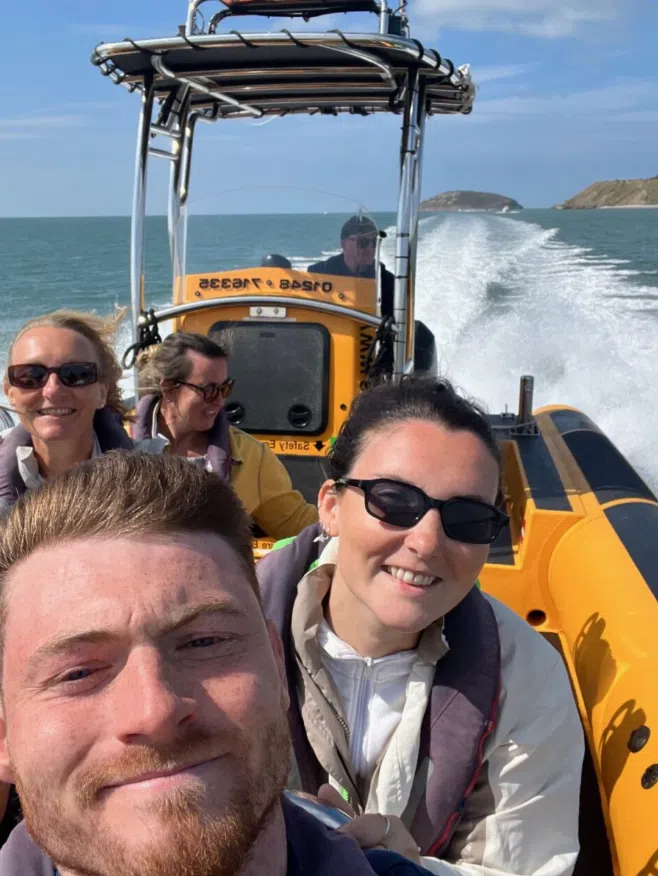
Que porter pour une sortie en bateau à moteur : balades en semi-rigide, cours et journées avec embruns
La navigation à moteur couvre tout, d’une douce excursion d’observation de la faune en semi-rigide à une virée côtière à pleine puissance et à un cours RYA Powerboat Level 2. Ce que vous portez varie selon le bateau et la météo, mais une règle s’applique toujours : prévoyez des embruns, du vent et une baisse de température dès que vous quittez le port.
Ce guide explique comment s’habiller pour pratiquer la navigation à moteur au Royaume-Uni : sorties passagers en semi-rigide, excursions touristiques et journées de formation pratique.
Lors du briefing à bord d’un semi-rigide, le skipper vous montrera la ligne d’embruns sur le flotteur. Asseyez-vous en dessous si vous voulez rester plus au sec ; la proue et le côté au vent sont les premiers exposés quand la mer se lève.
Découvrir la navigation à moteur →
Ce que l’opérateur fournit généralement
Lors d’une excursion passagers en semi-rigide comme l’excursion en semi-rigide pour explorer Puffin Island (à partir de £35), l’opérateur fournit le bateau, les gilets de sauvetage et souvent des vestes et pantalons imperméables anti-embruns pour les passagers. Portez tout de même des couches adaptées dessous et prévoyez des vêtements de rechange si vous voulez rester à l’aise ensuite.
Lors d’un RYA cours de navigation à moteur tel que RYA Powerboat Level 2 dans le nord du pays de Galles (à partir de £291.50), vous conduisez autant que vous naviguez comme passager. Attendez-vous à recevoir une liste détaillée d’équipement de la part de l’école : vêtements imperméables, chaussures antidérapantes et couches chaudes sont la norme.
Lisez toujours la rubrique "ce qu’il faut apporter" de l’annonce'. Ne supposez pas que le centre prête une tenue complète pour le large, sauf si cela est indiqué.
Excursions en semi-rigide : que porter dessous
| Couche | Recommandation |
|---|---|
| Base | T-shirt respirant ou haut thermique (pas de coton) |
| Intermédiaire | Polaire ou softshell, facile à fermer sous une veste anti-embruns |
| Jambes | Pantalon ou legging à séchage rapide ; short uniquement par temps chaud et calme |
| Pieds | Baskets ou chaussures bateau ; sandales uniquement si l’opérateur les autorise |
| Extérieure | Imperméables de l’opérateur par-dessus, ou les vôtres si vous en avez |
| Accessoires | Bonnet, lunettes de soleil, crème solaire ; gants au printemps et en automne |
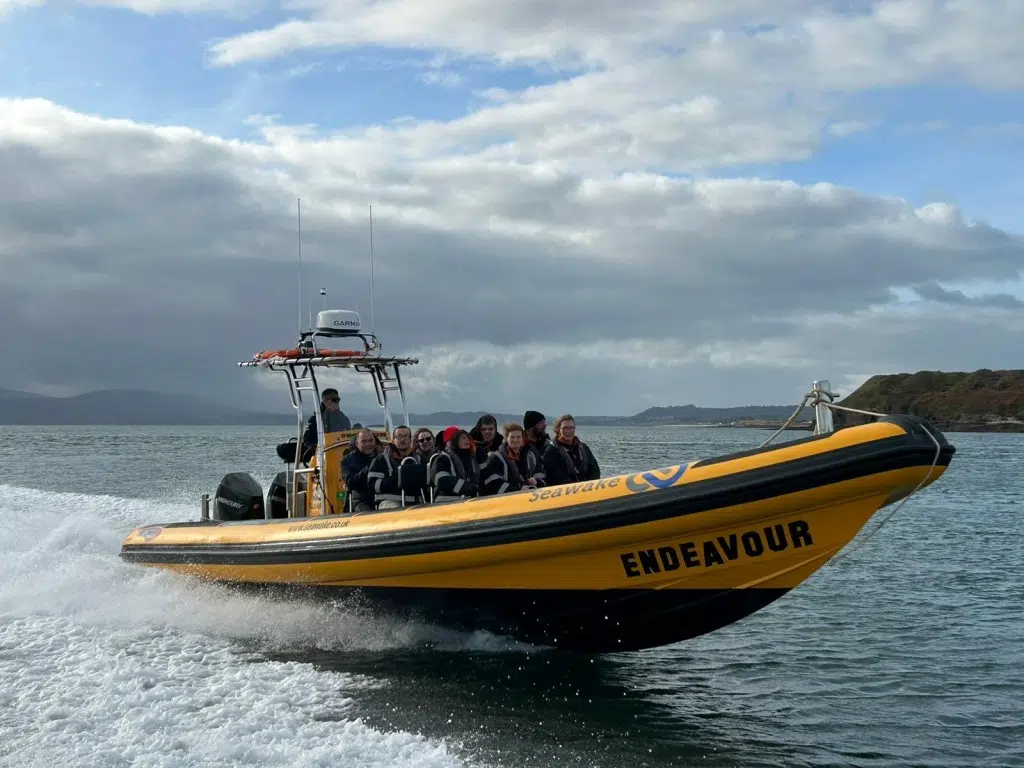
Même lors d’une excursion d’observation de la faune à vitesse de déplacement, le refroidissement éolien compte. L’évaporation des embruns sur vos vêtements prélève de la chaleur à votre corps : un tissu mouillé dans une brise à 20 km/h peut sembler 5 à 10°C plus froid que la température de l’air sur le ponton. Rester assis une heure sur le flotteur d’un semi-rigide avec un T-shirt en coton humide est plus froid que parcourir la même distance à terre, car vous produisez moins de chaleur métabolique.
Cours pratiques de navigation à moteur
Lorsque vous êtes à la barre, vous avez besoin de liberté de mouvement et d’adhérence sur un pont mouillé.
- Veste et pantalon imperméables : vêtements de quart de type voile ou cirés hauturiers si l’école le précise
- Chaussures antidérapantes fermées : chaussures bateau ou baskets avec une bonne semelle
- Gants : des gants fins de voile ou de navigation à moteur aident à lutter contre le froid et améliorent la prise sur le volant
- Aide à la flottabilité : généralement fournie ; portez-la correctement attachée
- Carnet et supports théoriques : les séances à terre font partie de la plupart des RYA cours
Apportez un sac étanche pour votre téléphone et les clés de voiture. Les embruns se glissent dans les poches.
Gilets de sauvetage : ajustement et port
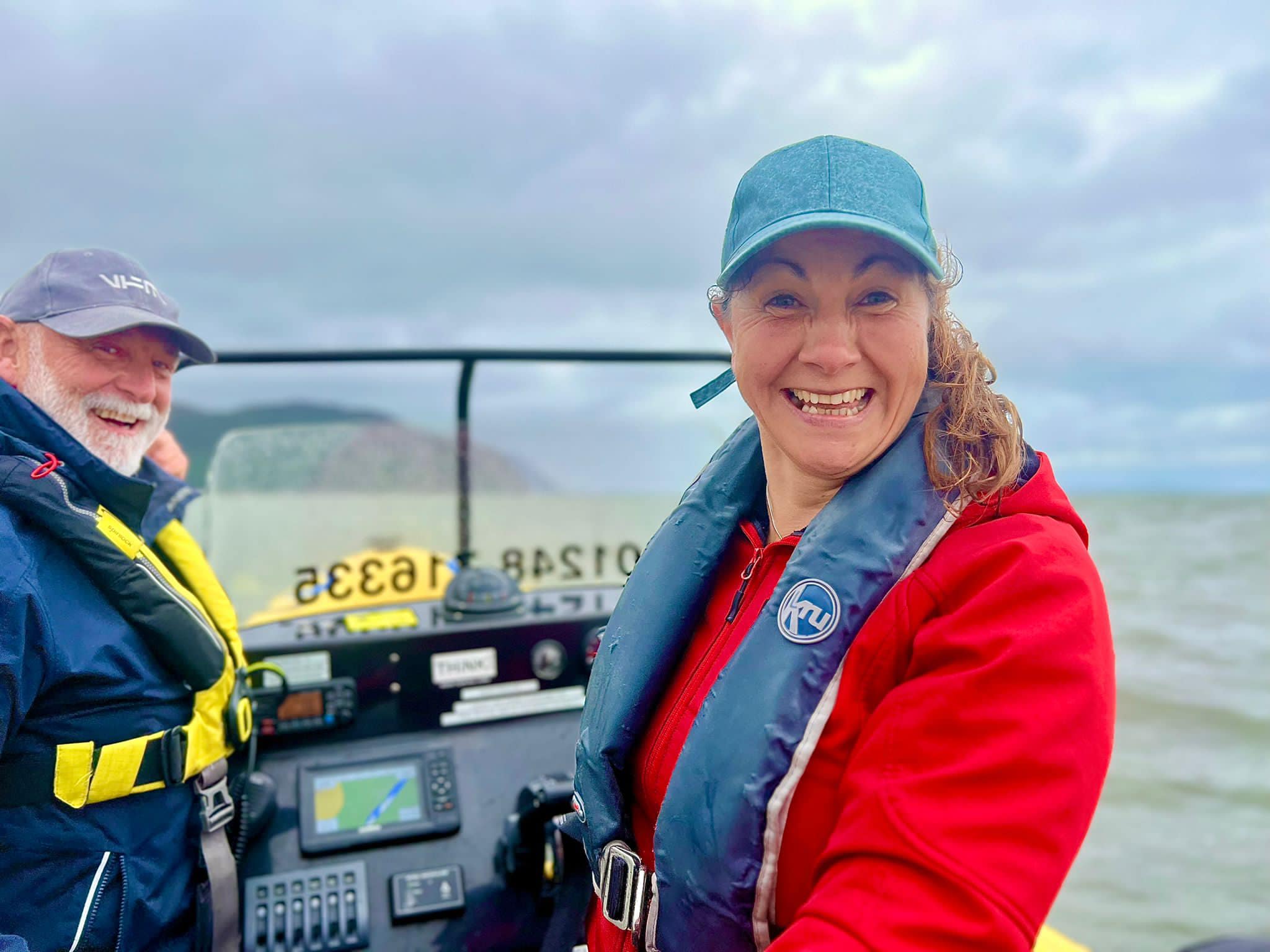
Les excursions passagers fournissent des gilets de sauvetage ou aides à la flottabilité avant le départ. Mettez-les complètement et fermement, sans les laisser pendre. Vous devez pouvoir glisser deux doigts sous la sangle d’épaule, pas davantage. Si vous emmenez un enfant, demandez à l’opérateur s’il dispose d’un équipement à sa taille au moment de réserver.
Ne remplacez pas le gilet par votre propre ceinture gonflable sans l’accord de l’opérateur. Les bateaux commerciaux suivent des règles de sécurité précises.
Saison et état de la mer
Sortie estivale calme dans le port : couches plus légères, mais prévoyez tout de même un vêtement coupe-vent. Les excursions en soirée se rafraîchissent rapidement.
Semi-rigide en pleine mer : considérez cela comme une navigation en eaux froides : vêtements entièrement imperméables, couche intermédiaire chaude, bonnet. À vitesse de planage, les embruns sont poussés par le vent apparent ; la proue et le flotteur au vent reçoivent le plus gros des projections. La température de surface de la mer au large des côtes britanniques est souvent de 12 à 16°C en été ; même une courte douche compte donc si votre couche de base est en coton.
Hiver ou mi-saison : couche thermique de base, polaire, vêtements imperméables, gants. Les opérateurs peuvent raccourcir ou reporter une sortie par mauvais temps ; c’est normal.
Ce qu’il ne faut pas porter
- Jeans et sweats à capuche en coton : lourds lorsqu’ils sont humides, froids au vent
- Écharpes amples ou longs manteaux non attachés : risque d’accrochage près des cordages et du matériel
- Talons hauts ou tongs : dangereux sur les ponts et pontons mouillés
- Un simple T-shirt parce que les prévisions annonçaient 18°C : la température de l’eau et le refroidissement éolien sont inférieurs à ceux du parking
Après la sortie
Glissez une serviette et une tenue sèche de rechange dans la voiture, surtout pour les sorties avec beaucoup d’embruns. Vos cheveux et vos chaussures recevront du sel ou de l’eau douce lors des sorties côtières et dans les estuaires.
Erreurs courantes
- Refuser les vêtements imperméables du centre parce qu’il fait beau. Vous les voudrez dix minutes plus tard, surtout sur le flotteur au vent.
- Pas de cordon pour lunettes de soleil : perdre une paire par-dessus bord coûte cher
- Habiller trop légèrement les enfants : les enfants se refroidissent plus vite ; superposez les couches comme pour vous, puis ajoutez-en une de plus
Prêt à réserver
Les excursions d’observation de la faune en semi-rigide sont l’initiation la plus douce : installez-vous, habillez-vous chaudement et profitez de la côte. Les RYA cours s’adressent à ceux qui veulent conduire eux-mêmes un bateau.
Découvrir la navigation à moteur → · Associez une sortie dans le détroit de Menai à notre guide des activités du nord du pays de Galles.
Autres guides d’équipement : randonnée · paddle · kayak · voile
🌿 Une partie des réservations adventuro soutient la conservation de la nature grâce à notre partenariat avec Rewilding Britain.
FAQ
Les excursions en semi-rigide fournissent-elles des vêtements imperméables ?
Souvent oui lors des excursions touristiques passagers : vestes et pantalons anti-embruns à porter par-dessus vos vêtements. Ils protègent des embruns poussés par le vent, mais pas d’une immersion complète. Vérifiez l’annonce. Portez des couches respirantes dessous (pas de coton) : si les embruns s’infiltrent par les poignets, les matières synthétiques sèchent plus vite et tiennent plus chaud qu’un sweat humide. Apportez les vôtres si vous êtes frileux ; l’équipement du centre est généralement en PVC non doublé ou dans une matière similaire.
Que dois-je porter pour un RYA cours de navigation à moteur ?
Prévoyez une veste et un pantalon imperméables, une couche intermédiaire en polaire ou softshell, une couche de base respirante, des chaussures fermées antidérapantes et des gants pendant les mois plus frais. Vous serez debout sur un pont mouillé, vous manipulerez des cordages et conduirez à grande vitesse : la liberté de mouvement compte davantage qu’un manteau épais. La liste d’équipement de l’école fait foi. Les aides à la flottabilité sont normalement fournies ; portez-les complètement attachées.
Puis-je porter une robe lors d’une sortie en bateau ?
Une tenue pratique est préférable : pantalon ou legging, chaussures stables, vêtements superposés. Les gilets de sauvetage doivent être bien ajustés aux épaules ; les tissus amples font des plis sous les sangles et peuvent remonter. Les embruns et les marches d’embarquement sont peu pratiques avec une robe ou un long manteau. Gardez le style pour le café du port après vous être changé.
Vais-je être mouillé sur un bateau à moteur ?
Partez du principe que oui, même sous le soleil. À grande vitesse, la coque projette une fine brume qui s’infiltre dans les fermetures et les poignets. Monter à bord depuis un ponton mouille les chaussures et les bas de pantalon. La pluie et la brume marine ajoutent encore de l’humidité. Des vêtements imperméables par-dessus des matières synthétiques à séchage rapide constituent la meilleure combinaison ; un sweat en coton sous une veste anti-embruns restera froid pendant toute la sortie.
Les crocs conviennent-ils pour la navigation à moteur ?
Ce n’est pas l’idéal. Les Crocs et sabots en mousse similaires offrent peu d’adhérence sur la fibre de verre et les flotteurs mouillés. Ils protègent également peu les orteils si vous heurtez un taquet ou un plat-bord dans une mer agitée. Des baskets à semelle adhérente ou des chaussures bateau fermées offrent une meilleure accroche lorsque le pont bouge sous vos pieds. Certains opérateurs vous demanderont de changer de chaussures avant l’embarquement.
L’endroit où je m’assois sur le semi-rigide change-t-il la tenue que je dois porter ?
Oui. Lors d’une navigation rapide, la proue et le flotteur au vent reçoivent les embruns les plus importants, car le bateau pousse l’eau face au vent apparent. À vitesse lente lors d’une excursion d’observation de la faune, vous restez plus au sec à l’arrière (vers la poupe). Si vous craignez le froid ou les embruns, demandez à l’équipage où vous asseoir et utilisez les vêtements imperméables du centre même si le temps semble calme au quai. Le vent sur l’eau est souvent d’une force de Beaufort supérieure à celui ressenti à terre.