
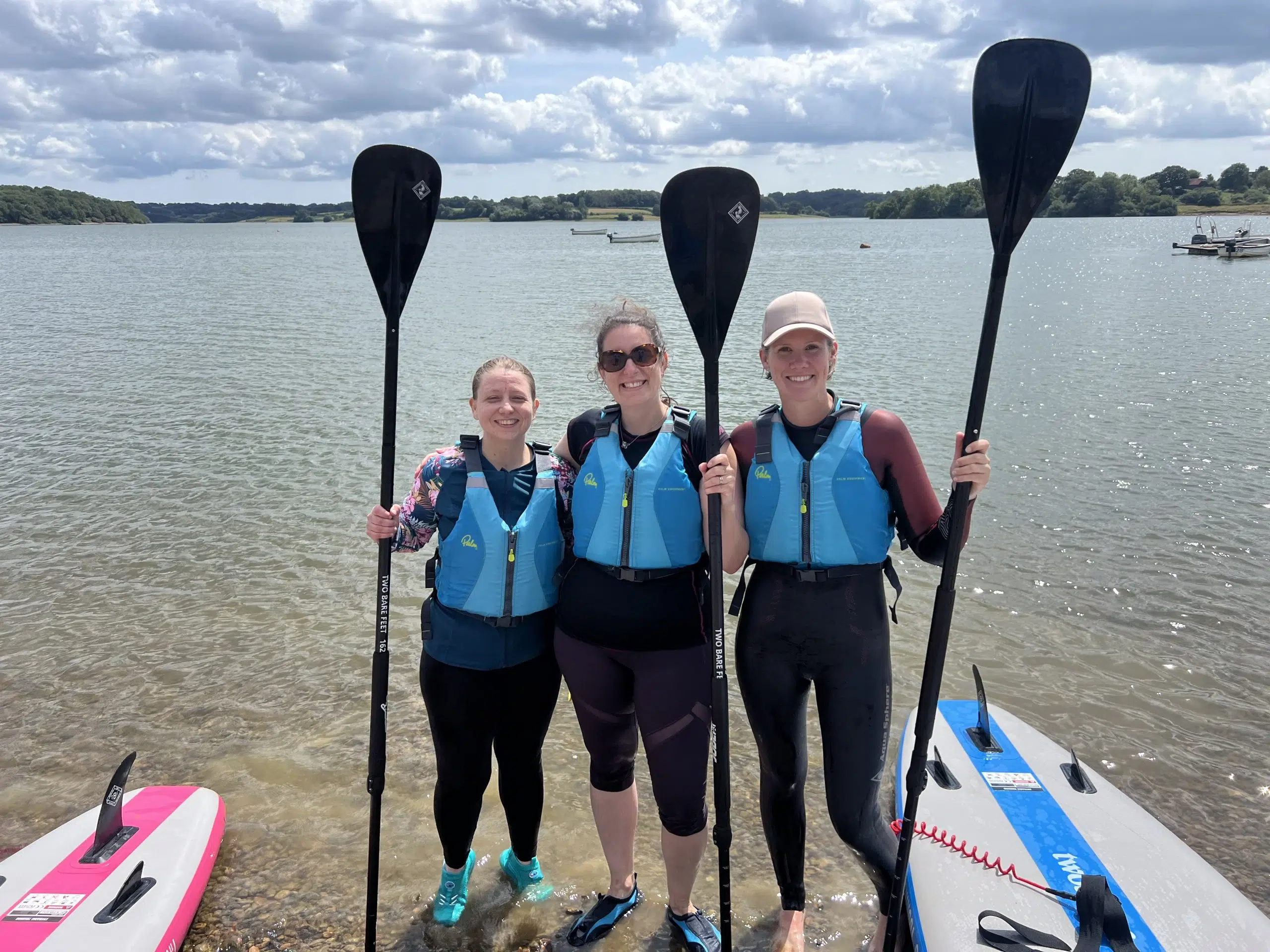
What to wear paddleboarding: SUP kit for UK waters
Stand-up paddleboarding looks simple until you are standing on a board in a force-3 breeze, knees locked, wondering why your cotton t-shirt is freezing. SUP is a water sport. You will get wet, even if you never fall in. Dress for immersion and sun, and the day gets much easier.
This guide covers what to wear for paddleboarding in the UK: beginner lessons, flat-water hire, and coastal sessions. Centres on adventuro often supply boards and paddles; clothing is usually on you unless the listing says otherwise.
On a first lesson, most people arrive overpacked. You need layers you can move in, sun protection, and a BA that fits over a thin top, not a thick hoodie.
What the centre usually provides
For a beginner SUP lesson like Beginner SUP lesson on the River Avon, expect the board, paddle, leash, and buoyancy aid to be included. Hire sessions such as paddleboard hire at Bewl Water (from £30) supply the board and paddle. You bring what you wear on the water.
Wetsuits are common on cooler days and coastal SUP, but not every flat-water hire centre loans them. Read the listing kit section before you assume one is waiting for you.
Core kit: what to wear on the board
| Item | What works | What to avoid |
|---|---|---|
| Top | Rash vest, quick-dry tee, or wetsuit top | Heavy cotton hoodies |
| Bottoms | Board shorts, leggings, or wetsuit bottoms | Denim, joggers that soak up water |
| Feet | Bare feet on warm flat water; neoprene boots or water shoes on rocky launch spots | Flip-flops (they float away) |
| Sun | Hat with strap, sunglasses with retainer, high-SPF sunscreen | Unsecured caps (they become litter) |
| Warmth | Full wetsuit (3/2mm spring to autumn; thicker in winter) | A single dry layer with no spare warmth ashore |
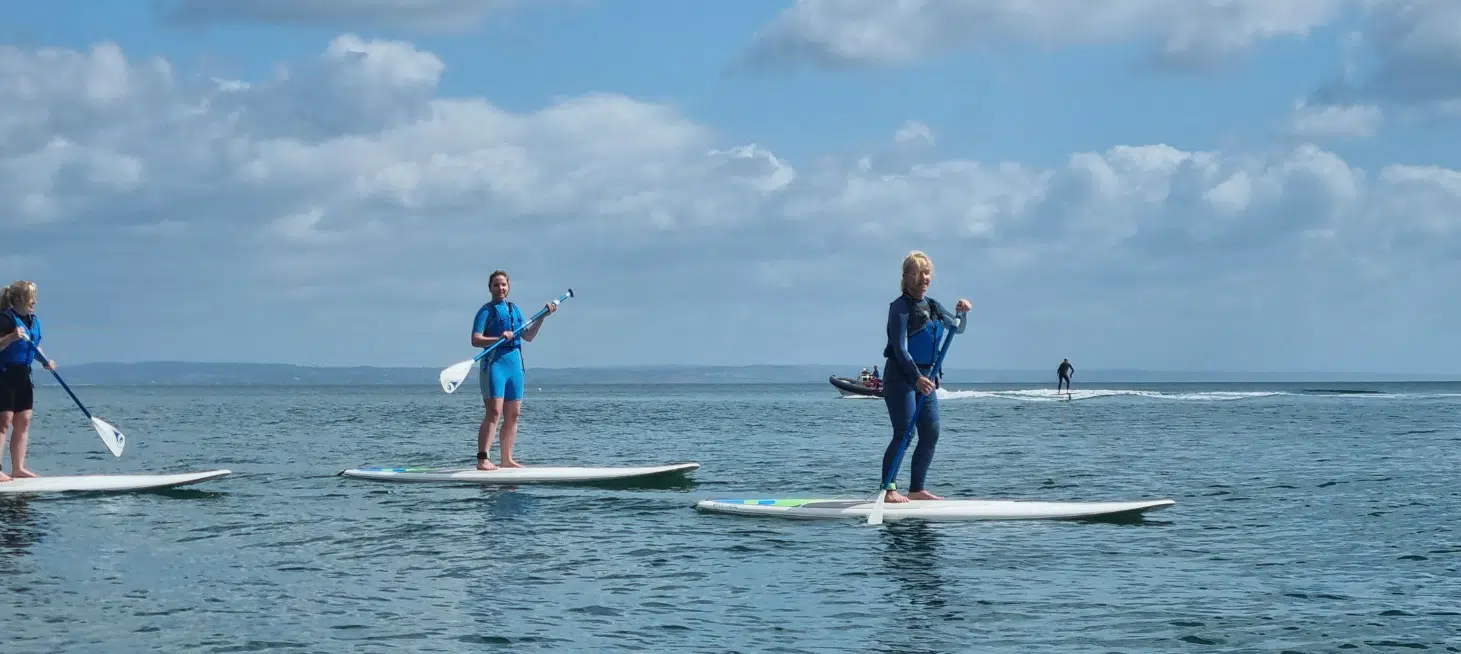
Wetsuit or no wetsuit
Wear a wetsuit when:
- Water temperature is below roughly 18°C (most UK open water from April to October; many reservoirs and coastal spots sit 12 to 16°C even in summer)
- You are on the coast with wind chill and longer immersion risk
- You are nervous about falling in. Warmth buys confidence and extends safe paddling time.
Rash vest and shorts can work on hot summer days at sheltered lakes and slow rivers when water is warm and sessions are under an hour, but pack a warm layer for after. Standing on a board exposes more skin to wind than kayaking; evaporative cooling from a wet top chills you faster than you expect.
If you own a wetsuit, a shorty or long-sleeve 3/2 mm covers most UK SUP from May to October. Winter paddling needs thicker neoprene (4/3 mm or more) plus gloves. Book a centre that knows cold-water safety.
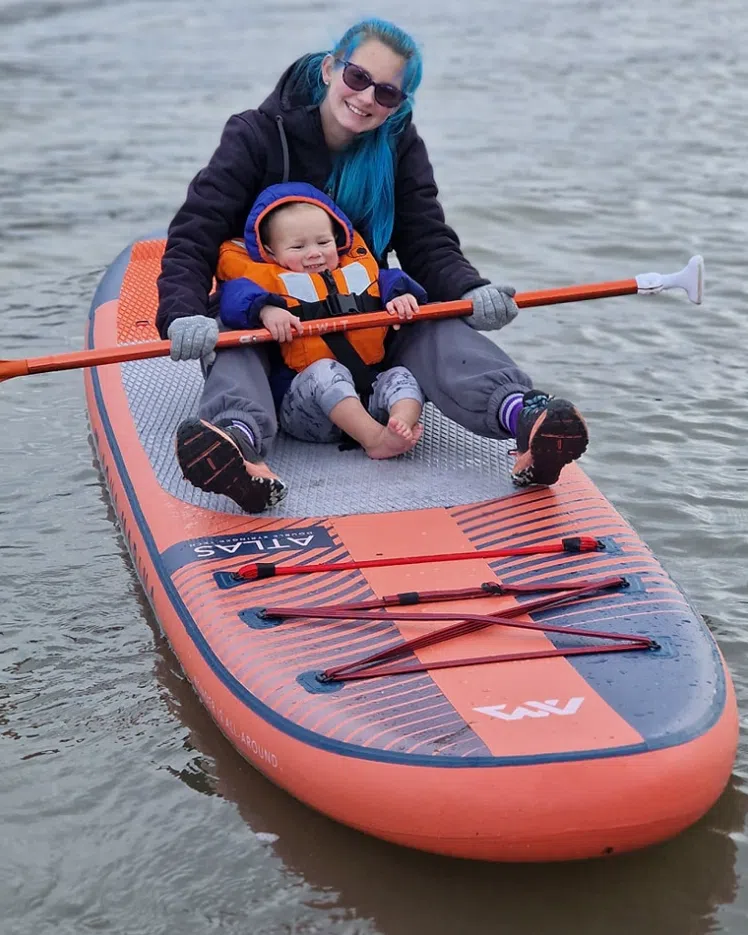
Buoyancy aid: non-negotiable
Wear the buoyancy aid (BA) the centre gives you, fitted snugly. It is not the same as a life jacket on a ferry. It is designed for active paddling and keeps you afloat if you slip off the board.
Clip the leash to your ankle or calf before you stand. A BA and leash together are standard on lessons; never paddle open water with neither.
Do not paddle without one on open water, rivers with current, or any session where children are involved.
Footwear on different launch types
- Sandy or grassy banks: bare feet are fine; rinse before getting back in the car
- Gravel, pebbles, or slipways: neoprene boots or water shoes protect toes and grip
- Rocky coast: boots with a decent sole; barnacles are sharp
Never paddle in flip-flops. Tie-on water shoes stay on your feet when you wade in.
What to bring for after the session
- Towel and a dry change of clothes: warm hoodie, joggers, dry socks
- Dry bag for phone and keys (or leave valuables locked in the car)
- Water bottle: paddling is thirstier than it looks
- Snack for after, especially on longer hire blocks
Leave jewellery and non-essential watches in the car. Salt and fresh water both punish metal.
Coastal vs lake SUP
Lakes and reservoirs: calmer, warmer in summer, less tidal planning. Still dress for wind and a full dunking.
Coastal SUP: add a wetsuit, check wind and tide, and expect colder water. A lesson is the right way in; do not hire a board offshore on your first day.
Common mistakes
- Cotton t-shirts: heavy when wet, cold in wind. On autumn lessons I still see cotton hoodies; they go straight back to the car.
- No sun protection: water reflects UV harder than a pavement walk; burnt shoulders are the default rookie error on flat reservoirs
- Skipping the buoyancy aid because "I can swim": cold shock and cramp do not care
- No warm layer ashore: shivering through the drive home ruins a good session
Ready to get on the water
Start with a beginner lesson if you have never stood on a board. Hire makes sense once you can paddle straight and self-rescue in calm conditions.
Browse paddleboarding → · More screen-free water days in our Lake District phone-free guide.
More kit guides: hiking · kayaking · sailing · power boating
🌿 A portion of adventuro bookings supports conservation through our partnership with Rewilding Britain.
FAQs
Do I need a wetsuit for paddleboarding in the UK?
Use water temperature as the guide, not air temperature. Below about 18°C, neoprene significantly slows heat loss when you are wet (and on SUP you will get wet from splash, kneeling, or falling). UK open water is often 12 to 18°C in summer; coastal wind adds wind chill on top. A 3/2 mm full suit or long-sleeve top is standard for spring, autumn, and coast days. On a hot day at a sheltered lake with warm water, a rash vest and board shorts can work for short hire if you accept getting cold when the breeze picks up.
Why is sun protection more important on SUP than on land?
Water reflects 10 to 30% of UV depending on angle and conditions, so exposed skin (shoulders, face, legs) receives direct sun plus reflected rays from below. Standing on a board puts you closer to unobstructed sky glare than sitting in a kayak. Use SPF 30+, reapply after swimming, and wear a hat with a strap. Sunglasses with a retainer stop you losing them when you look up at the paddle catch.
Can I wear trainers paddleboarding?
Only draining water shoes or neoprene boots with grip on wet surfaces. Standard trainers absorb water, become heavy, and take days to dry; wet fabric against skin accelerates cooling. Bare feet are fine on warm sand or grass launches only. On rock or barnacle coasts, boots protect cuts that ruin the session.
Should I wear my wetsuit under or over my buoyancy aid?
Under. The BA goes on top, zipped snug over your chest. Buoyancy aids are sized to fit over a thin wetsuit or rash vest; a hoodie or thick jacket underneath prevents the zip closing and lets the BA ride up, which reduces effective flotation and mobility if you fall in.
Does paddleboard hire include a wetsuit?
Sometimes. Flat-water hire centres in summer may expect you to bring sport clothing; coastal schools and lessons in cooler months more often include neoprene. Read the listing kit section. If water is below 18°C and no wetsuit is offered, bring your own or book a different session.
Can children wear normal swimwear for SUP?
Children need a fitted BA and usually a wetsuit on UK water outside the warmest few weeks of summer. Kids have less muscle mass and cool faster than adults for the same water temperature. Swimwear alone is rarely enough for sea or reservoir sessions longer than 30 minutes.