
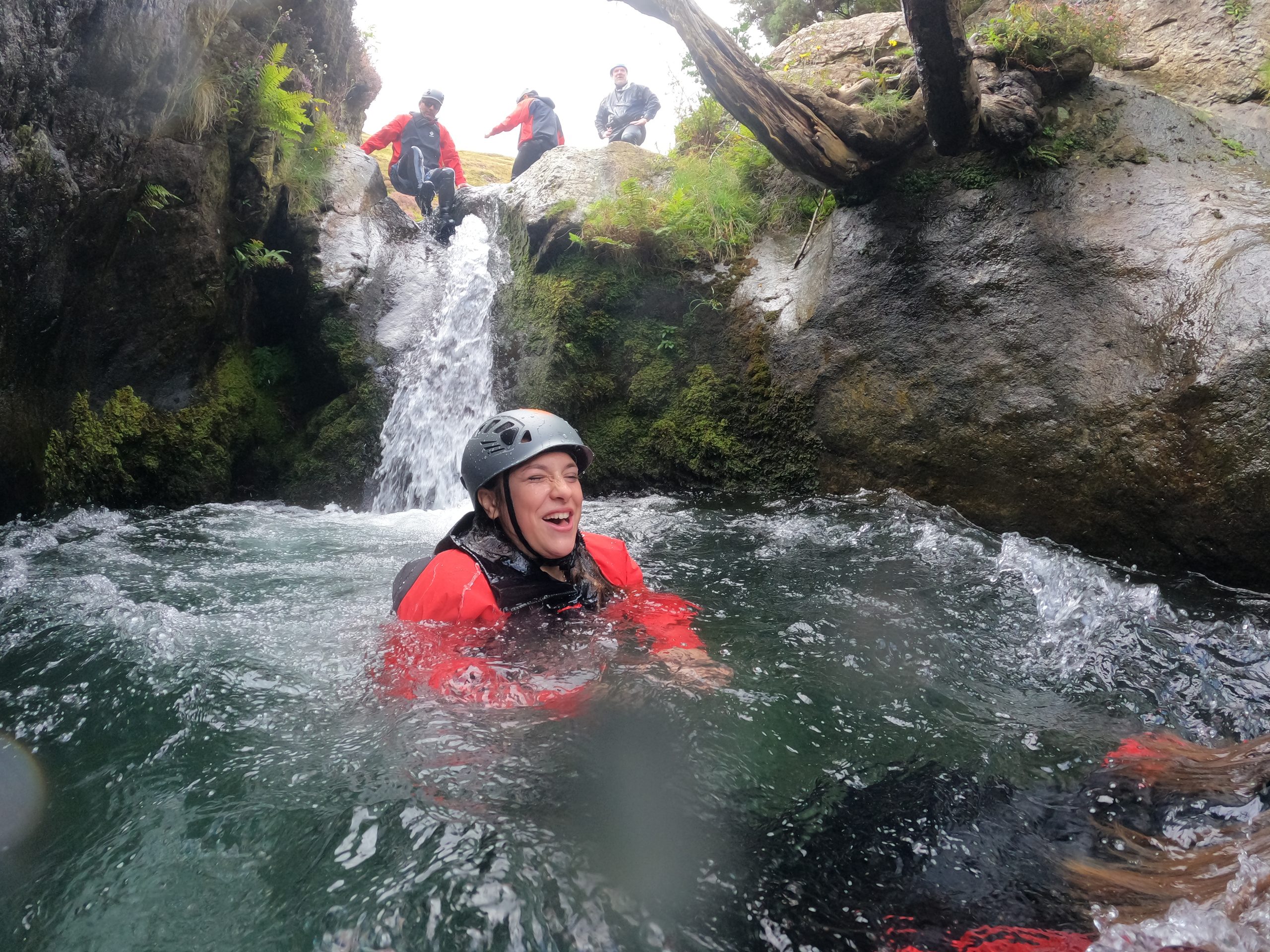
Barranquismo frente a coasteering: ¿cuál deberías probar primero?
El barranquismo y el coasteering parecen similares desde fuera: traje de neopreno, casco, rocas, agua y un guía animando a gritos. Ambos te dejan con frío, mojado y una sonrisa de oreja a oreja. Ambos son aptos para principiantes cuando reservas una sesión guiada. La diferencia está en el entorno por el que te desplazas, y eso cambia cómo se vive el día.
Barranquismo (y ghyll scrambling, su versión más suave de Lake District) recorre un río o desfiladero tierra adentro. Vadeas, trepas, te deslizas y saltas por agua dulce en un valle estrecho. El coasteering sigue la costa. Treparás al pie de los acantilados, nadarás entre cabos y podrás dar saltos opcionales al mar. Las mareas y el oleaje importan. El agua salada, las algas y los percebes forman parte de la experiencia.
Al final sabrás cuál probar primero y qué esperar ese día, con sesiones aptas para principiantes en adventuro para convertir la teoría en una escapada de medio día.
Explora el barranquismo → · Explora el coasteering → · Barranquismo en cañones vs senderismo por gargantas
Qué es el barranquismo
El barranquismo consiste en desplazarse por un desfiladero excavado por el agua, bajando o atravesándolo. En el Reino Unido suele ser un arroyo, un ghyll o un cañón fluvial con escalones de roca, pozas y alguna que otra cascada. Llevarás traje de neopreno y casco. El guía elige el recorrido según el nivel del agua del día. Puedes esperar vadeos, trepadas sobre roca mojada, toboganes naturales y saltos a pozas profundas. Algunas rutas incluyen un rápel corto.
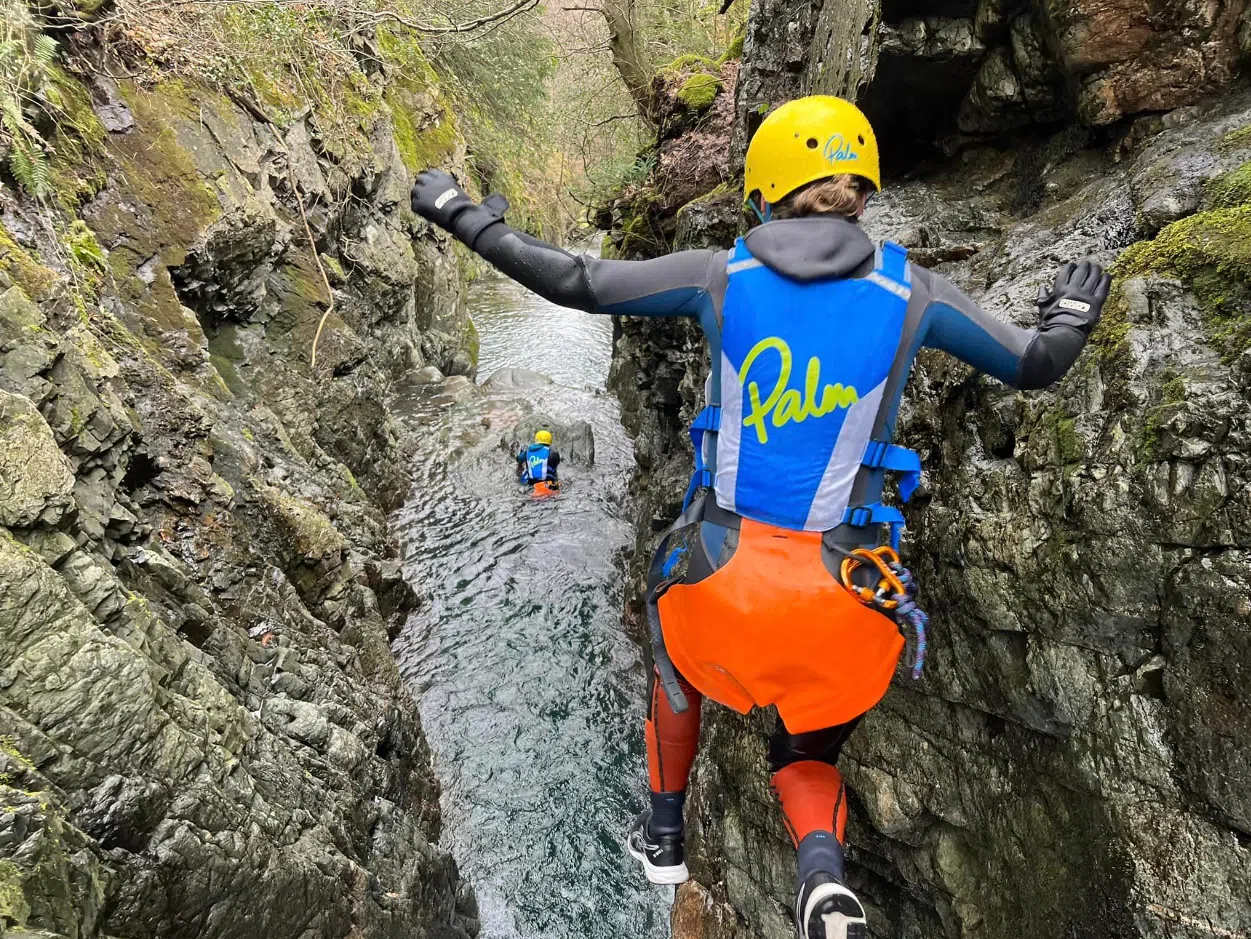
El ghyll scrambling pertenece a la misma familia de movimientos, normalmente con un nombre más amable y una iniciación más suave. En el Distrito de los Lagos, el ghyll scrambling en Stoneycroft Ghyll, cerca de Keswick, es el clásico primer día de barranquismo: 3.5 horas de vadear, trepar, deslizarse y repetir en un arroyo de laderas escarpadas sobre Braithwaite. Sin mareas. Valle cerrado. Los guías adaptan el recorrido al grupo. Desde £50, edades 6+.
A partir de ahí puedes pasar a un barranquismo más completo. Church Beck, sobre Coniston, ofrece una sesión de tres horas con saltos, toboganes y trepadas por cascadas. Se siente más como un «barranco de verdad» que un primer ghyll: exige un poco más, pero sigue siendo apto para principiantes y quienes quieren progresar, con el equipo incluido. Desde £70, edades 8+.
Gales aplica la misma lógica entre rocas diferentes. El descenso de desfiladeros desde Llangollen, en el valle del Dee, es una jornada de tres horas de trepadas y chapuzones con saltos a pozas. La misma energía del barranquismo, con un paisaje distinto. Desde £45, edades 8+.
Qué es el coasteering
El coasteering consiste en explorar la costa al nivel del agua. Treparás por repisas rocosas, nadarás pequeños tramos entre formaciones y, cuando el guía dé el visto bueno, saltarás desde los acantilados al mar. Llevarás traje de neopreno, casco y chaleco de flotación. La sesión se programa en función de la marea y el oleaje. Las condiciones determinan lo atrevida que parece la ruta.
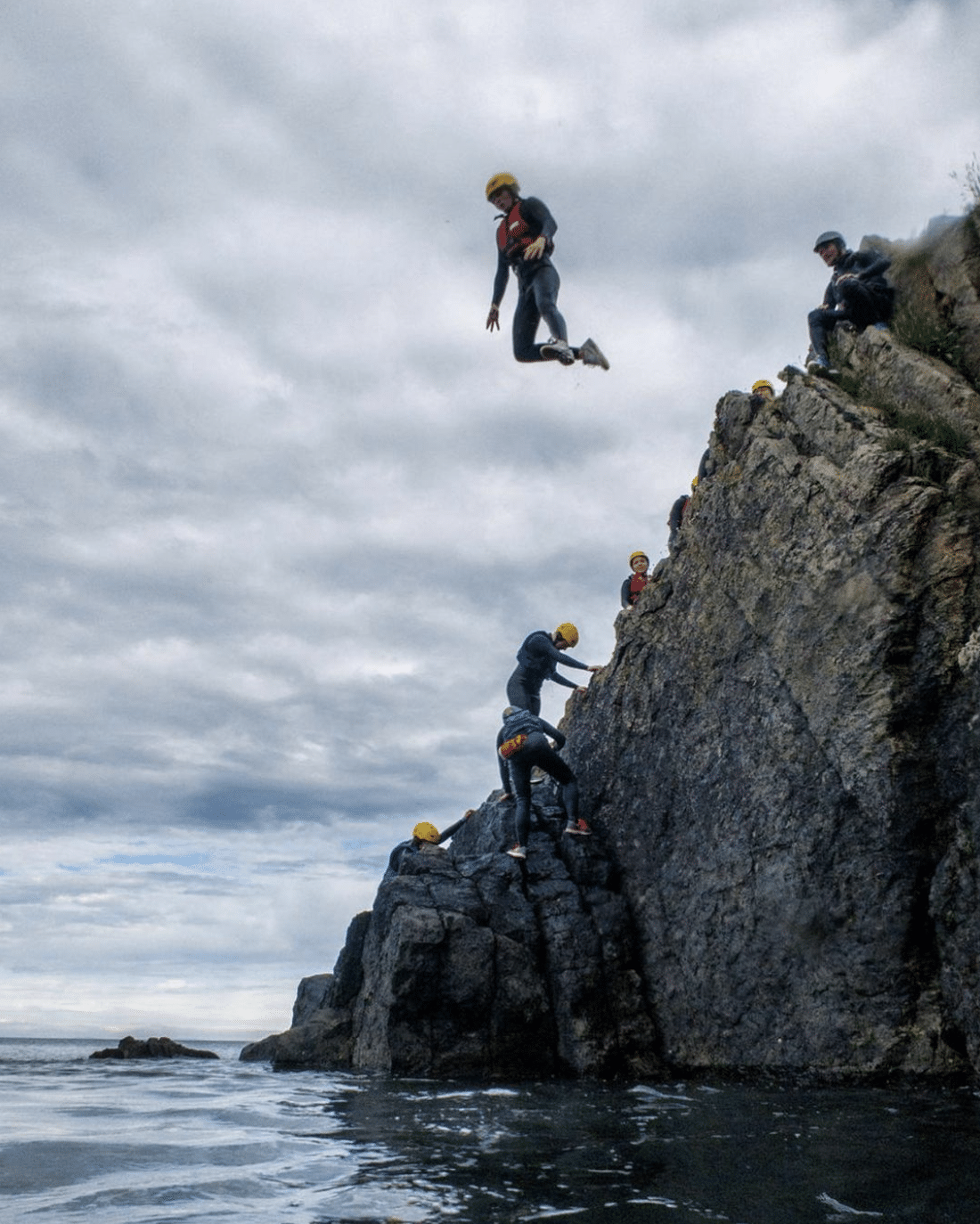
A diferencia de una jornada de barranquismo, el horizonte está abierto. Sentirás el movimiento del mar bajo tus pies. Para algunas personas, esa es la emoción; para otras, los nervios. Una buena primera sesión de coasteering mantiene los saltos como opción y se desarrolla en un tramo de costa fácil.
El coasteering en Stackpole Quay, en Pembrokeshire, es una excelente toma de contacto: guiado, con equipo incluido, en costa del National Trust, desde £45. Ideal si ya estás de vacaciones en Pembrokeshire y quieres descubrir si el coasteering es lo tuyo. Para más información sobre la costa, consulta nuestra guía de Pembrokeshire sin teléfono.
¿Quieres una jornada más completa en mar abierto? El coasteering en Dancing Ledge, cerca de Swanage, en la Costa Jurásica de Dorset, cuesta £50 e incluye traje de neopreno, casco y chaleco de flotación. Edad mínima: 14+. Reserva una plaza, únete al grupo y trepa y nada con un guía que interpreta el mar. El formato abierto es ideal si reservas por tu cuenta. Encontrarás más información en nuestra guía de aventuras para quienes viajan solos.
¿En qué se diferencian realmente?
| Barranquismo / ghyll scrambling | Coasteering | |
|---|---|---|
| Entorno | Río, arroyo o desfiladero interior | Acantilados marinos y costa |
| Agua | Dulce | Salt |
| Variables principales | Nivel del agua después de la lluvia | Marea y oleaje |
| Sensaciones | Valle cerrado, toboganes de roca y pozas | Horizonte abierto, base de los acantilados y baños en el mar |
| Primer miedo habitual | Agua fría, roca resbaladiza y altura del salto | Movimiento del mar, exposición y saltos desde acantilados |
| Mejores zonas del Reino Unido | Distrito de los Lagos y norte de Gales | Pembrokeshire, Dorset y Cornualles |
Ambas actividades requieren saber nadar básicamente y estar dispuesto a mojarte. Ninguna exige una forma física excepcional. Una sesión guiada de medio día es la mejor forma de iniciarse en ambas.
¿Cuál deberías probar primero?
Así es como suele decidir la mayoría de la gente.
Empieza con ghyll scrambling o barranquismo si:
- Vives tierra adentro o vas al Distrito de los Lagos o a Gales
- Prefieres los espacios cerrados al mar abierto
- Las tablas de mareas te ponen nervioso
- Quieres vivir tu primer día de agua y roca de la forma más suave posible
Empieza con coasteering si:
- Ya estás de vacaciones en la costa de Dorset, Pembrokeshire o Cornualles
- Nadas con confianza y te gusta el mar
- Quieres que los acantilados y el agua salada sean los protagonistas
¿Sigues dudando? Reserva primero ghyll scrambling. Menos preocupación por las mareas, un entorno cerrado y un paso sencillo más adelante hacia Church Beck o una jornada en la costa. ¿Te pone nervioso el oleaje? Stoneycroft antes que Stackpole. ¿Ya estás junto al mar y nadas con confianza? Reserva coasteering y deja el barranquismo para un fin de semana en los Lagos.
Qué esperar ese día
Equipo
Las sesiones guiadas incluyen el equipo técnico. Lleva traje de neopreno, casco y, a menudo, chaleco de flotación (estándar en coasteering y también habitual en jornadas de barranquismo). Trae una toalla, ropa seca y algo de abrigo para después. Deja las joyas y el teléfono en el coche. Las fundas impermeables no sustituyen a prestar atención.
Natación y forma física
Debes saber nadar. Los chalecos de flotación ayudan, pero seguirás en agua en movimiento. Dile al guía si estás nervioso. Las rutas se adaptan a la persona menos segura del grupo. En cuanto a la forma física, debes sentirte cómodo caminando sobre terreno irregular y usando los brazos para trepar. No necesitas entrenar durante meses.
Saladaos
Los saltos suelen ser opcionales. Los guías comprueban la profundidad y las condiciones. Nadie debería presionarte para saltar desde una repisa. Decir que no es normal, y el resto del día sigue funcionando.
Tiempo y nivel del agua
Las jornadas de barranquismo cambian según las lluvias. Más caudal significa más salpicaduras y, a veces, un recorrido diferente. El coasteering cambia con la marea y el oleaje. Tu guía puede acortar la ruta, cambiarla o cancelarla si el mar no está en condiciones. Eso es buena práctica de guía, no una reserva desperdiciada.
Dónde reservar tu primera sesión
📱 Trae a un amigo. ¿Vas a venir acompañado? Anímale a suscribirse a nuestra lista de correo (el formulario está en el pie de cualquier página de adventuro). Los nuevos suscriptores obtienen un 5% de descuento en su primera reserva, hasta £10.
Si quieres vivir tu primer día de barranquismo, empieza por Stoneycroft Ghyll, cerca de Keswick (£50, 3.5 horas, edades 6+). Si te fue bien y quieres algo más exigente, reserva Church Beck, en Coniston (£70). ¿Te diriges al norte de Gales? El descenso de desfiladeros en Llangollen (£45) ofrece la misma combinación de agua y roca en el interior.
Si quieres vivir tu primer día de coasteering, Stackpole Quay (£45) es la toma de contacto más económica de esta lista. ¿Listo para una sesión más completa en la Costa Jurásica, incluso si reservas por tu cuenta? Dancing Ledge, Swanage (£50, edades 14+).
Descubre el barranquismo → · Descubre el coasteering → · Encontrarás más detalles sobre la costa en nuestra guía de coasteering en Cornualles, y más jornadas de barranquismo y desfiladeros en nuestra guía de Snowdonia sin teléfono.
🌿 Una parte de las reservas de adventuro contribuye a la conservación mediante nuestra colaboración con Rewilding Britain.
Preguntas frecuentes
¿Qué es más difícil: el barranquismo o el coasteering?
Ninguna exige una forma física excepcional. El coasteering añade mareas, oleaje y agua salada, algo que a algunas personas les resulta más inquietante. El ghyll scrambling en un arroyo cerrado transmite una sensación más contenida. Empieza por Stoneycroft si no estás seguro.
¿Necesito saber nadar?
Sí, para ambas. Llevarás un chaleco de flotación en coasteering y, a menudo, también en las sesiones de barranquismo. Dile al guía si te pone nervioso el agua.
¿Pueden hacer barranquismo o coasteering los niños?
Muchos recorridos de ghyll scrambling aceptan edades 6+. El barranquismo en Church Beck y el descenso de desfiladeros en Llangollen empiezan a partir de 8+. El coasteering en Dancing Ledge es para mayores de 14+. Comprueba cada anuncio antes de reservar.
¿Debería hacer ambas actividades en el mismo viaje?
Solo si tienes dos medios días separados y tiempo para secar el equipo entre sesiones. Una combinación habitual es hacer ghyll scrambling el primer día y coasteering el segundo durante unas vacaciones en la costa de Dorset o Cornualles, o pasar dos días haciendo barranquismo en el Distrito de los Lagos antes de añadir coasteering en una escapada costera aparte.
¿El ghyll scrambling es lo mismo que el barranquismo?
Son de la misma familia. El ghyll scrambling suele ser la iniciación más suave del Distrito de los Lagos: los mismos movimientos sobre roca mojada, normalmente menos rápel y un nombre más amable. Las sesiones de barranquismo como Church Beck suelen sentirse más exigentes. Ambas son jornadas guiadas de agua y roca en el interior.