Surf Skate
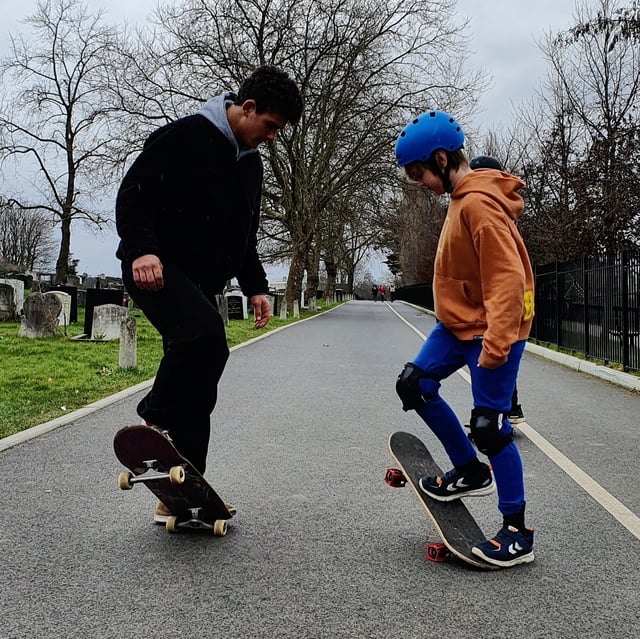
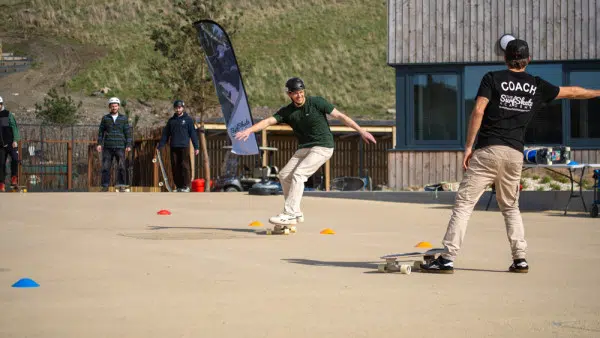
Surf skate is land-based surf training using a skateboard with a highly turning front truck to replicate bottom turns, top turns and cutbacks.

Surf skate is land-based surf training using a skateboard with a highly turning front truck to replicate bottom turns, top turns and cutbacks.
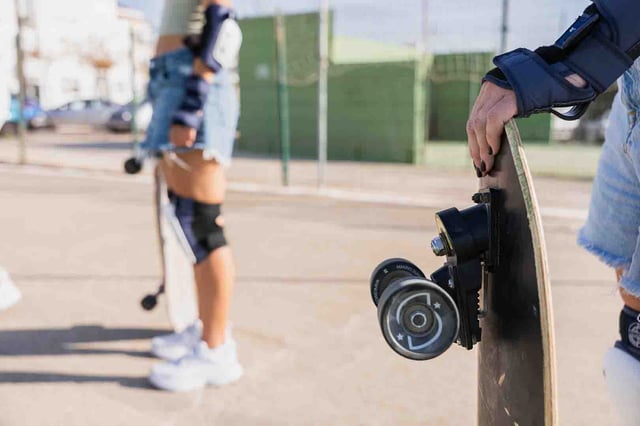
Surf skate uses a highly turning front truck (the steering assembly) that pivots more than a normal skateboard. That extra articulation lets you pump—generate speed by compressing/extension and edging—without pushing a foot on the ground. It’s designed to mimic surf mechanics like bottom turns, top turns and cutbacks on flat ground, banks and bowls.
Think wheelbase (distance between truck bolts), not just deck length.
Shorter wheelbases (≈ 15–17") feel snappy and carve tight arcs—great for quick drills and small riders.
Medium (≈ 17–19") balance responsiveness and stability—good all-rounders.
Longer (≈ 19–21"+) are calmer and more “drawn-out”—nice for flow and bigger riders.
If in doubt, pick a medium wheelbase around your shoulder–elbow span; you can fine-tune later with truck and bushing setup.
Bushings are the polyurethane cushions inside a truck; durometer is their hardness (measured on the A scale). Softer bushings and a looser kingpin nut = easier turning; harder/tighter = more stability. As a rule: lighter riders and flat-ground practice use softer settings; heavier riders or bowl work may step up durometer to stop wobble. Make small, even quarter-turn changes and test.
Larger, softer wheels (≈ 65–70 mm, 78–82A) grip rough UK tarmac and roll smoothly, which helps when learning to pump. Harder wheels (≥ 84A) slide sooner and feel faster on smooth bowls but punish poor technique. If you’re slipping out on banks, go softer or wider; if you’re “bogging” on polished concrete, try a touch harder.
Think compress → edge → extend. Enter the turn with a gentle compression (bend ankles/knees), edge the board by rolling through the feet while your hips and shoulders guide the arc, then extend out of the turn to return energy. Keep the upper body relaxed but lead with the head/shoulders so the board follows your line. Little, frequent pumps beat big heaves.
It builds rail engagement, early weight shift, and upper–lower body separation (upper body sets the line; lower body delivers it). You’ll feel more comfortable holding a drawn-out bottom turn, hitting the section earlier, and completing cutbacks without stalling. It won’t replace paddle fitness or wave reading, but it improves the turns you do get.
Most people get comfortable pumping and S-turns in a couple of sessions. Clean bottom-to-top turn patterns and reliable cutbacks usually take a few focused weeks. Bowl timing and snaps are longer-term projects, but very achievable with consistent practice or coaching.