High Ropes en Wales
Wales packs Snowdonia's peaks, a surf coast and white water into one compact adventure region. Hike and climb the mountains, coasteer and surf, kayak rivers and learn the ropes with expert centres across the country.

Wales packs Snowdonia's peaks, a surf coast and white water into one compact adventure region. Hike and climb the mountains, coasteer and surf, kayak rivers and learn the ropes with expert centres across the country.
High ropes is an obstacle course in the air. You clip a harness to a safety line, climb a ladder or cargo net onto the first platform, then work across beams, wobbly bridges and nets. The ground is a long way down. That's why an instructor clips you in on the ground.
Every park builds its own circuit. You'll meet balance crossings, cargo nets and swinging logs, plus a bigger feature such as a leap of faith or a Jacobs ladder. A lot of UK sites put a zip at the end so you ride down instead of climbing back. Low ropes sits closer to the ground and is the usual warm-up for schools. High ropes is the one with platforms in the canopy or on timber poles.
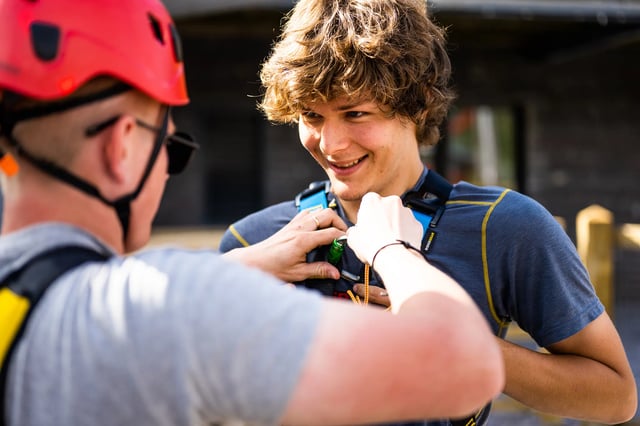
Briefing first, then a harness and a helmet. Staff check every clip. Then you go. Plan for 90 minutes to three hours on site, briefing included, though the listing has the exact time. Groups stay small. Skip an element if your hands freeze on the platform. Newer parks use a continuous belay, so you stay clipped from start to finish. Older courses may use a clip-and-move belay, where you transfer between lines at each platform with an instructor watching.
Families and school groups book it a lot. Stags too, usually for the zip at the end. You get height without a real crag. You need to step up and hold a rope. Nerves matter more than gym fitness. If you've never been off the ground, start on a beginner circuit and leave the highest line until you want it.
Ziplining is one cable and gravity. High ropes is a circuit you complete with your own feet. Climbing is a wall or a crag, with belaying and route-finding. Abseiling is a controlled descent on a rope. Some adventure parks sell all of them on the same day. They're not the same booking.
Check height and weight limits, whether the park uses a continuous belay, and if a zip is included. Open the Book here tab for live dates. Helmet and harness come with the session. If they don't, the listing says so.
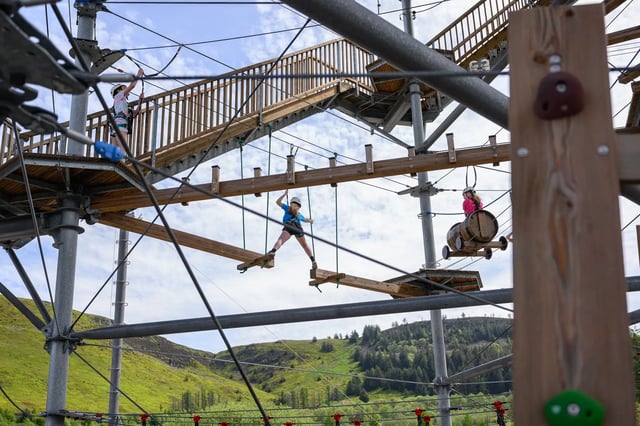
Circuito de cuerdas al aire libre de tres plantas en Tower Colliery. Reserva rutas de escalada para adultos, jóvenes o niños.
Desde £ 14
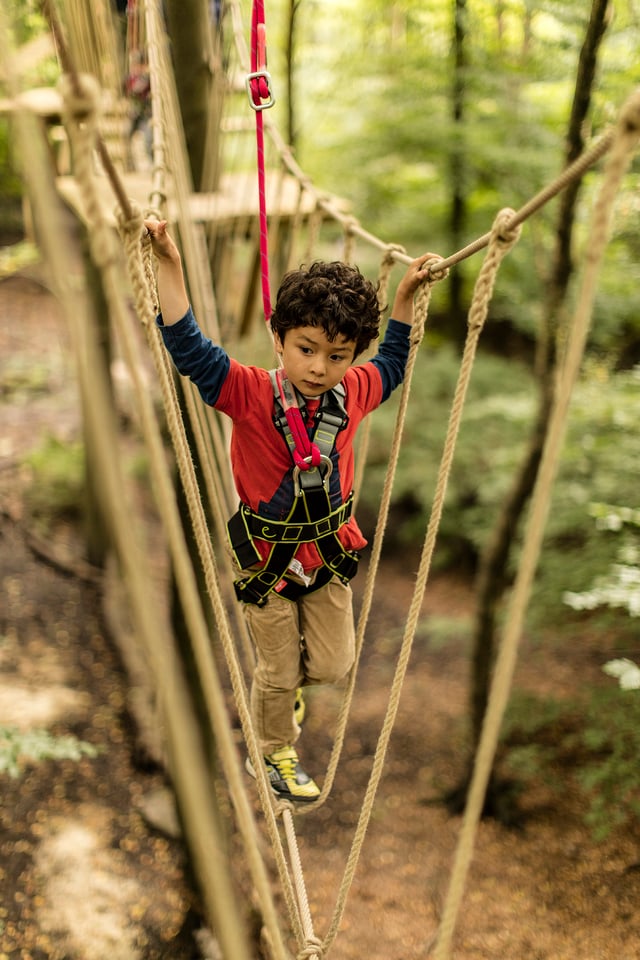
Una aventura familiar de circuitos de altura en Heaton Park, con ocho obstáculos y cinco tirolinas a la altura de las copas de los árboles.
Desde £ 31
Una tirolina de alta velocidad sobre la cantera de Penrhyn, con dos recorridos por 400m de circuito elevado.
Desde £ 35

Una aventura familiar de circuitos de altura en Windermere con 16 obstáculos y dos tirolinas a la altura de las copas de los árboles.
Desde £ 35
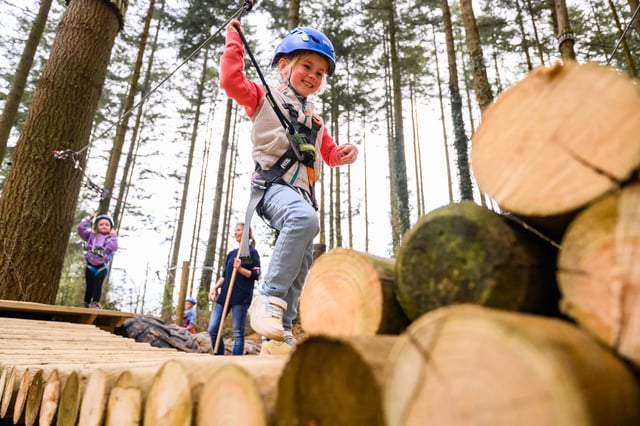
Una primera aventura arbórea llena de diversión para niños pequeños, con obstáculos a poca altura, puentes y tres minitirolinas.
Desde £ 14