Spend a full day on a private cenote route that links forest trails, cavern pools, and a ceremonial moment led on site before anyone enters the water. Guides set a steady rhythm so you hear how geology and living tradition fit together, then help each guest choose between a guided rappel entry or a walk-in stair when the final cave pool opens below the tree canopy.
The day starts at an agreed pull-out along the main Tulum to Cancún highway. After sign-in, collect helmets, harnesses, and lamps before convoy or short foot access to the cenote land. There is no hotel pickup in this product, so arrange your own taxi or rental timing to the meeting coordinates, then expect a short safety talk while equipment fits before walking into shaded jungle paths toward the first pool.
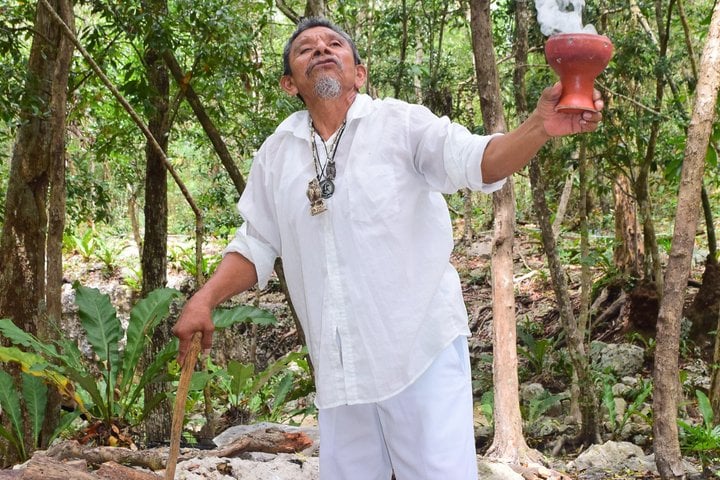
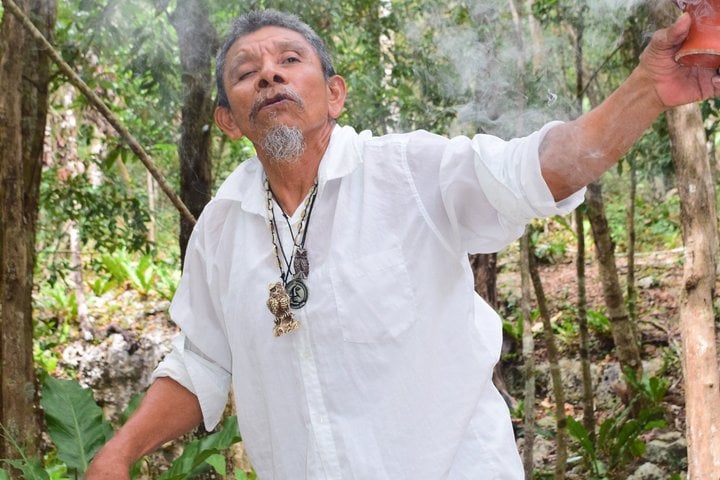
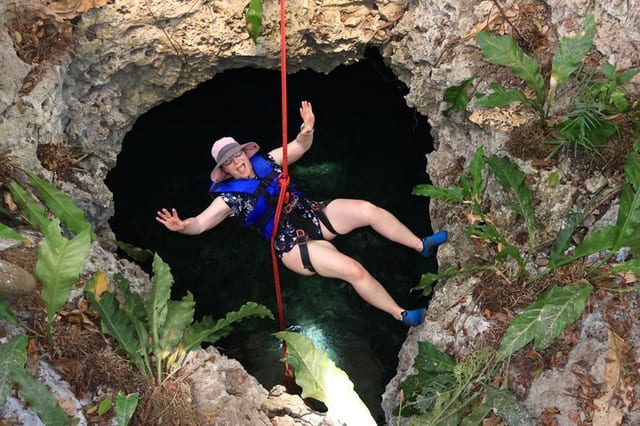
The spiritual segment is short, respectful, and optional to observe quietly if you prefer not to take part in every gesture. Later, adrenaline seekers join a certified rappel into the final cave cenote while others descend a separate stair entrance and meet in the same clear pool, so families split styles without splitting the day into conflicting departures.
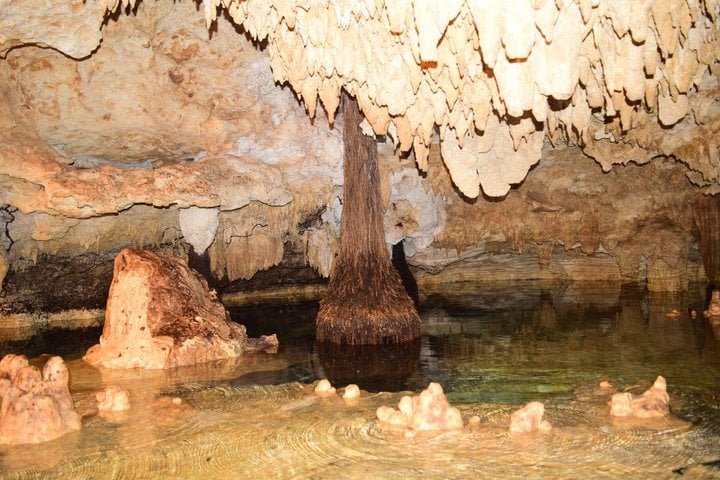
Yaxmuul sits inland from Tulum's coastal strip, where thin soil gives way to collapsed cave systems filled by freshwater. Jungle shade and root systems make the approach feel remote even though the highway corridor links several cenote clusters along the same road.
Drivers from Playa del Carmen or Cancún can join at the stated highway rendezvous; guests based in central Tulum should plan extra minutes for inland legs after leaving the beach zone. Closed shoes and a dry set of clothes matter more here than on a sandy snorkel morning.
Steadiness on uneven rock, comfort wearing a provided harness for the optional rappel, and ability to swim short stretches in cool freshwater with a life jacket if requested help the day flow smoothly. Children join when guardians accept shared responsibility on ladders and stairways.
Injuries, height anxiety, claustrophobia, or recent surgery are worth mentioning before helmets are assigned so guides can adapt route order or suggest skipping the vertical entry while still enjoying the shared pool.
Dual entry options on the final cenote reduce pressure on anyone nervous about ropes while still offering a technical line for confident guests. Gear checks run before each vertical move, and bilingual hosts keep the story connected to geology rather than rushed photo stops.
Private routing compared with mega-coach circuits means fewer bottlenecks at ladder points and clearer hearing during safety talks underground.
Rendezvous along the Tulum to Cancún road, confirm waivers, and distribute helmets, harnesses, and lamps sized to each guest.
Hosts outline the order of cenotes and where rappel versus stair options appear.
Follow shaded paths between collapsed chambers, learn how roots and water sculpt the rock, and pause at shallow pools for temperature checks.
Guides point out footing hazards before anyone steps onto slick rims.
Pause for the guided ceremony segment, then rotate through swim zones with clear entry and exit calls.
Lifeline positioning keeps mixed ages visible from the deck.
Rig the rappel line for volunteers while stair guests descend to the same water, regroup, and enjoy open swim time.
Derig safely before the return hike to vehicles.
No. The route offers two approved ways into the final cave pool: a certified rappel descent for guests who want a vertical line, and a stair entry that meets the same water without exposure at height.
Guides stagger timing so harnesses are fitted only for volunteers, while stair guests receive a parallel briefing on footing and handrails before descending at their own pace.
Cenote freshwater typically reads cooler than the nearby Caribbean, especially in shaded chambers where direct sun rarely reaches the surface for long stretches of the day.
Air temperature, recent rain, and time of entry all nudge how brisk the first plunge feels, which is why guides build short warm-up walks between pools so your body adjusts before longer swims.
Expect short paddles between ladders and platforms rather than ocean-length crossings, with crew nearby whenever the pool deepens beyond easy standing depth.
Life jackets are issued whenever flotation suits your comfort or a child's age, and you should flag weak swimming confidence at check-in so vests are adjusted before the first water entry.
Trail shoes or trainers with closed toes and real grip outperform open sandals on wet limestone steps, roots, and the occasional slick boardwalk between cenotes.
If you prefer neoprene water shoes, pick pairs that lace or strap snugly so they stay on during short climbs and muddy approaches without catching on rungs.
Young guests from age four may join when parents stay within arm's reach on ladders and confirm children's harness sizes during morning gear issue.
Share ages and any nervousness about height at booking so the team can reserve stair-first sequencing, calmer pool order, and spare flotation before the vans depart.
Plan on roughly seven hours from the highway rendezvous through the final derig and return chat beside the vehicles.
Weather, pace of photography breaks, and brief traffic holds on the corridor road can add or trim minutes at the end without cutting core swim time when conditions stay safe.
Cave light is uneven, so phones with bright screens often blow highlights on water while losing detail in rock shadow unless you brace on a platform.
Small waterproof housings help, yet guides will still ask you to stow devices before any rappel moves or ladder sections where two-handed contact matters for balance.
The on-site ritual frames why guests move quietly around certain stones and how offerings relate to local stewardship of the water.
You may watch respectfully without repeating every gesture, though guides still expect full attention during safety rules that follow the ceremony before anyone swims.
Heavy rain can make limestone stairs slicker and can cloud shallow pools until sediment settles, which sometimes shifts the order in which cenotes open.
Thunder or unsafe ladder conditions can pause vertical segments even when general rain looks light from the roadside, so keep your phone reachable in case the meet time slides by a short margin.
A single coordinate on the busy Tulum to Cancún corridor lets vans stage without chasing scattered hotel driveways that sit on low-bandwidth jungle lanes.
Guests driving rental cars can park near the agreed pull-out, while taxi guests pin the same GPS note their driver sees, which reduces missed connections compared with multiple hotel sweeps.
We partner with Rewilding Britain to help protect our natural spaces for future adventures.
All centres are vetted for safety and quality. Your adventure is in good hands with adventuro.
About the centre
Tulum
Operated by Mava Travels, a partner of adventuro.