
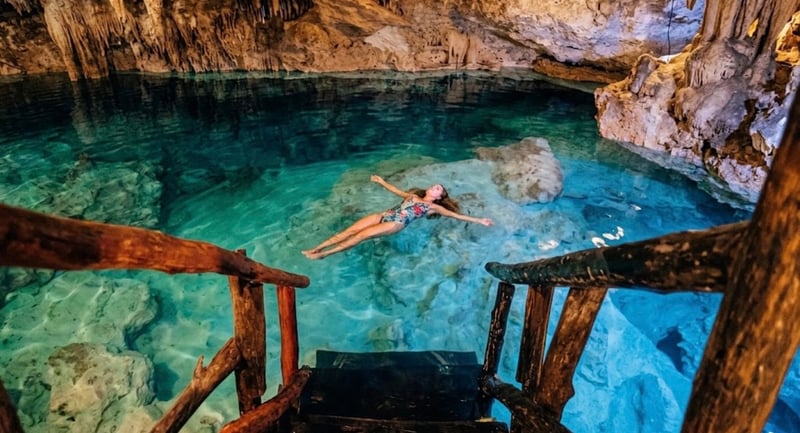
Rescue macaws, spider monkeys and Melipona bees in a jungle sanctuary, swim a covered cenote, then reach Akumal Bay by speedboat to snorkel over reef and turtle grass with a marine guide. The route keeps groups near ten guests so sanctuary time stays calm and reef rules stay clear. Lunch back in Playacar is available on lunch-inclusive tour options.
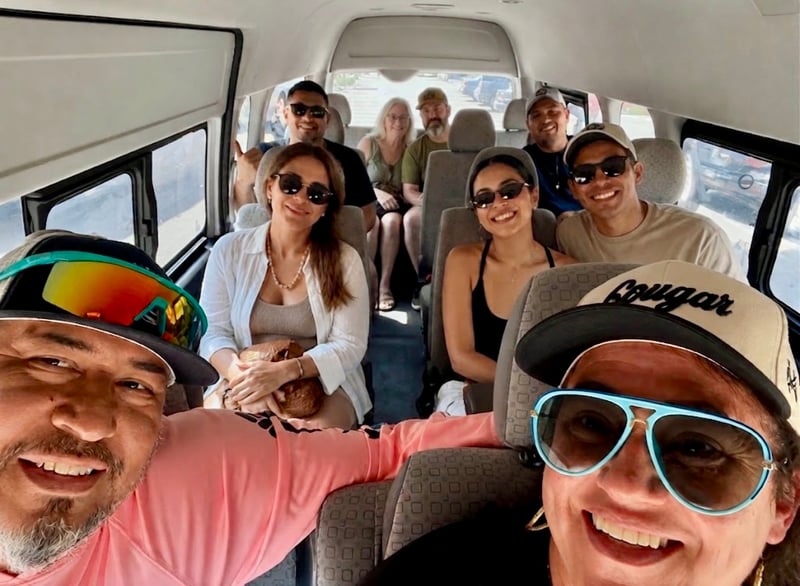
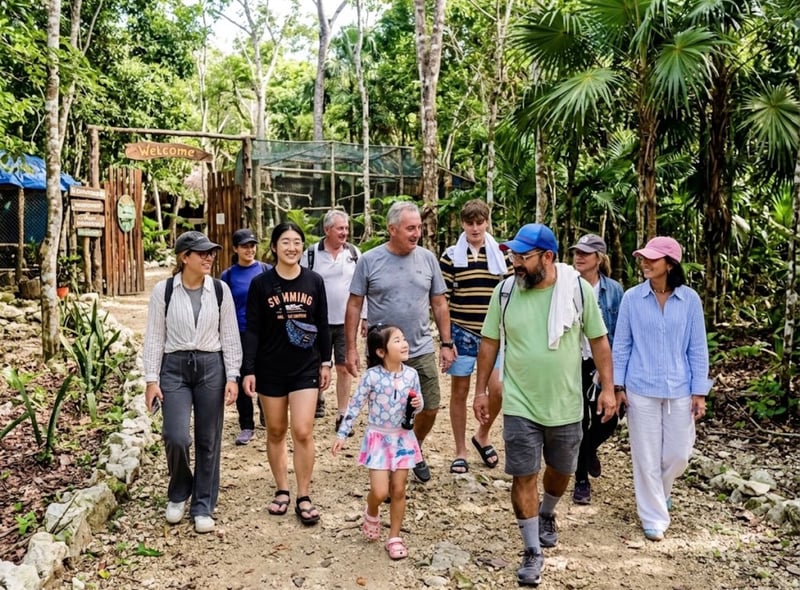
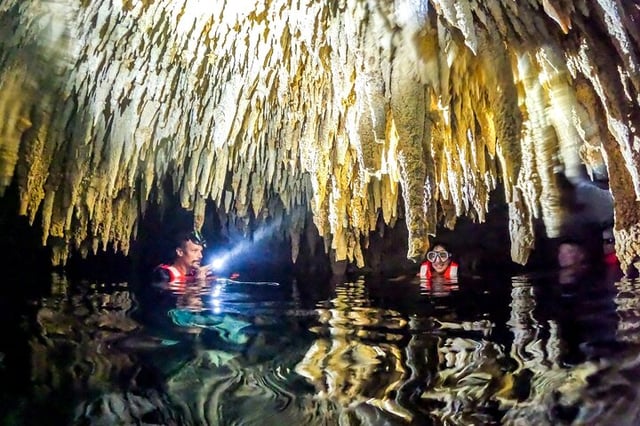
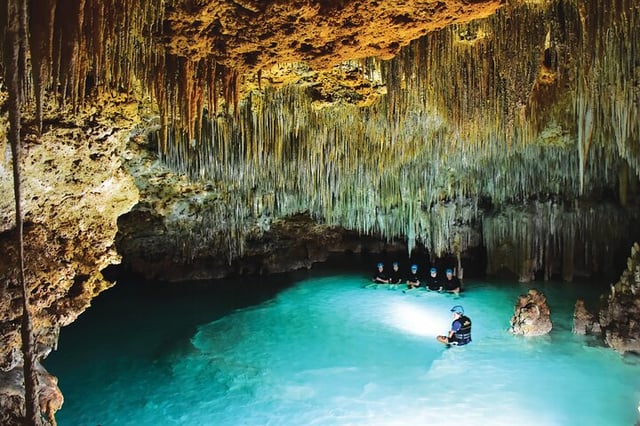
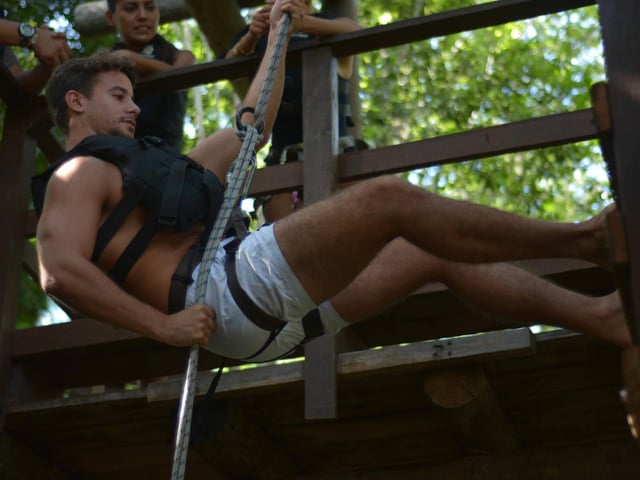
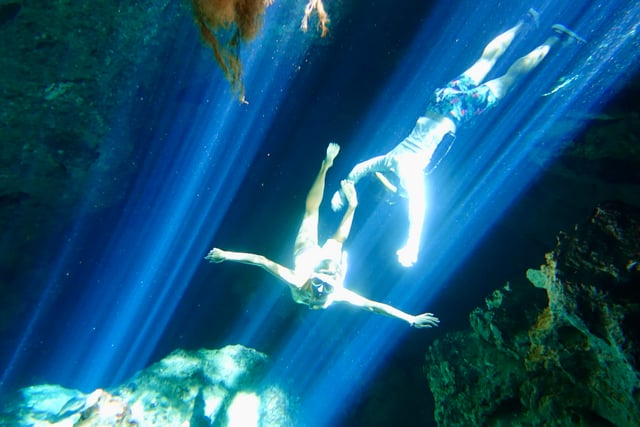
From Playacar you drive south into the forest for a slow sanctuary circuit with a resident nature expert: rescued birds and mammals, Melipona honey, and hands-on moments where welfare rules allow. A rinse and change precede a short walk to a covered cenote with life jackets, then the van continues to Akumal for dive-centre lockers, showers and a speedboat run to the reef.
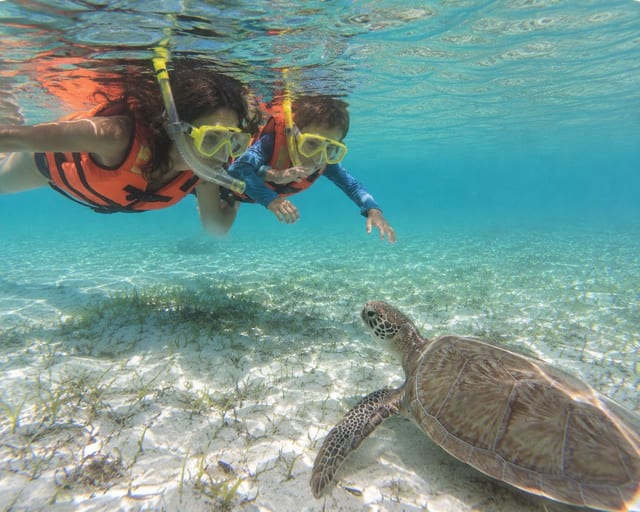
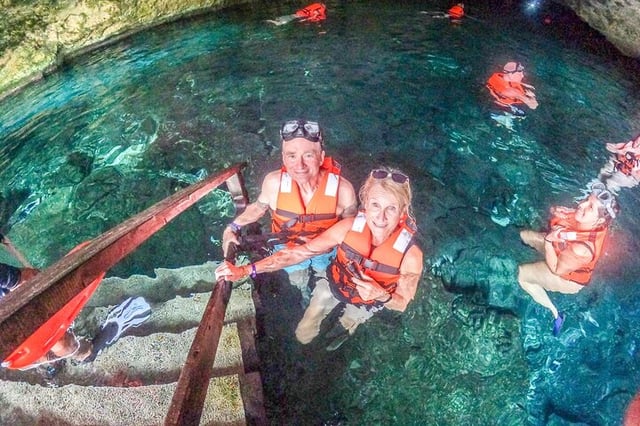
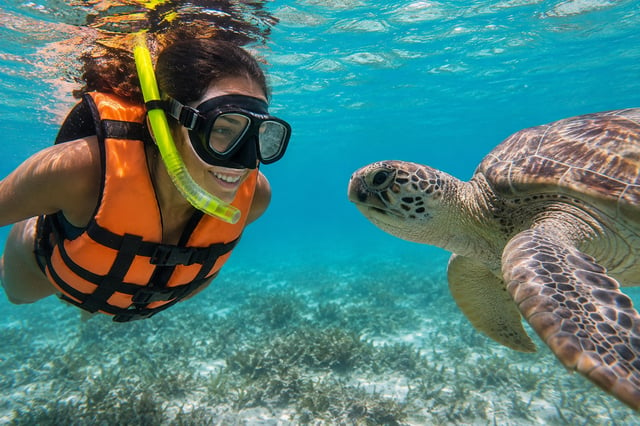
You snorkel back toward shore over turtle grass with mandatory life jackets and no sunscreen, watching green turtles feed where guides say it is safe and legal. If harbour authority rules close the bay, your coordinator discusses an alternative five-cenotes route or another suitable date with you before you travel. Lunch-inclusive options end with a meal at Lara & Luca after sanctuary, cenote and reef time.
The sanctuary and cenote sit inland from Akumal, away from coastal hotel strips, while the marine segment uses a professional dive centre on the bay instead of crowded public beach entry. Forest humidity and open reef sun feel different in one coordinated day, all looped from Playacar.
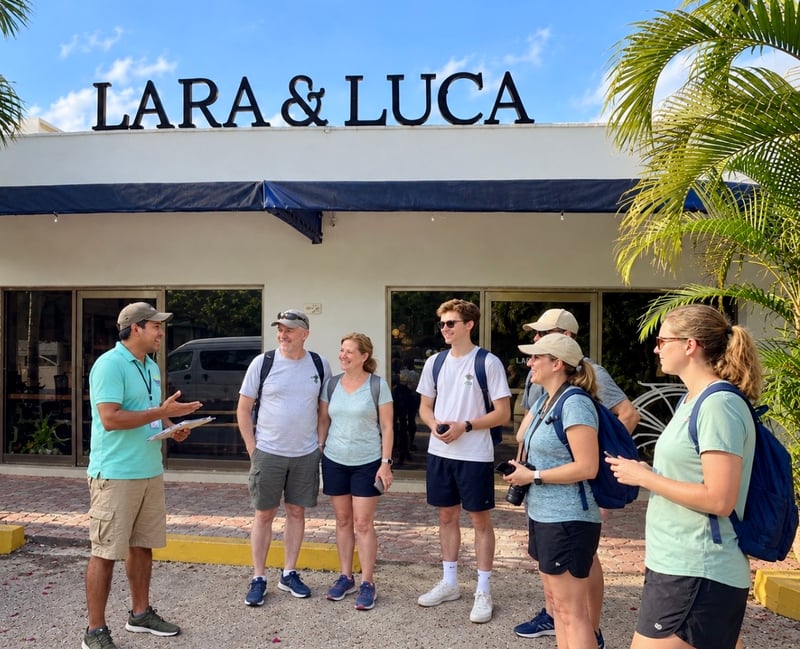
Meeting point parking is free at Lara & Luca in Playacar Fase II. Included transport covers sanctuary, cenote and Akumal legs; hotel pickup remains a paid extra when requested in advance.
Walking is on natural jungle paths with mosquitoes likely, so eco-friendly repellent and closed shoes matter. Cenote and reef swims are optional with life jackets; let us know if anyone in your party is a non-swimmer so guides can plan extra support.
Sunscreen of any kind is banned in the cenote and Akumal waters. Rash guards cover skin for both. Shared departures need at least two guests in the group. Touching turtles, reef or restricted animals is not permitted.
Speedboat reef access and dive-centre changing rooms differ from beach-only turtle tours, while the sanctuary visit partners with a rescue centre rather than a display zoo. Fees, transport, cenote access, snorkel kit and guided reef time sit in one coordinated day instead of stitching operators together.
Groups cap at ten, WhatsApp messages cover timing before the date, and backup land routes exist when the port closes the bay. Lunch-inclusive rates finish at the same air-conditioned restaurant where the morning started.
When harbour authority rules stop snorkelling, your coordinator can line up another suitable date or shift the day to a five hidden cenotes route inland instead of ending early.
Your guide explains choices on site and stays in touch on WhatsApp beforehand so you are not stranded without a land plan.
The site is a rescue and rehabilitation sanctuary, not a commercial zoo. Animals arrive from confiscation, injury or situations where they cannot return to the wild immediately.
Your visit funds welfare work while the nature expert keeps pacing educational rather than performance based.
Some residents allow controlled contact, such as parrots or spider monkeys with hibiscus flowers, while crocodiles and other species are viewed from safe distances set by staff.
Marine turtles must never be touched in Akumal; life jackets stay on and guides enforce spacing.
Shared tours welcome guests aged eight and above with an adult. Jungle humidity, walking and open-water snorkel with life jackets suit most confident eight-year-olds.
Private tours for your group only can sometimes take younger children; ask your coordinator about age limits for private departures.
Sanctuary time uses natural paths between enclosures with frequent stops for talk and shade. The cenote segment is a short walk from changing rooms.
Reef snorkel is water based with minimal walking beyond the dive centre deck and boat boarding.
Melipona bees are stingless bees tended by Maya communities for honey used in ceremony and traditional medicine. Their colonies are sensitive to habitat loss.
The tasting uses small portions so you can compare the flavour with ordinary honey without over-collecting from the hive.
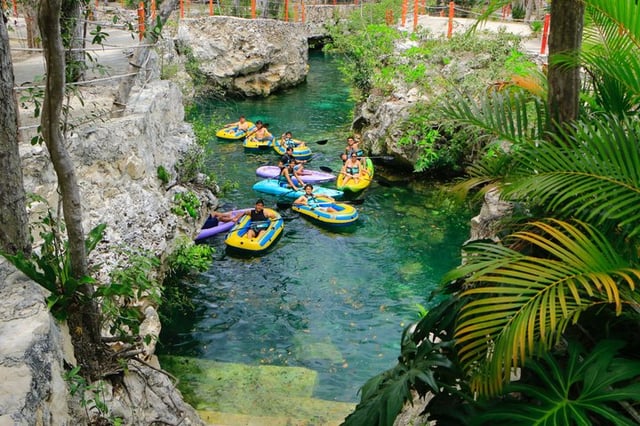
Swimming is optional and life jackets are available. Platforms let you stay dry while others enter the water.
Changing rooms and showers at the sanctuary and Akumal centre help you rinse repellent before protected water.
Sunscreen is banned in the cenote and in Akumal Bay to protect freshwater and marine habitats. Use rash guards, hats and cover clothing instead.
Eco-friendly repellent is fine in the jungle if you shower before swimming as staff advise.
Some tour options include lunch at Lara & Luca with a drink, while others end at the meeting point without a meal. Vegetarian dishes are available when lunch is part of your tour.
Tell us about dietary needs in advance so the kitchen can plan.
English and Spanish cover the van, sanctuary and reef segments. Sanctuary experts may switch detail to Spanish with translation from your lead guide.
Italian or French support may be possible when requested before travel, subject to guide availability.
We partner with Rewilding Britain to help protect our natural spaces for future adventures.
All centres are vetted for safety and quality. Your adventure is in good hands with adventuro.
About the centre
Playa del Carmen
Operated by Soul Experiences Mexico, a partner of adventuro.
Cozumel & Island Coast, Mexico
From $126.10
Cozumel & Island Coast, Mexico
From $149
Riviera Maya & Caribbean Coast, Mexico
From $169