We partner with Rewilding Britain to help protect our natural spaces for future adventures.
All centres are vetted for safety and quality. Your adventure is in good hands with adventuro.
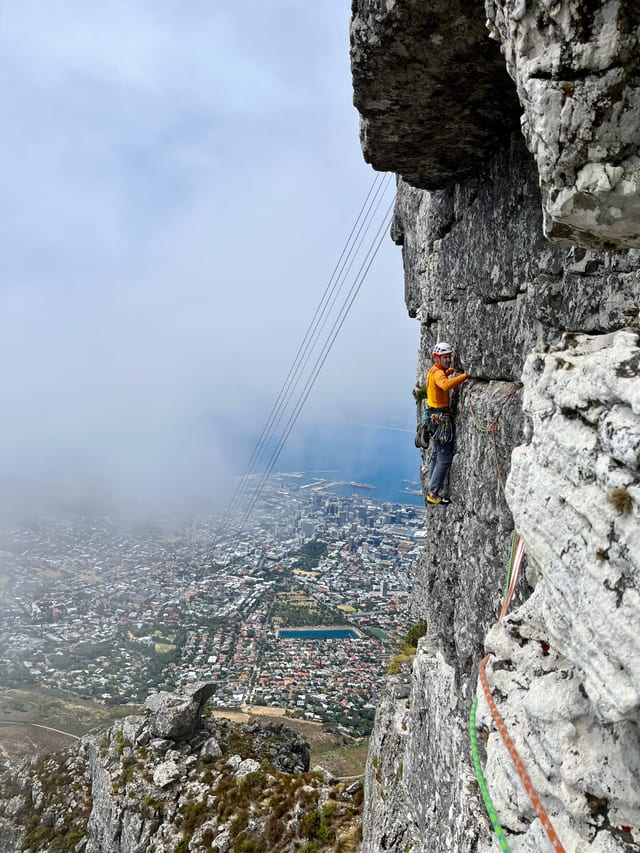
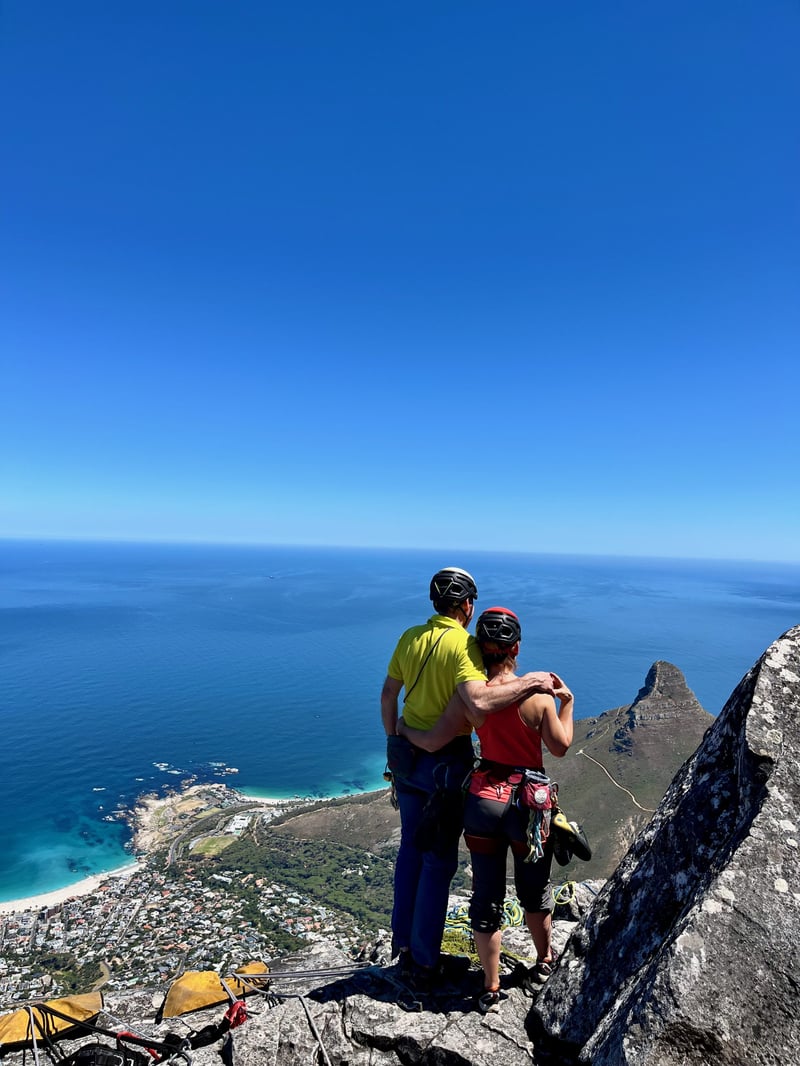
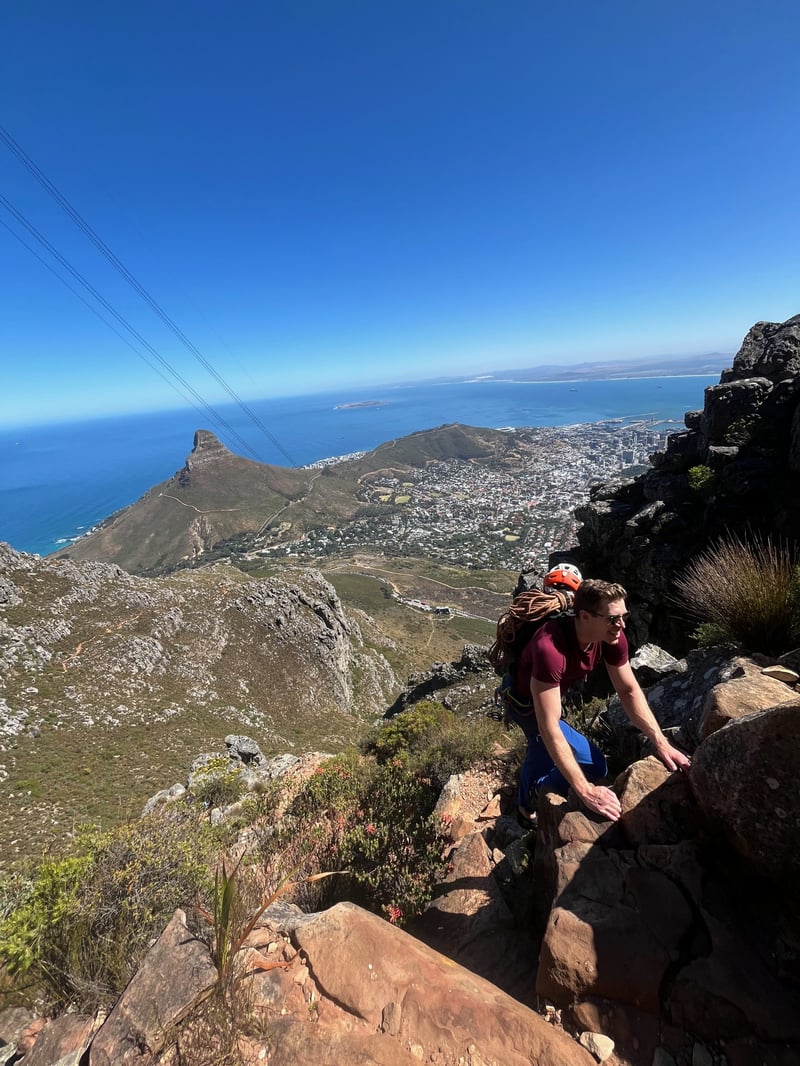
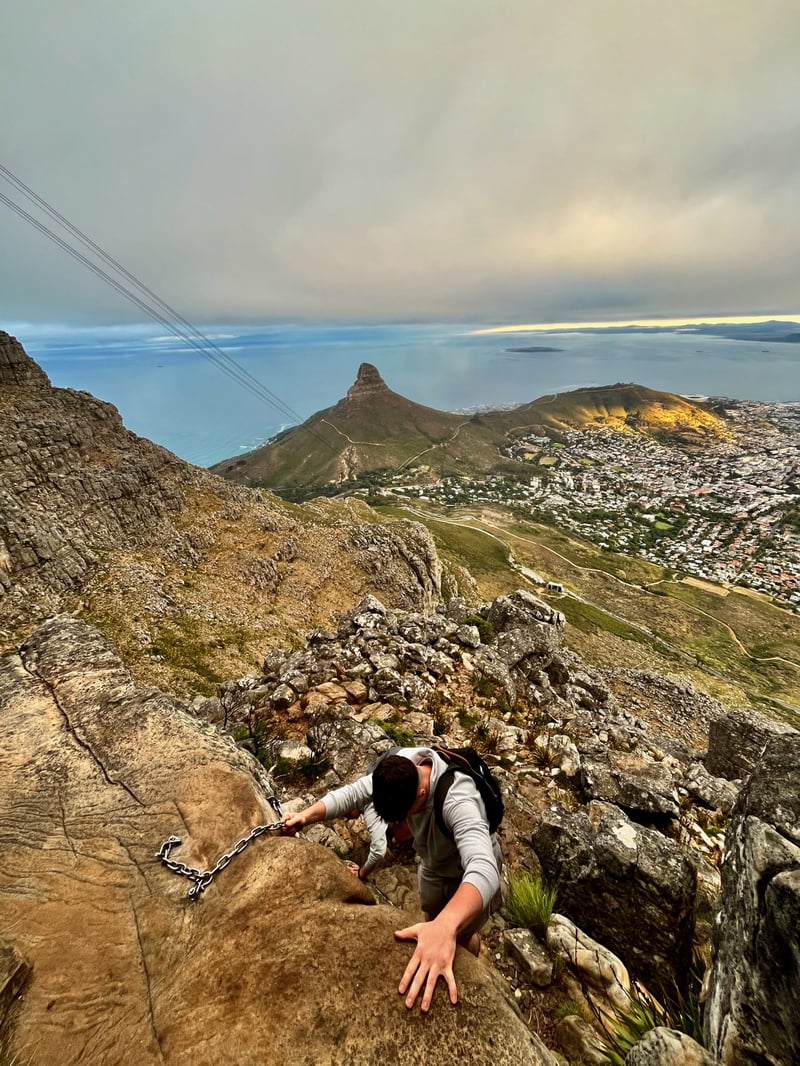
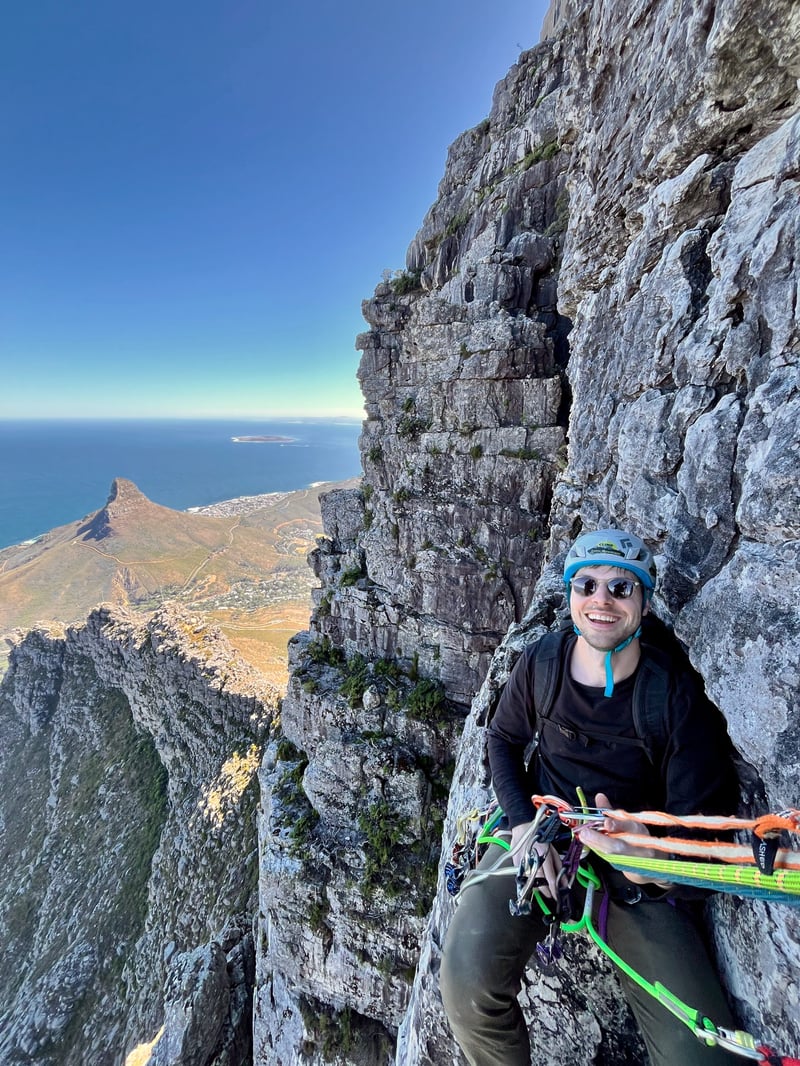
Starting near the Atlantic, you work toward Table Mountain's plateau on a guided sea to summit day. Hiking, scrambling and short roped pitches stack together so the ocean stays at your back until the city appears over the last band. It is a long, varied mountain day rather than a staircase to a cafe.
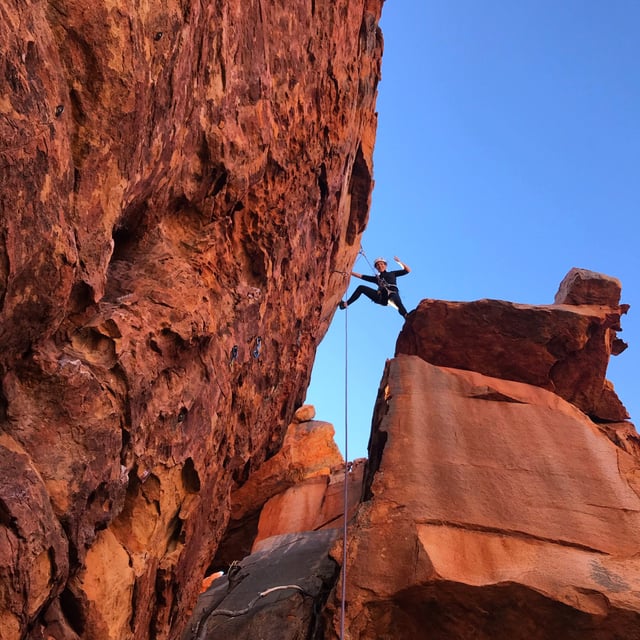
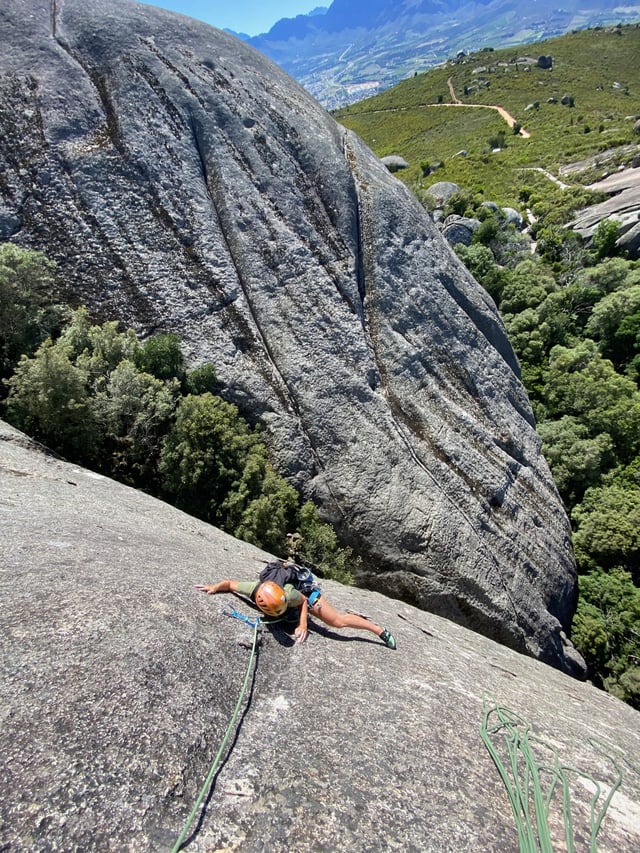
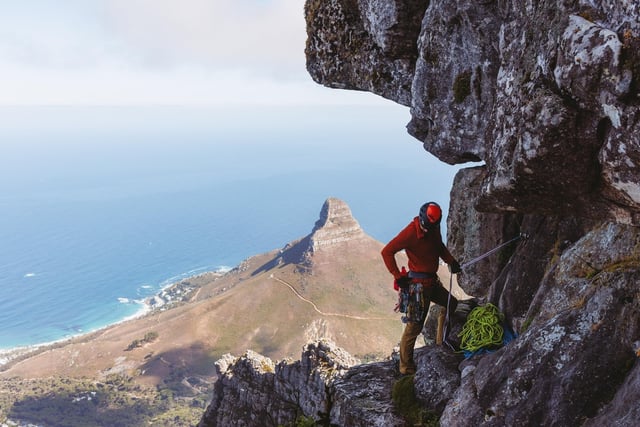
The day begins near the coast with a briefing, then you work up through fynbos paths, rock steps and short roped pitches as the route needs them. You get coaching on movement and rope handling so the mixed ground feels connected rather than like three separate sports bolted together.
Higher up, the angle eases onto the plateau where you can eat, take in the view and decide with your guide how you will descend, by path or cableway depending on conditions. Heat, wind and a late start can shorten the upper section, and that call is made for safety rather than pride.
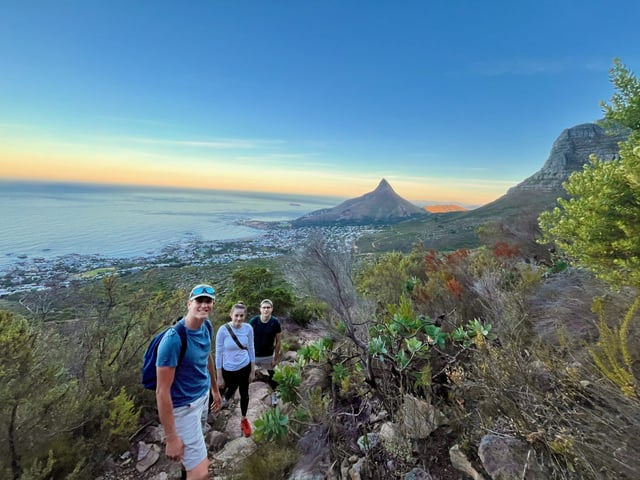
The line runs up the ocean face of Table Mountain, so you spend the morning looking at beaches and the Twelve Apostles before the city bowl opens on the far side. It is a different character from the popular Platteklip steps: more varied underfoot, more exposure in places, and far fewer casual walkers.
Your pre trip message names the exact trailhead or pick up. Some itineraries include hotel collection in Cape Town; others meet on Tafelberg Road or an Atlantic side parking bay, and we send a pin so you are not guessing which bend in the road is ours.
The minimum age is 12. You need steady hiking fitness, a willingness to scramble and a calm approach to heights, because some steps sit above steep drops even when the climbing is not technical.
Tell us about knees, vertigo or medical conditions beforehand so we can advise honestly. This is a long mountain day, not a short viewpoint stroll, and a poor weather window may mean a lower turnaround with the same guide still looking after the group.
A qualified mountain guide who works this face through the week will not force a summit when the wind is wrong, and will not rush you past a step you are not ready for. That judgement is the difference between a proud day and a messy one.
Small groups, a clear kit list and a briefing that actually explains the rope sections help you settle quickly. NQF and MDT training sit behind the calm, so the sea to summit line stays an adventure rather than a scramble without a plan.
For hotel collection, be in the lobby on time with walking kit packed and your phone on. The Atlantic side start is sensitive to traffic on Camps Bay and Kloof Nek, so a late guest delays everyone on the rock.
If you are driving, use the parking pin in your pre trip message and do not leave the car on a blind corner of Tafelberg Road. Arrive a little early; the briefing is easier when the group is not still hunting for a space.
Wear grippy shoes you can scramble in, and pack at least two litres of water, sun protection, a windproof layer and a packed lunch unless food is listed as included. Hands will get dusty on the rock bands, so a small towel or spare buff is useful at rest stops.
A small pack that sits close to your back is better than a swinging tote on the steeper steps. Helmets are used on those sections, so a cap you can wear under one helps in the sun without getting in the way of the strap.
It is both. You hike and scramble on the Atlantic face, then use a rope on short rock bands as the route needs them. The day is mixed on purpose so the ocean stays in view while you gain the plateau.
You do not need to be a gym climber. You do need a head for steps above drops and the fitness for a long mountain day, because some easy looking moves sit above steep ground.
Guests should be at least 12. A participating adult should stay with younger walkers for the whole ascent, including the roped bands and the descent.
Exposure on this face is real even when the moves are simple. Be honest about heights before you come, because a freeze on a step is harder to manage halfway up than at the trailhead.
Allow about eight hours from meeting to descent. Early starts beat heat on the western slopes and give you time for the mixed ground without rushing the rope sections.
Keep the evening free. Tired legs and a sunset dinner reservation on the other side of town are a poor mix after a sea to summit day.
Grippy hiking or approach shoes are the usual choice. Climbing shoes are optional and often too aggressive for the long approach, which includes fynbos paths as well as rock.
Smooth fashion trainers struggle on the rock steps. Bring something you trust on slabby stone, because a slip here has more consequence than a slip in a shopping mall.
Descent may be by path or cableway depending on wind, queues and the group. Your guide makes that call on the plateau after seeing how the morning has gone.
If the cars are off, you walk down. That is still part of a proper mountain day, not a failed plan, so pack a little extra water and a layer for the windy table.
The trailhead sits on the Atlantic side of Table Mountain. Hotel collection is used when it is part of your itinerary, and a pin goes out beforehand.
Do not assume the lower cableway is the start unless that is what the message says. The ocean face has its own parking bays, and a wrong turn on Tafelberg Road wastes cool morning time.
Some steps sit above steep ground even when the climbing is not technical. If anyone has strong vertigo, talk to us first so we can advise on a hiking gorge instead of this mixed line.
A qualified guide can coach a careful first timer through short roped bands. They will not drag a terrified guest up an exposed step just to say they reached the plateau.
You need hiking fitness for a full day with elevation, plus a willingness to use your hands. Rest stops happen, but the face is steep and the rope sections add time.
If a two hour hill walk already feels like a stretch, choose a shorter Table Mountain path first. This is a long, proud day, not a warmup for the cableway queue.
The rope comes out on the rock bands that need it, not on every fynbos step. Your briefing covers the calls before those sections so they feel familiar when you are on the stone.
Helmets are used on the steeper ground. Listen to when the kit goes on, because that is the signal that the character of the day is about to change.
At least two litres of water, sun protection, a windproof layer, grippy shoes and a packed lunch unless food is listed as included. Hands get dusty on the rock bands, so a small close fitting pack is better than a swinging tote.
A cap you can wear under a helmet helps in the sun. Extra snacks matter on a mixed day, because the plateau can feel a long way from the last shade on the face.
About the centre
Cape Town
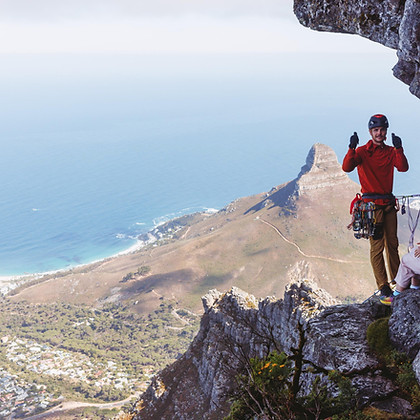
You'll explore Cape Town's iconic peaks and wild Cederberg landscapes with qualified mountain guides who know Table Mountain, Lion's Head and the winelands crags inside out. From sunrise hikes and cable-car descents to multi-pitch rock climbing and multi-day traverses, every outing is paced for your group with clear briefings, solid kit checks and routes matched to the weather.
Whether you're after a half-day introduction on the mountain or a guided expedition sleeping under the stars, you'll get hands-on coaching, local insight and a safety-first approach on some of South Africa's most spectacular terrain.
Operated by KAYU Adventures, a partner of adventuro.