We partner with Rewilding Britain to help protect our natural spaces for future adventures.
All centres are vetted for safety and quality. Your adventure is in good hands with adventuro.
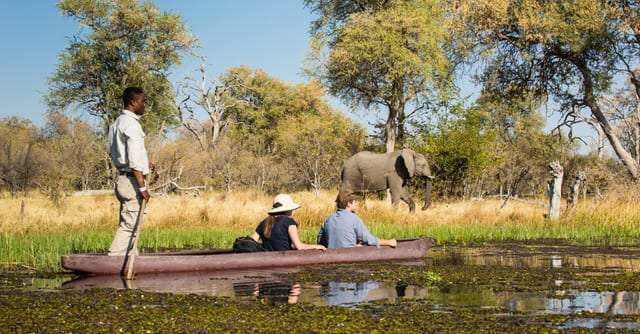
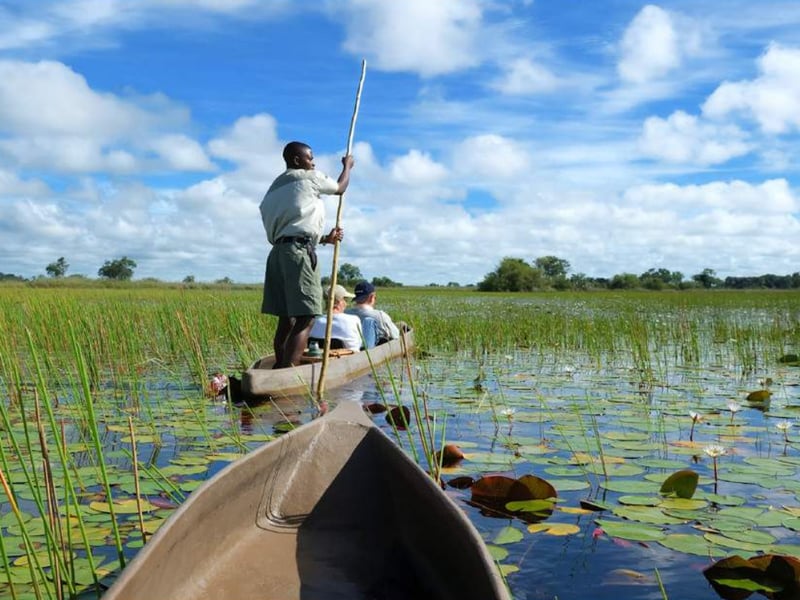
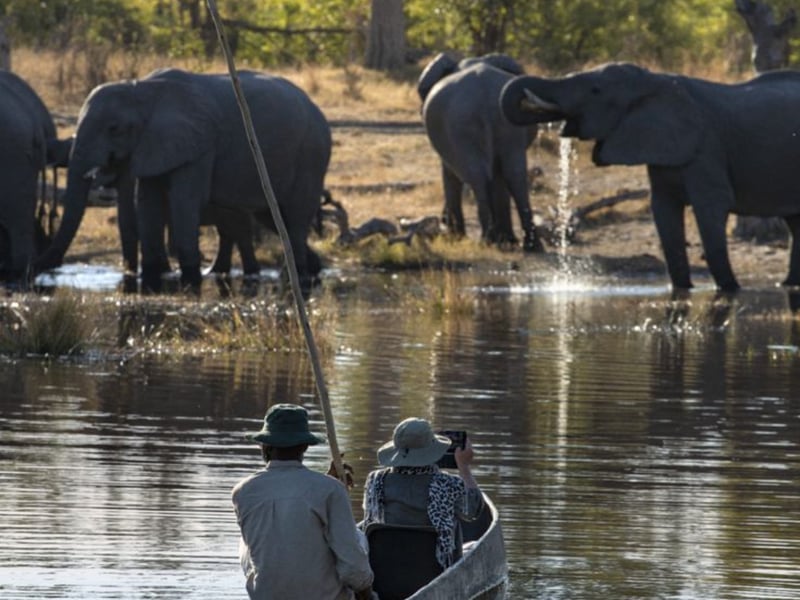
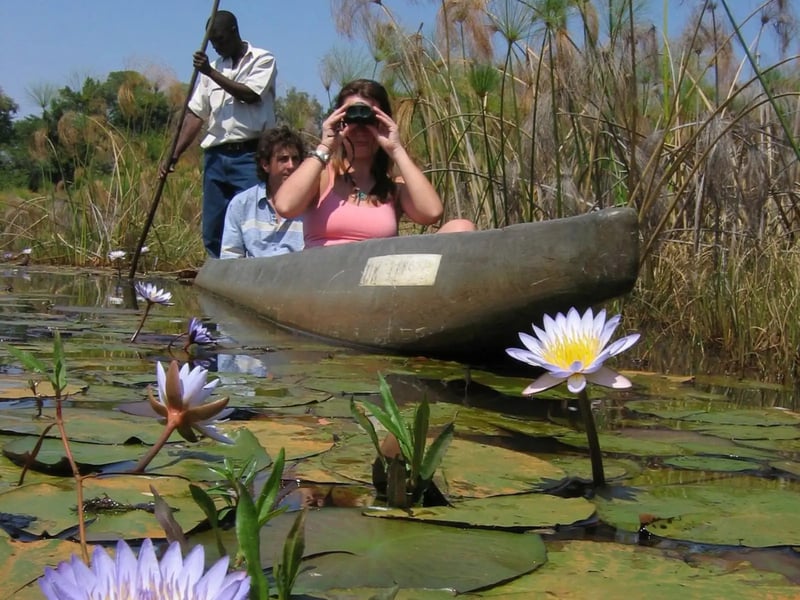
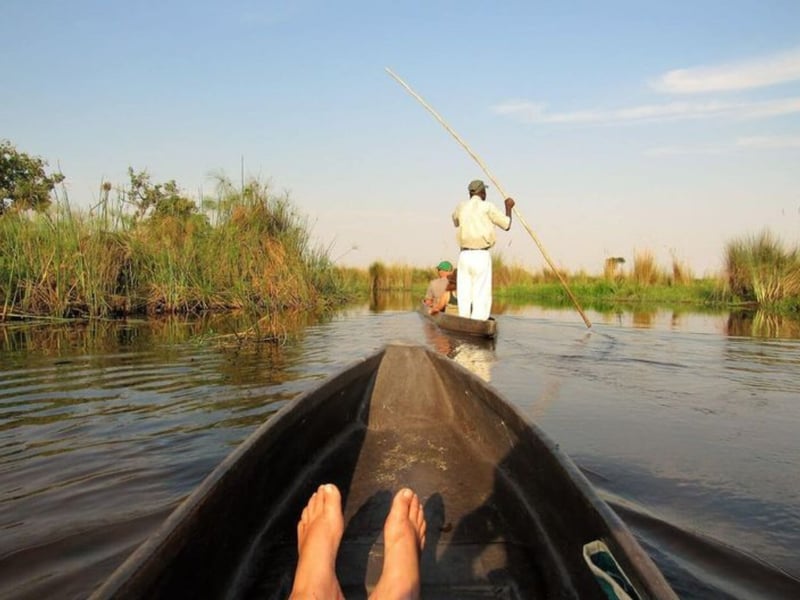
Traditional canoes and guided walks shape three days in the Okavango Delta, with two nights in a wilderness bush camp. You meet your guide at Maun Airport, pole out to a remote island, and spend the days on quiet channels rather than long vehicle drives.
Channels come first: after the Maun meet you travel by road to the mokoro station, then sit low in a traditional dugout while a skilled poler stands and moves you through the reeds to an island camp. The first afternoon includes lunch, settling in and an evening mokoro as the light drops. The next day mixes an early guided walk with trackers, rest time in camp, and an afternoon loop through new channels, with meals cooked on site and nights under the stars.
On the last morning you take a quiet mokoro for birdwatching, then return to the poling station and transfer back to Maun Airport. You do not paddle; you sit still, follow the poler's lead and walk when the guide says it is safe. Hippo, elephant and birdlife are often close at water level, though sightings always depend on the day.
Seasonal water spreads through papyrus, islands and quiet channels across this inland wetland in Botswana. From a mokoro you sit at water level among reeds, with space to watch animals without an engine.
Camp is on a remote island reached only by canoe, so nights are dark and quiet. Maun is the gateway town; once you leave the road, the days are about water, walking and the camp rather than a city base.
You do not need canoe experience. You should be happy sitting in a mokoro for stretches of the day and walking on uneven, sometimes wet ground with a guide. The minimum age is 6, with a responsible adult in the party.
A valid passport is required, and Botswana entry rules are your responsibility. If you have mobility concerns, ask the team so they can advise honestly. Days include rest time in camp between the morning walk and the afternoon mokoro.
Guides work in English, Spanish and French, and local polers and trackers lead the channels and walks so you learn the waterways rather than watching from a vehicle only. Camp stays simple and close to the water, with meals and activities built into the three days.
The founder started with short outings near Cape Town and Johannesburg and grew the work into delta trails and reserve days, remaining a member of the Africa Tourism Association and SATSA. Groups stay small, up to six, which keeps the mokoros and walks manageable.
On arrival at Maun Airport you meet your local guide and travel by road to the mokoro station. From there you glide through the channels by traditional canoe until you reach the remote island campsite.
After settling in and lunch, you set out on an evening mokoro to watch the light drop over the reeds. Dinner is prepared in camp, and you spend the first night under the stars.
Rise with the sun for a guided walking safari with local trackers. You learn to read animal tracks, plants and the delta ecosystem while spotting wildlife on foot.
After breakfast there is time to rest in camp. Following lunch you head out again by mokoro to explore new areas of the delta, then return for dinner and another night in the wilderness.
Start the final day with a peaceful early mokoro, ideal for birdwatching and quiet time on the water. Back at camp you have breakfast and pack up.
You return by mokoro to the poling station, then transfer by road to Maun Airport. Keep your passport handy for the journey out.
The trip starts at Maun Airport in Botswana. Your guide meets you on arrival and travels with you by road to the mokoro station, then by traditional canoe to the island camp.
On day three you return the same way and are dropped at Maun Airport. Bring a valid passport, as it is required. If your flight times are tight, ask the team so they can confirm whether the transfer window works.
You are met at Maun Airport in Botswana. From there the team transfers you by road to the mokoro station and then by canoe to the island camp.
On day three you return the same way and are dropped at Maun Airport. Share flight times when you enquire so the team can confirm the transfer window works for your arrival and departure.
A mokoro is a traditional dugout canoe poled through shallow channels. You sit low in the boat while a skilled poler stands and moves you through the reeds.
It is a quiet way to travel at water level, useful for watching birds and animals without an engine. You do not need paddling experience, only a willingness to sit still and follow the poler's lead.
The minimum age is 6. Children should be comfortable sitting in a canoe for stretches of the day and following guide instructions on walks, with a responsible adult in the party.
Share ages when you enquire so the team can confirm the trip is a good fit and can plan boats and camp space for the group.
The trip is moderate in pace. You should be happy sitting in a canoe for stretches of the day and walking on uneven, sometimes wet ground with a guide.
Days include rest time in camp between the morning walk and the afternoon mokoro. If you have mobility concerns, ask the team so they can advise honestly.
You stay two nights in a wilderness bush camp on an island reached by mokoro. Facilities are simple, meals are cooked in camp, and nights are dark and quiet beside the water.
This is not a lodge stay. Bring a torch, a warm layer for cool mornings and a willingness to camp close to the channels.
Yes. A passport is required for this product. Botswana entry rules are your responsibility, including any visa you may need for your nationality.
Keep documents in your daypack for the airport meet and the return to Maun so the team can move you through the transfers smoothly.
Guests often look for elephant, hippo and rich birdlife from the mokoro, and for tracks and animals on the walks. Sightings always depend on the season and the day.
Polers and trackers know the channels and will give space to animals. Follow their instructions around hippo and other wildlife at all times.
Bring neutral, breathable clothes, a warm layer, rain protection, closed walking shoes, a hat, sunscreen and insect repellent. A torch, binoculars and a reusable bottle are useful in camp.
Soft bags are easier on the road and mokoro transfers than hard cases. Keep a warm layer handy for cool mornings.
The delta can bring sun, wind or sudden rain. If conditions make a channel or walk unsafe, the team may adjust the plan or reschedule activities. They will be in touch as soon as decisions are clear.
A waterproof layer and a flexible attitude help. Light rain often still allows time on the water with route changes.
Groups can start from one guest, with a maximum of six. That keeps the mokoros and walks small enough for the guides to manage on the water and on foot.
Tell the team if you are travelling as a private party so they can plan boats and camp space for your dates.
About the centre
Maun
We design short and multi-day journeys across Southern Africa, mixing wildlife, open landscapes and local culture in South Africa, Botswana, Namibia, Zimbabwe and Eswatini. Guides work in English, Spanish and French, and we look after the transfers so the days stay simple from first pickup to last drop-off.
What started as short outings near Cape Town and Johannesburg has grown into reserve days, delta trails and scenic flights, always with a small-team approach. We are members of the Africa Tourism Association and SATSA, and we keep planning personal from the first enquiry through to the journey home.
Operated by Knap Tours, a partner of adventuro.