We partner with Rewilding Britain to help protect our natural spaces for future adventures.
All centres are vetted for safety and quality. Your adventure is in good hands with adventuro.


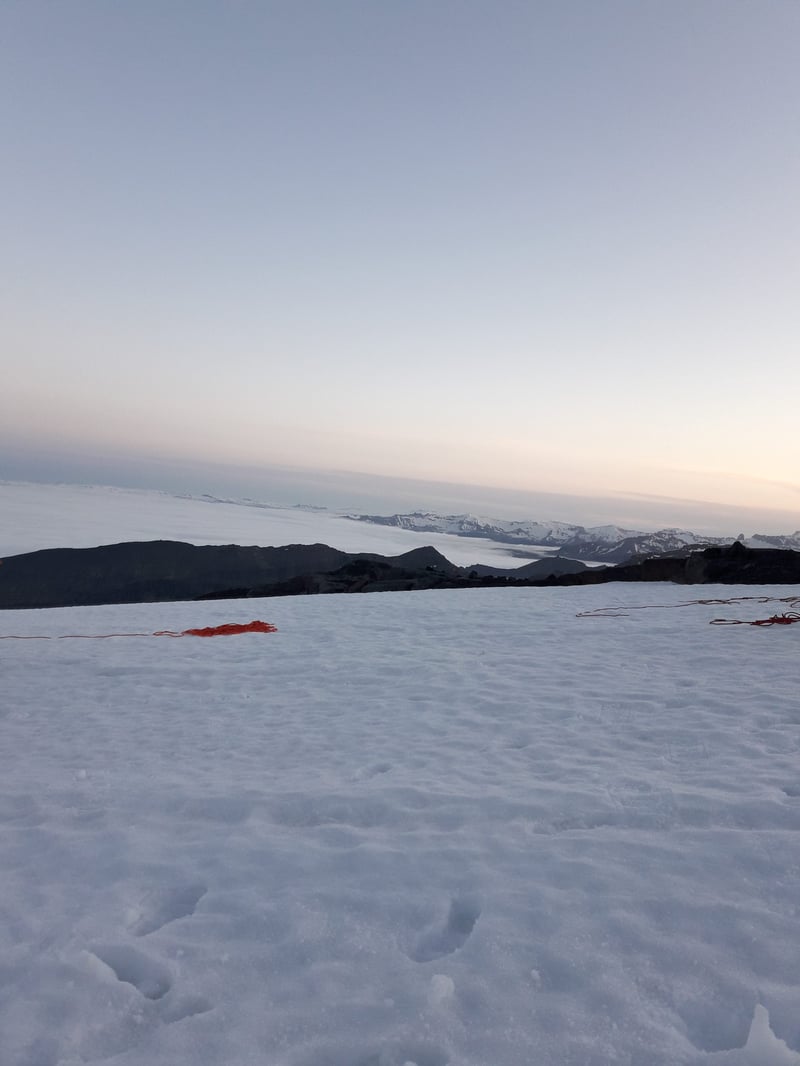
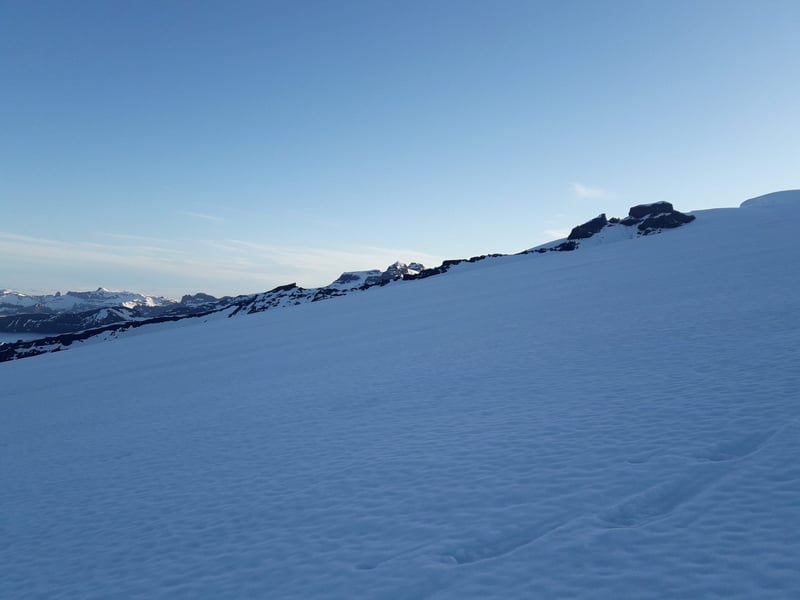
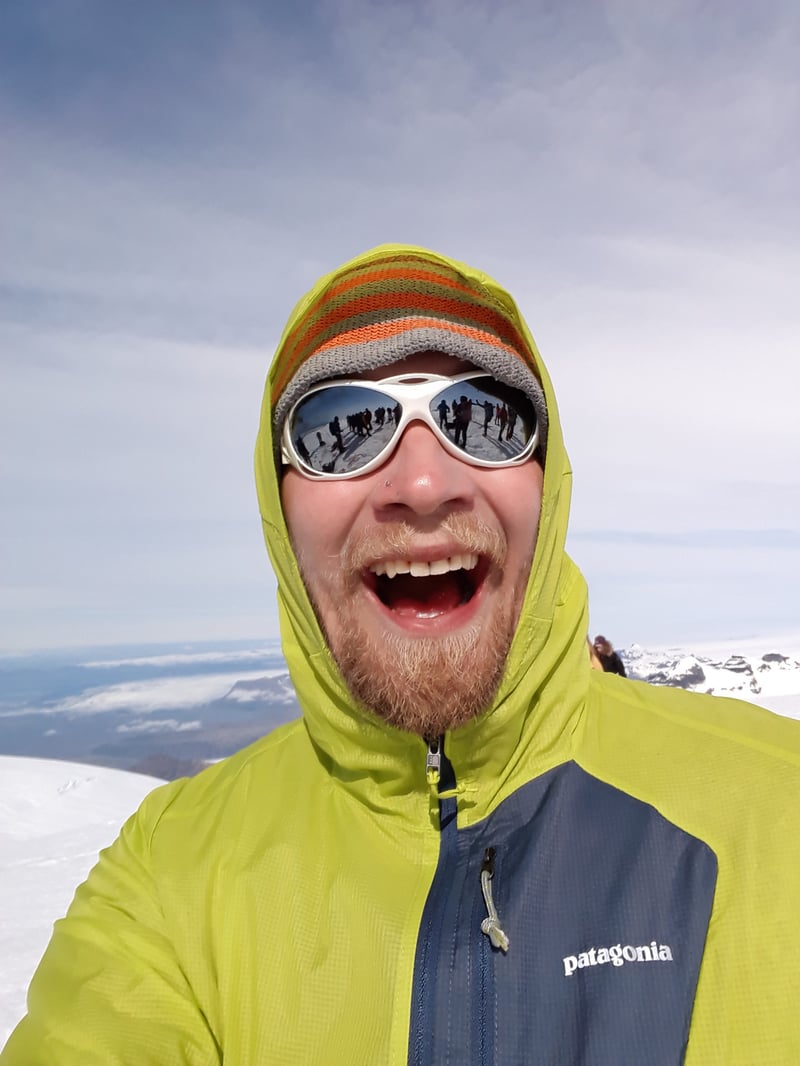
Stand on Hvannadalshnúkur, Iceland's highest summit at 2,110 metres, on a guided expedition across Öræfajökull glacier from the Sandfell trailhead near Skaftafell, where after a pre-trip briefing summit day covers steep gravel, roped glacier travel through crevassed terrain and a final crampon push to the top of the island. Experienced glacier guides navigate crevasses and set start times matched to your team's background at the mandatory briefing the day before, suiting hikers with prior mountain days who want a structured attempt on Iceland's highest point rather than an improvised glacier walk.
Attend the mandatory briefing the day before summit day to review glacier equipment, pacing, start time and your mountain experience, then begin early at Sandfell with a steep gravel ascent from around 20 metres to 700 metres. Refill water at a spring near 500 metres and take a snack break before continuing on rock and snow toward Skerið at 1,100 metres where the team ropes up.
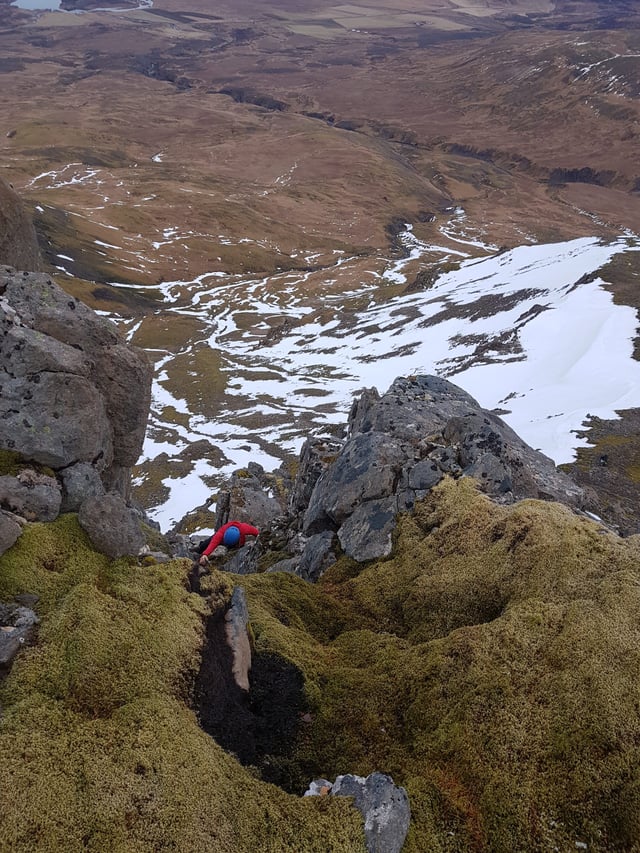
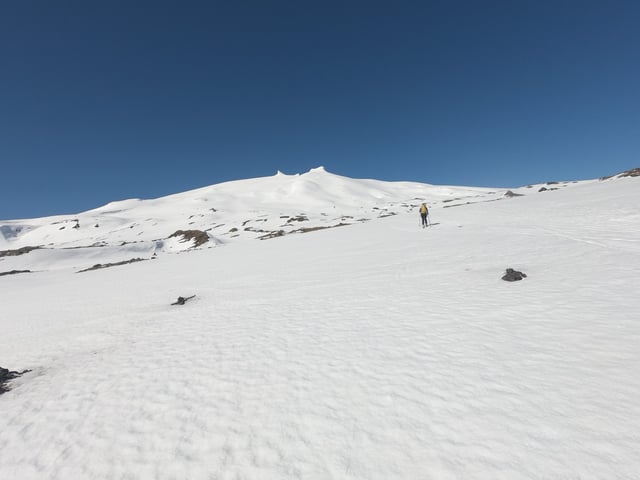
Long snow slopes through crevassed terrain lead to the Öræfajökull plateau near 1,800 metres for lunch and regular food breaks, followed by the final 200 metre summit push with crampons to Hvannadalshnúkur. Descent follows the same route, moving carefully while roped through the upper glacier before faster walking below Skerið back to the car after a full fourteen-hour mountain day.
Öræfajökull forms the southern edge of Vatnajökull in southeast Iceland near Skaftafell National Park. The Sandfell trailhead accesses the standard summit route used for Hvannadalshnúkur attempts, with dramatic views of the outlet glacier and surrounding peaks even before you reach the high plateau.
Allow five or more hours driving from Reykjavík along the south coast, passing Hvolsvöllur, Vík and Kirkjubæjarklaustur before turning toward Skaftafell. Plan local accommodation for two nights around the briefing and summit day so you are not rushing a long drive immediately before or after the expedition.
Excellent endurance for a fourteen-hour day, prior mountain experience and comfort roped on glacier terrain are important for this expedition. Attend the mandatory pre-summit briefing where guides confirm kit and start times based on your background. Bring full expedition day kit including two litres of water and substantial food for the ascent, plateau lunch and descent combined.
Harness, crampons and ropes are provided at rope-up on the mountain, so you do not need to arrive with full glacier hardware beyond solid hiking kit. Previous long hill days above 1,000 metres help you understand the pacing guides recommend during the briefing before the early Sandfell start.
Experienced glacier guides navigate crevasses and set start times matched to team experience at the pre-day briefing, which helps less experienced groups leave early while fitter teams may start later and still aim for a mid-day summit. The briefing format ensures you understand equipment, pacing and goals before committing to the early start.
Guide teams work regularly on Öræfajökull's standard Sandfell route and communicate clearly during roped travel on crevassed slopes. Their route finding and turnaround decisions reflect daily glacier conditions rather than a rigid summit promise, which keeps Iceland's highest summit attempt organised and safety-led.
The summit day starts at Sandfell, the sand hill trailhead near Skaftafell in southeast Iceland. Reach the area via Route 1 east from Reykjavík, turning onto road 998 after Kirkjubæjarklaustur. A briefing meeting is held the day before the climb at a time we confirm when you book.
Transport to Skaftafell and accommodation are not included. Plan to stay locally the night before your pre-trip briefing and summit day so you arrive rested for the early start at Sandfell.
Bring waterproof jacket and trousers, warm layers including an insulated jacket, sturdy hiking boots, hat, gloves, sunglasses, hiking poles, 20 to 30 litre backpack and at least two litres of water plus a full day's food. High-altitude stops on the plateau feel colder than the lower gravel slopes, so pack insulation you can wear during lunch on the glacier.
Harness, crampons and ropes are provided when roping up at Skerið around 1,100 metres. A spring near 500 metres on the lower hill allows refilling bottles early in the day before the long upper section where water sources are limited.
Expect a briefing the day before covering glacier equipment, pacing and start time, then around fourteen hours on summit day from Sandfell to return. The route climbs steep gravel to around 700 metres, continues through Skerið at 1,100 metres where you rope up, then long snow slopes to the plateau near 1,800 metres before the final summit push.
After lunch on the plateau you cross toward the final 200 metre summit section with crampons before descending the same route roped where required. Build two nights locally into your itinerary: one before the briefing and one after the summit day before driving onward along the south coast.
Groups up to eight share a guide team on the glacier, keeping roped travel manageable on Öræfajökull's crevassed slopes. Smaller groups allow finer pacing adjustments on the long ascent and more time for instruction during rope-up and crevasse navigation sections.
Private or semi-private departures may be available for experienced teams who want exclusive guide attention on Iceland's highest summit route. Contact us with your group size and background and we'll match guide allocation to your experience level.
Harness, crampons and ropes are provided when the team ropes up at Skerið around 1,100 metres, along with crevasse navigation and glacier travel instruction from your certified mountain guide. The pre-expedition briefing also covers how to pack and adjust kit for the long summit day.
Personal waterproof clothing, boots, poles, food and water are not included and must be carried from Sandfell through the full ascent and descent. Plan for at least two litres of water and substantial food because the plateau section is long and exposed with limited refill points above the lower spring.
Summit day includes photo opportunities on the Öræfajökull plateau and at the high point when visibility allows, with views across Vatnajökull and neighbouring peaks such as Hrútfellstindar on clear days. Many guests capture their Iceland highlight shot at the top of the island's highest summit at 2,110 metres.
Keep cameras in dry bags during roped travel and on windy plateau sections. Your guide pauses for group photographs when conditions make safe stops possible without delaying crevasse navigation on the upper glacier.
Hvannadalshnúkur attempts run in summer when daylight and glacier conditions suit a fourteen-hour summit day with a pre-trip briefing. Shoulder season departures depend on snow cover on the lower gravel slopes and stable crevasse bridges on the upper glacier, which guides assess before confirming each team start time.
Winter expeditions are not part of the standard format because short daylight and demanding access make the usual Sandfell route impractical for most visitors. Monitor mountain forecasts for the summit elevation rather than only coastal towns along Route 1.
Shared expeditions join up to eight participants with a guide team, which suits hikers who want company on Iceland's classic highest summit route. Private or semi-private options may be available for groups with substantial mountain experience who prefer exclusive guide attention and tailored start times.
Both formats include the mandatory pre-day briefing and the same specialist glacier equipment on summit day. Private departures are available on request if your team already moves efficiently roped on glacier terrain and wants finer control over pacing.
At 2,110 metres Hvannadalshnúkur is Iceland's highest summit, rising from the Öræfajökull outlet of Vatnajökull, Europe's largest glacier by volume. The route crosses gravel, rock and snow with crevasse navigation on the upper glacier, giving a complete picture of Icelandic high mountain terrain in one day.
Clear views from the top can extend across the ice cap toward neighbouring peaks and the southeast coast far below. Your guide shares geological context during the ascent, explaining how Öræfajökull sits at the edge of Vatnajökull and why the standard Sandfell route has become the classic way to reach the island high point.
Experienced glacier guides lead the briefing and summit day, with qualifications covering crevasse rescue, roped team travel and high-altitude pacing on Öræfajökull. They adjust departure times at the briefing so less experienced teams leave earlier while fitter groups may start later, aiming to reach the top around mid-day when conditions allow.
On the mountain guides route-find through crevassed terrain and communicate clearly during roped sections so the team moves together efficiently above Skerið. Their decisions on turnaround points reflect daily weather and glacier reports rather than a fixed summit guarantee, which keeps the expedition format safe on an active ice cap.
About the centre
Skaftafell
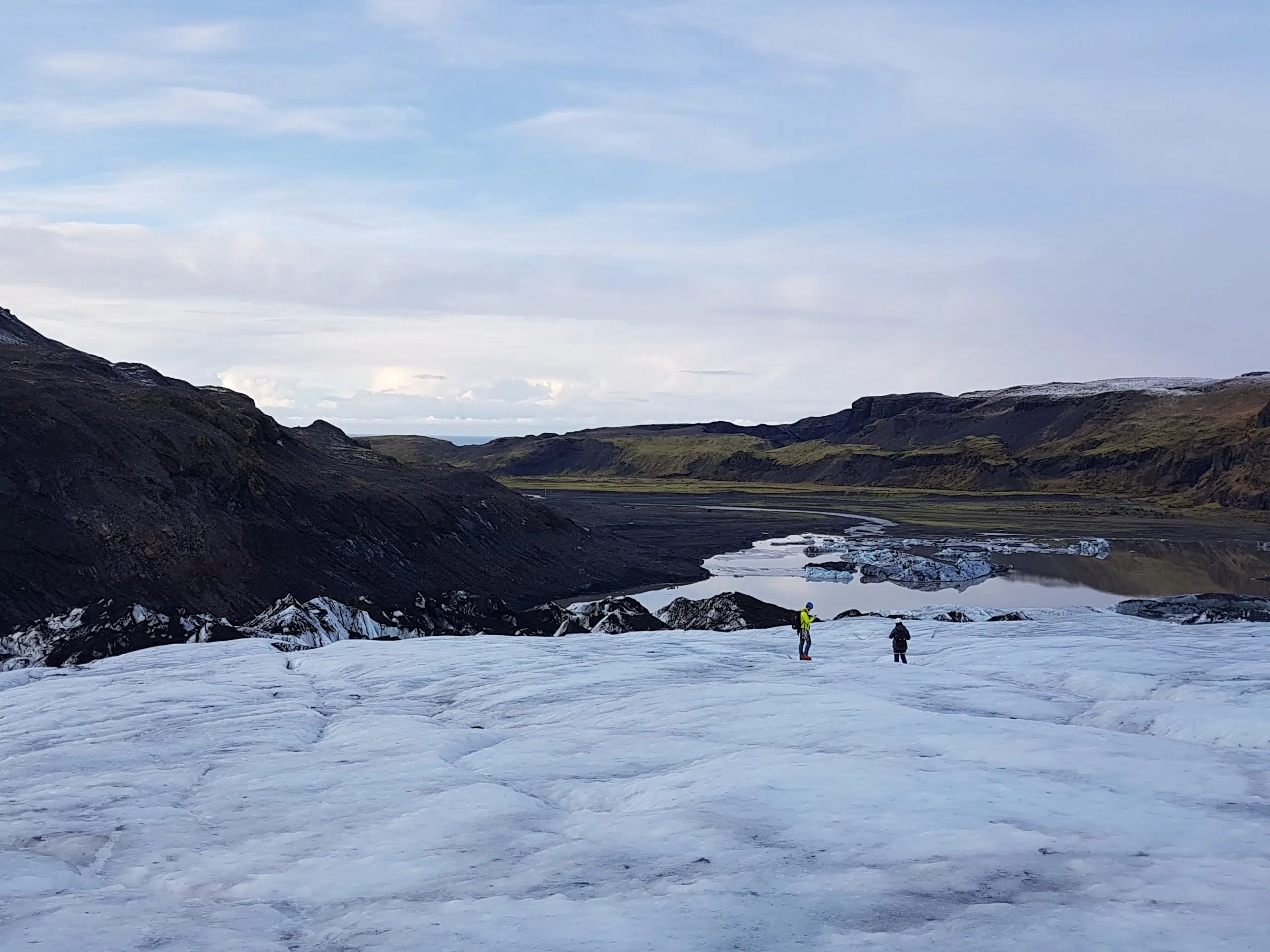
Explore Iceland's glaciers, volcanoes, and alpine peaks with certified mountain guides based in Selfoss. From introductory glacier walks to summit attempts on Hvannadalshnúkur and Snæfellsjökull, trips are tailored to your group's experience and the conditions on the day.
Small-group guiding keeps routes flexible and safety-focused, with quality equipment provided for glacier travel and ice climbing where required. Whether you want a classic glacier hike or a multi-day mountaineering objective, local expertise helps you make the most of Iceland's highland terrain.
Operated by North Ice, a partner of adventuro.