We partner with Rewilding Britain to help protect our natural spaces for future adventures.
All centres are vetted for safety and quality. Your adventure is in good hands with adventuro.
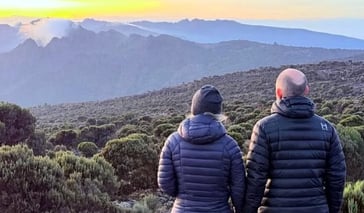
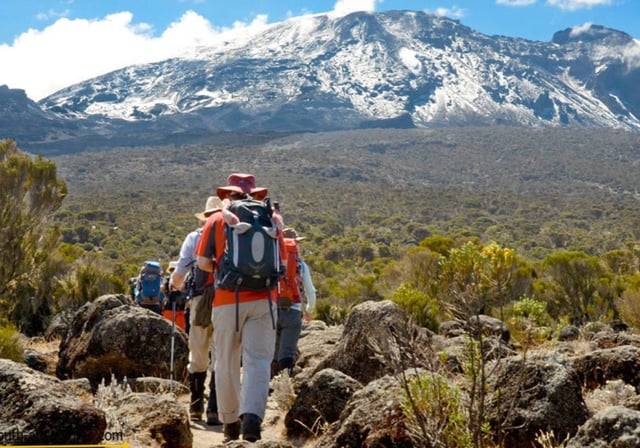
Stretching across Kilimanjaro’s western slopes, this eight-day route is widely regarded for its gradual acclimatisation and varied scenery. The journey begins in rainforest before opening into high moorland and the expansive Shira Plateau, offering early views across the mountain’s vast landscape.
Progress is intentionally paced to support adjustment to altitude, with key acclimatisation stages such as Lava Tower built into the itinerary. A dedicated mountain team manages camps, meals and logistics throughout, ensuring steady progression toward the summit over a longer and more comfortable ascent profile.
Safety is prioritised through structured altitude monitoring, daily health checks and the availability of emergency oxygen across the route. Guides are trained in wilderness response and high-altitude decision-making to support climbers in changing conditions.
Alongside the expedition itself, each trek contributes to community-based initiatives in the Moshi region, supporting health and education programmes. This adds a meaningful connection between the mountain journey and local impact.
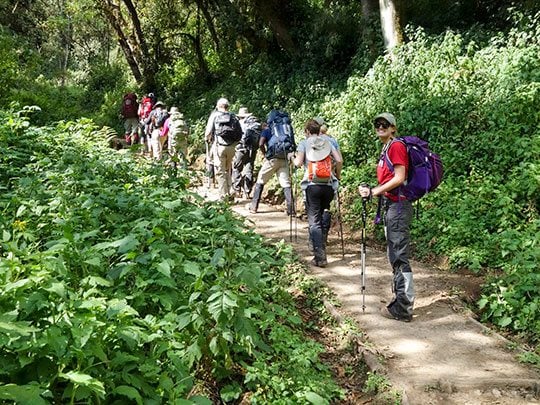
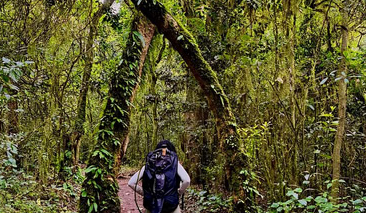
The trek begins at Londorossi Gate with registration before continuing to the trailhead by vehicle. The route enters dense rainforest where the path climbs steadily under canopy cover.
Mti Mkubwa Camp is reached after several hours of hiking through humid forest conditions. The evening is spent resting and preparing for higher altitude sections ahead.
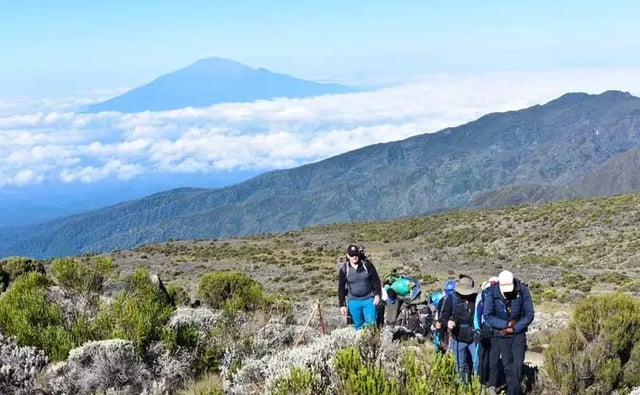
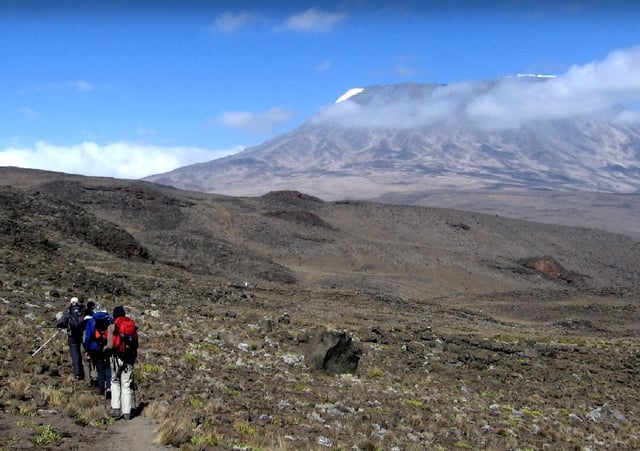
Leaving the rainforest behind, the trail transitions into heath and moorland with increasing elevation gain. Streams and ridges mark the landscape as the route approaches the Shira Plateau.
Shira 1 Camp is reached by late afternoon, offering wide views and open terrain. Time is spent adjusting to altitude in a more exposed mountain environment.
The route continues across the expansive Shira Plateau, with gentle gradients and open scenery. Volcanic formations and distant peaks become more prominent throughout the day.
Shira 2 Camp is reached after a steady trek, with time for light acclimatisation walks and rest. The open setting provides strong visibility across surrounding mountain ranges.
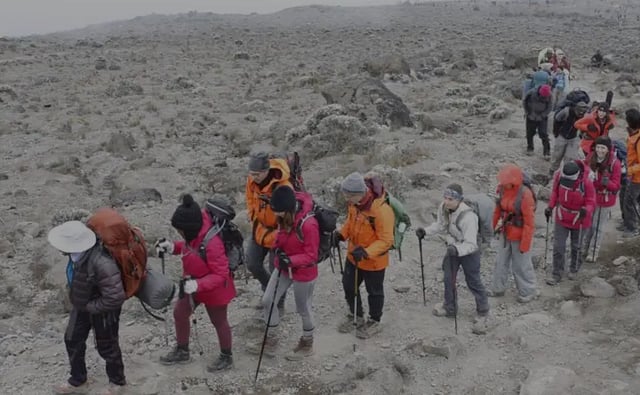
A key acclimatisation stage involves ascending to Lava Tower at higher altitude before descending again. This supports physiological adjustment to reduced oxygen levels.
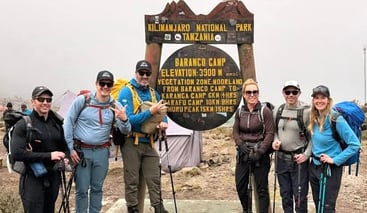
Barranco Camp is reached in the afternoon within a sheltered valley beneath dramatic rock formations. The rest of the day is focused on recovery and preparation for the next ascent stage.
The morning begins with a steady climb up the Barranco Wall, a rocky but non-technical section requiring careful movement. Once above, the route continues through ridges and valleys.
Karanga Camp is reached for rest and acclimatisation support ahead of higher camps. The afternoon remains focused on hydration and energy recovery.
The terrain becomes increasingly barren as the trail enters alpine desert conditions. The climb continues steadily toward Barafu Camp, the final staging point before summit night.
Arrival at camp is followed by early rest, with preparation focused on overnight ascent. Energy conservation becomes essential ahead of the final push.
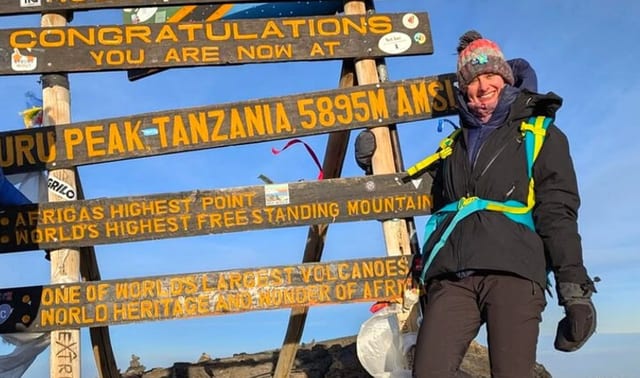
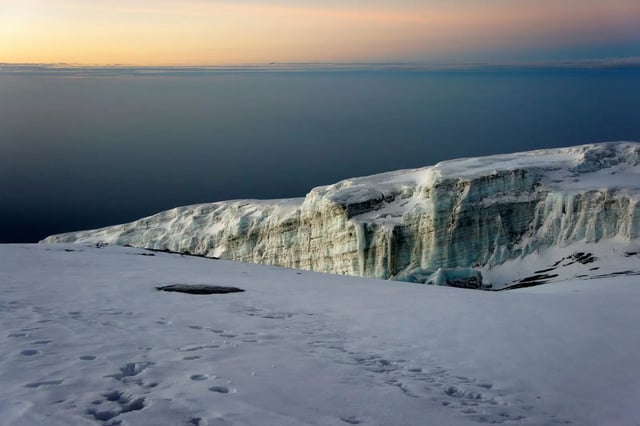
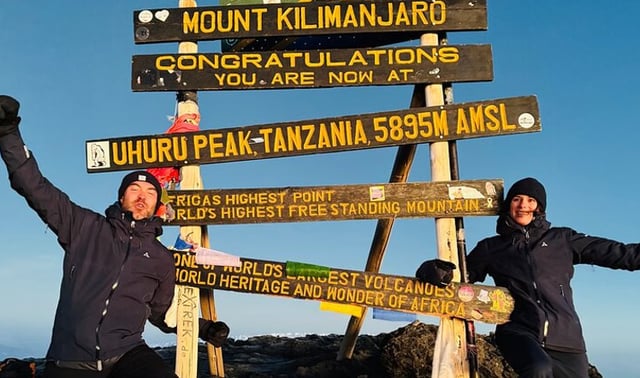
The summit attempt begins around midnight, climbing through scree and rocky terrain toward Stella Point and onward to Uhuru Peak. Sunrise often occurs near the upper slopes, with wide views across the mountain.
After a short time at the summit, descent begins immediately to Barafu before continuing down to Mweka Camp. This is the most demanding day, combining ascent and long descent in one continuous effort.
The final day descends through rainforest where conditions become warmer and oxygen levels improve noticeably. The trail is steady and continuous throughout.
Arrival at Mweka Gate marks completion of the trek, followed by certificate collection and transfer back to base accommodation or onward travel.
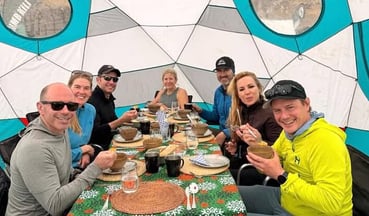
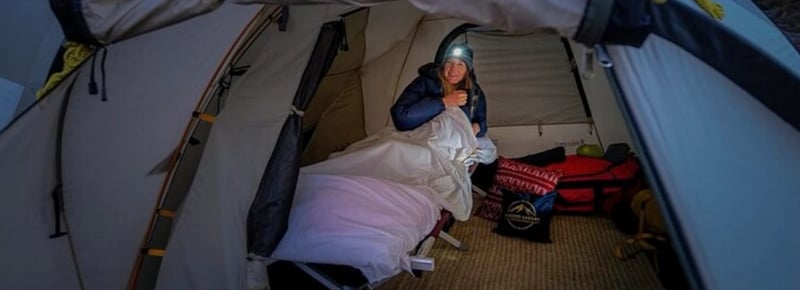
Set across remote mountain environments, accommodation is provided in shared camping setups at designated sites along the route. Tents, dining areas and sleeping arrangements are managed by the support crew.
Conditions become colder and more exposed at higher elevations, particularly during summit staging. All logistics and equipment handling are managed by the team to support recovery and consistency throughout the trek.
This route is considered one of the most scenic options, offering a longer approach through varied ecological zones. It is also known for its strong acclimatisation profile due to its extended itinerary.
The gradual progression helps reduce the impact of altitude compared to shorter routes.
The plateau provides wide, open terrain at high elevation with early mountain views. It offers a sense of space and exposure not found on lower routes.
This section also allows early acclimatisation before joining the main ascent path.
Daily monitoring is carried out using pulse oximetry to track oxygen levels and physical response. Guides adjust pace and rest periods based on conditions.
Emergency oxygen is available and descent is prioritised if needed.
Camping is used throughout with tents and dining areas set up at each stop. All logistics are managed by the support team.
Higher camps become colder and more exposed, especially before summit night.
Meals are prepared daily by the mountain crew to support energy and recovery. Food is served at each camp.
Water is treated where necessary and regular hydration is encouraged throughout the trek.
The summit push begins around midnight on day seven, allowing ascent in colder, more stable conditions. This supports arrival at sunrise.
After a short stay at the summit, descent continues immediately to lower camps.
A good general fitness base is important due to the duration and altitude exposure. No technical climbing skills are required.
Endurance training before arrival is recommended to improve comfort.
About the centre
Moshi
Operated by Hillborn Organic Coffee, a partner of adventuro.
Kilimanjaro & Arusha, Tanzania
From $2800
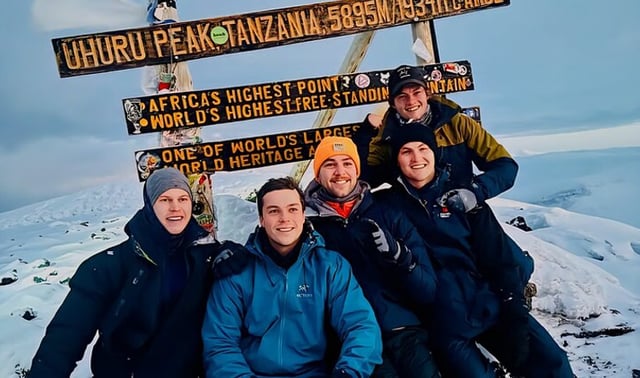
Kilimanjaro & Arusha, Tanzania
From $2800
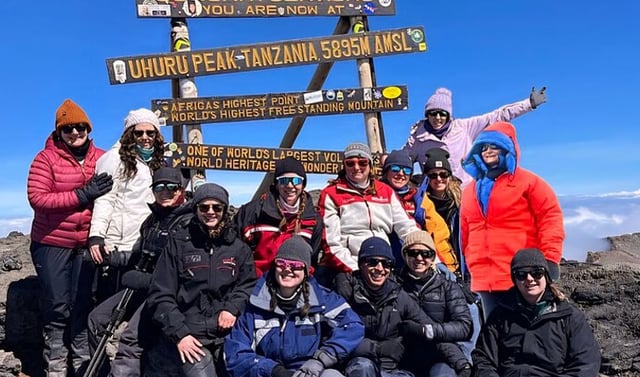
Kilimanjaro & Arusha, Tanzania
From $2600
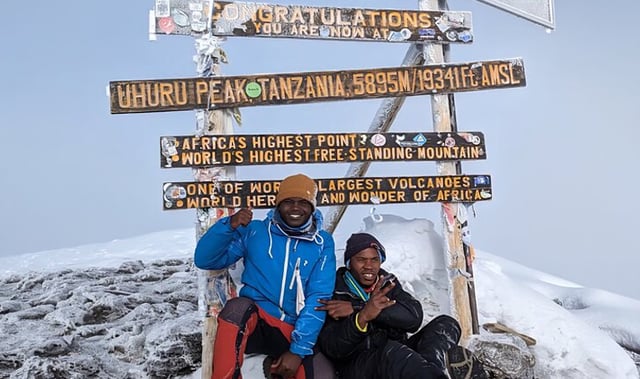
Kilimanjaro & Arusha, Tanzania
From $2600
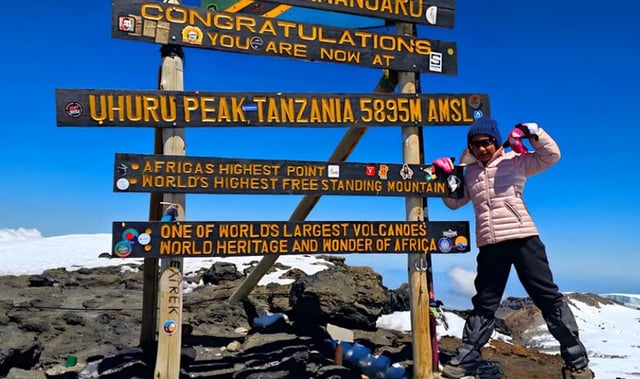
Kilimanjaro & Arusha, Tanzania
From $2200
Kilimanjaro & Arusha, Tanzania
From $80