We partner with Rewilding Britain to help protect our natural spaces for future adventures.
All centres are vetted for safety and quality. Your adventure is in good hands with adventuro.
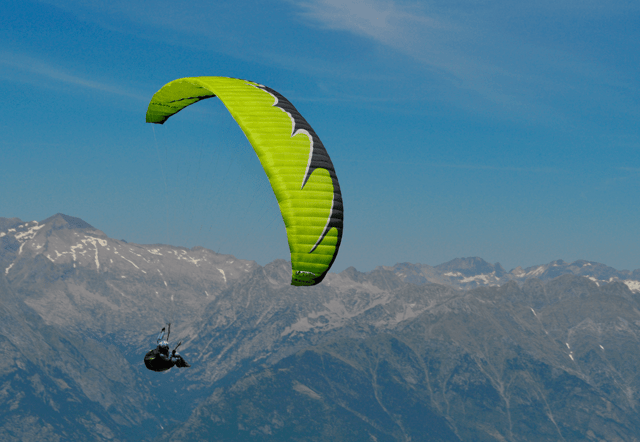
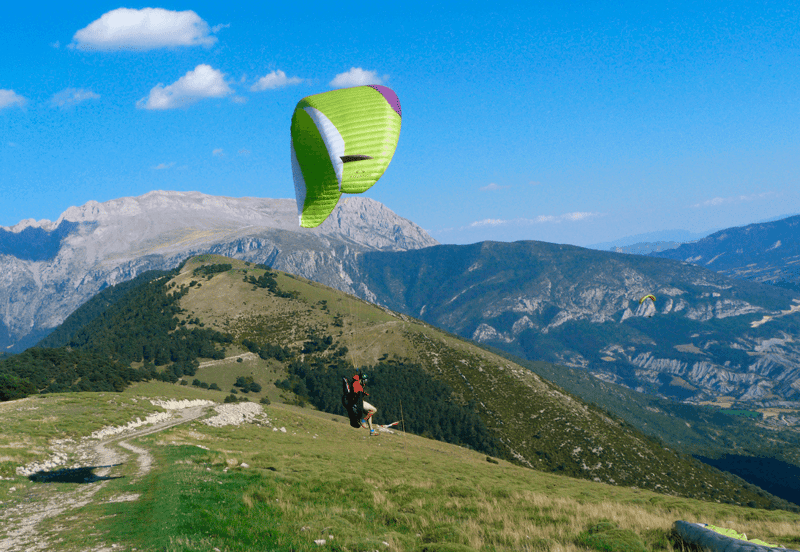
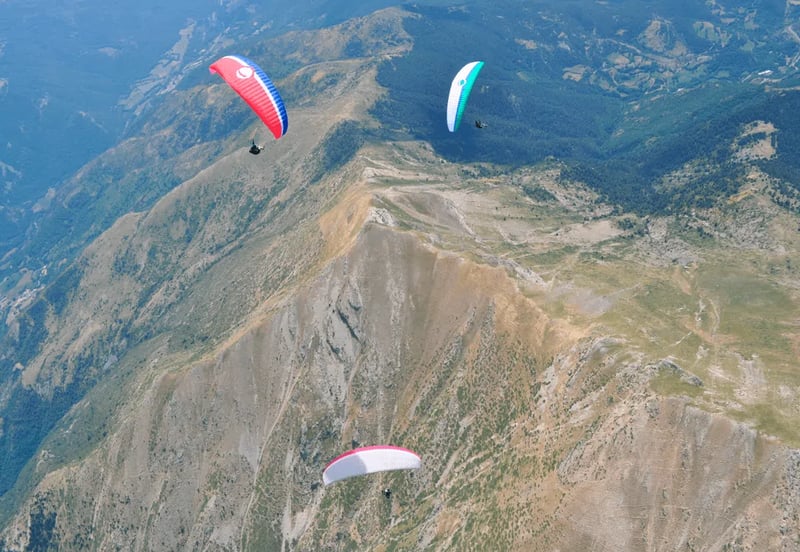
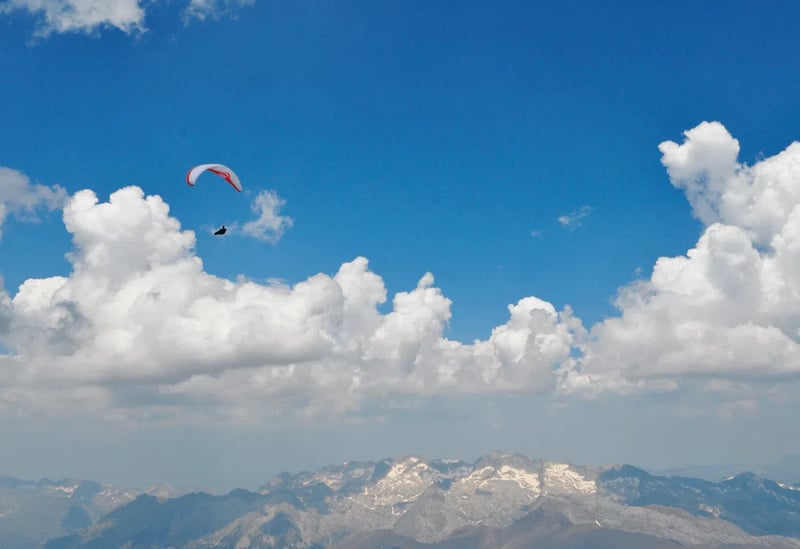
A step beyond progression, this advanced beginner course is designed to help you move towards full independence in the air. Over five days, you’ll refine your technique, improve decision-making, and develop the confidence to handle a wider range of flying conditions.
The course begins with a focus on refining your ground handling skills, working on more advanced techniques such as reverse launches in stronger wind, lateral take-offs, and precise canopy control. These sessions are adapted to the conditions each day and are key to improving your confidence before moving into more demanding flights.
As the week progresses, you’ll complete a minimum of ten flights from a variety of take-off points, with conditions ranging from calm morning descents to more active thermal flying. You’ll work on improving efficiency in lift, controlling your brake input when centring thermals, and adapting your flight path based on terrain and conditions. When possible, you’ll also be introduced to short cross-country style flying by following the instructor, helping you understand route choices and positioning in the air.
Theory sessions run alongside the practical elements, covering more advanced topics such as air stability, thermal behaviour, site evaluation, and decision-making processes. You’ll also work on handling more complex scenarios, including different landing approaches, use of descent techniques, and managing changes in conditions. The aim is to give you the tools to fly with greater awareness and independence.
Based in Castejón de Sos, in the Benasque Valley, this course takes place in one of the most established paragliding areas in Spain. The region offers a wide range of flying conditions, from gentle valley flights to more technical thermal and ridge environments, making it ideal for advanced training.
The combination of varied terrain, reliable weather patterns, and multiple take-off and landing options allows for a flexible training approach. This means you’ll experience different flying scenarios throughout the course, helping you build a broader understanding of how to adapt to changing conditions.
This course is intended for pilots who have already completed an introduction course and at least one progression course, with a solid base of flying experience. It is recommended that you have completed two progression courses and ideally an SIV course, or have logged around 25 flights.
You should already feel confident with basic flight control and be ready to take on more responsibility in the air. This course focuses on developing independence, so a willingness to engage with both technical instruction and decision-making is essential.
With decades of experience behind it, the school has built a reputation for developing pilots through structured, progressive training. From its early role in shaping paragliding in Spain to its current approach, the focus has always been on creating confident, capable pilots who understand both the technical and decision-making aspects of flying.
The current team, including instructors like David, combines that experience with a modern, student-focused approach. Small group sizes and dedicated resources ensure that each participant receives focused guidance, while the variety of flying sites allows for a training experience that goes beyond repetitive practice and prepares you for real-world flying situations.
This course is aimed at pilots who already have a solid foundation and want to move towards full independence. It builds on progression-level skills and introduces more advanced flying techniques.
It’s suitable if you’ve completed at least one progression course and are looking to improve your control, decision-making, and overall confidence in varied conditions.
You will complete a minimum of ten flights during the course, depending on weather conditions and progression. These flights are designed to expose you to a range of scenarios.
The focus is on developing your skills in different conditions rather than simply increasing the number of flights.
You’ll be introduced to the basics of cross-country flying through guided “follow the instructor” flights when conditions allow. This helps you understand route planning and positioning.
It’s an introduction rather than full cross-country training, but it provides a strong foundation for future progression.
You’ll work on techniques such as using the speed bar efficiently, performing big ears, controlling collapses, and improving landing precision.
You’ll also develop better control of your wing in both calm and more active conditions, helping you become a more adaptable pilot.
Ground handling sessions can be physically active, especially when practising in stronger wind conditions. You’ll need to be comfortable moving with the wing and handling it actively.
Flying itself is less physically demanding, but requires focus and concentration over extended periods.
Theory sessions cover advanced aerology, thermal behaviour, flight planning, and safety procedures. You’ll also learn how to evaluate flying sites and conditions more effectively.
These sessions are designed to improve your decision-making as much as your technical flying ability.
You will receive a flight logbook and training record documenting your progress during the course.
There is also the possibility of working towards APPI Pilot Level 3 certification, depending on your progression and performance.
All sessions are weather-dependent, and instructors will adjust the schedule as needed to ensure safe conditions.
If minimum course objectives are not met, you may be able to complete remaining flights later or discuss alternative options.
No, all equipment is provided, including wing, harness, helmet, and safety systems.
If you have your own equipment, it can be checked by instructors to ensure it is suitable for training.
After completing this course, you’ll be in a strong position to continue flying more independently and begin exploring longer flights.
You may also continue training with more advanced courses or focus on building experience in different flying environments.
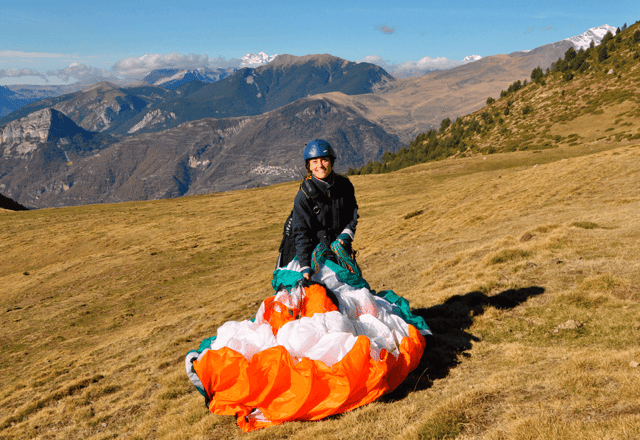
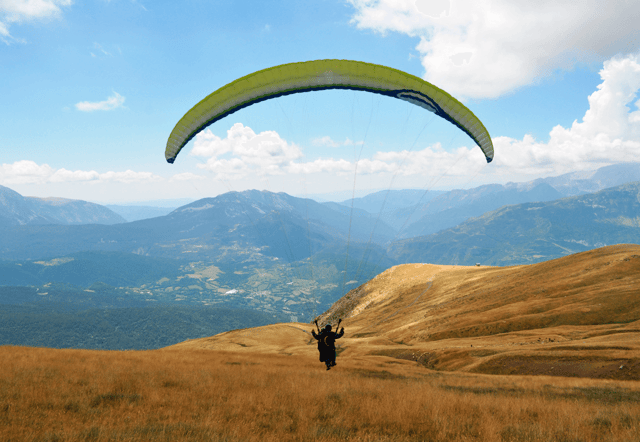
About the centre
Castejón de Sos
Operated by Parapente Pirineos, a partner of adventuro.