Ready to find a course or session?
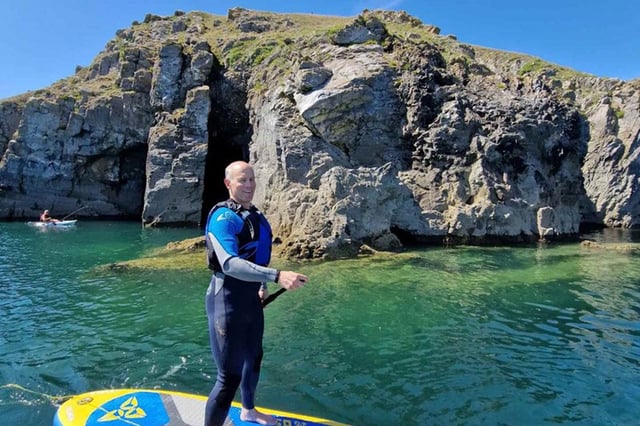
ISA Open Water SUP Instructor takes you beyond the lake wall and into coastal bays, estuaries and big water where wind, swell and tide actually matter. You should already hold Flat Water SUP Instructor and have real hours paddling in open conditions. This course teaches you to brief nervous paddlers for offshore routes, manage drifts and run rescues when a beginner lets go of the paddle in a chop.
Two or three full days blend classroom weather work with on-water leadership drills. Your examiner watches mock lessons in conditions that may be mild or genuinely awkward depending on the week you book. That unpredictability is intentional. Open water instruction is never fully controllable.
You will rehearse empty-board recovery, towing tired paddlers and the boring admin of route cards that save you when visibility drops. Flat water instructors often underestimate how fast a hire fleet drifts downwind on an estuary. ISA fixes that gap before you take paying groups offshore.
Students remember the instructor who turned them back when the wind funnel kicked up, not the one who pushed offshore for a nice photo. ISA trains you to be the first type. That judgement call is part of the assessment, not an optional extra.
Open Water SUP Instructor is assessed through personal paddling, theory, rescue skills and a mock lesson observed by an ISA examiner.
Quick answers about this qualification. For anything else, use live chat or browse bookable activities below.
Find activitiesIt is the ISA qualification to teach SUP in coastal and estuary open water with wind, swell and tidal influence. You extend Flat Water SUP Instructor skills into dynamic venues where route planning and rescue judgement matter as much as stroke demos.
It is not surf SUP instruction. River and surf-specific modules sit elsewhere in the ISA pathway. Employers hire open water instructors for guided coastal paddles and hire fleets beyond sheltered lakes.
Yes in normal ISA progression. Centres expect flat water instructor certification or verified equivalent before open water assessment.
Leave a comment when you book if your flat water card is from another agency for crossover checks.
Two to three full days are typical, sometimes compressed into a long weekend. Assessment usually falls on the final day when conditions cooperate.
Book flexible travel if your centre warns about coastal weather windows.
Written assessment covers teaching methods, safety and open water awareness alongside practical evaluation.
Examiners focus on whether you can plan a safe coastal session, not abstract trivia.
Logged paddling beyond flat lakes: coastal bays, estuaries or large wind-affected water. Comfort in light chop and current matters.
A few guided tours before the course beats arriving with only pool-flat hours.
No. Open water SUP covers coastal and estuary venues with manageable swell, not breaking surf zones.
Surf SUP requires separate ISA training if your centre offers it.
Wetsuit suited to long coastal sessions, leash, warm layers and food for full days. Centres usually provide training boards.
Sun protection and hydration matter even on grey UK coast days.
Centres postpone offshore assessment or use sheltered venues rather than forcing unsafe demos.
That delay is frustrating and correct. Open water instructing starts with judgement calls.
Beginner and intermediate open water SUP within ISA limits and your centre insurance. Hire fleets and guided coastal paddles become viable revenue.
Stay inside your assessed conditions until experience builds.
ISA open water instructor status is internationally recognised. Local insurance and visa rules still apply.
Your certificate proves teaching standard; employers confirm operational scope.
adventuro lists ISA open water SUP instructor courses at coastal training centres. Compare flat water prerequisite checks, equipment hire and assessment day flexibility.
Training on your home coast builds local tidal knowledge early. Training abroad gives warmer water for comfort drills. Both are valid if the centre teaches to ISA standards.