
Ready to find a course or session?
Bronze Navigator Award is the NNAS entry point for map and compass work in open countryside. You learn on paths and tracks rather than blind contour crossings across moorland. If you currently follow friends or rely on phone apps and feel uneasy when the path forks, this two-day course is the structured fix.
Minimum contact time is twelve hours over two days with a registered NNAS tutor. You orient the map, use handrails like walls and streams, measure distance by timing and pacing, and build a walk plan you can follow without guessing. Assessment is integrated into the course through practical exercises, not a separate written paper.
NNAS accreditation at SCQF Level 4 gives a nationally recognised certificate when you meet the standard. Bronze pairs naturally with Hill Skills if you want broader hill walking safety alongside pure navigation. Getting lost on course is part of learning. That is normal.
Bronze Navigator Award is assessed continuously by your NNAS tutor during practical navigation exercises.
Quick answers about this qualification. For anything else, use live chat or browse bookable activities below.
Find activitiesIt is the entry Navigator Award from the National Navigation Award Scheme, accredited at SCQF Level 4. The course teaches essential map reading and compass skills for countryside walking on paths and tracks.
It is a personal navigation certificate, not a qualification to lead groups commercially.
None for navigation itself. You should be fit enough for a day walk on uneven ground in typical weather.
Leave a comment when you book if you have never read an OS map. Tutors adjust pacing for absolute beginners without making the group feel held back.
At least twelve hours over two days is standard. Some providers compress or split sessions but outdoor time remains the core.
Day two usually includes longer legs that pull Bronze skills together. Arrive with charged headtorch batteries even on summer courses in case timings run late.
No separate written paper. Your tutor assesses practical navigation during walks and gives feedback throughout.
You receive the certificate when skills are demonstrated consistently, not from a one-off trick question at the car park.
Outdoor clothing, sturdy boots, a Silva-type baseplate compass and notebook. Your provider names the OS Explorer or Landranger sheet for the venue.
Leave a comment when you book if you need to borrow a compass or buy your first map. Wrong map scale wastes everyone's time on day one.
NNAS certificates do not expire, but navigation rusts without practice like any physical skill.
Many walkers refresh with map days or move to Silver Navigator Award within a year or two while skills are fresh.
Yes. Bronze is widely used for DofE expedition preparation at bronze and silver levels alongside organisational training.
Check your school's expedition policy. Some combine NNAS with Hill Skills for broader hill safety.
Tutors coach relocation and map setting until concepts click. Small tutor groups mean repeated practice rather than one high-stakes test.
If standard is not met yet, providers discuss extra practice days. The goal is competent navigation, not failing people on purpose.
Bronze stays on paths and obvious handrails. Silver Navigator Award takes you off paths across open country with tighter compass work.
Most people complete Bronze before Silver unless a tutor confirms equivalent experience.
Bronze focuses on map and compass. GPS may appear in discussion but is not the core syllabus tool at this level.
Leave a comment when you book if you rely on phone apps today. Tutors show why paper maps still matter when batteries die on a wet hillside.
adventuro lists NNAS registered providers running Bronze courses in the Peak District, South Downs, Snowdonia fringes and other venues.
Compare tutor ratio, maps included and weekend dates. Leave a comment when you book if you want a beginner-friendly group size.
Learn foundational map and compass skills on a two-day NNAS Bronze Navigation course in Sid Vale for £90 or Dartmoor for £110.
From £ 110
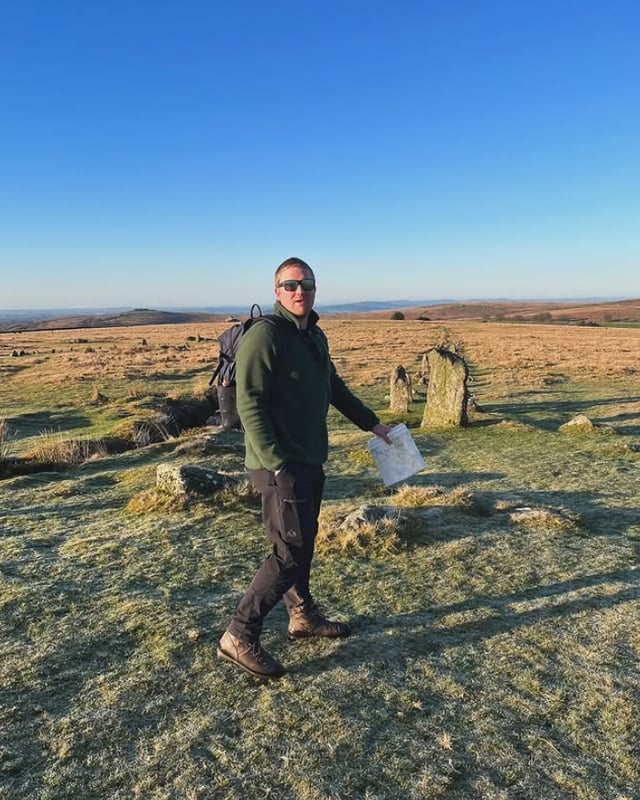
Learn to navigate confidently on this 2-day NNAS Bronze course in Dartmoor. Includes maps, compasses & certificate. £118pp. Beginners welcome.
From £ 118