

Why Cyclocross Might Be the Most Fun You Can Have on Two Wheels
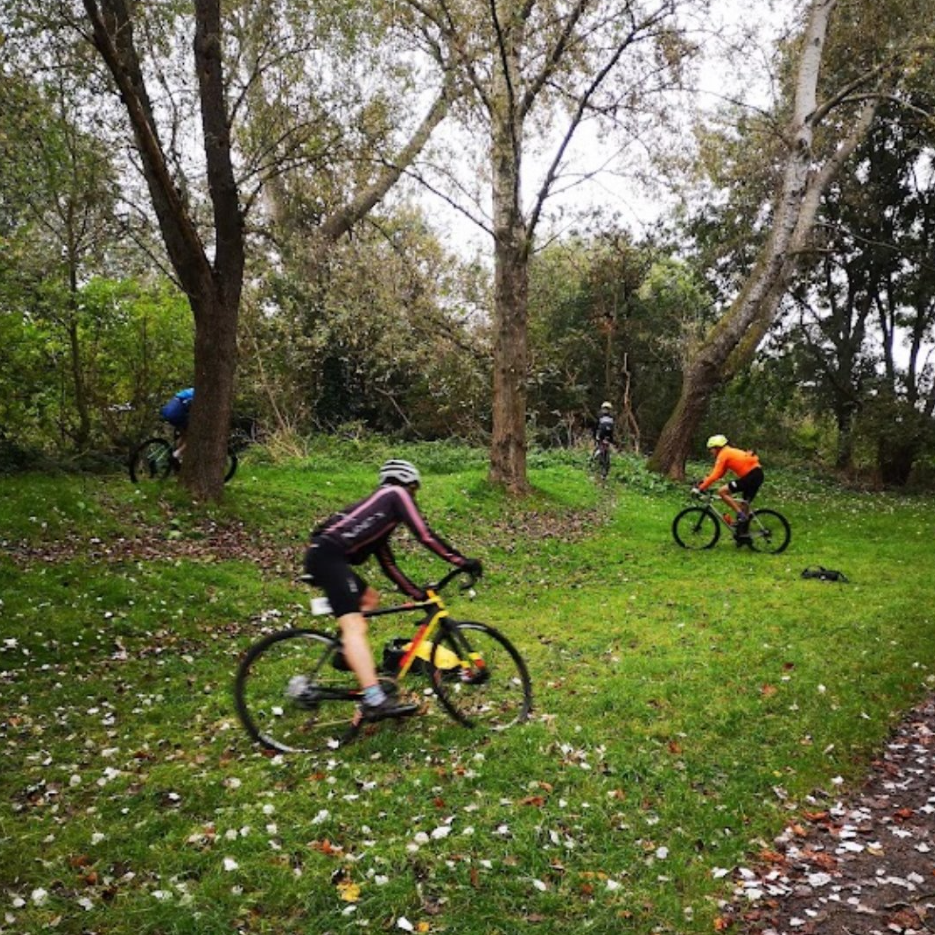
Cyclocross (often “CX” to insiders) is a hybrid discipline — part road, part off-road, part obstacle course — raced on a closed loop, usually 2.5 to 3.5 km, repeated multiple laps. The terrain is varied: grass, dirt, gravel, even pavement. There are sections where riders dismount and carry or shoulder their bikes (over barriers, up steep banks, or through deep mud). The races tend to be energetic, dynamic, and often decided in the last lap.
What draws many people to the sport is that it rewards bike handling, tactical reading of conditions, fitness, and mental grit — and it’s unpredictable. A twist of mud, a slippery turn, or a botched barrier run can flip a race on its head.
A Brief Pedal Through History
Cyclocross has roots in Europe in the early 20th century. Legend (and some old cycling journals) say that road racers used it as a way to train through the off-season — racing cross-country courses when roads got muddy or impassable. Some early “cross” events looked a lot like what we’d today call mountain bike rallies.
By the 1920s and 1930s, it had become more formal, especially in Belgium and France, with dedicated races in winter. Asphalt sections, woods, fields, barriers — they were experimenting with what would become the cyclocross template. Over the decades, the sport matured: specialist bikes, rules, international governance under the UCI (Union Cycliste Internationale), and a calendar of cross seasons, particularly in Northern Europe.
Key milestones:
- The first UCI Cyclocross World Championships took place in 1950 (in France).
- Belgium quickly became a stronghold and cultural heartland, spawning legends like Sven Nys, Wout van Aert, Mathieu van der Poel, etc.
- Over time, the sport spread: the U.S., the UK, the Netherlands, and more have built strong ‘cross communities.
In the 1986 World Championships at Lembeek (Belgium), it became controversial because days of rain and a farmer having ploughed his field led to a course many thought was “unfair” — even the defending champ Klaus-Peter Thaler refused to race. That moment reminds us that cyclocross’s character is often defined by nature and volatility more than by controlled precision.
Current Competitions & Structure
In today’s cyclocross world, these are some of the marquee circuits:
- UCI Cyclocross World Cup: The top international series. Riders accumulate points over a number of rounds; consistency and peaks both matter.
- Superprestige, X²O Badkamers Trophy, and Exact Cross (formerly Ethias Cross / Brico Cross) are major Belgian/Northern European series.
- Exact Cross, for example, runs multiple standalone races from October to January across Belgium and the Netherlands.
- National Championships: Nearly every country with a cyclocross presence runs a national title.
- World Championships: Usually held in late January or early February, the UCI Cyclocross World Championships is the one-day showdown for the rainbow jersey.
Then there are countless regional “cross” events, local circuits, and grassroots “CX” scenes — they feed into the higher levels and sustain passion.
The Season & Categories
The cyclocross season in the Northern Hemisphere typically runs from October through to February. It straddles autumn and winter intentionally, using muddy, challenging conditions as the canvas.
Rider categories mirror other cycling disciplines: Elite Men, Elite Women, Under-23, Junior, sometimes Masters or Veterans. Riders accumulate UCI points, and team structures (professional cross teams, mixed squads) have grown in sophistication.
Rules & Format: How a Cross Race Works
Here’s a rundown of the technical and sporting rules — from a rider’s perspective:
- Race Duration & Laps: Elite races last about 40 to 60 minutes. The exact number of laps is adjusted so the winner crosses in that range.
- Course Features: Barriers (wooden planks), steps, steep run-ups, tight corners, muddy trenches, grass slopes, and pavement sections mix it up. Sometimes bridges, stairs, sand pits, or descents add dramatic flair.
- Dismount / Remount Zones: Riders must dismount before certain obstacles and carry or shoulder their bikes. After the obstacle, they remount and continue. Efficient transitions are key.
- Bike Changes / Pits: There’s usually a pit area where teams have spare bikes (especially helpful in muddy/slushy conditions). Riders can swap into a clean bike, or mechanics can assist.
- Lapped Riders: If a rider is overtaken (lapped) by the leader, the rules require them to leave the race at the end of that lap (i.e., they don’t continue endlessly). Some riders feel the rules around lapped riders are imperfect.
- 80% Rule: A rule exists where riders whose gap exceeds 80% of the leader’s first lap time may be pulled from the race to prevent interference or danger.
- Equipment Limits: There are rules around tyre width, handlebar width, frame geometry, etc., to keep things fair and safe.
- Interference / Obstruction: As with any racing, riders must not obstruct others, especially on remount zones. Crashes, tangles, tape entanglement are not uncommon, and often spark heated debate.

What Makes Cyclocross Special
- Versatility & Creativity
The course is never the same. One race you’re in vicious mud, next you’re on slippery roots, next in frozen grass. Adapting on the fly is essential. Handling skill often matters as much as raw power. - Spectacle & Intimacy
Spectators are close. You’ll see riders coming through grass, pushing bikes up steep banks, weaving through tape. Every pass and crash is visible. That proximity (crowds, atmosphere, mud everywhere) makes CX uniquely visceral. - Unpredictability & Drama
Because conditions and obstacles can flip a race, favorites can falter. A small slip, or a misjudged barrier, can change podium positions. That tension — that every lap matters — gives the sport energy. - All-Weather, All-Season
Cyclocross embraces mud, rain, snow, wind. It’s built for the “off-season.” For riders who love riding through adversity, it’s a perfect outlet when road racing falls quiet. - Community & Grassroots Backbone
Even at the elite level, local clubs and events are lifeblood. Many top riders grew up in club CX circuits. The barrier to entry (relatively modest compared to big-budget road racing) and the appeal of muddy fun keeps it accessible.
Controversies and Friction
No sport is without its tensions. Cyclocross has a few ongoing debates and flashpoints:
The “Pick and Choose” Dilemma
In 2023, UCI President David Lappartient drew ire when he suggested riders who skip a World Cup race to attend a national or alternate event would be barred from future World Cups or World Championships. This raised backlash — top riders argued their calendars are full, and skipping is sometimes necessary for recovery or planning. Škoda We Love Cycling+1
Legend Lucinda Brand publicly criticized the idea, calling it short-sighted and warning it would force riders into overcommitment. Cyclingnews
Lapped Riders & Interference
As I mentioned before, there is tension over whether lapped riders — i.e. riders overtaken by the leader — should be allowed to influence the race by being in the path of chasers. Lucinda Brand has called for reform, noting that in her experience lapped riders have interfered (especially in running/barriers sections), hindering rivals chasing the leaders. Cyclingnews
Equipment Disqualifications
A recurring thorn: marginal differences in equipment legality. The Lillee Pollock disqualification (Australia, 2022) is a case in point — she was stripped of her U23 women’s title when her bike’s handlebars were found to be too wide under UCI rules. CX Down Under
These cases spark debates over whether rules are too finicky, whether enforcement is fair, and whether specs reflect modern bike evolution (e.g. wider handlebars in gravel/CX crossover bikes).
National Federation Decisions
In 2025, British Cycling stirred controversy by electing not to field any elite women or an under-23 men’s team for the Cyclocross World Championships. This left top UK names like Anna Kay and others unable to compete under the British flag that year, which angered parts of the CX community. CyclingUpToDate.com
Final Lap Thoughts
Cyclocross is many things: it’s a snowball race, a mechanical puzzle, a mud fight, and a chessboard of tactics all rolled into one. For riders like me, it satisfies a deeper hunger — the need to ride hard in mess, to test oneself in instability, to feel every corner, every crash, every sprint.
But it’s not static. The sport is evolving (equipment rules, schedules, calendar politics) and that evolution isn’t always smooth. Debates over lapped riders, UCI participation mandates, federation selections, and technical disqualifications are signs of a discipline wrestling with growth, identity, and fairness.
If you’re curious to jump in, even as a weekend warrior, I say do it: find a local CX event, muck your bar tape, borrow or rent a CX or cyclocross-capable bike, and go. You’ll get hooked on the unpredictability — every lap gives you a new puzzle, every finish line a small victory.