
Kayak Entry and Exit Made Easy: A Step-by-Step Guide
Before your kayaking adventure begins, you need to know how to safely get in and out of your kayak. For beginners, this can feel like the trickiest part of kayaking. Even experienced paddlers can run into challenges depending on the location or water conditions.
In this post, we’ll cover everything you need to know about entering and exiting your kayak safely from a variety of spots, including beaches, docks, and rocky shores. These tips will help you prevent injuries and help you feel more confident.
Why Safe Kayak Entry and Exit is Important
While kayaking itself can feel intuitive, entry and exit require specific techniques. Doing it wrong can lead to tipping, slipping, or even damaging your kayak. Here’s why it’s worth learning:
- Avoid Injuries: A stable entry and exit reduce the chance of falling or straining your muscles.
- Keep Your Gear Intact: Proper handling prevents unnecessary wear and tear on your kayak and paddle.
- Adapt to Different Locations: Whether you’re launching from a dock, beach, or uneven ground, knowing the right method will keep you safe.
Let’s break down the techniques for different locations so you can be prepared for any paddling adventure.

Shorelines
If you’re launching from the shoreline, look for calm, shallow areas to make entry and exit easier. Make sure to avoid slippery or uneven spots, which can make balancing harder. And most importantly, keep your movements steady and deliberate to maintain stability.
How to Get In
- Position Your Kayak: Place your kayak in shallow water, ensuring it is parallel to the shore. The bottom of the kayak should rest lightly on the ground to keep it stable.
- Prepare Your Paddle: Keep your paddle nearby, either on the kayak or on the ground within easy reach.
- Straddle the Kayak: Stand over the kayak with one foot on each side of the cockpit.
- Lower Yourself Slowly: Hold the edges of the cockpit for balance as you lower yourself into the seat. Keep your weight centered to avoid tipping.
- Bring in Your Legs: Once seated, tuck your legs into the cockpit one at a time.
- Push Off: Use your hands or paddle to push off from the shore and start paddling.
How to Get Out
- Paddle to the Shore: Approach the shoreline slowly. Let the bottom of your kayak lightly touch the ground in shallow water.
- Stabilize the Kayak: Use your paddle as a brace by placing it across the cockpit and onto the ground.
- Sit up and pull yourself up: With both hands on the sides of the cockpit, push down and lift yourself up until you can get a leg underneath you. Keep your centre of gravity low so you do not get unstable and keep your hands on the side of the cockpit. It is sometimes helpful to sit on the back of the cockpit if you struggle to squat in a low position.
- Swing Out Your Legs: Turn your body slightly and bring one leg out of the kayak at a time. Place your foot firmly on the ground.
- Stand Up: Using the edges of the kayak for balance, rise to your feet and step onto the shore.
Docks
Launching from a dock requires extra care, since the kayak can shift while you’re getting in or out. For easier transitions, use a dock with a low height and practice staying centered while the kayak shifts slightly beneath you. If possible, get a buddy to help you hold the kayak steady.
How to Get In
- Align the Kayak: Position your kayak parallel to the dock and secure it. You can hold it in place with a rope or by using your hand.
- Sit on the Dock: Lower yourself into a seated position on the edge of the dock with your legs hanging over the side.
- Step Into the Kayak: Place one foot in the center of the kayak, just in front of the seat. Keep your other foot on the dock for balance. Then move your hands on to the kayak gently one at a time.
- Lower Yourself Slowly: Shift your weight into the kayak, keeping your movements slow and controlled.
- Bring in Your Other Leg: Once seated, lift your second leg into the kayak and adjust your position.
- Push Off: Use your paddle or hands to push away from the dock and begin paddling.
How to Get Out
- Approach the Dock: Paddle parallel to the dock and position the kayak close enough to reach it with your hand.
- Hold the Dock: Use your hand or paddle to stabilize the kayak against the dock.
- Sit up and pull yourself up: Againwith both hands on the sides of the cockpit, push down and lift yourself up until you can get a leg underneath you. Keep your centre of gravity low so you do not get unstable and keep your hands on the side of the cockpit. It is sometimes helpful to sit on the back of the cockpit if you struggle to squat in a low position.
- Step Onto the Dock: Turn your body and place one foot firmly on the dock while keeping the other in the kayak for balance.
- Stand Up Slowly: Shift your weight onto the dock as you lift your other leg out of the kayak.

Rocky or Uneven Shores
In rocky areas, stability and careful movement are key because of uneven footing and slippery surfaces. Wear water shoes for better grip and take your time to assess your footing and stabilize the kayak before moving. Also, make sure to avoid launching or landing in areas with sharp rocks that could damage the kayak.
How to Get In
- Find a Stable Spot: Look for a flat area where you can position the kayak securely.
- Anchor the Kayak: Place the kayak in shallow water, ensuring it won’t shift as you get in. You can wedge it slightly between rocks if needed.
- Sit on the Edge: Sit on the edge of the cockpit with your feet still on the ground.
- Slide Into the Seat: Carefully lower yourself into the seat, keeping your center of gravity low.
- Bring in Your Legs: One at a time, lift your legs into the cockpit and adjust your position.
How to Get Out
- Approach Slowly: Paddle toward the shore and identify a stable spot to land.
- Stabilize the Kayak: Use your paddle or hands to keep the kayak steady as you prepare to exit.
- Swing Out Your Legs: Turn your body and extend one leg onto the shore for balance.
- Stand Carefully: Rise to your feet while holding onto the kayak for support if necessary.
Deep Water
Sometimes you may need to enter or exit your kayak directly from the water, such as after capsizing or when launching from a swimming area. For these deep water launches, practice self-rescue techniques in calm water before attempting on open water.
How to Get In
- Position the Kayak: Turn the kayak upright and steady it in the water.
- Position at the Rear: Move the rear of the kayak and use the paddle as an outrigger (put on top of the kayak perpendicular to the boat). Grab on to the rear of the cockpit with one hand and something else on the rear deck.
- Kick Your Legs: Use a strong kicking motion to lift your body onto the kayak and/or use the paddle for additional leverage. Get so your torso is on the boat with your head facing the rear of the boat.
- Slide Into the Seat: Swing your legs on to the boat (towards the front of the kayak and over the cockpit). While staying low for balance, slide backwards into the cockpit before turning around to face the front and adjust your position.
How to Get Out
- Stabilize Yourself: Hold the sides of the cockpit or paddle for balance.
- Slide into the Water: Lower yourself gently into the water feet-first.
Muddy or Marshy Shores
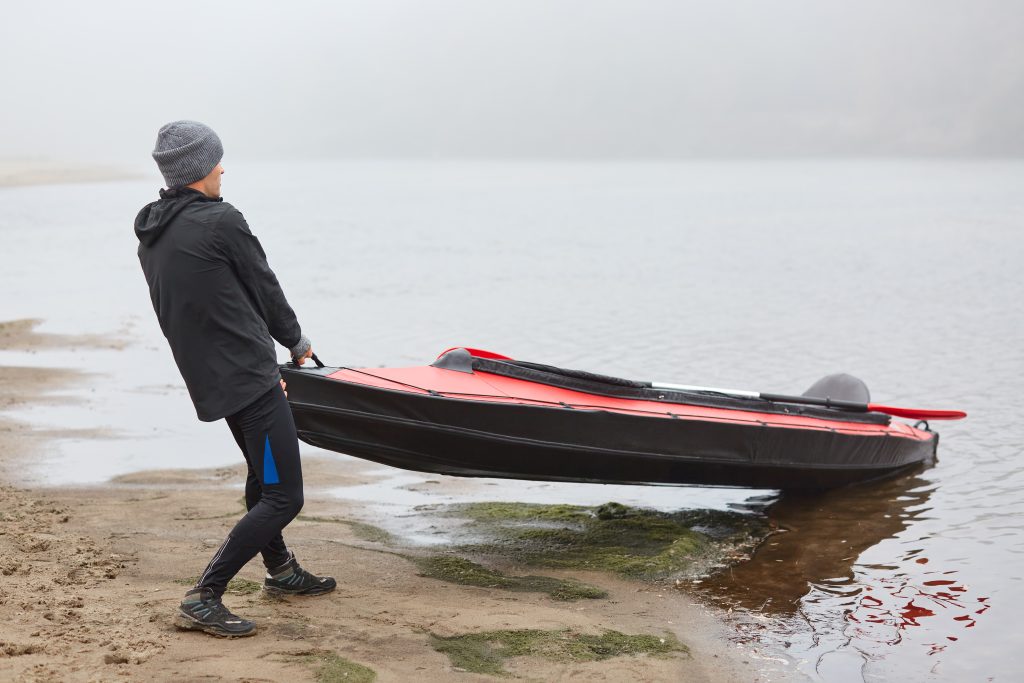
Muddy or marshy shores can be challenging since the soft ground doesn’t provide stable footing. Wear waterproof boots or shoes designed for muddy environments and avoid stepping into deep, sticky mud whenever possible.
How to Get In
- Position Your Kayak: Place the kayak at the edge of the water on firmer ground if possible. If it’s unavoidable to launch in soft mud, ensure the kayak is floating slightly to prevent it from sinking into the mud.
- Use a Paddle for Support: Place your paddle across the kayak’s cockpit and onto the ground for stability.
- Minimize Weight on the Ground: Sit on the edge of the cockpit while keeping your weight balanced over the kayak, reducing pressure on the muddy area.
- Slide Into the Kayak: Quickly transfer your weight into the seat and lift your legs into the cockpit.
How to Get Out
- Paddle Toward Firmer Ground: If possible, aim for a spot with less mud or where vegetation can help stabilize your footing.
- Brace with the Paddle: Use your paddle as a support point by pressing it into the mud or vegetation.
- Swing Out Your Legs: Bring one leg out to test the stability of the ground before committing your weight.
- Move Quickly and Lightly: Avoid lingering in one spot, as soft mud can pull at your shoes and destabilize you.
Surf Zones
Launching from or landing on surf zones can be one of the trickiest scenarios. We recommend that you practice launching in small surf before attempting larger waves. It is worth attending a surf kayaking lesson. Keep your kayak pointed into the waves during both entry and exit. To prevent water from entering the cockpit, you can use a spray skirt.
How to Get In
- Assess the Waves: Look for a calmer section of the shoreline and time your entry between sets of waves. Ensure that you are well away from rocky sections with crashing waves, and are aware of any currents in the water.
- Position the Kayak: Place the kayak at the water’s edge, pointing it directly into the waves.
- Quickly Enter: Sit on the edge of the cockpit, slide into the seat to avoid being hit by incoming waves.
- Paddle Immediately: Start paddling as soon as possible to gain momentum and push through the waves. It is important to not get turned parallel to the waves as that is when you will likely capsize.
- If the waves are too big: If you capsize or struggle to get past the waves, then maybe reassess the situation and whether this is a sensible point of entry for you.
- Wear a helmet: Given the risk of capsizing with surf kayaking, it is recommended that you wear a helmet to protect yourself from any boat, paddle or rock that could come your way.
How to Get Out
- Approach the Shore Slowly: Ride the waves gently toward the beach, keeping your kayak perpendicular to the waves to avoid tipping. If you catch a wave, lean back and steer to ensure you stay straight.
- Exit Quickly: As soon as you reach shallow water, lift yourself out and step onto the ground. Pull the kayak onto the shore immediately to prevent it from being dragged by retreating waves.
Concrete Ramps or Sloped Landings
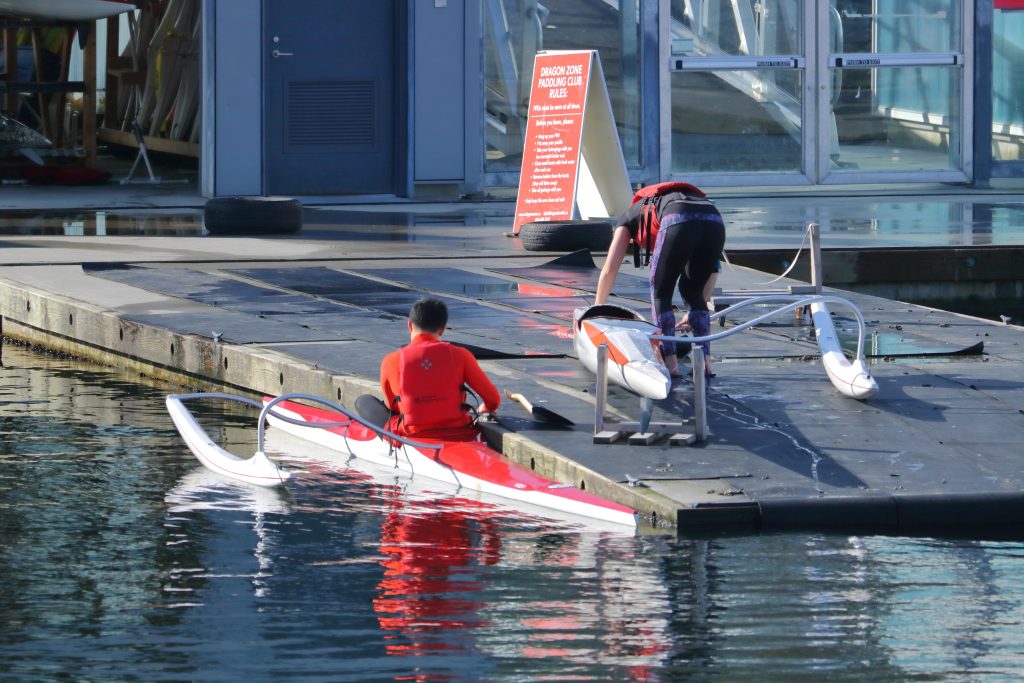
Concrete ramps, often found at boat launches or public parks, can be slippery and steep, especially when wet. Watch out for algae or moss, which can make the surface slippery and wear shoes with good grip to avoid slipping.
How to Get In
- Position the Kayak: Place the kayak in shallow water at the bottom of the ramp. The bow should be facing the water.
- Sit on the Ramp: Sit at the edge of the ramp and position your feet in the water on either side of the kayak for balance.
- Slide Into the Seat: Use your hands to support your weight as you lower yourself into the cockpit.
- Adjust and Push Off: Once seated, adjust your position and use your paddle to push off from the ramp.
How to Get Out
- Approach the Ramp: Paddle slowly and align the kayak parallel to the ramp.
- Stabilize the Kayak: Hold onto the ramp or use your paddle for stability.
- Swing Out Your Legs: Place one leg onto the ramp and use it to stabilize yourself as you bring the other leg out.
- Stand Carefully: Rise to your feet and pull the kayak onto the ramp.
Icy or Snowy Banks
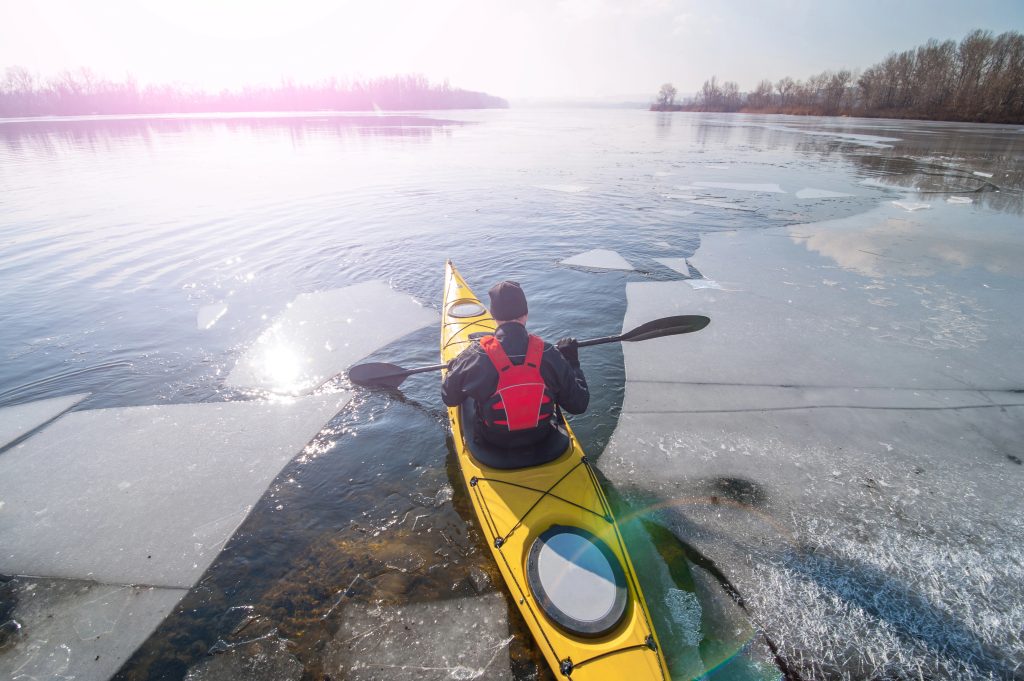
In cold or icy conditions, dress in layers and use a dry suit to stay warm and dry. For shoes, wear insulated, waterproof boots for warmth and traction.
How to Get In
- Clear the Ice: If launching from an icy bank, clear any loose snow or ice to create a stable area.
- Position Your Kayak: Place the kayak securely on the ice or in shallow water at the edge.
- Brace Yourself: Use your paddle or an ice pick for additional stability while getting in.
- Enter Slowly: Sit on the edge of the cockpit and slide into the seat, keeping your movements slow and deliberate.
How to Get Out
- Paddle to the Shore: Approach an area with minimal ice buildup to make landing easier.
- Stabilize the Kayak: Use your paddle or an ice pick to keep the kayak steady.
- Step Out Carefully: Exit the kayak one leg at a time, placing your feet on firm ground or a cleared section of ice.
Steep Banks
Steep banks, like those found on river edges, require extra effort to stabilize the kayak to ensure your safety. Check for stable handholds and avoid areas with loose soil or unstable vegetation. You can also use a throw rope for assistance.
How to Get In
- Anchor the Kayak: Place the kayak at the water’s edge, securing it with a rope or wedging it between rocks.
- Use a Rope or Handhold: If the bank is steep, use a rope or tree root for balance as you lower yourself toward the kayak.
- Enter with Control: Sit on the cockpit edge and slide into the seat, keeping your center of gravity low.
How to Get Out
- Stabilize the Kayak: Hold onto the bank or use a rope for extra stability.
- Climb Out Slowly: Turn your body and place one foot on the bank, using your hands to pull yourself up.
- Pull Up the Kayak: Once out, pull the kayak up the embankment or secure it to prevent it from drifting.
Be Prepared for Every Scenario
By using these techniques, you’ll be well-prepared for your kayaking adventure. Each setting has different challenges, but with some practice and the right equipment, you’ll gain the confidence to enter and exit your kayak safely in any environment. Practice the methods to find what works best for you, and enjoy your time on the water!