
Best coasteering in Cornwall: how to choose a session and book
How to choose your coasteering session in Cornwall
You've picked one of the best counties in the UK for it. Cornwall's granite cliffs, sea caves, and Atlantic swell cover the full range, from gentle first-timer routes to full-send jump lines, often within an hour's drive of each other.
The hard part isn't finding coasteering in Cornwall. It's choosing which session fits your group: north coast versus south, two hours versus half a day, family-friendly versus maximum thrill. This guide helps you decide, then points you to sessions you can book on adventuro.
What is coasteering?
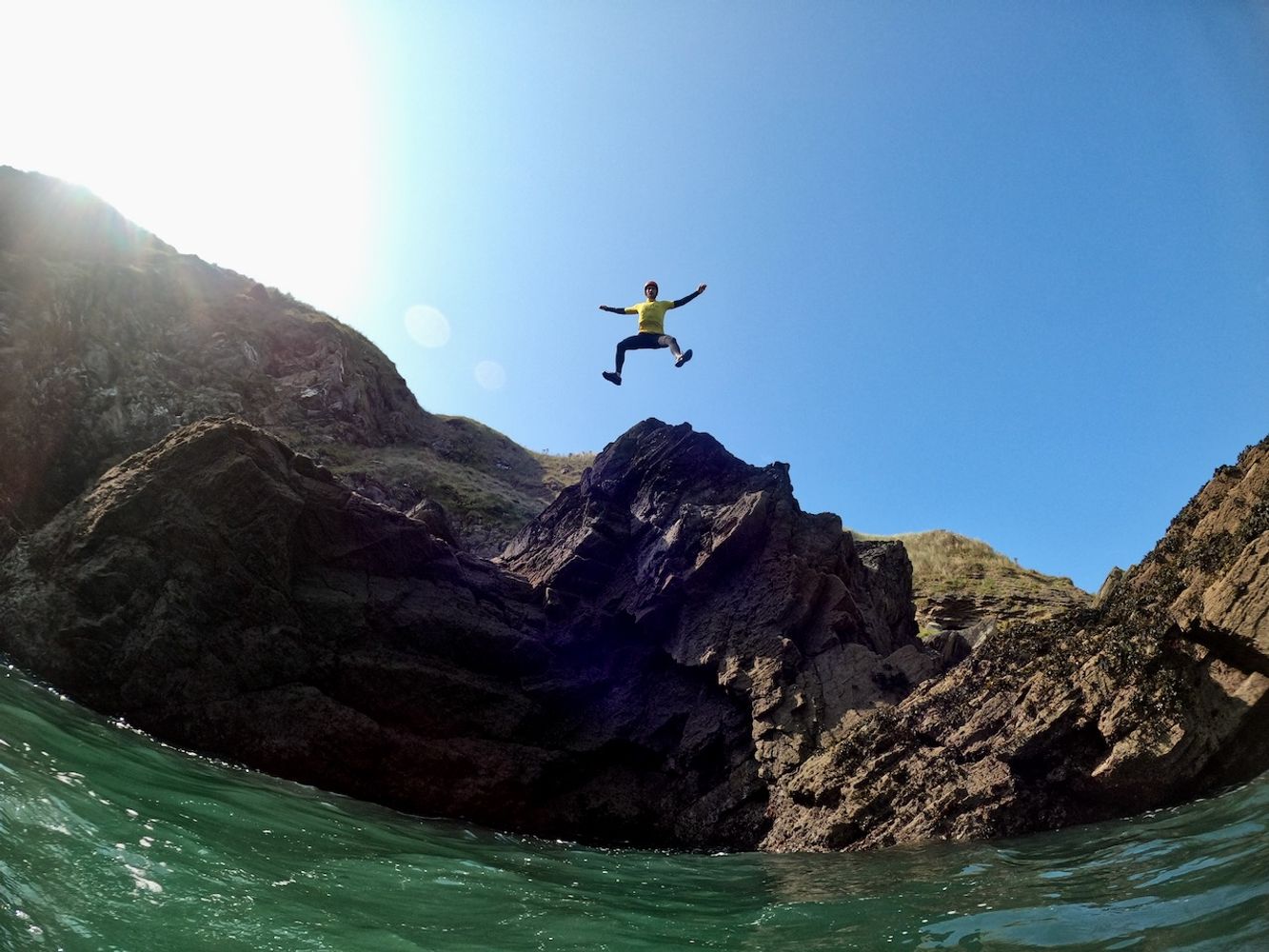
Coasteering is a guided journey along the coastline by climbing, scrambling, swimming, and optional cliff jumps. You're always with a qualified guide who knows the tides, entry points, and which jumps are safe that day.
Most jumps are optional. Good operators build the route around the least confident person in the group, not the loudest one. That's why it works for adventurous families, stag and hen groups, and first-timers who've never done anything like it.
Why Cornwall?
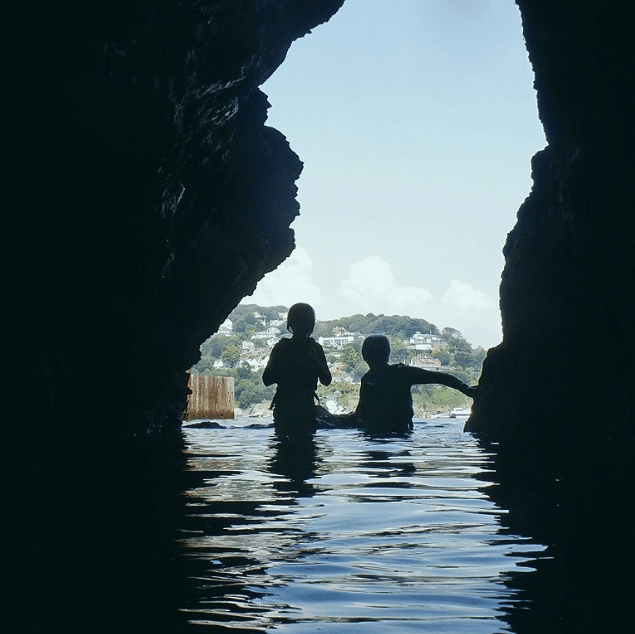
Cornwall is one of the UK's original coasteering hotspots. You get dramatic granite coastline on the north coast (Newquay, Padstow, Tintagel), and quieter, cliff-backed routes on the south coast around The Lizard and Mount's Bay. Guided sessions run year-round, with peak season from May to September, though many centres keep going into the shoulder months. It's also easy to pair with a wider Cornwall trip, so you can surf, SUP, or kayak the next morning.
If you're comparing regions, Pembrokeshire is the other UK heavyweight. Cornwall wins on sheer variety and how many centres run daily sessions in summer.
Cornwall coasteering by area
| Area | Best for | Vibe |
|---|---|---|
| Newquay & north coast | First-timers, groups, maximum choice | Busy in summer; iconic cliffs; Fistral and Towan routes |
| Padstow / Harlyn / Port Gaverne | Families, slightly quieter north-coast days | Sheltered bays; strong local operators |
| Tintagel / Bossiney | Scenic half-day adventures | Dramatic coastline; fewer crowds than Newquay |
| The Lizard (south coast) | Groups who want south-coast drama | Different rock, different feel; brilliant for mixed groups |
| West Cornwall (Praa Sands, Penzance) | West Cornwall holidaymakers | Combine with beach day; beginner-friendly options |
Rule of thumb: book Newquay or the north coast if you want the widest choice and classic coasteering energy. Book The Lizard or west Cornwall if you're already staying south and want something brilliant without the Newquay summer bustle.
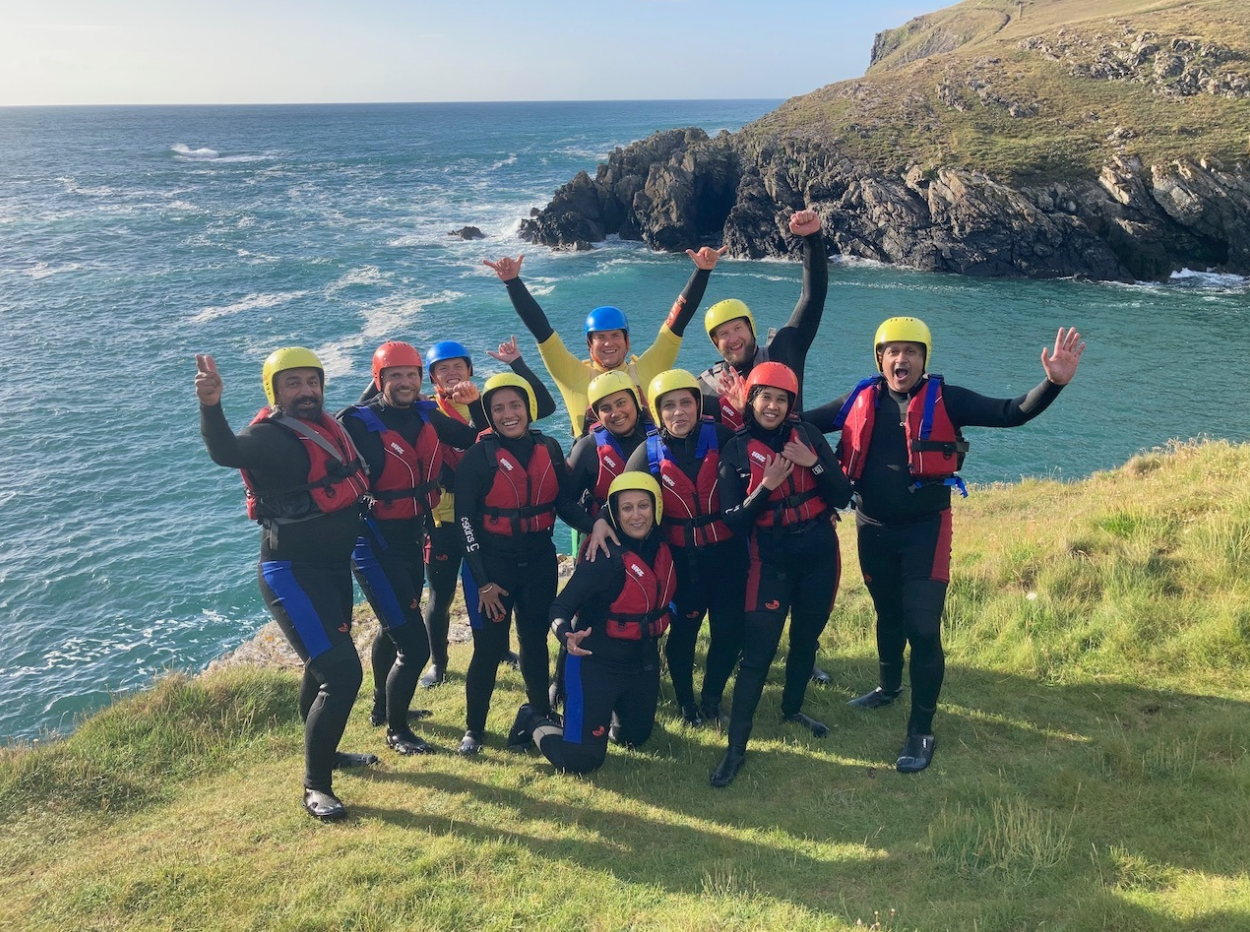
How to choose a coasteering session
Use these five filters before you click book.
1. Match the session length to your day. A 2-hour session suits confident beginners and tight itineraries. A 2.5 to 3 hour route gives more swimming, more coastline, and usually more jump options. If you're driving from London or Bristol, don't squeeze a long session into a checkout day.
2. Check the minimum age and group type. Family-friendly routes often start around age 8 to 10 (check each listing). Open sessions suit solo travellers and couples. Private group bookings work for stags, hens, and birthdays.
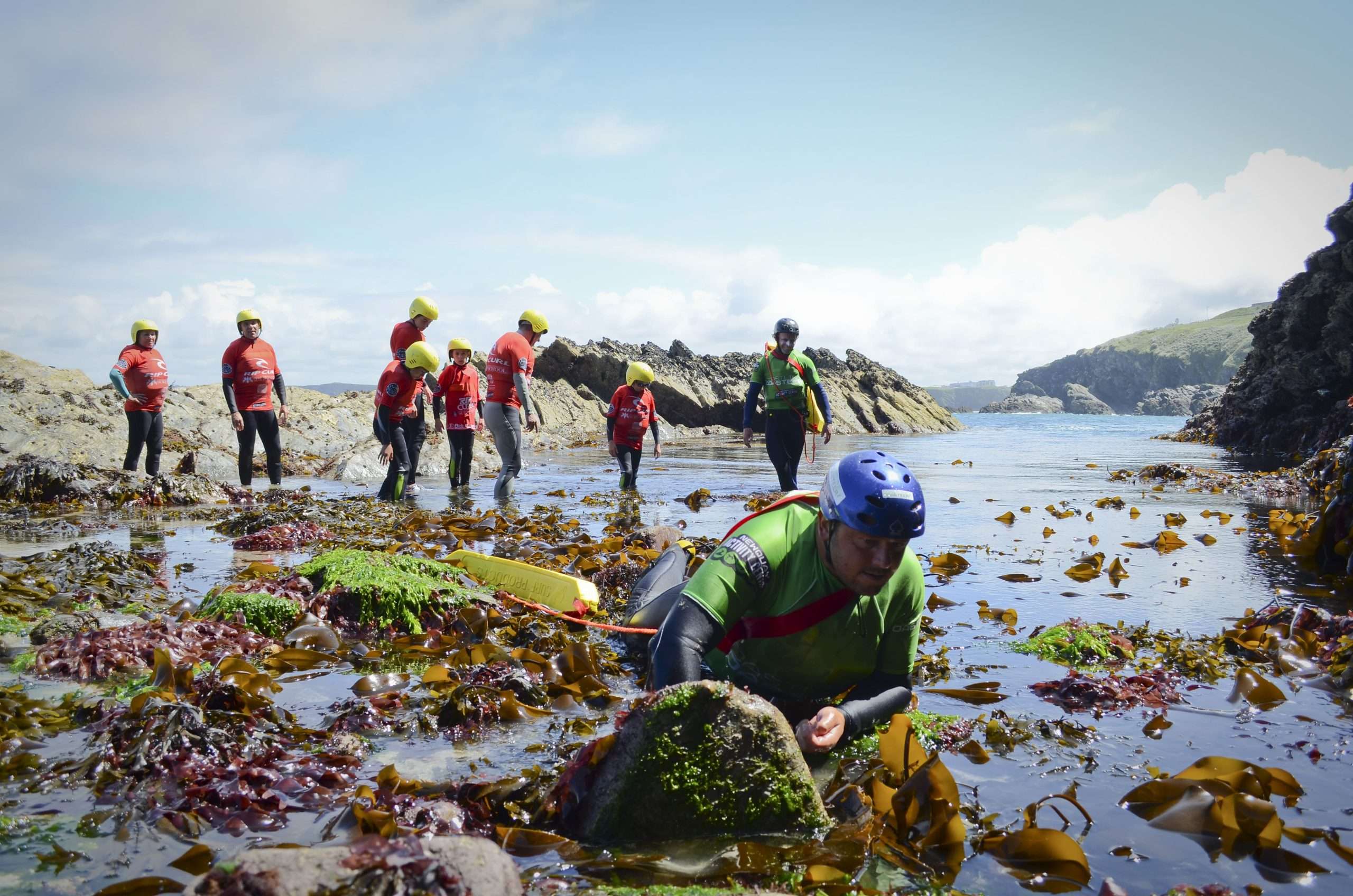
3. Ask what's included. Most Cornwall centres include wetsuit, buoyancy aid, helmet, and guide. You bring swimwear, old trainers or water shoes, and a towel. Confirm the meeting point and parking, because north-coast car parks fill fast in August.
4. Be honest about confidence, not just fitness. You don't need to be an athlete. You do need basic swimming confidence and comfort in cold water. Nervous about jumps? Say so when you book. Guides adapt routes daily.
5. Book guided, not DIY. Cornwall's coastline changes with tide and swell. A guided session is how you explore properly and safely. That's what the listings below are for.
Best coasteering in Cornwall: sessions worth booking
Check price, availability, and meeting point on each listing — they change by season.
1. Hidden Gem Coasteering — Adventure Gully, Towan Beach (Newquay)
Best for: First-timers · Groups · North coast classic
Why book: Towan Beach is proper Newquay coasteering, accessible and energetic, ideal if you want the north-coast experience without overthinking it.
Level: Beginner-friendly
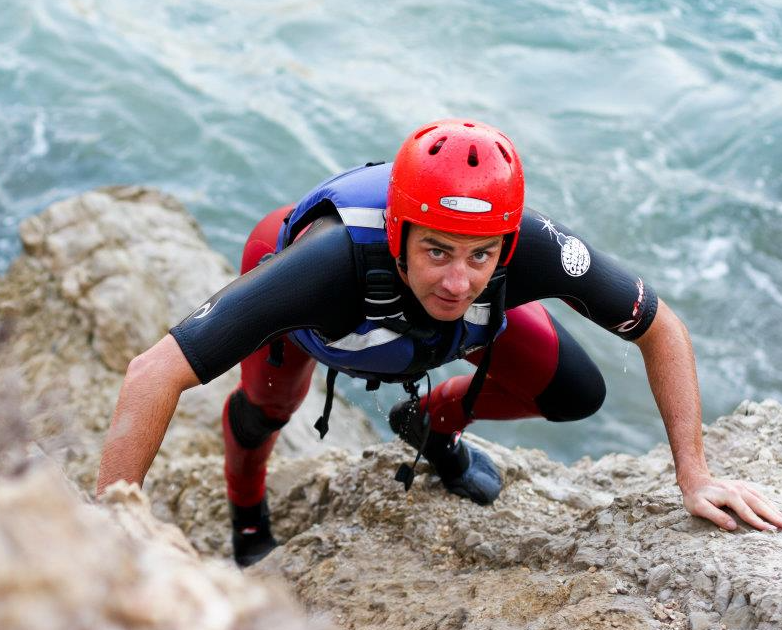
2. The Coasteer — 3-hour session from Fistral Beach (Newquay)
Best for: Anyone who wants more route · Confident beginners
Why book: Fistral is Newquay's flagship beach. A 3-hour session means more coastline, more swimming, and more time to find your rhythm.
Level: Beginner to intermediate
3. 2.5-hour coasteering adventure, Bossiney Bay
Best for: Scenic half-day · Tintagel / north Cornwall stays
Why book: Bossiney and the Tintagel coastline are spectacular. A 2.5-hour route fits well between morning surf and an evening BBQ.
Level: Beginner to intermediate
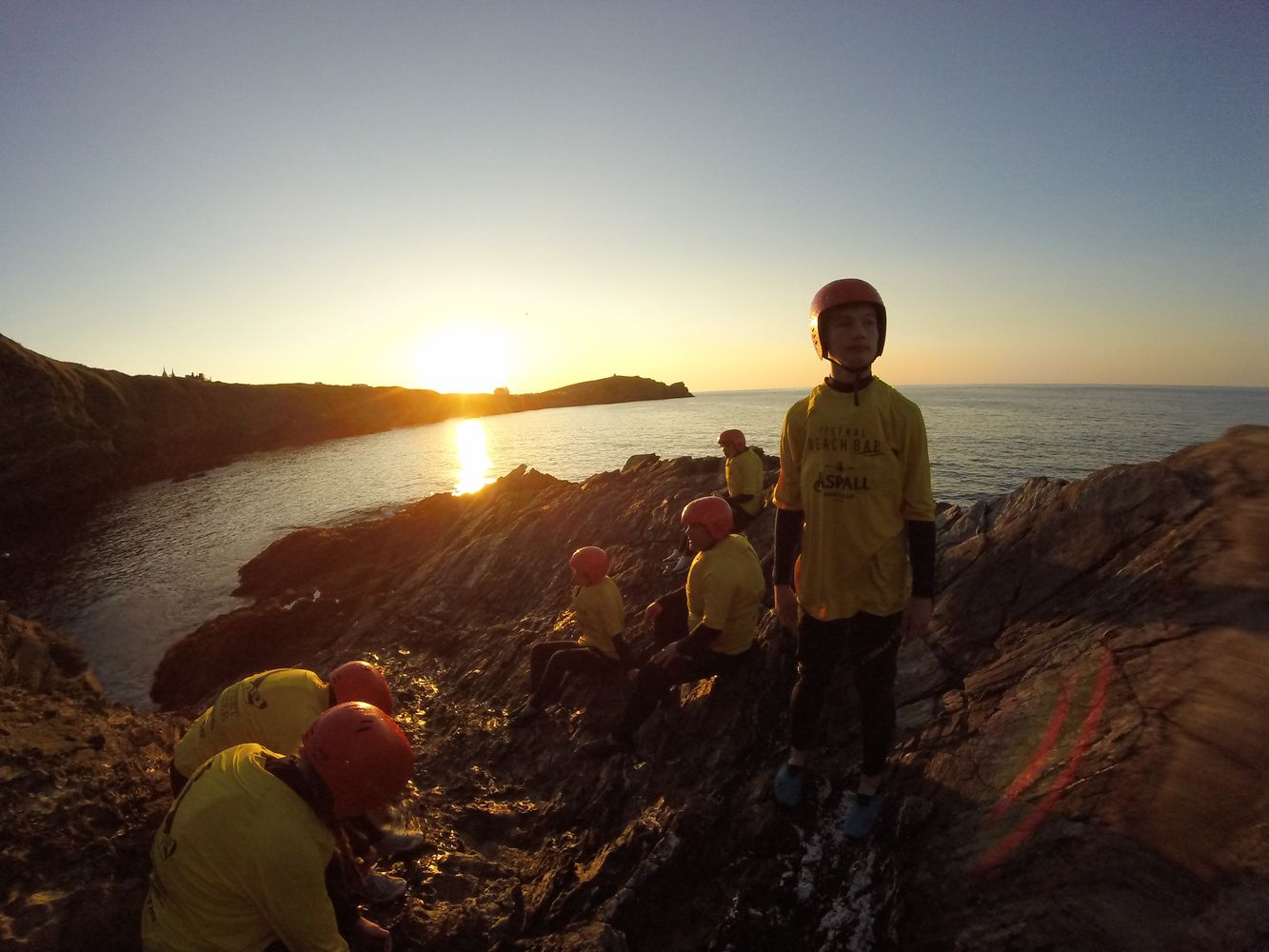
4. Group coasteering — The Lizard Peninsula
Best for: Groups · South coast · Different Cornwall feel
Why book: The Lizard is Cornwall's south-coast wildcard, with dramatic cliffs and turquoise water. A brilliant option if your holiday base is south rather than Newquay.
Level: Beginner-friendly (check group details on listing)
More Cornwall supply: Browse all coasteering in Cornwall →
What to expect on the day
Before you arrive: Eat something light. Bring a swimsuit, towel, and footwear you don't mind getting wet. Leave valuables in the car.
Kit: Centres provide wetsuit, buoyancy aid, and helmet. Some offer gloves in cooler months.
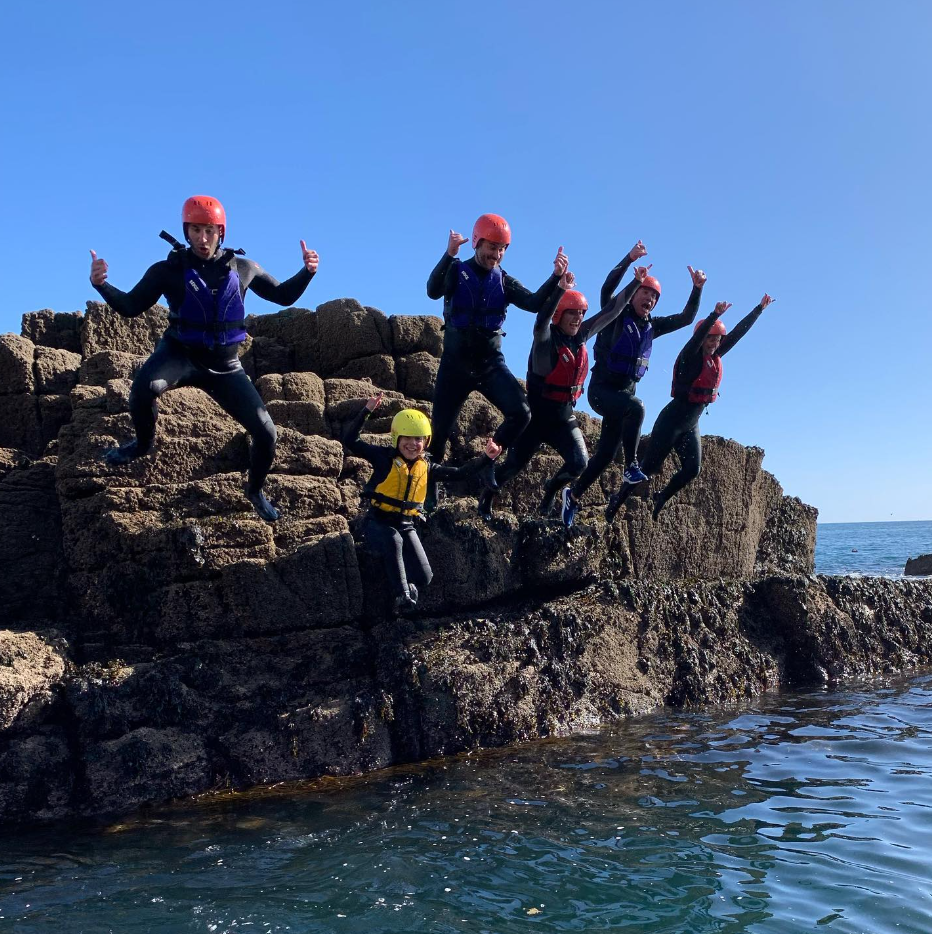
On the route: You'll scramble rock, swim short sections, and get the option to jump from heights your guide approves. Guides read conditions on the day. If a jump isn't safe, it's off the menu. No ego, no argument.
After: Warm up, debrief, photos if the centre offers them. Then you'll probably start planning the next one.

When is the best time for coasteering in Cornwall?
May to September is peak season, with the warmest water and the most daily sessions. Book early for August. April and October can be excellent with fewer crowds, though you'll want a thicker wetsuit and flexible weather plans. Winter sessions run at some centres but are weather-dependent, better suited to locals and hardcore adventurers than most holidaymakers.
Sessions are tide-dependent. Your centre confirms the exact meeting time after booking. Trust their timing. They're reading swell and tide charts so you don't have to.
Book coasteering in Cornwall
Ready to get on the coast? Compare beginner-friendly sessions, check availability, and book in one place. For a wider offline weekend, pair this with our phone-free outdoor activities in Cornwall guide. Pack the right kit with what to wear coasteering.
Book coasteering in Cornwall →
🌿 A portion of adventuro bookings supports conservation through our partnership with Rewilding Britain.
FAQs
Is coasteering in Cornwall safe for beginners?
Yes, when you book a guided session with a reputable centre. Guides choose the route based on conditions and your group's confidence, and jumps are optional. Look for clear safety briefings, qualified staff, and kit included. Avoid informal "turn up and jump" setups without professional supervision.
Do I need to be able to swim?
You need basic swimming confidence, not Olympic fitness. You'll wear a buoyancy aid throughout. Tell your guide if you're nervous in the water and they'll keep the route appropriate.
What should I wear for coasteering in Cornwall?
Swimwear under a centre-provided wetsuit. Old trainers or water shoes with grip, not flip-flops. Bring a towel and warm layers for after. Sunscreen on exposed skin in summer.
What's the minimum age for coasteering in Cornwall?
Many family sessions accept children from around 8 to 10, but it varies by centre and route. Check the individual listing on adventuro. Private group bookings can often be tailored, so message the centre if you're unsure.
How far in advance should I book?
In July and August, book as early as you can, especially for weekends and school holidays. Shoulder season is more flexible, but tide-led sessions still have limited spaces. Request-only listings may take a short confirmation from the centre, while instant-book sessions go faster in peak weeks.
Planning to go international?
Partner guide Matt from Kernow Coasteering on coasteering beyond the usual UK spots, including the Isles of Scilly.