
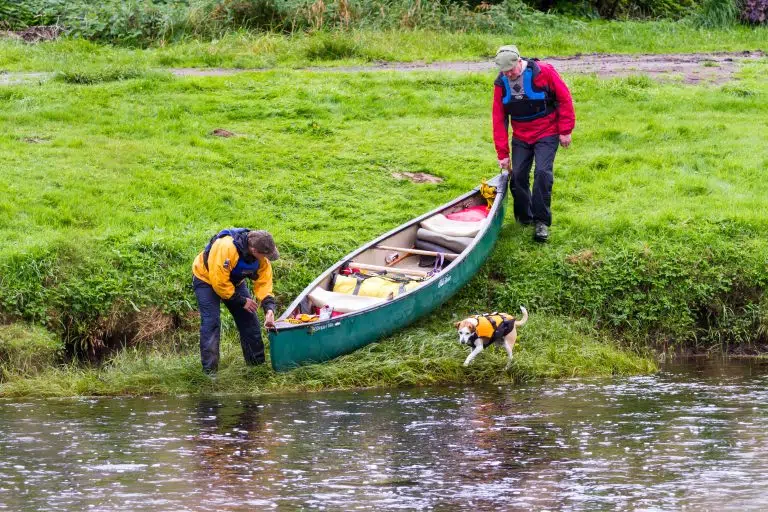
Beginner’s Guide to Canoeing: FAQs Answered
Canoeing is a great way to connect with nature, enjoy the water, and get some exercise while you’re at it. If you’re just starting out in this sport, you most likely have some questions. In this post, we’ll answer some frequently asked questions about canoeing, so you can get the most out of your experience.
1. What is the difference between canoeing and kayaking?
The main differences between canoeing and kayaking lie in the boat design, seating positions, and the paddling techniques:
Boat Design
- Canoe: Canoes are open on top, have high sides and a flat or slightly rounded bottom. They’re usually designed to carry multiple people and gear, so they’re larger and more spacious than kayaks.
- Kayak: There are many kayak options out there, but they’re often closed on top, with a small cockpit where the paddler sits in. However, some kayaks have sit-on-top designs that are built without the cockpit to make them more accessible.
Seating Position
- Canoe: In a canoe, paddlers typically sit on the benches or kneel on the bottom of the boat. If you’re in rough water and need more control, it’s better to kneel rather than sit.
- Kayak: Kayakers sit on the bottom of the kayak with their legs extended forward. Sitting low like this helps with balance and control, particularly in rough water or when they need to maneuver quickly.
Paddling Technique
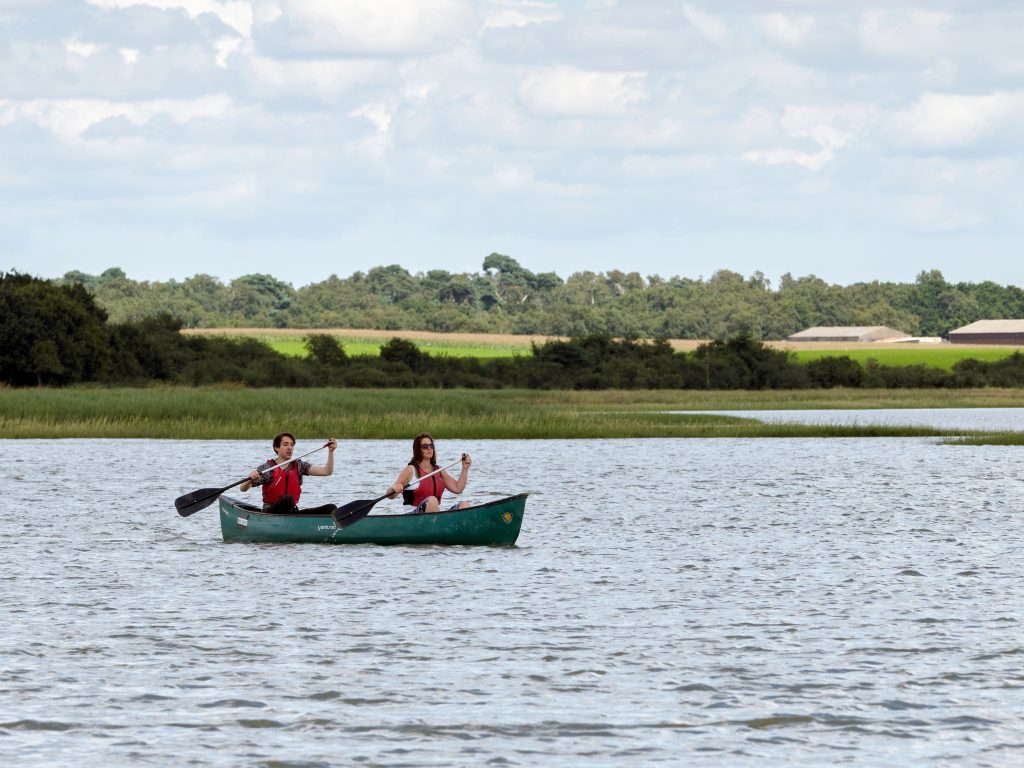
- Canoe: Canoeing uses a single-bladed paddle, which the paddler alternates from one side of the boat to the other. This requires a bit more effort to keep the canoe moving straight.
- Kayak: Kayakers use a double-bladed paddle, which allows them to paddle on both sides without having to switch. This gives them more speed and efficiency, so it’s easier to maintain a straight course.
Overall, canoeing tends to be more leisurely and is ideal for enjoying calm waters. It’s common in activities like river trips, fishing, or exploring calm lakes. For those looking for a more active and sporty activity, we recommend sea kayaking or whitewater kayaking.
2. Which is easier, kayaking or canoeing?
Kayaking is generally considered easier for beginners, but of course this is all subjective. A reason why kayaking can be considered easier is because kayaks are usually more stable than canoes due to their lower center of gravity. The paddler also sits lower in the water, which makes it easier to maintain balance. Using a double-bladed paddle also makes for easier strokes on the water. In contrast, canoeing requires more technique to paddle effectively with a single-bladed paddle.
Kayaks are typically easier to maneuver, especially in rough waters, due to their smaller size and the ability to make quick, alternating strokes. Canoes are larger and wider, so it can be more challenging to turn and control. Kayaking is also considered easier is because it’s often done solo. This means you only need to coordinate your own movements. Canoeing is frequently done in pairs, and requires more coordination between paddlers.
3. How do I choose the right canoe?
Choosing the right canoe depends on what you plan to do and involves considering several factors:
- Purpose: First things first, consider what you’re mainly using it for. There are different types of canoes for different purposes such as recreational paddling, fishing, or touring.
- Size and Capacity: Choose a canoe that fits your needs in terms of length, width, and weight capacity. Longer canoes generally offer better tracking, while wider canoes provide more stability. Ensure it can comfortably support the weight of you, your gear, and any passengers.
- Material: Canoes are made from various materials like aluminum, fiberglass, Kevlar, or plastic. Aluminum is durable and low-maintenance but heavier, while materials like Kevlar are lightweight and high-performance but more expensive.
- Design: Consider the canoe’s design features such as the hull shape (flat-bottomed for stability, or V-shaped for tracking), and whether it has features like built-in seats, storage compartments, or adjustable footrests.
- Portability: Think about how easy it will be to transport and store the canoe. If you need to carry it to a launch site, a lighter canoe might be preferable.
4. What gear do I need for canoeing?
Besides the canoe and paddle, we recommend a life jacket or personal flotation device. Even if you already know how to swim, it’s important to wear one for your safety. Dress in quick-drying, weather-appropriate clothing, and wear a hat and sunscreen for sun protection. For footwear, wear water shoes to provide protection and grip.
For emergencies, bring along a basic first aid kit for treating minor injuries. We also recommend taking an emergency kit and including items like a whistle, flashlight, GPS device, and a signaling device in case anything happens. A dry bag is a great addition for keeping things like your phone and snacks dry.

5. How safe is canoeing?
Canoeing is generally safe as long as you take the proper precautions and go during safe water conditions. Always wear a life jacket, check the weather conditions before heading out, and make sure you’re familiar with the waterway. If you’re feeling unsure, stick to calm waters until you’re more comfortable. You can also go with an experienced guide and take a canoeing course where you can have a pro teach you the ropes and ensure your safety. Check out our canoeing courses here.
6. When canoeing, what is the most efficient position?
It depends on the situation, but generally, an upright seated position or a kneeling position is recommended. When you’re seated, make sure to maintain an upright posture with a slight forward lean to engage your core. Ensure your hips are squarely on the seat and your feet are firmly planted. This position allows for better power transfer and stability. Alternatively, kneeling lowers your center of gravity and provides you with more stability, especially in rough water or making sharp turns. Kneeling allows for more powerful strokes, but it can get uncomfortable if you’re doing this for an extended period of time. If you prefer to kneel, we recommend getting kneeling pads to make this position more comfortable.
7. How do I paddle a canoe correctly?
Grip the paddle with both hands, keeping your top hand directly over your bottom hand. As you paddle, rotate your torso to generate power rather than relying solely on your arms. Insert the paddle blade fully into the water near the bow (front of canoe) and pull it straight back to the stern (back of canoe) then lift it out and repeat on the opposite side. Maintain a steady rhythm and ensure your strokes are even to keep the canoe moving in a straight course.
You can follow the 3 Golden Rules of Canoeing to paddle comfortably, safely, and efficiently:
- Use the power of torso rotation.
- Let your upper and lower bodies work independently, but cooperatively with each other
- Keep your hands within your field of vision.
8. What are the best paddling techniques for different conditions?
Canoe paddle strokes are easy to master with little practice. If you’re in calm water, use a smooth forward stroke and the J-stroke to keep the canoe straight. In winds and waves, use a sweep stroke to steer and feather the paddle to reduce wind resistance. For rough water, use the draw stroke to maneuver sideways and use bracing techniques to maintain balance. If you’re dealing with currents, use the back stroke to move against the flow or adjust positioning.

9. What is the best way to maintain the canoe’s stability?
Keep your body centered and balanced by sitting or kneeling with your weight evenly distributed. Paddle smoothly and evenly on both sides to prevent the canoe from tipping, and use gentle, controlled strokes. In tandem canoeing, coordinate with your partner to ensure synchronized paddling. You can also lower your center of gravity by keeping your body close to the canoe’s floor and avoid sudden movements or shifts in weight.
10. What should I do if my canoe tips over?
If your canoe tips over, don’t panic. Stay calm and hold onto the canoe to prevent it from drifting away. Try to climb back onto the canoe using a “swim and kick” technique to help lift yourself back in. If you can’t get back in, stay with the canoe and signal for help. To avoid further tipping, distribute your weight evenly and avoid sudden movements when re-entering the canoe. Once back in, work to balance and stabilize the canoe by paddling and adjusting your position slowly.
11. What should I do in case of an emergency while canoeing?
In case of an emergency, the first step is to stay calm. If you have a signal, use your phone or a whistle to call for help. If someone is injured, administer first aid if you’re able. Make sure you’re familiar with basic water rescue techniques and know how to handle situations like capsizing or getting caught in a current before you head out to canoe.
12. What is canoeing good for?
Besides good fun, canoeing is great for a full-body workout and it strengthens muscles, improves cardiovascular health, boosts flexibility, and it helps develop skills such as coordination and balance. It also supports your mental well-being by reducing stress and helps you connect with nature. Canoeing is an activity that brings people together, and it’s a wonderful way to explore diverse and scenic waterways.
13. How do I properly care for and maintain a canoe?
To properly care for and maintain a canoe, clean it regularly to remove dirt, salt, and debris, and inspect it for any signs of damage or wear. Store it in a cool, dry place away from direct sunlight to prevent UV damage. If you have a plastic canoe, check for any cracks and repair them promptly, while for fiberglass or Kevlar canoes, inspect for any gel coat damage and make necessary repairs. Proper storage and regular checks will help extend the life of your canoe.
14. How do I transport a canoe?
For those that don’t have a truck, you can place your canoe on a roof rack or vehicle rack with padded supports on top of your vehicle. Use straps or tie-downs to firmly secure the canoe to the rack. Make sure it is centered and does not shift during transit. If you’re traveling for longer distances, we recommend periodically checking the straps to make sure the canoe remains secure.
15. What are the environmental impacts of canoeing?
Canoeing has minimal environmental impact compared to motorized watercraft, but it’s important to be mindful of a few factors. If paddlers are not cautious, they can disturb sensitive ecosystems, such as bird nesting sites or fish spawning areas. Littering or leaving waste behind can harm wildlife and degrade the water quality. Frequent canoeing in some areas can also cause erosion along the shorelines. To minimize impact, we recommend to always follow “Leave No Trace” principles, respect wildlife and habitats, and avoid paddling in environmentally sensitive areas.
16. How do I launch and land a canoe?
To launch a canoe, position it parallel to the water’s edge, and check that it’s stable. If you’re alone, hold the canoe by the grab lines or handles and gently slide it into the water, stepping in carefully as you do. For tandem launches, coordinate with your partner to keep the canoe balanced. Once in the water, make sure it’s floating evenly before you get in and start paddling.
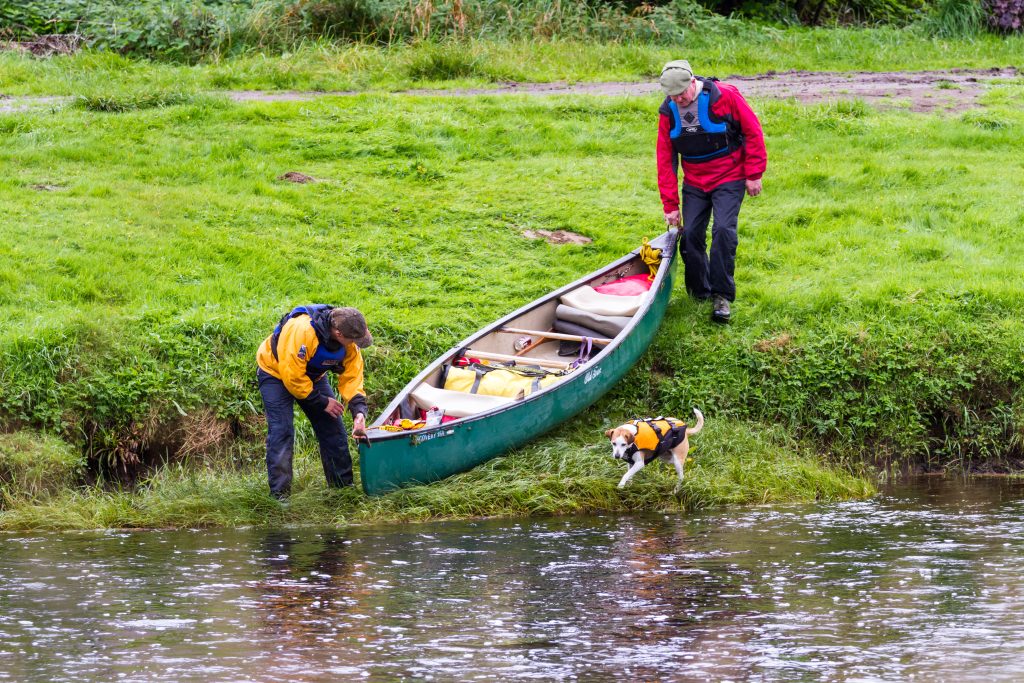
To land a canoe, approach the shore slowly and at a shallow angle. Once you’re near the shore, secure the canoe by holding it steady while you and any passengers carefully exit. Use a paddle or a rope to pull the canoe onto the land if necessary, and be mindful of avoiding rocks or debris that could damage the canoe.
17. How do I read a river or waterway for safe canoeing?
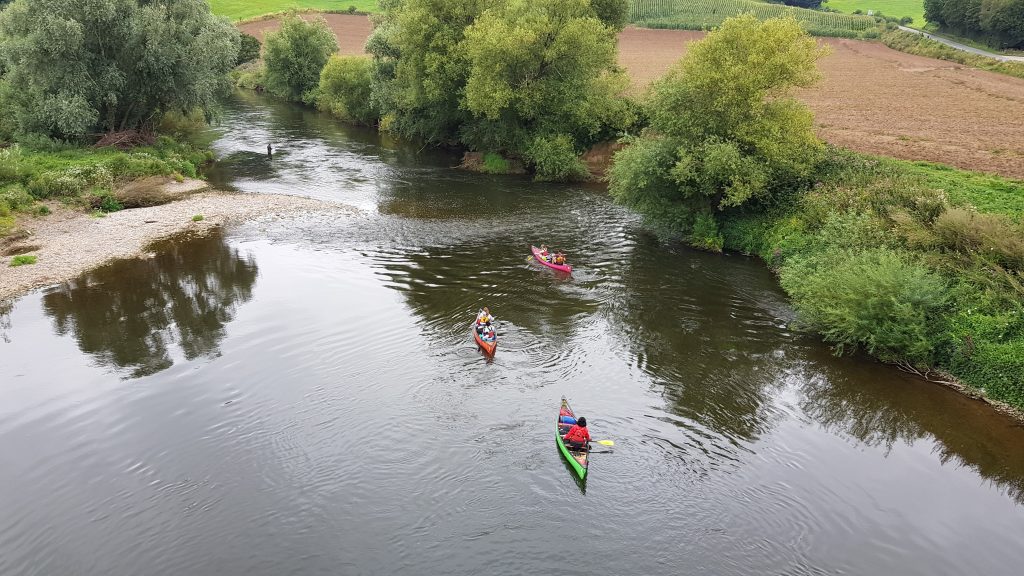
To read a river or waterway for safe canoeing, start by observing the flow and current speed to gauge how fast the water is moving. Look for obstacles such as rocks, fallen trees, or debris that could block your path or cause capsizing. Avoid shallow areas that could damage the canoe and pay attention to changes in the water surface because it can signal turbulence or hidden dangers. Lastly, always check the weather conditions before you head out because it can affect your safety.
18. What are the basic navigation skills needed for canoeing?
Knowing how to read maps and use a compass is a great backup in the case your GPS device fails. Another skill is to identify and use any landmarks you can to help you navigate. Knowing how to locate and plan portage routes is also highly important. Portages are necessary when you need to carry your canoe and gear over land because it’ll help you safely bypass obstacles like rapids or waterfalls. We would recommend that you learn to read the water’s surface to identify the direction and strength of currents. Understanding how this affects your canoe’s movement will help you be safe and make informed decisions.
19. How do I plan a multi-day canoe trip?
Planning a multi-day canoe trip requires some prep work. Start by selecting a route and researching the waterway’s conditions, potential hazards, and available campsites. Create an itinerary when you plan your route, including where you’ll camp each night. Ensure you have all the necessary gear before you head out such as a tent, sleeping bags, and food supplies. For your safety, prepare for the weather and always let someone know your plans. In the case you don’t want to plan a trip yourself, check out our multi-day canoe trips here on adventuro.
20. What are the common mistakes to avoid when canoeing?
Common mistakes to avoid when canoeing include not wearing a life jacket and overloading the canoe beyond its weight capacity, which can lead to instability and capsizing. To be safe, always check the weather forecast before you go and avoid paddling in severe conditions like strong winds. If you’re doing tandem canoeing, clear communication with your partner is essential to coordinate movements and maintain balance. Also, it would be good to have navigation skills, such as reading maps and recognizing hazards. It’s also important to know how to use correct paddling techniques to prevent fatigue and possible injury.
What other questions do you have?
We hope you feel more confident and excited to get out on the water after getting answers to some common questions. Did we miss any questions you might have? If we did, feel free to drop us a line and let us know!