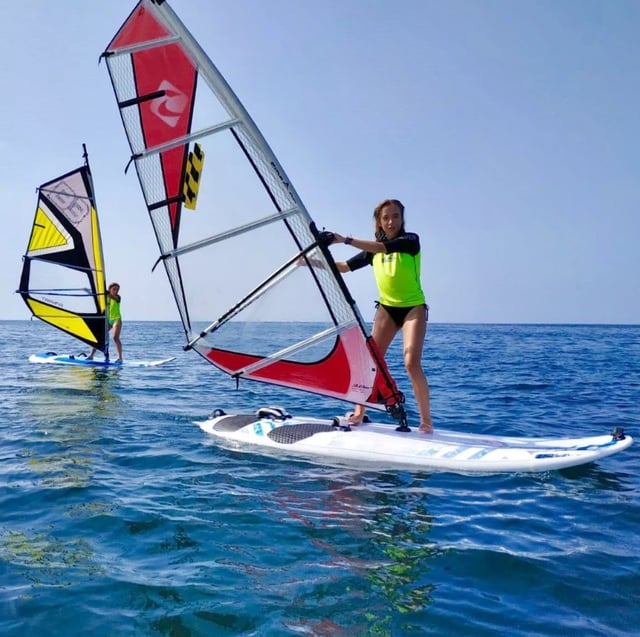
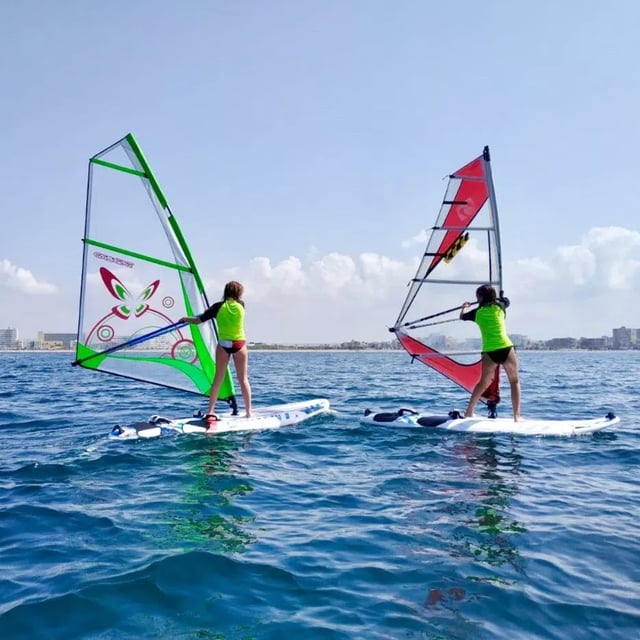
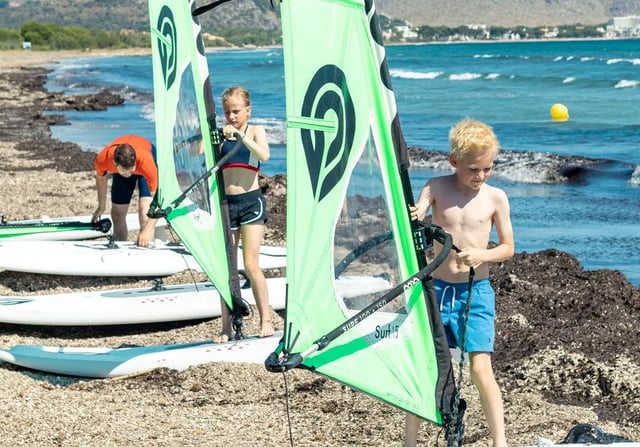
Mallorca is a fine and friendly windsurfing destination, centred on the Bay of Pollença in the north of the island. The bay's reliable summer thermal winds, flat sheltered water and shallow, sandy launch make it one of the best places in the Mediterranean to learn to windsurf and to progress, while warm water and a long season add to the appeal. Whether you're stepping onto a board for the first time or refining your technique, the conditions are about as welcoming as windsurfing gets.
The Bay of Pollença
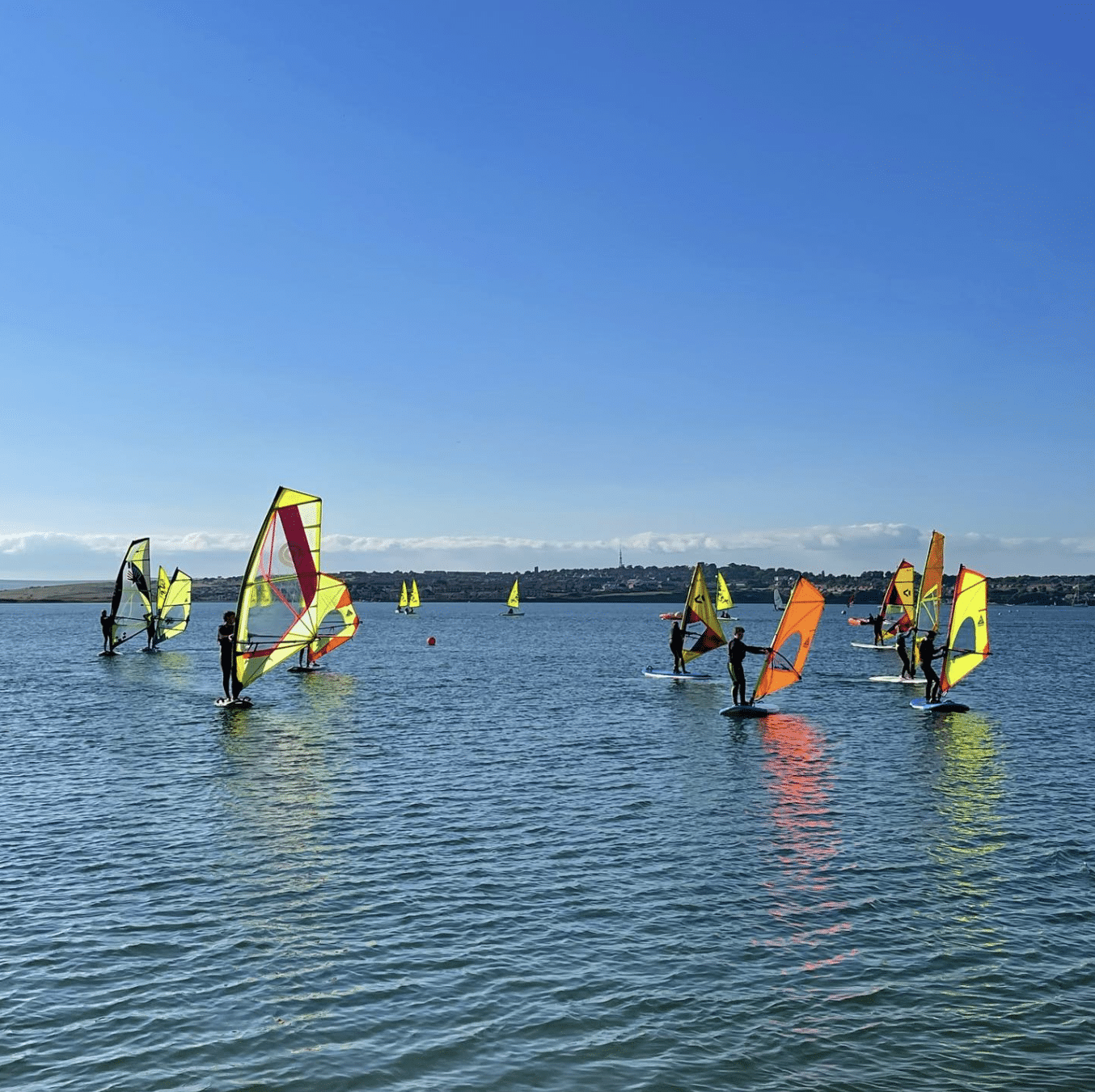
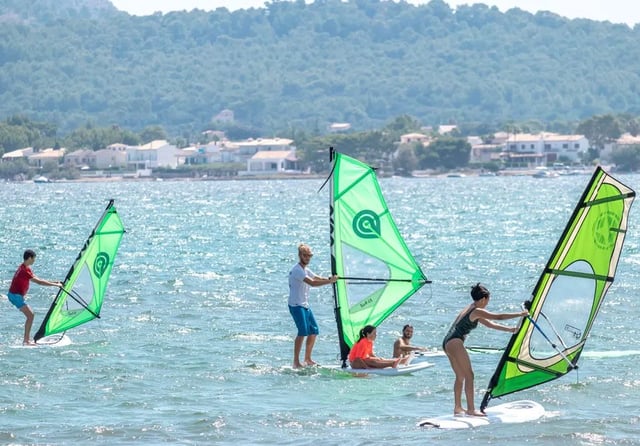
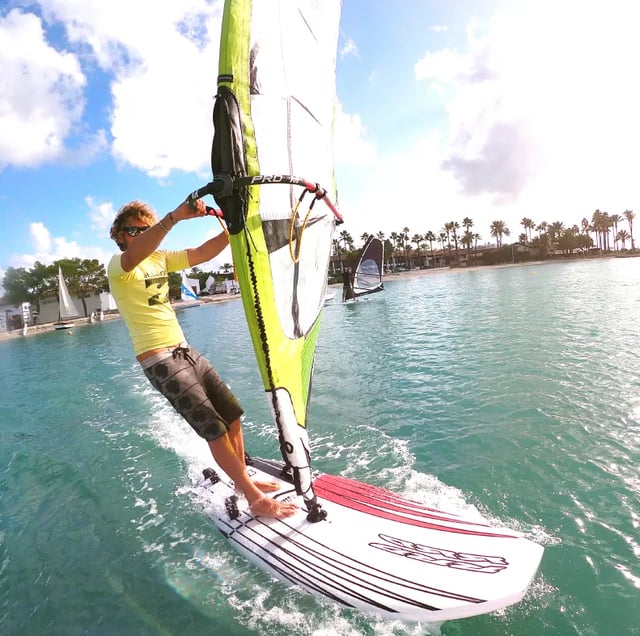
The Bay of Pollença is the island's windsurf hub: dependable cross-shore thermal winds build through the day in summer, the water inside the bay stays flat and the shallow launch makes it safe and easy. These are textbook learning conditions, and there's enough wind for intermediates to plane and improve. The same bay is a leading kitesurf and wingfoil venue, so the watersports infrastructure is excellent.
Lessons and hire
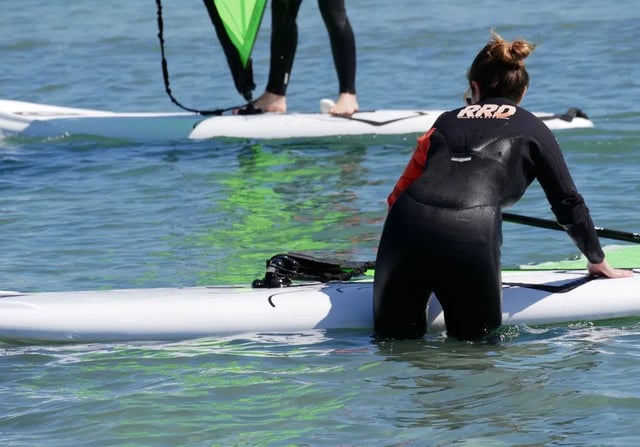
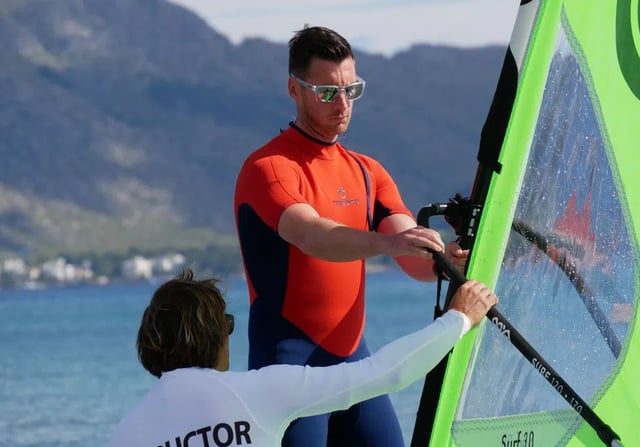
Pollença's watersports centres offer windsurf lessons for all levels and equipment hire for the experienced, with quality kit and authorised teaching areas. Lessons are the fastest, safest way to start in the bay's forgiving conditions.
Adventuro centres in Mallorca
- Mallorca Kiteboarding — A dedicated watersports centre on the Bay of Pollença for windsurfing, kitesurfing, wingfoil and SUP, with an authorised private teaching area and coaching for all levels.
- BonaOna Surf School — A Palma de Mallorca team offering friendly, well-structured windsurfing and watersports coaching in calm, accessible conditions.
- Wind Pirates — A Mallorca watersports team rooted in the Mediterranean lifestyle, hiring windsurf gear and more for those who want to get on the water independently.