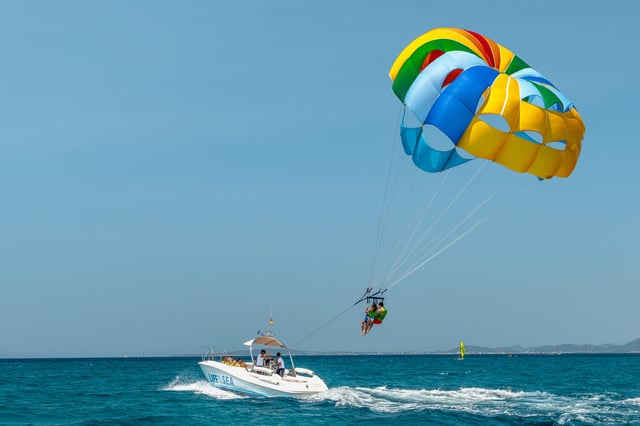
Parasailing in Mallorca
Serra de Tramuntana ridge, sheltered calas; famous for spring road-cycling camps, coastal trekking and sea-cave kayak trips.

Serra de Tramuntana ridge, sheltered calas; famous for spring road-cycling camps, coastal trekking and sea-cave kayak trips.
No. Parasailing is designed for first-timers. The crew handle the boat, tow speed and line management; you just follow a short briefing and enjoy the flight. No swimming ability or watersports background is required.
Most modern operations use a winch system on the boat. You launch and land directly from the deck: the canopy inflates as the line is paid out, lifting you smoothly, and you’re gently winched back in for landing. There’s no running or jumping involved.
Typical heights range from 100 to 500 feet, depending on local regulations, weather and tow line length. Your operator will explain the height before launch and can often adjust within safe limits.
Actual airtime is usually 8–15 minutes. The full experience, including briefing and boat time, is around 30–60 minutes.
Most people find it surprisingly calm. Once airborne, there’s very little noise or movement, and no sensation of falling. If you’re nervous, tandem flights are common and often feel more reassuring.
While all airsports carry risk, yes, when run by licensed operators in suitable conditions, parasailing is remarkably safe. Crews monitor wind strength, sea state and visibility closely and will cancel or reschedule if conditions aren’t right. Modern parasailing uses purpose-built boats, inspected equipment and conservative operating limits.
The boat controls your airspeed, so steady tow speed maintains lift even if ambient wind eases. If conditions become unsuitable, the crew will winch you back in promptly and safely.
Yes. Tandem and triple flights are common, subject to combined weight limits. Children can usually fly with an adult, though minimum age, height and weight rules vary by operator.
Swimwear or quick-dry clothes, plus sun protection. You’ll be given a buoyancy aid and harness; helmets or light waterproofs may be provided. Footwear is usually optional—check with the operator.
Parasailing is towed behind a boat with no steering by the rider. Paragliding is foot-launched aviation with pilot control and training. Parasailing is simpler, calmer and far more accessible.