
E-Foiling in Fuerteventura
Windswept lava plains and dune beaches; Europe’s most reliable kite- and wind-surf destination plus easy reef breaks for learners.
Overview
What is E-Foiling?
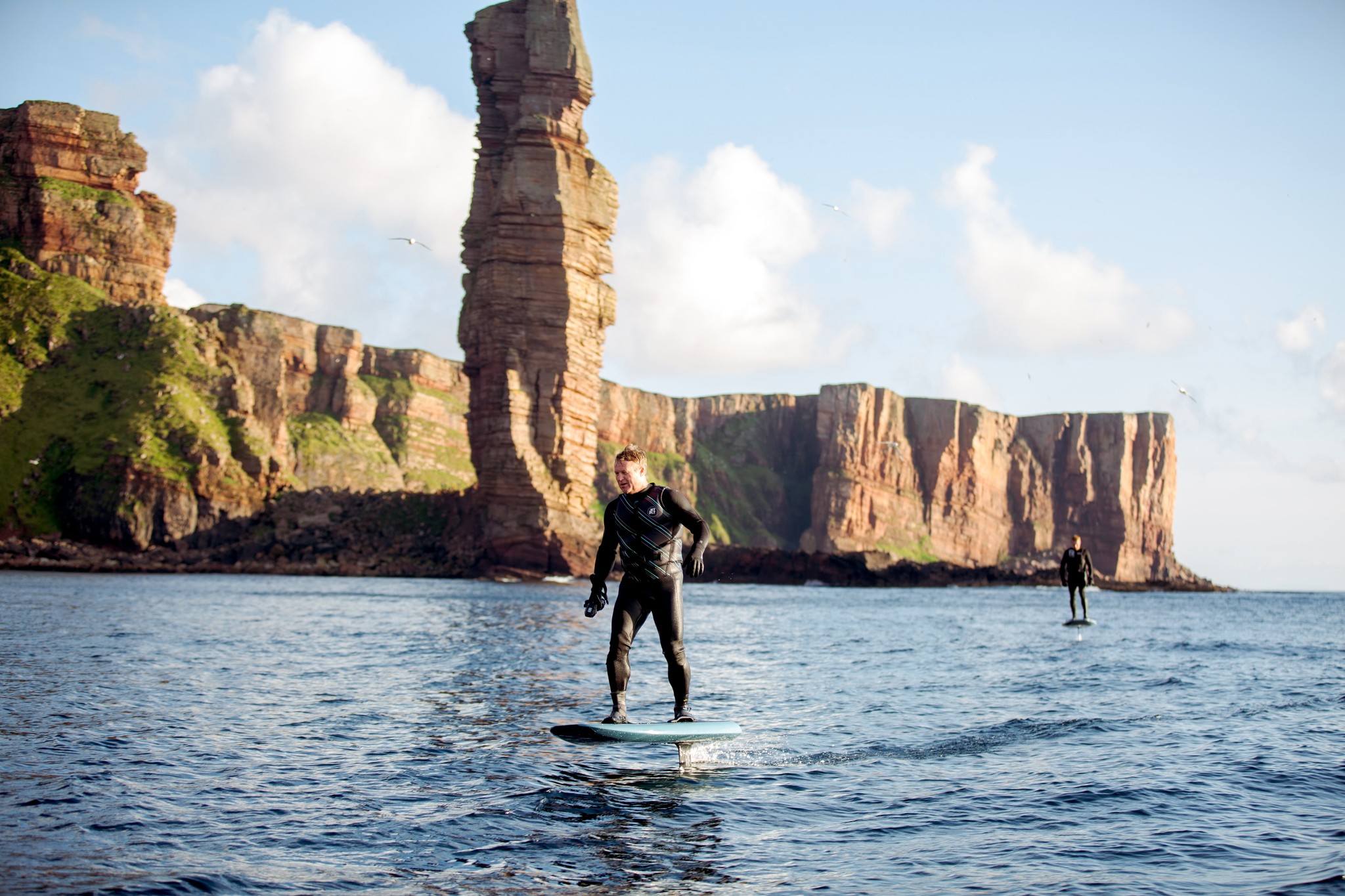
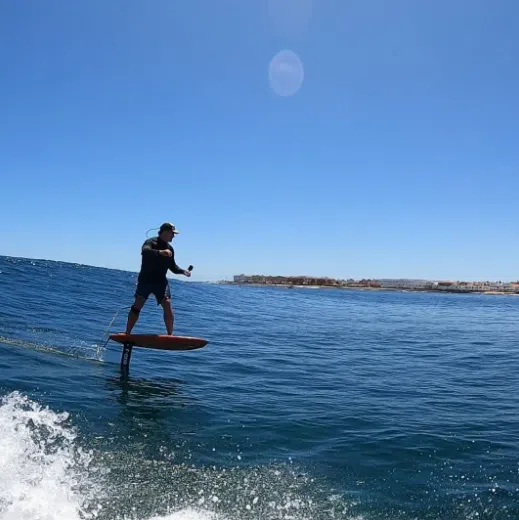
E-foiling is a powered water sport that uses a board fitted with a hydrofoil and a battery-powered electric motor. The hydrofoil is mounted below the board and shaped like an underwater wing. As the motor drives the board forward, the foil generates lift, raising the board and rider above the water’s surface. This lift reduces drag and allows the board to move efficiently through a range of water conditions, including flat or choppy water. The rider controls the speed using a handheld wireless remote.
The equipment typically consists of a carbon or composite board, a detachable foil mast with a front and rear wing, and a waterproof battery integrated into the board. Boards vary in size and design depending on use, ranging from short, manoeuvrable boards to longer, more stable versions. Most systems offer adjustable speed settings and can reach moderate speeds on calm water without the need for wind or waves. The design makes it possible to glide smoothly with minimal water disturbance.
Battery capacity and ride time vary by model, but most setups offer 60–90 minutes of use per charge. Recharge times depend on the size and type of battery. Maintenance mainly involves rinsing components with fresh water and checking for wear on mechanical or electrical parts. Foil wings can also be swapped or adjusted depending on the rider’s preference or experience level. Some boards are modular, allowing for future upgrades or changes to mast length, foil shape, or battery size.
E-foiling does not require wind, swell, or towing to operate, which allows users to ride in places where traditional surfing or kiteboarding is not practical. This includes rivers, lakes, harbours, and nearshore coastal areas. Noise levels are low due to the electric motor, making e-foils suitable for areas with sound restrictions or where minimal disruption is preferred.
How It Works and What to Know
The hydrofoil works by redirecting water flow under the board to create upward lift, which allows the board to rise out of the water once sufficient forward speed is reached. The lift reduces surface resistance and increases efficiency. The electric motor provides consistent propulsion, enabling controlled acceleration and maintaining a chosen speed without external forces. A remote control, usually connected by Bluetooth, is used to adjust throttle in real-time.
Riders shift their weight slightly forward or backward to control pitch and height above the water. Steering is achieved by leaning into turns and shifting weight side-to-side, similar to snowboarding or surfing. Stability improves with practice, and falls are generally slow-speed due to built-in safety features like gradual power cut-off or reduced speed modes.
Foil size, wing shape, and mast height all influence ride characteristics. Larger front wings generate more lift and are often used for beginners or lower speeds, while smaller wings allow for higher speeds and tighter control. Maintenance, battery storage, and safe handling of electronics are key parts of owning or hiring e-foil equipment.
E-foiling is expanding globally, with various manufacturers offering boards for personal use, instruction, and rental. Developments continue in battery range, control systems, and foil efficiency to make the sport more accessible and adaptable to different skill levels and environments.