Certifications11 Feb 2023-7 min read
Learning To Skydive: Your Complete Guide
This is your complete guide to learn to skydive. We break down the steps and to you find your feet

Ready to find a course or session?
Guides and stories related to this certification.
Accelerated Free Fall is British Skydiving's fast track from complete beginner to solo jumper. You are not hanging on a tandem instructor's chest. From level one you exit the aircraft in freefall with instructors beside you, learning body position, altitude awareness and canopy control jump by jump.
Ground school comes first: a full day on equipment, emergencies and how the AFF levels build. Then the sky. Weather owns the calendar more than your diary does. Many students finish eight levels in eight to ten jumps over a long weekend or scattered Saturdays. Repeating a level is normal, not a failure.
Completing AFF clears you for supervised solo jumps at affiliated drop zones. The British Skydiving A Licence needs more jumps, consolidation exercises and a written exam after that. AFF is the steep part of the learning curve, where the sport finally stops feeling like a ride and starts feeling like yours.
AFF is assessed jump by jump against British Skydiving performance standards. Your instructors debrief every skydive and sign off levels when you meet the criteria.
Quick answers about this qualification. For anything else, use live chat or browse bookable activities below.
Find activitiesAccelerated Free Fall is the structured beginner route to solo skydiving. You learn in freefall from early levels with instructors beside you, not attached like a tandem.
Ground school plus progressive jumps build the skills British Skydiving expects before you jump solo at affiliated centres.
A tandem is a one-off ride harnessed to an instructor who controls everything. AFF is training: ground school, multiple jumps and skills that leave you flying your own canopy.
Tandems are brilliant tasters. AFF is for people who want the sport, not just the photo.
Ground school is typically one full day. Many students finish eight AFF levels in eight to ten jumps over several flying days, weather permitting.
Spreading it across weekends is common. Rushing the calendar against British weather is how people get frustrated.
You repeat the level when your instructors agree you are ready. Many students repeat at least one level. Skydiving is skill-based, not tick-box.
Extra jumps cost extra. That is normal, not a personal insult.
Completing AFF levels clears you for supervised solo jumping at your centre, within their rules. The British Skydiving A Licence is the next milestone: minimum 18 jumps total, consolidation exercises and a written exam.
Your drop zone explains the exact path from AFF graduate to A Licence holder.
Not during AFF. Centres provide student jumpsuit, helmet, altimeter, goggles and rig with AAD. Buying gear comes later when you know what fits and what you like.
Leave a comment when you book if you are tall or need larger suit sizes so the centre can confirm availability.
At British Skydiving-affiliated centres, AFF is the standard training route with qualified instructors, briefed emergencies and modern equipment. Risk exists in skydiving; training manages it with procedure and repetition.
Follow medical guidance honestly. Hiding a health issue helps nobody at 12,000 feet.
Good general health matters more than gym medals. You carry kit, hold a stable body position in freefall and land on your feet under canopy.
Check British Skydiving medical guidance and speak to your doctor if unsure. Centres turn away unfit students for everyone's safety.
Sixteen with parental consent if under eighteen at most British Skydiving centres. Some drop zones set higher minimums for AFF.
Ask when you book if you are booking for a teenager. AFF is demanding even for keen sixteen-year-olds.
Yes, often. Wind limits, cloud base and rain ground students while aircraft sit idle. Good centres use grounded time for theory and canopy drills.
Build slack into your plan. A two-day intensive can become a three-weekend project without warning.
adventuro lists British Skydiving AFF courses at drop zones across the UK. Compare whether ground school, jump bundles and kit hire are included before you pay.
Training at your local dz builds club relationships early. Training away on holiday works too if you can return for weather days.
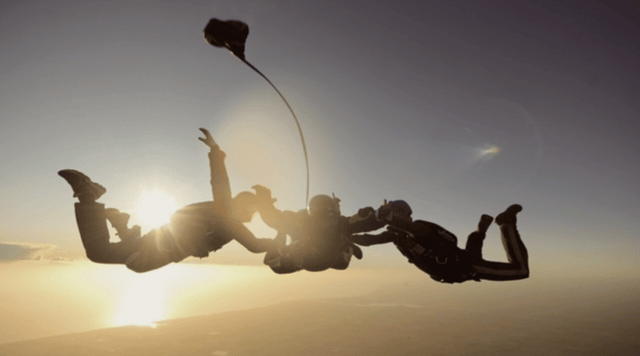
Experience adrenaline-rush, learn skydiving with the AFF Level 1 course.
From £ 350

Join our AFF courses to become a qualified skydiver, with expert instruction, comprehensive training, and full gear provided.
From £ 421