
What Surfboard is Right for You? A Complete Guide
Choosing the right surfboard is one of the most important decisions you’ll make as a surfer (until you inevitably end up with an excessive collection like me ;)), whether you’re just starting out or looking to push your skills to the next level. The surfboard you use should match your skill level, body type, and surfing goals to help you paddle efficiently, catch waves more easily, and improve your manoeuvrability.
For beginners, having a board that offers stability and buoyancy will make learning to stand up and ride waves far easier, while advanced surfers will need a board that complements their technical skills and the types of waves they want to ride. Boards designed for high-performance manoeuvres will allow more responsive turns and control in steep waves, while cruisier, larger boards offer an easier ride in smaller, gentler surf.
Understanding the factors that go into surfboard selection – such as length, width, thickness, and shape – can make a world of difference in how quickly you progress and how much you enjoy your sessions. A good board can reduce frustration and increase your wave count.
1. Understanding the Different Types of Surfboards
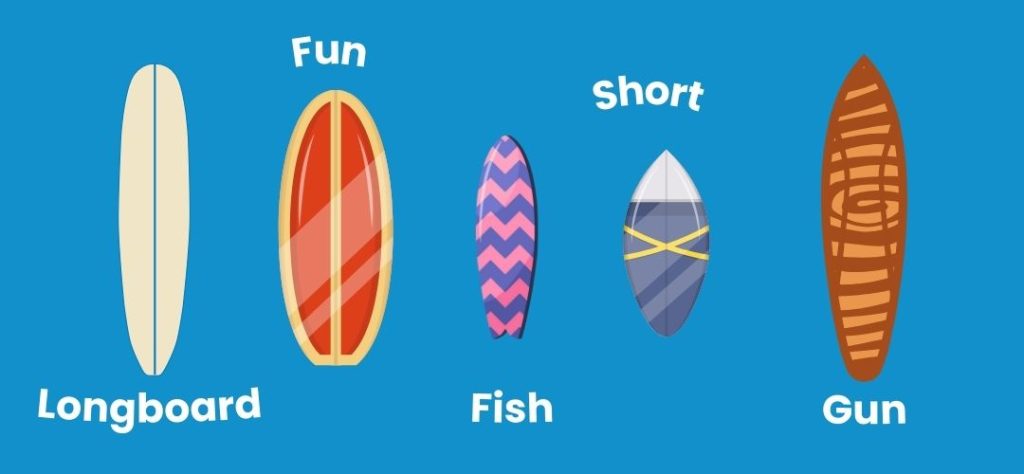
Surfboards come in many shapes and sizes, each designed to handle different types of waves and cater to varying skill levels. Here’s a rundown of the most common types of surfboards and what they’re best suited for:
Shortboard
The shortboard is synonymous with high-performance surfing. These boards are typically between 5’6” and 6’8” in length, with a pointed nose and a more aggressive rocker (the curve of the board from nose to tail). This shape is ideal for making quick, sharp turns on steep waves and allows for advanced tricks like cutbacks, snaps, and aerials.
While shortboards offer maximum manoeuvrability and speed in steep surf, they are less forgiving and require solid paddling and wave-catching skills. Shortboards are best suited for intermediate to advanced surfers who are looking to challenge themselves on fast, hollow waves.
Longboard
Longboards, usually ranging from 8’ to 10’ in length, are great for beginners or anyone looking for a smooth, relaxed style of surfing. These boards are much easier to paddle, offering superior buoyancy and stability, which makes it simpler to catch waves and stay balanced. The longer length also makes them ideal for small to medium waves, where you can glide and cruise along the face of the wave.
Longboards allow for a classic surfing style, with a focus on cross-stepping and nose riding. Even experienced surfers often keep a longboard in their quiver for those days when the waves are mellow and they want to enjoy a laid-back session.
Fish
The fish is a shorter, wider board that excels in small to medium-sized waves. Known for its distinctive swallowtail design, the fish is typically between 5’4” and 6’4” in length, making it more manoeuvrable than a longboard but more buoyant and faster than a shortboard in weaker waves. The wider shape and flatter rocker provide extra speed and stability, even in slower surf.
Fish boards are perfect for intermediate surfers who want a versatile board that can handle a range of conditions but is especially suited for fun, playful days in small surf. It’s a great option when the waves are too slow or mushy for a shortboard but still offer enough to make some speedy, flowing turns.
Funboard
As the name suggests, the funboard is designed for fun and versatility. Typically ranging from 7’ to 8’ in length, it’s a hybrid between a longboard and a shortboard, offering the best of both worlds. Funboards are wider and have more volume than a shortboard, making them easier to paddle and more forgiving when catching waves.
However, they are also shorter than a longboard, allowing for quicker turns and better manoeuvrability. This makes them a fantastic choice for intermediate surfers or beginners who are looking to transition from a longboard to something with more performance capabilities. They work well in a variety of conditions, from small to medium waves, and are a great option for those looking for a single, do-it-all board.

Soft Top Board
Soft top surfboards are made with a soft foam exterior, which makes them the safest and most forgiving option for beginners. These boards are stable, buoyant, and easy to handle, making them perfect for learning the basics of surfing without the risk of injury from harder, fiberglass boards.
Soft tops are typically wider and longer, offering plenty of stability to make standing up and balancing on the wave easier. They’re often found at surf schools and are a great choice for first-time surfers or those still building their confidence in the water. Their durability also makes them ideal for rough beach breaks where boards are more likely to take a beating.
Gun
For those looking to tackle big waves, the gun is the board of choice. Guns are long (typically 7’ to 12’), narrow, and designed for maximum speed and stability in large, powerful surf. The pointed nose and streamlined shape allow the board to handle high speeds while maintaining control on steep, fast-breaking waves.
Guns are specifically designed for waves that are too large and fast for traditional shortboards. If you’re planning on surfing places like Hawaii’s Pipeline or Nazaré in Portugal, a gun will be your go-to board. These boards are for experienced big-wave surfers only, as they require advanced skills in both paddling and navigating treacherous conditions.
2. Surfboard Size Guide: What’s the Right Size for You?
Choosing the right size surfboard is key to ensuring your experience in the water is both enjoyable and productive. Whether you’re just starting out or looking to progress, the size of your surfboard directly affects how easy it is to paddle, catch waves, and manoeuvre.
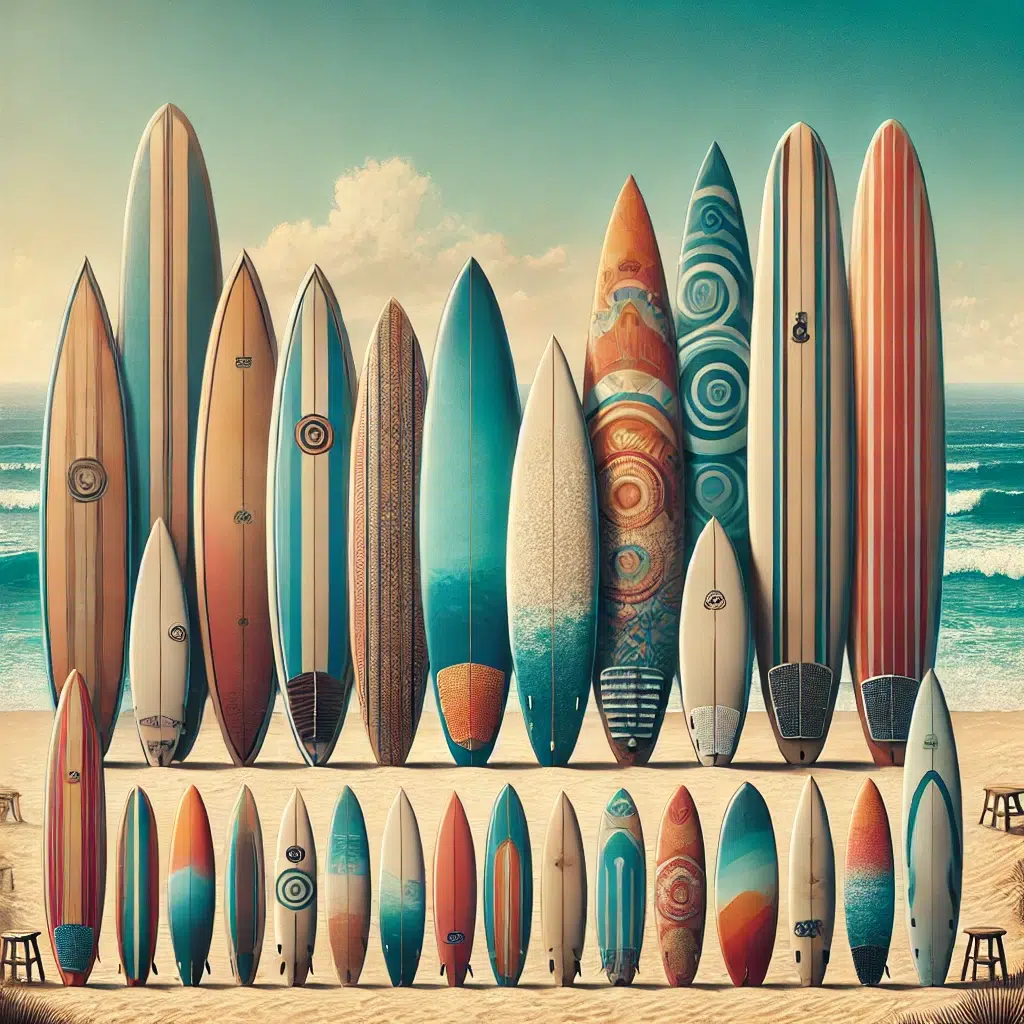
Here’s a breakdown of the key factors that determine the right surfboard size for you.
Height and Weight Considerations
One of the most important factors when choosing a surfboard size is your height and weight. Generally speaking, the bigger you are, the larger the surfboard you’ll need for adequate buoyancy and stability. Larger boards provide more flotation, making it easier to paddle, balance, and catch waves.
Here’s a basic guide for matching surfboard size to your body weight and skill level:
- Beginners: For beginners, it’s best to start with a board that’s around 2 to 3 feet taller than your height. This ensures the board has enough surface area to offer stability and buoyancy. For example, if you’re around 5’8″ (173 cm), a board around 8’0″ to 9’0″ would be a good starting point.
- Intermediate Surfers: As you progress, you can start reducing the size of your board. Intermediate surfers might opt for a board that’s closer to their height or slightly above. This allows for more manoeuvrability while still maintaining stability.
- Advanced Surfers: More experienced surfers often ride boards that are shorter than their height, especially if they are performance-oriented. This gives them greater control and responsiveness in more critical wave sections.
In general, bigger boards are better for beginners, as they provide more stability, making it easier to learn the basics of paddling, standing up, and catching waves. As you develop your skills, you can gradually transition to smaller, more responsive boards.
Volume and Floatation
Volume is a key measurement for surfboards, indicating the board’s buoyancy. It’s measured in litres and is calculated based on the board’s length, width, and thickness. The higher the volume, the more buoyant the board, which makes it easier to paddle and float.
- High Volume Boards: Boards with more volume (60+ litres) are ideal for beginners or surfers looking to catch smaller waves. They provide extra floatation, making them easier to paddle and more forgiving in choppy or slow conditions. For example, a longboard or a soft top might have a high volume to give beginners the stability they need.
- Low Volume Boards: As surfers progress, they typically move to lower-volume boards (30-40 litres for an average adult). These boards are more responsive and manoeuvrable, but require more effort to paddle and catch waves. Shortboards and fish typically have lower volumes.
When selecting the right board, consider your body weight, skill level, and the type of waves you’ll be riding. Heavier surfers and beginners will benefit from more volume to keep them afloat, while lighter and more advanced surfers can opt for boards with less volume for more control and agility in the water.
Here’s a rough guide to volume recommendations based on experience:
- Beginner: 60-80 litres (depending on height and weight)
- Intermediate: 40-60 litres
- Advanced: 30-40 litres (or even lower for high-performance surfing)
Surfboard Length, Width, and Thickness
Board Length
The length of the surfboard plays a huge role in how the board paddles and handles waves. Generally, longer boards (over 8 feet) are easier to paddle and catch waves with because they have more surface area. They’re also better for beginners, as they provide stability and momentum when paddling. Shorter boards (under 7 feet), on the other hand, are harder to paddle but offer more control and quicker manoeuvres, making them ideal for experienced surfers.
- Longboards: Best for beginners or those who want to cruise on smaller waves, as they offer superior paddle power and stability.
- Shortboards: Better suited for more experienced surfers who need speed and precision in steeper, faster waves.
Surfboard Width
The width of the surfboard affects how stable the board feels under your feet. Wider boards provide more stability and float, making them ideal for beginners and those surfing in slower, mushier waves. Narrower boards, on the other hand, are more agile and responsive but less forgiving in terms of balance, making them better for advanced surfers who need sharper turns and quicker movements in the water.
- Wider boards (21” or more): Great for beginners, small waves, and increased stability.
- Narrow boards (under 19”): Best for advanced surfers looking for quick response and performance in powerful waves.
Surfboard Thickness
Thickness is the final piece of the puzzle when it comes to surfboard size. Thicker boards have more buoyancy, making it easier to paddle and catch waves. They’re ideal for beginners or surfers who want to ride smaller, less powerful waves. Thinner boards, while less buoyant, offer more control and sensitivity, especially in steep or critical wave sections.
- Thicker boards (2.75” or more): Good for beginners and small-wave surfers, providing extra flotation and ease of wave catching.
- Thinner boards (under 2.5”): Ideal for experienced surfers who want more control and responsiveness.
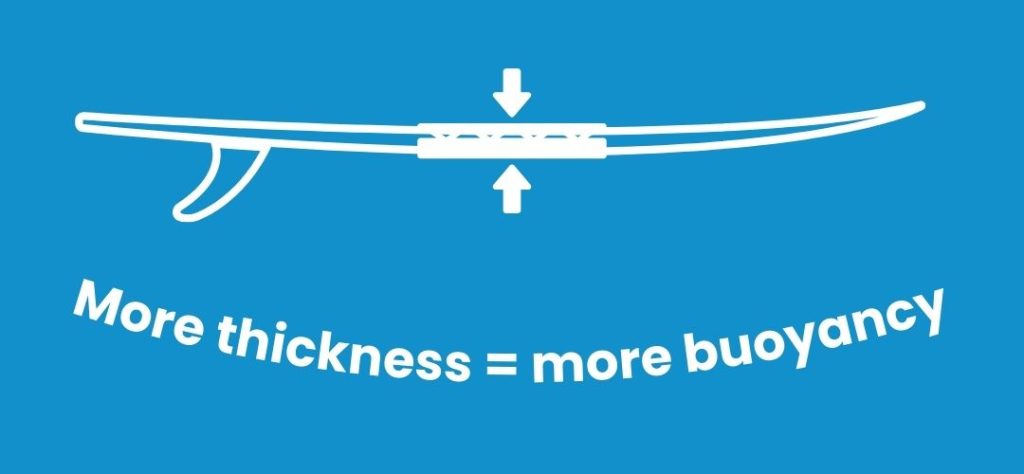
In summary, choosing the right surfboard size involves balancing your height and weight with the volume, length, width, and thickness of the board. Beginners should prioritise boards with more floatation and stability, while advanced surfers can opt for smaller, lower-volume boards that provide greater control and manoeuvrability in more challenging conditions.
3. Matching Your Surfboard to Your Skill Level
When choosing a surfboard, it’s essential to match it to your current skill level. Your experience in the water will determine the type of board that best suits your needs. Using a board that aligns with your abilities can accelerate your learning curve and ensure you enjoy your time in the water, rather than struggling with a board that’s too advanced or not suited to your progression.
Beginner Surfers
As a beginner, your primary focus should be on stability, paddle power, and ease of catching waves. Surfing has a steep learning curve, so the more stable and buoyant your board is, the easier it will be to practise the fundamentals like standing up, paddling into waves, and maintaining balance. A larger, more buoyant board gives you more room for error and helps you catch more waves, allowing you to build confidence and improve more quickly.
- Why Stability and Paddle Power Matter: Beginners often struggle with paddling and catching waves, so a board that makes this easier will help you spend more time standing and less time battling with the waves. Stability also allows you to practise your foot positioning and pop-up technique without constantly falling off the board.
- Recommended Boards:
- Longboards: These boards, typically 8-10 feet long, provide excellent stability and buoyancy, making them perfect for beginners. Their large surface area makes paddling into waves easier and allows you to ride smaller, slower waves with ease.
- Soft Top Boards: With their foam construction, soft tops are extremely forgiving, safe, and durable. They’re ideal for those just getting started, as they provide ample float and won’t cause injury if you happen to fall on them.
- Funboards: A funboard offers a good balance between performance and stability. They’re shorter than longboards but still provide enough buoyancy and paddle power to help beginners catch waves easily. They’re also a great choice for those transitioning from soft tops to more advanced boards.
Intermediate Surfers
Once you’ve mastered the basics—such as paddling, standing up, and catching waves—you can start transitioning to boards that offer a mix of performance and ease of use. As an intermediate surfer, you’ll want a board that is still stable enough to catch waves reliably but also manoeuvrable enough to allow you to start practising turns, cutbacks, and other more advanced moves.
- Why Balance Between Performance and Stability Matters: At this stage, you’re looking for a board that gives you a bit more control in the water, especially when it comes to turning and riding steeper waves. However, you still need some stability to keep catching waves consistently without too much effort. A good intermediate board lets you start experimenting with performance manoeuvres while still providing enough float to paddle efficiently.
- Recommended Boards:
- Funboards: If you haven’t already moved to a funboard, this is a great time to make the switch. Funboards offer more manoeuvrability than longboards while still being relatively stable, making them perfect for intermediates looking to refine their skills.
- Fish: A fish board is shorter and wider, making it faster and more manoeuvrable than a funboard but still providing the float needed for intermediate surfers. It’s particularly well-suited for small to medium waves, where the extra width and flatter rocker help generate speed.
- Hybrid Shapes: These boards combine elements from different styles, such as shortboards and funboards, offering a versatile option for intermediates who want to ride a variety of wave types. Hybrids offer a balance between control and floatation, allowing intermediates to start testing more challenging waves while retaining some of the stability they’re used to.

Advanced Surfers
For advanced surfers, it’s all about performance. By now, you’ll have a solid grasp of paddling, wave positioning, and executing turns. Your board selection should focus on responsiveness, speed, and matching the board to specific wave conditions. Advanced surfers often have a quiver of boards suited for different waves, from small beach breaks to large reef waves, allowing them to adjust their gear depending on the surf.
- Why Performance Boards Matter: Advanced surfers need boards that can handle sharp, powerful turns, high-speed manoeuvres, and steep wave faces. Performance-oriented boards are typically less buoyant and more agile, enabling experienced surfers to push their limits and take on more challenging surf.
- Recommended Boards:
- Shortboards: For fast, steep waves, a shortboard is the go-to choice. These boards are designed for high-performance surfing, allowing for quick, sharp turns and manoeuvres like snaps and aerials. Shortboards are usually between 5’6” and 6’8” and are best suited for advanced surfers who are comfortable on critical wave faces.
- Fish: Fish boards remain a great option for advanced surfers, especially when the waves are small or mushy. Their design makes them faster in slower waves, offering a fun alternative to the shortboard when conditions aren’t ideal for high-performance surfing.
- Guns: If you’re looking to take on big waves, a gun is essential. These long, narrow boards are designed for paddling into large, fast-moving waves and maintaining control at high speeds. Guns are specifically crafted for big-wave surfing and are only recommended for advanced surfers who are experienced in handling powerful waves.
4. Consider the Types of Waves You’ll Be Surfing
The type of waves you’re planning to surf plays a major role in choosing the right surfboard. Not all boards are suited for every wave condition, and selecting the wrong one can make your session less enjoyable or even frustrating. Knowing how different boards perform in various wave types will help you maximise your time in the water and match your equipment to the conditions.
Here’s a breakdown of the best surfboards for different types of waves:
Small Waves: Best Boards for Small, Slow Waves
Small waves, typically knee to waist high, lack the power needed for more performance-oriented boards like shortboards. Instead, you’ll want to opt for boards that can generate speed and maintain stability in slower, weaker surf. The right board will help you make the most out of smaller days and allow for a cruisy, playful ride.
- Recommended Boards:
- Longboards: Longboards excel in small waves due to their size and buoyancy. Their length and flat rocker allow them to glide effortlessly on the smallest of waves, making them perfect for smooth, flowing rides. The extra paddle power also helps in catching small waves early, giving you more ride time.
- Fish Boards: Fish boards are a great choice for small, weaker waves because their wider shape and flatter rocker help maintain speed. The swallowtail design and extra volume make fish boards fast and responsive, allowing for quick turns even in less-than-ideal conditions.
- Funboards: Funboards combine elements of longboards and shortboards, providing enough float to catch small waves easily while still offering more manoeuvrability than a longboard. They’re great for making the most out of small surf and can still handle steeper sections when conditions improve.

Medium Waves: Ideal Boards for Mid-Size Waves
Medium waves, roughly chest to head high, provide enough power and face for a variety of surfboards to perform well. These waves are where most surfers spend their time, as they’re consistent and offer a good mix of speed and shape. When choosing a board for medium waves, you’ll want something that strikes a balance between floatation and manoeuvrability.
- Recommended Boards:
- Shortboards: Shortboards are designed for medium to large waves, making them the ideal choice when the surf picks up. They provide excellent control and the ability to perform high-performance manoeuvres like cutbacks, snaps, and aerials. A shortboard’s thinner profile and more pronounced rocker help maintain speed and control on the steeper sections of medium waves.
- Funboards: Funboards can also work well in medium waves, offering a balance of stability and manoeuvrability. If the waves are mellow and a bit softer, a funboard will give you the extra float you need without sacrificing too much in terms of performance.
- Hybrids: Hybrid boards, which combine features of shortboards and fish boards, are great for maintaining speed and manoeuvrability in medium surf. They handle a variety of conditions and are especially good for surfers looking for versatility.
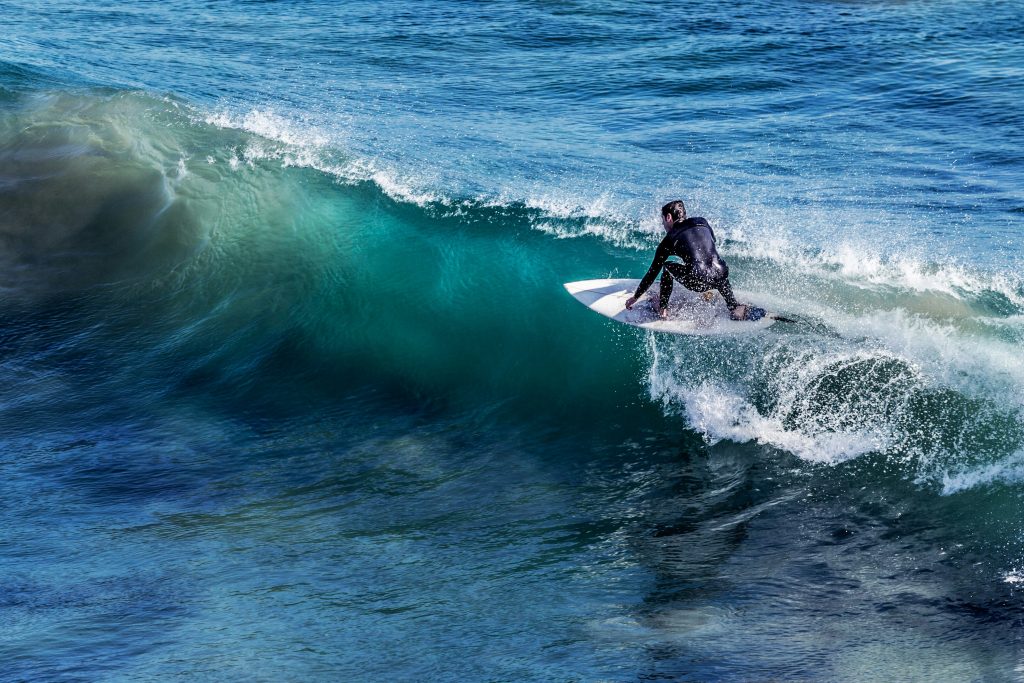
Large Waves: Choosing the Right Board for Big-Wave Surfing
Large waves (anything head high and above) come with increased speed and power, requiring boards that can handle the intensity. When surfing large waves, you need a board that offers stability and control at high speeds, with enough paddle power to help you get into waves early before they break.
- Recommended Boards:
- Guns: Guns are the go-to boards for big-wave surfing. Their long, narrow shape allows them to paddle into waves early and maintain control on steep, fast drops. Guns are typically between 7’ and 12’ in length, with a pointed nose for streamlined paddling and a heavy rocker to handle steep wave faces.
- Step-Up Shortboards: Step-up boards are essentially longer, thicker shortboards designed for large, powerful waves. They provide the manoeuvrability of a shortboard with the extra paddle power and stability needed for bigger surf. These boards are great for advanced surfers tackling larger beach or reef breaks.
- Performance Shortboards: For experienced surfers, a performance shortboard can handle larger waves, especially if the conditions are clean and not too heavy. Choose a slightly longer and thicker shortboard to provide more control and paddle power.
Choppy or Messy Conditions: Boards That Handle Rougher Surf Better
Surfing in messy or choppy conditions can be tricky, as the waves are often unpredictable, and maintaining speed and control is a challenge. You’ll want a board that can cut through the chop and provide stability while still allowing for quick directional changes.
- Recommended Boards:
- Fish Boards: Fish boards are ideal for choppy conditions due to their wider shape and flatter rocker. The extra volume helps maintain speed and control in bumpy, mushy waves, while the fish tail adds stability and manoeuvrability.
- Funboards: Funboards also work well in messy conditions because they provide more float and stability, making it easier to stay on top of the wave even when the water is rough. They’re great for maintaining speed and control when the conditions are far from perfect.
- Hybrids: Hybrid boards are versatile enough to handle a range of conditions, making them a solid choice for messy surf. They provide enough float to help you paddle through choppy water and still offer a decent amount of control for quick turns.
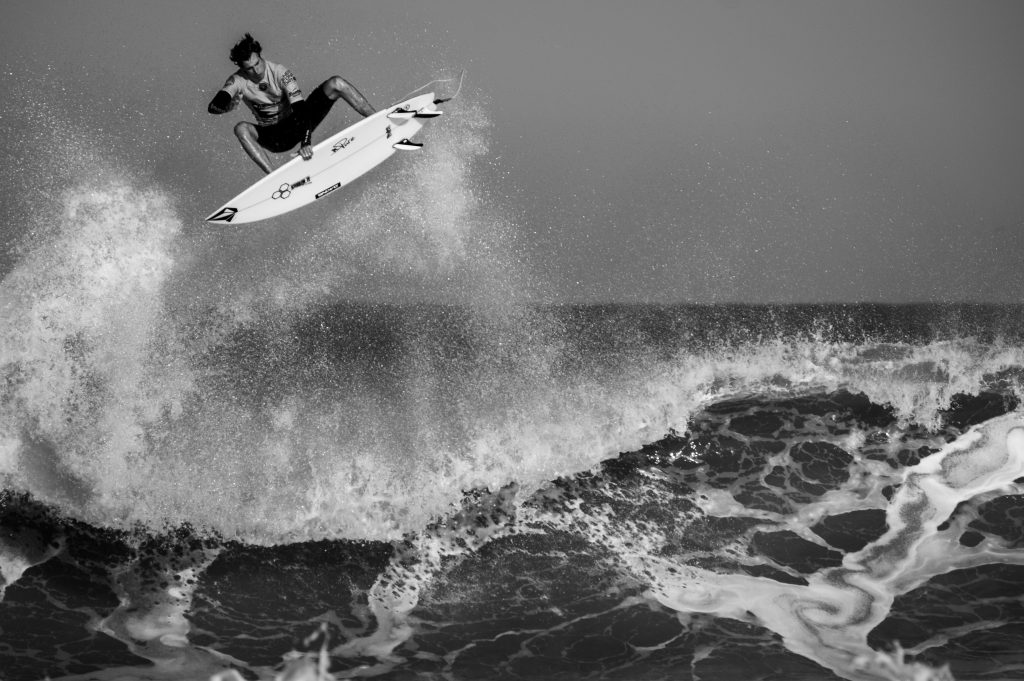
Matching Your Board to Wave Type: Key Considerations
When selecting a surfboard based on wave conditions, consider the following factors:
- Paddle Power: Larger, thicker boards are better for small waves and messy conditions, as they provide more buoyancy and paddle power.
- Manoeuvrability: Shorter, thinner boards are ideal for powerful, steep waves, where you need quick directional changes.
- Wave Face: For steep, critical waves, choose boards with a pronounced rocker to prevent pearling (the nose diving into the water). For flatter waves, a flatter rocker helps generate speed.
- Wave Size: Larger boards are needed for big waves to ensure early entry and control, while smaller boards work best for medium to small waves.
5. Construction Materials: Foam, Epoxy, and Fibreglass
The material used to construct your surfboard significantly affects its performance, durability, and overall feel in the water. Different materials offer unique advantages and disadvantages, making it important to choose the right construction based on your skill level, surfing goals, and the conditions you’ll be surfing in. Here’s a breakdown of the most common surfboard materials – foam, epoxy, and fibreglass – along with some of the latest developments in surfboard construction.
Foam Surfboards
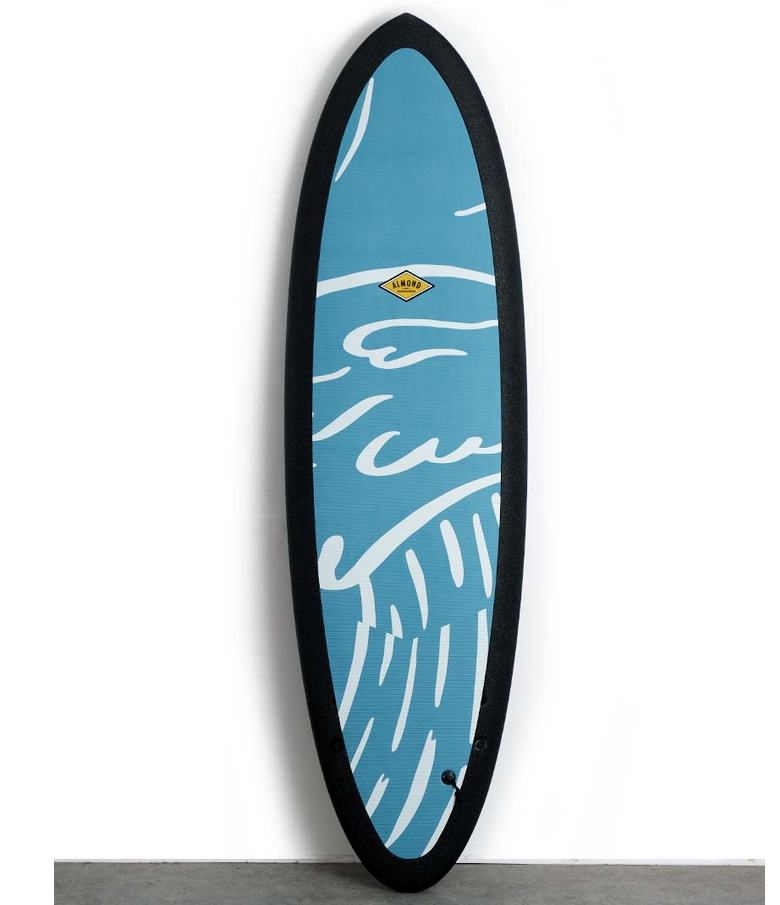
Foam surfboards, also known as soft tops, are constructed with a soft foam exterior and a lightweight core, usually made of expanded polystyrene (EPS). These boards are especially popular with beginners due to their safety, stability, and ease of use. Foam boards are generally thicker and wider, offering plenty of buoyancy, which makes catching waves and standing up much easier for inexperienced surfers.
- Pros:
- Lightweight and Buoyant: Foam surfboards are extremely lightweight and float well, making them easy to paddle and control. The buoyancy helps beginners catch waves with less effort, and the added stability makes it easier to stay balanced when learning.
- Safe: The soft exterior reduces the risk of injury from falls or collisions with the board. This makes foam boards ideal for crowded beaches or surf schools where safety is a priority.
- Durable: Foam boards are tough and resilient to dings, making them an excellent choice for beginners who might knock the board around a bit during the learning process.
- Cons:
- Limited Performance: Foam boards lack the responsiveness needed for advanced manoeuvres. Their bulkier shape and soft construction mean they don’t carve as sharply or handle steep waves as well as other materials.
- Slow Speed: Due to their thickness and soft construction, foam boards aren’t built for speed or high-performance surfing, limiting their use to smaller, slower waves.
Epoxy Surfboards
Epoxy surfboards are constructed with an EPS foam core, which is coated with layers of epoxy resin and fibreglass cloth. These boards are highly durable and lightweight, making them a popular choice for both beginners and advanced surfers alike. Epoxy boards have gained popularity in recent years due to their strength and resistance to damage.
- Pros:
- Durable and Resistant to Dings: Epoxy surfboards are much more durable than traditional fibreglass boards. The epoxy resin is harder and more resistant to impact, making these boards less prone to dings, cracks, and other common surfboard damage. This durability is especially useful for beginners or surfers who frequently encounter rocky breaks.
- Lightweight: Epoxy boards are lighter than fibreglass, making them easier to carry, paddle, and manoeuvre in the water. This makes them an attractive option for surfers who prefer a board with less weight but still want good performance in a variety of conditions.
- More Buoyant: The EPS foam core used in epoxy boards is less dense than polyurethane (PU) foam found in traditional fibreglass boards. This gives epoxy boards more buoyancy, making them easier to paddle and faster to catch waves, especially in smaller surf.
- Cons:
- Stiffer Feel: While epoxy boards are lighter and more durable, they tend to feel stiffer compared to traditional fibreglass boards. This rigidity can limit the board’s flexibility and responsiveness, making them feel less natural when carving or riding larger, more powerful waves.
- Less Responsive in Critical Waves: In steep, hollow waves, the extra buoyancy and stiffness of an epoxy board may cause it to sit higher on the water, reducing responsiveness and control in critical sections of the wave.
Fibreglass Surfboards
Fibreglass surfboards are the most traditional type of surfboard construction, usually made with a polyurethane (PU) foam core that is laminated with fibreglass cloth and polyester resin. These boards have been the standard for decades, offering a balance of flexibility and performance, particularly for intermediate and advanced surfers looking for a classic feel in the water.
- Pros:
- Flexible and Responsive: Fibreglass boards offer more flex than epoxy boards, which provides a smoother, more natural ride. The flexibility allows the board to bend and adapt to the contours of the wave, giving surfers a better connection with the water and more control during manoeuvres.
- Traditional Feel: Many experienced surfers prefer the feel of fibreglass boards due to their responsiveness and performance in a wide range of conditions. They handle well in both small and larger waves, making them versatile and reliable for surfers seeking performance.
- Better for Heavier Waves: Fibreglass boards typically sit lower in the water than epoxy boards, which provides more control and stability in heavier or steeper waves. This makes them an excellent choice for surfers tackling more powerful surf.
- Cons:
- Less Durable: Fibreglass boards are more prone to dings, cracks, and damage compared to epoxy boards. The polyester resin used in the lamination process is softer than epoxy resin, meaning fibreglass boards are more likely to get dinged when coming into contact with rocks, other boards, or during transport.
- Heavier: Fibreglass boards are generally heavier than epoxy boards, which can make paddling and carrying the board more challenging, especially for smaller surfers. While the extra weight can be beneficial in certain surf conditions (like heavier waves), it can also be a drawback in smaller, weaker surf.
New Developments in Surfboard Construction
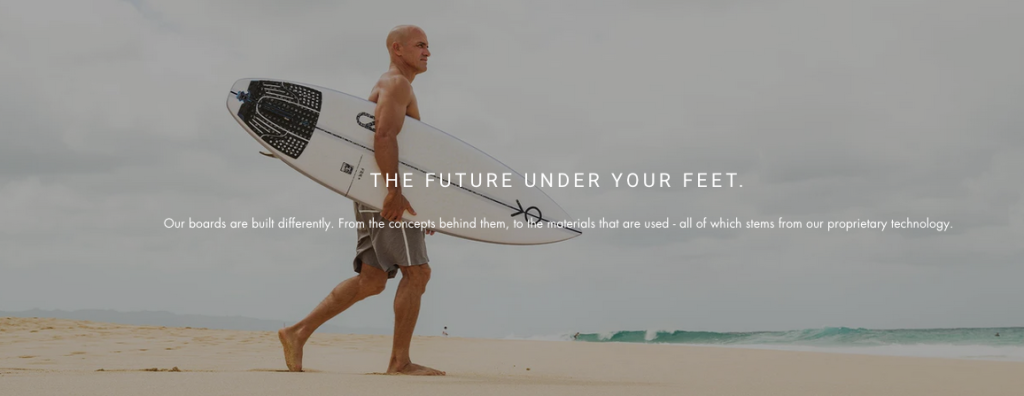
In recent years, surfboard manufacturers have been exploring new materials and technologies aimed at improving performance, durability, and environmental sustainability. Some of the latest innovations in surfboard construction include:
- Eco-Friendly Materials: With the surf industry placing more emphasis on sustainability, there has been a rise in the use of eco-friendly materials such as recycled foam, bio-based resins, and natural fibres like hemp and flax in surfboard construction. Companies like Firewire and Channel Islands are leading the way in creating surfboards with a lower environmental impact, using greener alternatives to traditional PU and EPS foams.
- Carbon Fibre Reinforcement: Some high-performance boards now feature carbon fibre reinforcement along the rails or deck. This material adds strength and stiffness without adding extra weight, providing surfers with increased durability and enhanced responsiveness for advanced manoeuvres.
- 3D-Printed Surfboards: 3D printing technology is slowly making its way into surfboard manufacturing. Custom 3D-printed boards offer precise shaping and the ability to experiment with new, innovative designs that aren’t possible with traditional construction methods. This technology allows for personalised board designs tailored specifically to a surfer’s size, weight, and style.
As technology continues to advance, we can expect to see more surfboards that combine cutting-edge materials with eco-friendly practices, pushing the boundaries of performance and sustainability in the sport.
6. Surfboard Shape and Fins Setup
The shape and design of a surfboard are crucial elements that determine how it performs in the water. Every detail—from the curve of the board to the shape of the tail—has an impact on speed, manoeuvrability, and overall control. Understanding these design features will help you choose the right board for your surfing style and the types of waves you plan to ride.
Rocker
The rocker refers to the curve of the surfboard from nose to tail. This feature plays a significant role in how the board handles speed, turning, and wave conditions. There are two main types of rocker to consider: flat rocker and curved (high) rocker.
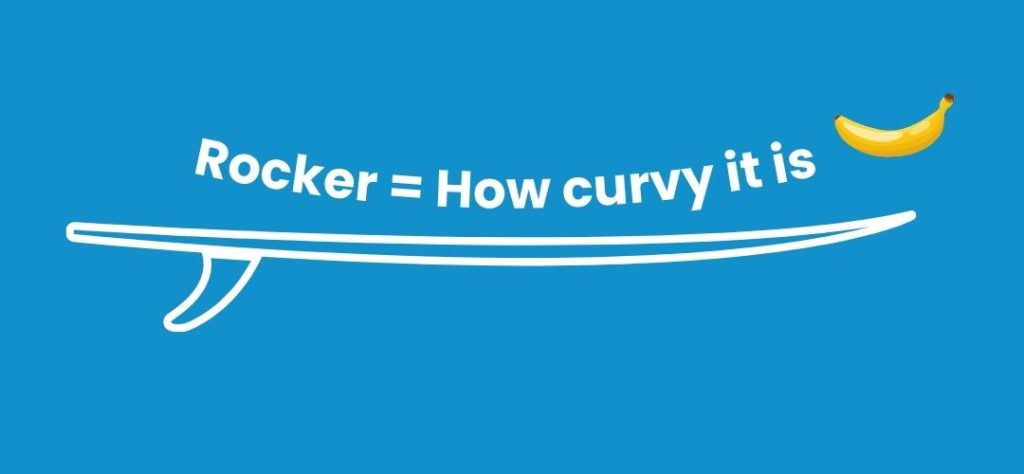
- Flat Rocker: Boards with a flatter rocker (less curve) tend to generate more speed because they glide more easily over the water. They are ideal for small to medium waves, where speed generation is crucial due to the lack of natural power in the waves. Boards with a flat rocker also tend to paddle faster and allow surfers to catch waves earlier.
- Specifications: A typical flat rocker board will have a nose lift of around 2.5″ to 3″, with the tail lift slightly less.
- Curved (High) Rocker: Boards with more curve, or a higher rocker, are built for steeper, more critical waves. The extra curve helps the board turn quickly and prevents the nose from “pearling” (digging into the water) when dropping into steep waves. However, boards with a high rocker are slower on flat sections of a wave and require more effort to paddle.
- Specifications: A high rocker board will generally have a nose lift of around 4″ to 6″, making it ideal for sharp, vertical drops in bigger surf.
Tail Shape
The tail shape of a surfboard affects how the board handles turns and how it performs in different wave conditions. Different tail shapes provide varying degrees of speed, control, and stability.
- Square Tail: A square tail is wider, which increases the surface area of the board, offering greater lift and speed in smaller waves. The sharp corners of the square tail also allow for quick, sharp turns. It’s a versatile tail shape that works well in a variety of conditions but excels in smaller, weaker waves where extra speed is needed.
- Rounded Tail: Rounded tails provide smoother turns and better control in larger, more powerful waves. The rounded shape creates more hold in the water, offering stability and control, especially in steeper wave faces. This makes it a popular choice for boards designed for medium to large waves.
- Pintail: The pintail is the narrowest tail design, ideal for maintaining control in big waves. The reduced surface area of the tail allows the board to “bite” into the wave, offering excellent stability and grip on steep, fast-breaking waves. Pintails are typically used on big wave boards like guns, where control is essential.
- Swallow Tail: Commonly found on fish boards, the swallow tail design combines the turning ability of a pintail with the added surface area of a square tail. This design allows for quick, responsive turns while maintaining speed in smaller, mushier waves. It’s a great choice for intermediate surfers looking to ride smaller waves with added manoeuvrability.
Rails
The rails of a surfboard—the edges that run along the sides—impact how the board handles in terms of turning and overall control. Rails can vary from soft (rounded) to hard (sharp), each offering distinct performance characteristics.
- Soft Rails: These rounded rails are more forgiving and make the board easier to control, especially for beginners or surfers riding in smaller waves. Soft rails provide more hold on the wave and are great for smooth, drawn-out turns, making them ideal for longboards and funboards.
- Hard Rails: Hard, sharp rails are designed for high-performance surfing, offering quick, responsive turns. They allow the board to release water quickly, which increases speed and manoeuvrability. Hard rails are commonly found on shortboards, where precision and responsiveness are critical for riding steeper, faster waves.
- 50/50 Rails vs. 60/40 Rails: A 50/50 rail has equal curvature on both the top and bottom, offering maximum hold and stability, often found on longboards. A 60/40 rail has a slightly sharper bottom edge, providing more responsiveness while still offering good control, often found on hybrid boards and funboards.
Fins
The fin setup on your surfboard can significantly influence how the board handles in different conditions. Fins provide stability and control, helping the board grip the wave and aiding in turning and manoeuvring. There are several common fin setups to consider:
- Single Fin: This classic design is typically found on longboards. A single fin offers a smooth, flowing ride, providing stability and control. It’s great for surfers who prefer a more relaxed, cruising style, particularly on small to medium waves. However, single fins don’t offer the same level of manoeuvrability or responsiveness as multi-fin setups.
- Twin Fin: Twin fins provide more speed and a looser feel than single fins. This setup allows the board to skate more freely across the water, making it easier to perform quick turns. Twin fins are common on fish boards, where speed and manoeuvrability in smaller waves are prioritised.
- Thruster (Three-Fin Setup): The thruster setup is the most versatile and popular configuration found on modern shortboards. It offers a balance of stability, control, and manoeuvrability. The two side fins provide drive and speed, while the centre fin offers stability and control, making this setup ideal for a variety of wave conditions, from small to overhead surf.
- Quad Fin: A quad fin setup provides extra speed and stability, especially in smaller, mushy waves. By eliminating the centre fin, quad setups reduce drag, making the board faster in down-the-line surfing. Quads also offer more hold and control in steeper sections of the wave. They’re often used in fish boards or by surfers looking for more drive and speed in small to medium surf.
- Five Fin (Removable Fin System): Some boards are equipped with a five-fin box system, allowing surfers to switch between different fin setups depending on the conditions. This versatility enables the surfer to customise their ride, switching from a thruster setup for more control to a quad setup for added speed in smaller waves.
Benefits of Removable Fin Systems
Modern surfboards often feature removable fin systems, such as the FCS (Fin Control System) or Future Fins, which allow surfers to swap out fins based on wave conditions and personal preferences. These systems provide the flexibility to adjust your fin setup depending on whether you want more speed, control, or looseness.
- Customisation: Removable fin systems allow you to experiment with different fin configurations without committing to one specific setup. This is especially useful if you surf a variety of wave types or want to adapt your board to changing conditions.
- Replacement and Maintenance: If a fin breaks or gets damaged, removable systems make it easy to replace the fin without having to repair the entire board. This also extends the life of your board by allowing quick, cost-effective repairs.
7. Surfboard Maintenance and Care
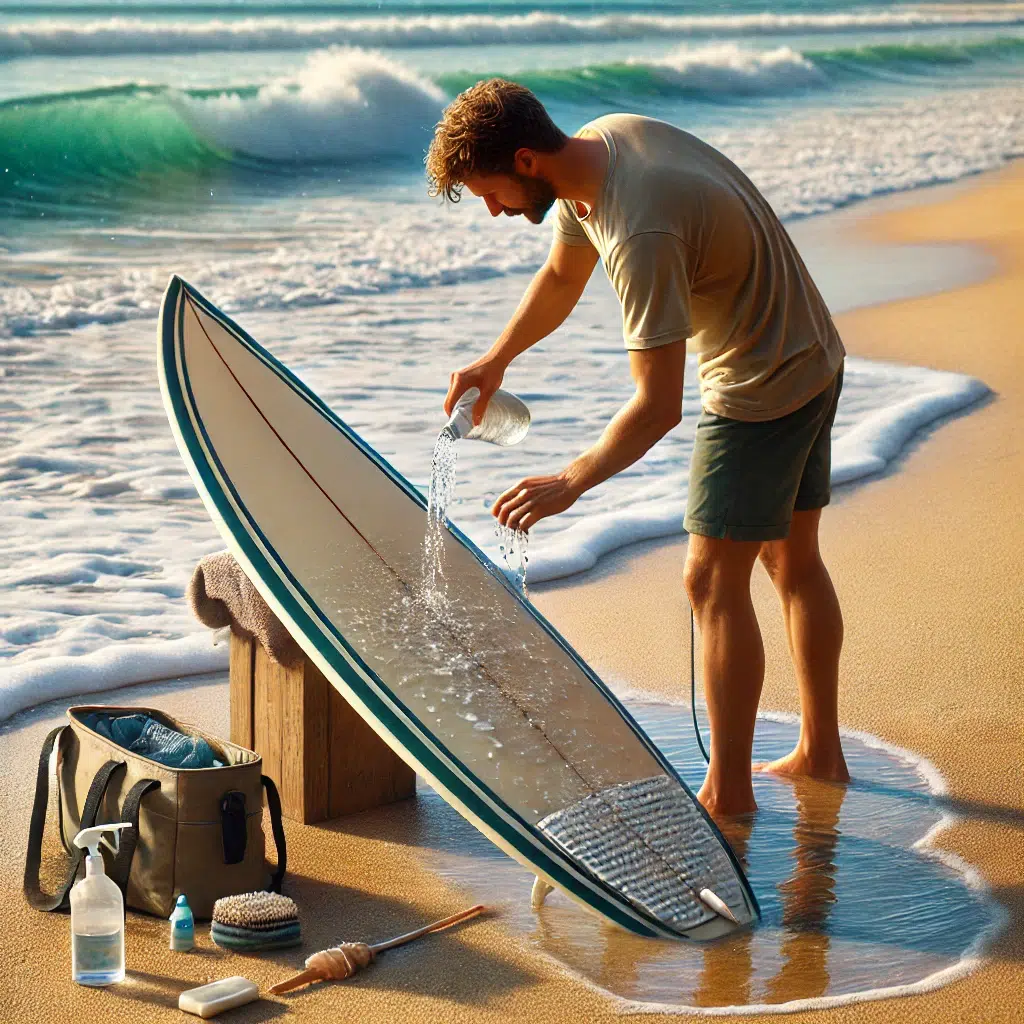
Taking care of your surfboard is essential for ensuring its longevity and performance. Whether you have a foam, epoxy, or fibreglass board, regular maintenance will keep it in good condition and help you avoid costly repairs down the line.
Keeping Your Board in Good Condition
- Cleaning: After each surf session, it’s important to rinse your board with fresh water to remove any salt, sand, or debris. Saltwater can corrode and weaken your board over time, particularly if you have metal components like fin screws. Use a soft cloth or sponge to wipe down the surface and ensure all grit is removed.
- Avoiding Sun Damage: Prolonged exposure to the sun can damage your board’s surface and weaken its structure. UV rays can cause the foam inside to degrade and the fibreglass to yellow. To prevent this, store your board in a shady area or use a surfboard bag with UV protection. When at the beach, avoid leaving your board in direct sunlight for long periods.
- Proper Storage: Store your board in a cool, dry place away from extreme temperatures. Storing a board in a hot car or under intense sunlight can cause delamination, where the outer layer separates from the foam core. If possible, store your board vertically in a padded rack, or horizontally with padding underneath to prevent pressure dings.
Surfboard Repairs
Even with the best care, surfboards are prone to dings and scratches. Knowing how to handle minor damage can save your board and keep it in good working condition.
- Foam Boards: Foam boards are highly durable and less prone to damage, but if you notice any major dings or cuts, you can use a waterproof adhesive or surfboard repair tape to cover the damage. For deeper cuts, consult a professional for repair.
- Epoxy Boards: Epoxy boards are more resistant to dings than fibreglass, but if you do get a ding, it’s important to use an epoxy-specific repair kit. Clean the damaged area, sand it lightly, and apply the epoxy resin to fill in the ding. Let it cure according to the instructions before sanding it down smooth.
- Fibreglass Boards: Fibreglass boards are prone to dings and cracks, especially on the rails or tail. For small dings, use a polyester resin repair kit. Clean the area thoroughly, apply resin, and allow it to cure before sanding. For more severe damage, such as cracks or delamination, it’s best to take your board to a professional for repair.
Transporting Your Board Safely
Protecting your surfboard during transport is crucial, whether you’re driving to the beach or travelling long distances.
- On the Roof of a Car: Use proper surfboard roof racks with soft padding to prevent pressure dings. Secure the board with strong straps, ensuring it’s nose-up and tail-down to reduce wind resistance. Don’t overtighten the straps, as this can cause pressure dents.
- In a Surfboard Bag: Invest in a well-padded surfboard bag to protect your board during transport. Make sure the bag has extra padding around the nose and tail, which are the most vulnerable parts of the board. For long trips or air travel, consider a board bag with wheels and extra foam protection.
- Air Travel: When flying with your surfboard, pack it with extra padding, including bubble wrap or foam, to protect it from handling during transit. Use soft towels or wetsuits to wrap around the rails and tail. Check airline policies for board fees and dimension limits before travelling.

8. Budget Considerations: New vs. Used SurfBoards
When choosing a surfboard, your budget plays a major role in the decision-making process. Understanding the pros and cons of buying new versus used boards can help you make the best choice for your needs and wallet.
Buying New Surfboards
- Pros:
- Customised Options: When you buy a new board, you have the option to customise the design, shape, and materials to suit your specific surfing style and preferences. Custom surfboards can be tailored to your exact height, weight, and skill level.
- Longer Lifespan: A brand-new surfboard, with proper care, will last longer than a used one. You can be confident that the materials are fresh and free from wear, so your board will perform at its best.
- Latest Technology: New surfboards often incorporate the latest design innovations and materials, such as eco-friendly construction or advanced carbon fibre technology. These improvements can enhance performance and durability.
- Cons:
- Higher Cost: New surfboards can be expensive, especially if you’re looking for custom-made or high-performance boards. The cost may be overkill for beginners who are just getting started and might not yet need all the extra features.
- Overkill for Beginners: If you’re a beginner, you don’t necessarily need the latest technology or custom specs. A basic, reliable board is often sufficient, and spending more on advanced features might not significantly improve your learning experience.
Buying Used Surfboards
- Pros:
- Cost-Effective: Buying a used surfboard is much more affordable than buying new. For beginners, this is a great way to get into surfing without breaking the bank. You can often find good deals on quality boards that have seen limited use.
- Great for Beginners or a Second Board: A used board is perfect for those still learning or for more advanced surfers looking to expand their quiver without spending a lot. You can experiment with different shapes and styles without the financial commitment of a brand-new board.
- Cons:
- Wear and Tear: Used boards may have dings, scratches, or repairs, which can affect their performance and longevity. Always inspect a used board carefully to ensure there are no major structural issues.
- Limited Choices: When buying used, your options are limited to what’s available in the market. You may not find the exact size, shape, or design you want, and compromises may need to be made.
Where to Buy Used Boards
If you decide to go for a used surfboard, it’s important to know where to look and how to assess the quality of the board.
- Surf Shops: Many surf shops offer a selection of used boards that have been inspected and repaired if necessary. Buying from a reputable shop ensures that you’re getting a board in good condition, and you can often get advice from experienced staff.
- Online Marketplaces: Websites like Craigslist, eBay, and Facebook Marketplace are good places to find used boards. However, it’s important to inspect the board in person before purchasing. Look for any signs of water damage, delamination, or poorly repaired dings.
- Local Surf Communities: Many local surf communities and clubs have swap meets or board sales, where surfers can buy and trade used boards. This is a great way to find deals and chat with other surfers about the board’s history and performance.
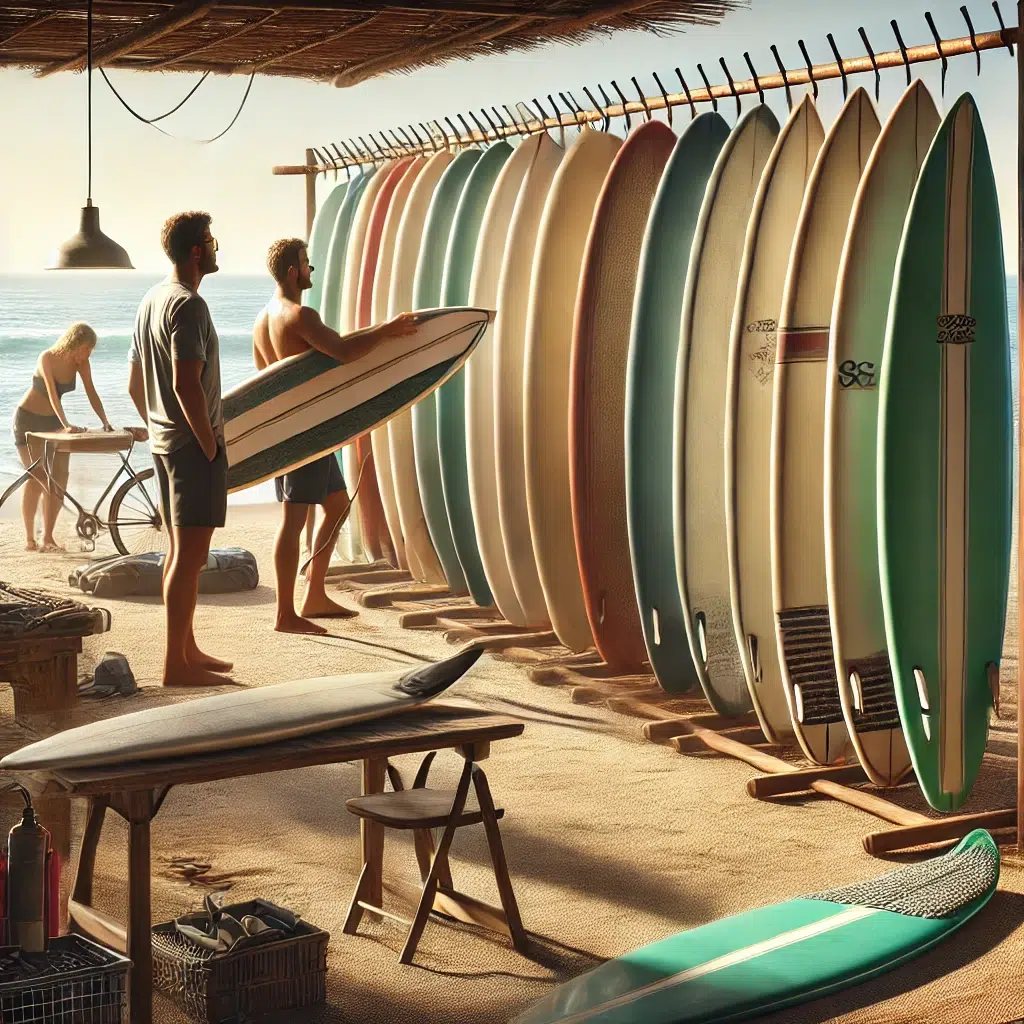
9. Test-Riding Boards: Why It’s Important
Before committing to a new surfboard, whether it’s your first board or an upgrade, test-riding is one of the best ways to ensure you’re making the right choice. Renting or borrowing a board to try it out on the waves allows you to feel how it performs, assess its comfort level, and determine if it suits your surfing style and goals.
Benefits of Renting or Test-Riding a Board Before Buying
- Understanding Performance: Surfboards can feel very different depending on their shape, size, and construction. Test-riding a board helps you experience its performance firsthand, allowing you to feel how it paddles, how easy it is to catch waves, and how it turns on the face of the wave.
- Saving Money: Test-riding can prevent you from spending a lot of money on a board that might not be right for you. Renting a board gives you the chance to try various shapes and sizes before committing to a purchase.
- Assessing Conditions: Waves vary from day to day, and trying a board in different conditions can give you a better idea of how versatile it is. You can determine if it handles well in both small, mushy waves and larger, more powerful surf.
- Building Confidence: When you find a board that feels right, it boosts your confidence in the water. Test-riding multiple boards will help you understand what design features work best for your ability and style, making your final choice more informed.
How to Assess Whether a Board Feels Right for Your Style and Skill Level
- Paddling: Pay attention to how the board paddles. Is it easy to paddle out through the waves, or does it feel sluggish? A board that paddles well should glide smoothly and help you catch waves earlier.
- Stability: For beginners, stability is key. Test how stable the board feels when you’re paddling and trying to stand up. If the board feels wobbly, it may be too advanced for your current skill level.
- Turning and Control: Intermediate and advanced surfers should focus on how the board handles turns. Is it responsive enough for quick changes in direction? Does it hold its line when you’re carving through a wave? Boards with more rocker and sharper rails typically turn more easily.
- Wave Catching: Pay attention to how easy it is to catch waves on the board. A board that is too small or lacks enough volume for your body type may struggle to catch waves, whereas a board that’s too big may feel cumbersome.
- Overall Feel: Ultimately, it’s about comfort and confidence. If the board feels natural under your feet and responds well to your movements, it’s likely a good match for your surfing style.
10. Final Thoughts: Making the Best Choice for Your Surfing Journey
Choosing the right surfboard is a journey in itself, and the perfect board will depend on your skill level, wave type, and personal goals. If you’re a beginner looking for a stable, forgiving board or an experienced surfer seeking high-performance gear, matching the board to your needs is essential for progression and enjoyment.
Recap the Key Factors in Choosing the Right Surfboard
- Skill Level: Beginners should prioritise stability, paddle power, and ease of catching waves. Longboards, soft tops, and funboards are great starting options. Intermediate surfers can transition to more manoeuvrable boards like fish or hybrid designs, while advanced surfers should focus on performance-oriented boards like shortboards or guns for big waves.
- Wave Type: Consider the type of waves you’ll be surfing most often. Larger boards with a flatter rocker excel in small, slow waves, while boards with more curve and narrow tails are better suited for steeper, more powerful waves.
- Surfboard Materials: The construction of your board affects its durability and performance. Foam boards are great for beginners due to their safety and buoyancy, while epoxy and fibreglass boards offer better performance for intermediate and advanced surfers.
- Shape and Design Features: Pay attention to the rocker, tail shape, rails, and fins of your surfboard. Each design feature plays a role in how the board performs in different conditions, from speed and manoeuvrability to stability and control.
- Test-Riding: Whenever possible, test-ride a board before buying. Feeling how a board handles on the water will help you make a more informed choice and ensure it matches your style and skill level.
Progress with the Right Gear
Investing in the right surfboard isn’t just about riding waves – it’s about progressing as a surfer. The right board can help you catch more waves, develop better technique, and increase your confidence in the water. As you grow in skill, your needs will change, and having a board that matches your development will keep your journey exciting and rewarding.
Remember, surfing is a personal experience, and the “right” board is the one that feels good under your feet. If you’re just starting out or pushing your limits in advanced surf, make sure your board complements your surfing style, the conditions you face, and the goals you’ve set for your journey on the waves. Enjoy the ride!
Read Next: 8 Best Electric Surfboards – So, Where Is the Best Surfing in the UK? – Can You Surf on a Paddleboard? Yes. But is it Easy? – 15 Of The Best Surfing Locations in the World – The Science of Surfing: Dom Moore’s Ocean Confidence Framework – Best Christmas Gifts for Surfers this Year
Check out adventuro Surfing for the latest Surfing Courses, Lessons and Activities near you!