
The Ultimate Beginner’s Guide to Surfing Safely
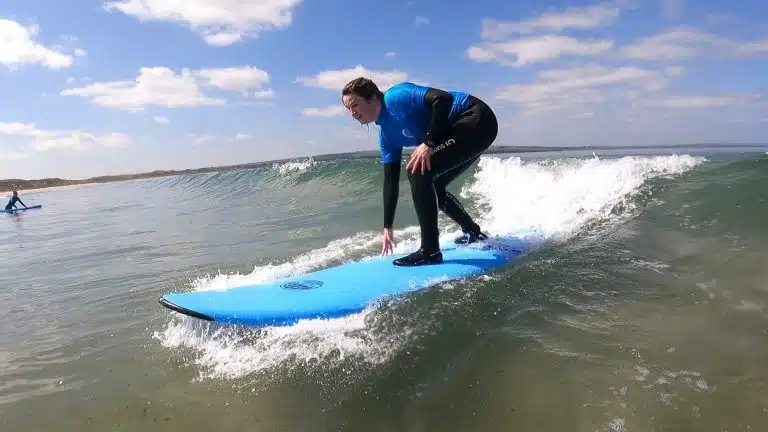
Surfing is one of the most thrilling sports you can try. The feeling of catching your first wave and gliding across the water is like nothing else. But while surfing is an incredible experience, it comes with its challenges, especially for beginners. Understanding how to handle the ocean, the equipment, and your own abilities is crucial for staying safe and building confidence in the water.
As a beginner, you’re not just learning to balance on a board; you’re also learning how to read waves, understand currents, and navigate an environment that’s constantly moving. The ocean can be unpredictable. It’s easy to feel out of your depth if you’re not properly prepared.
At adventuro, we know how important it is to have the right guidance when starting out. That’s why we offer hundreds of surfing lessons and equipment hire options across the UK, all led by experienced instructors who understand the needs of beginners. Whether you’re stepping onto a board for the first time or looking to improve your skills, we’ve got you covered with expert advice and a safe, supportive environment to learn.
Top Tip: Something I wish someone taught me while I was learning is, don’t push to advance in too many areas at once, i.e. equipment, breaks, wave strength. It is better to nail techniques on smaller waves than move to bigger more powerful waves to soon. You get more time up on the board, more successful catching of waves and more fun. Too many big wipeouts or sessions without many successful waves can knock your confidence. Go slow to go fast.
1) Understand Ocean Conditions
Before heading into the water, it’s crucial to understand the environment you’re stepping into. The ocean is dynamic, and learning how to assess its conditions is one of the most important safety measures you can take.
Surf Reports
When reviewing a surf report, you want to focus on a few key factors to help you decide if conditions are suitable for your skill level. Here’s what to look for and how to interpret the information:
- Wave Height
- Look for waves in the range of 1–3 feet for beginners. Smaller waves are more forgiving, giving you the chance to focus on your technique without being overwhelmed.
- Anything above 4 feet can be challenging for a first-timer and may make it difficult to paddle out or safely catch a wave. With a ‘foamie’ board, you do not need much wave power to get going.
- Swell Direction
- Swell direction indicates where the waves are coming from. Each beach responds differently to swells based on its orientation.
- Beginners should look for reports that mention a “favourable swell direction” for the beach they’re visiting. You can ask local surf instructors or use apps that suggest the best conditions for specific spots.
- Wind Speed and Direction
- Calm winds or “offshore winds” (blowing from land to sea) are ideal as they help to create clean, well-shaped waves.
- Avoid surfing when there are strong “onshore winds” (blowing from sea to land), as they create messy, choppy conditions that make it hard to catch waves. Wind speeds below 10 knots are best for beginners.
- Tide Times
- Many beginner-friendly beaches work best at mid or high tide because the waves break further from shore, making them easier to ride.
- Check tide charts to see when the tide will be at its peak during your planned session. Low tide can expose hazards like rocks or shallow sandbanks, which are best avoided when you’re still learning.
- Wave Period
- This measures the time between waves and is typically shown in seconds. A longer wave period (10 seconds or more) usually means more powerful, well-spaced waves. Beginners should aim for shorter wave periods (around 6–10 seconds) as the waves will have less power and be more manageable.
Learning About Tides and Currents
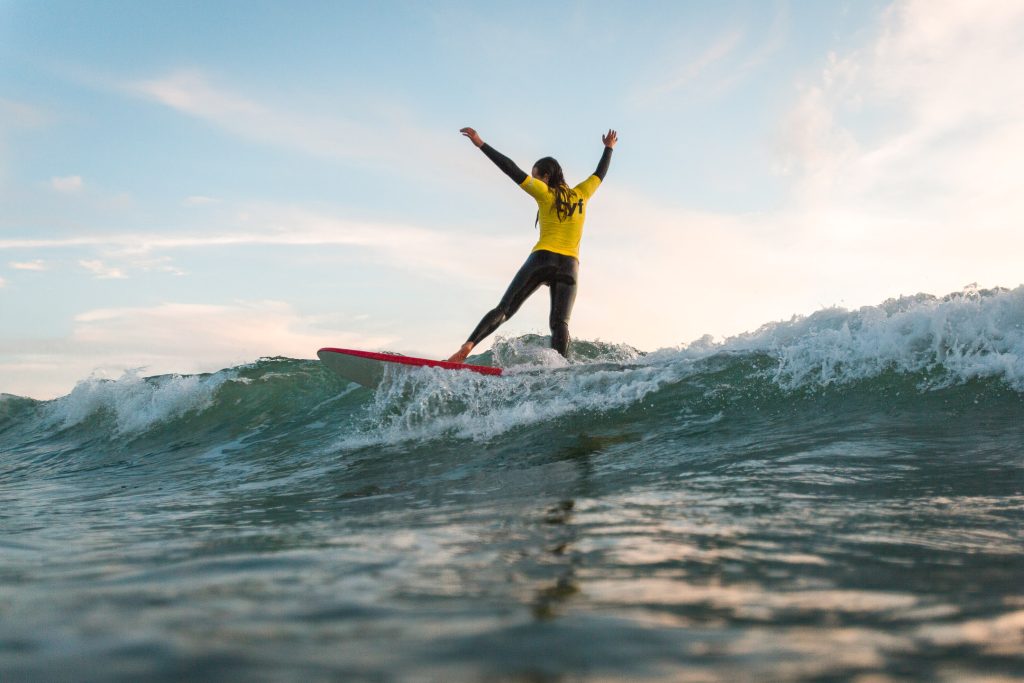
Tides and currents play a huge role in surfing conditions and safety. Here’s a closer look at what to watch for and advice tailored to popular beginner surf spots in the UK.
Tides: What to Look For
- Low Tide:
- During low tide, the water retreats, exposing hazards such as rocks, reefs, or uneven seabeds. Waves tend to break closer to shore and can be faster and harder to manage.
- Tip: Check if the beach you’re visiting has rocky areas or exposed reefs at low tide. Many beginner spots are sandy-bottomed, but hazards can still appear as the tide goes out.
- High Tide:
- At high tide, the water moves further up the beach, reducing the likelihood of exposed hazards. Waves tend to be gentler and break further out, making them easier to catch.
- Tip: Surfing an hour or two after high tide (as the tide starts to recede) is often ideal for beginners, as the waves are consistent but not too powerful.
- Mid Tide:
- Mid tide often offers a balance between high and low tide conditions. Many beginner-friendly beaches perform best at mid-tide when the waves are manageable and the water depth is forgiving.
- Tip: Before heading out, research the “best tide” for your chosen location, as this can vary by beach.
Currents: What to Watch For
- Rip Currents:
- Rips are fast-moving channels of water that flow back out to sea. These can pull surfers out of their depth quickly.
- How to Spot a Rip: Look for areas where the water appears darker, foam flows out to sea, or waves break unevenly. If unsure, ask a lifeguard for guidance.
- If you get caught in a rip, do not paddle against it as you will tire, paddle perpendicular to the current until you are out of the current before making your way back to shore.
- Longshore Currents:
- These run parallel to the shore and can push you away from your starting point. They are usually created by wave angles and tides.
- Tip: Use landmarks on the beach (like a flag or building) to track whether you’re drifting, and paddle back to your starting point if necessary. Get out of the water well before you drift into a spot where getting out will be difficult, e.g. rocks or cliffs as paddling back against the current can be very difficult.
Beginner Spot Advice in the UK
- Croyde Bay, Devon
- Tides: Best at mid or high tide. Low tide can expose rocks at the south end of the beach.
- Currents: Rip currents form at either end of the bay, so stick to the middle where lifeguards often patrol.
- Fistral Beach, Cornwall
- Tides: Great for beginners at high tide with consistent, small waves. Avoid low tide when stronger waves can form.
- Currents: Look out for rips near the rocks on either side of the beach. The central zone is safest.
- Porthcawl, South Wales (Rest Bay)
- Tides: Best surf is at mid to high tide. Low tide can expose rocks near the shore.
- Currents: Some strong rip currents can form, so beginners should stay close to lifeguarded areas.
- Scarborough (South Bay), Yorkshire
- Tides: Works well on a rising tide. Low tide can reveal rocks, but there’s plenty of sandy beach to keep beginners safe.
- Currents: Relatively mild currents, but always ask for advice from local surf schools.
- Bournemouth, Dorset
- Tides: High tide produces the most beginner-friendly waves. Low tide is less consistent.
- Currents: Gentle currents make this one of the safest spots for first-timers, but always remain aware of your surroundings.
Practical Tips for Tides and Currents
- Always research the specific beach you’re visiting. Many surf schools provide tide and hazard guides for their locations.
- Stick to lifeguarded areas, where zones are marked, and lifeguards can provide real-time advice on conditions.
- Watch the water for 10–15 minutes before entering to spot hazards like rips, uneven breaks, or strong currents.
2) Choose the Right Equipment
Beginners benefit most from gear that’s easy to handle, forgiving, and suited to their skill level.
Use a Beginner-Friendly Surfboard
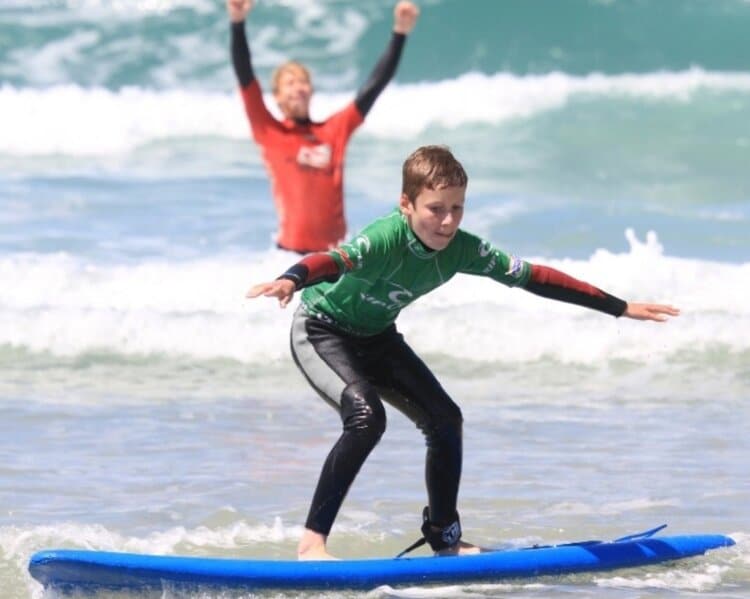
- Soft-Top Boards aka “foamies”: These are the go-to boards for first-timers. Made with a foam top, they are safer during falls and provide extra buoyancy, making paddling and standing up much easier.
- Size Matters: Choose a longer board (7–9 feet) for stability. Larger boards give you more time to balance and are better for catching smaller, slower waves.
- Tip: Rent or buy a beginner surfboard at a local surf school or hire centre. Many places will provide boards tailored to the conditions of the beach.
Select the Right Leash
- Why It’s Important: Your leash keeps the board tethered to you, preventing it from becoming a hazard to others or being carried away by waves.
- Choosing a Leash: Ensure the leash is the correct length for your board—typically the same length or slightly shorter.
- Attaching It Properly: Secure the leash around your back ankle (your dominant foot) with the Velcro strap snug but not too tight.
Wear a Wetsuit or Rash Guard
- Protection and Comfort: A wetsuit keeps you warm in cooler waters, reducing fatigue and keeping you comfortable during long sessions. In warmer conditions, a rash guard helps prevent sunburn and irritation from the board.
- What to Look For: Beginners should opt for a wetsuit with a thickness of 3/2mm for summer or 5/4mm for colder months in the UK. Ensure a snug fit to maximise insulation without restricting movement.
Start at Beginner-Friendly Beaches
The location you choose for your first surf can make all the difference. A beginner-friendly beach will provide safer and easier conditions, helping you focus on learning the basics.
What to Look For in a Beginner Beach
- Smaller, Consistent Waves: Gentle, rolling waves (1–3 feet) are ideal for first-timers. These waves give you time to practice paddling and standing without being overwhelming.
- Sandy Bottoms: A sandy seabed is much safer for falls than rocky or reef-bottomed beaches. Look for beaches known for their soft, forgiving conditions.
- Lifeguard Presence: Beaches with lifeguards are strongly recommended for beginners. Lifeguards can provide guidance on conditions and are there to help in emergencies.
Avoid Crowded Surf Spots
- Crowded beaches, especially those with advanced surfers, can be intimidating and increase the risk of collisions.
- Look for quieter areas or specific beginner zones where you can focus on learning without pressure. Many beginner beaches have designated surf schools or less busy sections that are perfect for newcomers.
Beginner-Friendly Beaches in the UK
- Polzeath Beach, Cornwall: Gentle waves and a sandy bottom make this a popular choice for beginners. Lifeguards patrol the area, and several surf schools are nearby.
- Caswell Bay, Swansea: A sheltered beach with consistent, beginner-friendly waves and lifeguard cover during peak seasons.
- Saunton Sands, Devon: Known for its long, rolling waves and sandy seabed, this is an excellent spot for practising the basics.
- Cromer, Norfolk: A quieter option with manageable waves and a sandy beach, ideal for first-time surfers looking for a more relaxed environment.
Learn the Basics on Land First
Before you hit the water, it’s a good idea to practise some key techniques on land. Getting familiar with these basics will make your time in the ocean smoother and safer.
Practise Pop-Up Techniques
- The Pop-Up: This is the motion of going from lying on your board to standing up. Practise it on the sand to build muscle memory.
- How to Practise:
- Lie flat on the sand as if you’re paddling on your surfboard.
- Place your hands flat near your chest, like a push-up position.
- In one fluid motion, push up with your arms and slide your front foot forward while your back foot follows.
- Land in a balanced stance with knees bent, feet shoulder-width apart, and your body facing sideways.
- Tip: Repeat this move several times until it feels natural. Doing so on the beach will help you stay calm and confident when you try it on a moving wave.
Understand Basic Surfing Etiquette
Surfing has an unspoken set of rules designed to keep everyone safe and avoid conflicts in the water.
- Right of Way: The surfer closest to the peak of the wave (where it breaks) has the priority. Never drop in on someone else’s wave. When riding whitewater waves, just ensure that that no one is using the wave in your section.
- Paddle Wide: When paddling out, avoid the line where surfers are riding waves. Paddle around the break to minimise collisions.
- Control Your Board: If you wipe out, keep hold of your board if possible to prevent it from hitting others.
- Be Respectful: Share waves and avoid overcrowding areas, especially those marked for beginners.
Know Your Limits
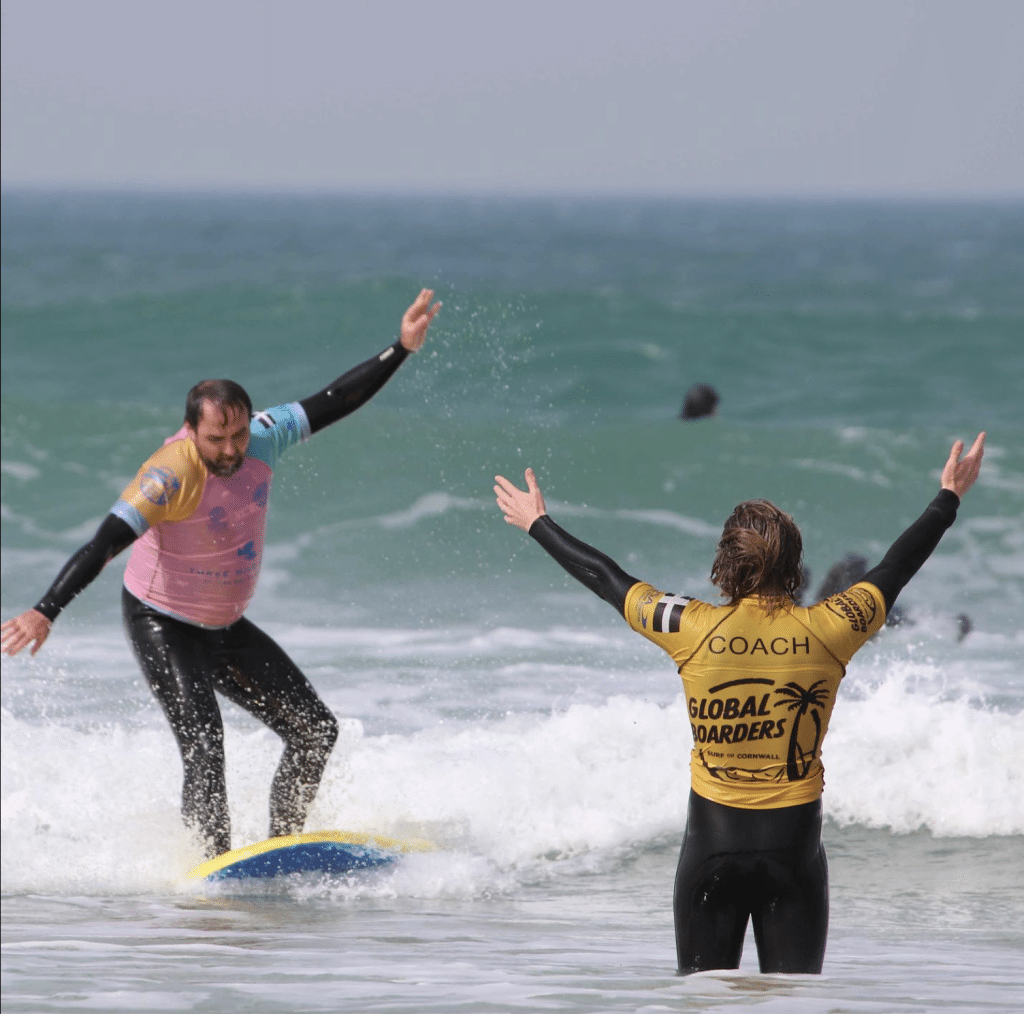
Surfing can be physically demanding, especially when you’re learning. Being aware of your abilities and knowing when to take a break can prevent accidents and keep you safe.
Recognise Your Fitness Level and Experience
- Surfing requires strength, endurance, and coordination. If you’re new to the sport or haven’t been active recently, take it slow and build up gradually.
- Start with shorter sessions (30–60 minutes) and increase your time in the water as you gain fitness and confidence.
Manage Fatigue
- Take Breaks: Paddling can be exhausting, so rest on the beach or sit on your board between waves to conserve energy.
- Stay Hydrated: Bring water to the beach and drink regularly to stay energised and alert.
Stay Within Safe Zones
- Stick to the designated beginner area or lifeguard-patrolled zones. These areas typically have gentler waves and fewer hazards.
- Avoid venturing too far out or into deeper water until you feel confident in your paddling and swimming abilities.
Stay Aware of Your Surroundings
Being aware of what’s happening around you is crucial for your safety and the safety of others in the water.
Keep an Eye on Other Surfers and Swimmers
- Watch the line-up (the group of surfers waiting for waves) to avoid accidentally cutting someone off or colliding.
- Be mindful of swimmers and other beachgoers, particularly in shared zones.
Be Mindful of Your Board
- Your surfboard can cause injury to yourself or others if it’s not controlled.
- Hold onto it tightly when paddling or falling to prevent it from hitting someone.
- Avoid letting it drift away if you wipe out.
- When walking with your board, carry it under your arm with the nose pointing forward to avoid hitting anyone nearby.
Common Mistakes to Avoid
Even with preparation, beginners often make some common mistakes that can affect their progress or safety. Being aware of these pitfalls will help you avoid unnecessary frustration and make the most of your surfing experience.
1. Paddling Out Too Far or Attempting Waves Beyond Your Skill Level
- It’s tempting to paddle out where experienced surfers are catching bigger waves, but these areas are not suitable for beginners. Larger waves are harder to manage, and the deeper water can quickly exhaust you.
- Tip: Stay close to the shore and focus on smaller, rolling waves until you build confidence and control.
2. Ignoring Surf Etiquette
- Disrupting other surfers by “dropping in” (taking someone else’s wave) or paddling through the line-up can lead to accidents and frustration.
- Tip: Learn the basics of surf etiquette before heading out and always be respectful of others in the water.
3. Failing to Warm Up or Overstaying in the Water
- Surfing is physically demanding, and jumping in without a proper warm-up can lead to stiffness, cramps, or injury. Similarly, staying in the water too long can lead to fatigue, making it harder to stay safe.
- Tip: Spend 5–10 minutes stretching and warming up before paddling out. Keep your sessions manageable—60–90 minutes is plenty for beginners.
When to Seek Help
Getting professional guidance is one of the best ways to start surfing safely and successfully. Knowing when to seek advice or assistance can also make your experience far more enjoyable.
1. Take Lessons from Professional Instructors
- Surf lessons are invaluable for beginners, providing a structured and safe introduction to the sport. Instructors can teach you the fundamentals of paddling, popping up, and reading waves.
- Tip: Book lessons with a certified surf school that has a strong reputation for working with beginners.
2. How to Choose a Reputable Surf School
- Look for schools that are accredited by organisations like Surfing England or the International Surfing Association (ISA).
- Check reviews online and ensure the school employs qualified, experienced instructors.
- Find a provider that caters specifically to beginners and offers a safe learning environment with soft-top boards and small group sizes.
3. Ask Lifeguards for Advice
- Lifeguards are a valuable resource when surfing at a new location. They can provide insights on tides, currents, and hazards, and they’re there to help in emergencies.
- Tip: Before entering the water, have a quick chat with the lifeguards about the day’s conditions and the safest areas to surf.
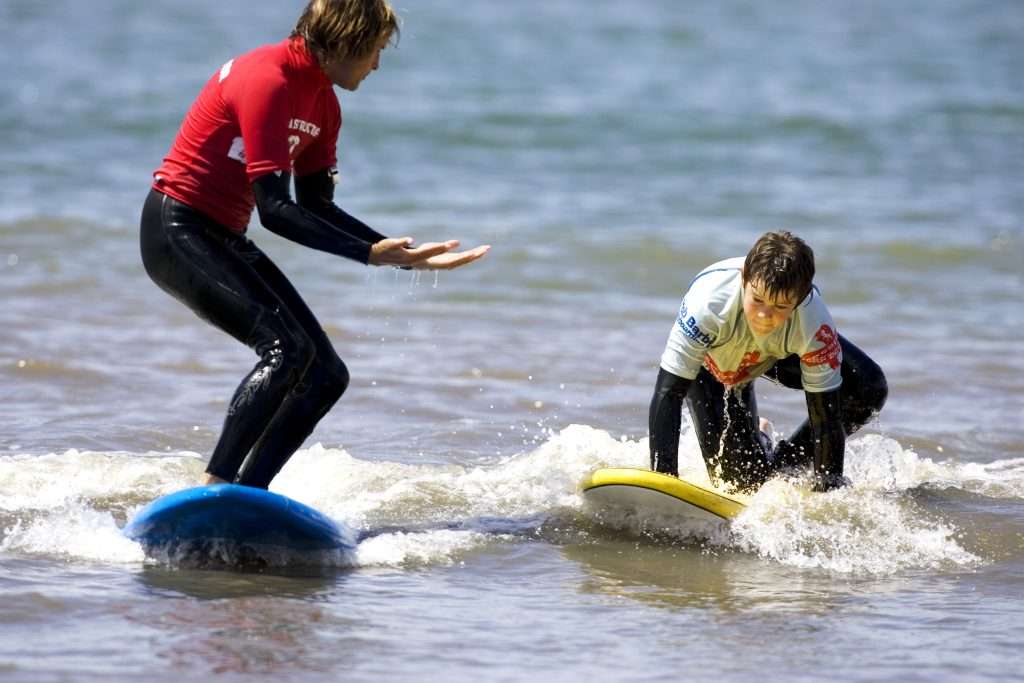
Why Choose adventuro for Surfing?
At adventuro, we make it easy to start your surfing journey with confidence. Whether you’re stepping onto a board for the first time or looking to refine your skills, we have everything you need for a safe and enjoyable experience.
Access to Hundreds of Beginner-Friendly Lessons
- adventuro connects you with expert surf schools and hire providers across the UK.
- From short taster sessions to multi-day courses, you’ll find options tailored to every schedule and budget.
Experienced Instructors and Well-Organised Sessions
- All lessons are led by skilled instructors who specialise in working with beginners.
- Sessions are carefully planned to provide step-by-step guidance, ensuring you feel supported at every stage of your learning journey.
Locations Across the UK
- With surf schools and hire centres located at some of the UK’s best beginner-friendly beaches, adventuro offers unmatched convenience.
- Whether you’re heading to Newquay in Cornwall, Saunton Sands in Devon, or Rest Bay in Wales, we’ve got you covered with tailored options that prioritise safety and fun.
By avoiding common mistakes, knowing when to seek help, and choosing the right provider, you can ensure your first surfing experience is safe, enjoyable, and memorable. Start your journey with adventuro.