
The History of the Pontcysyllte Aqueduct
The Pontcysyllte Aqueduct is one of those rare places where engineering brilliance and natural beauty meet. Rising high above the River Dee in North Wales, it has been nicknamed the “stream in the sky” since it opened in 1805. Today it’s both a working waterway and a UNESCO World Heritage Site, drawing visitors from across the world who want to walk across its dizzying heights or drift across by boat. But thanks to platforms like adventuro, you can now experience the aqueduct in a completely different way—by kayak or canoe.
Did you know?
More than 200,000 people visit the aqueduct each year, making it one of the most popular heritage attractions in Wales.
The aqueduct was designed by Thomas Telford and William Jessop as part of the Llangollen Canal, which linked the industrial Midlands to the quarries and ironworks of North Wales. At 307 metres long and 38 metres high, it was the tallest and longest aqueduct in Britain at the time. Its cast-iron trough was a revolutionary design, using molten iron plates sealed with Welsh flannel and lead to make the channel watertight. The structure was so ambitious that locals doubted it would ever hold water. More than two centuries later, it’s still in daily use, carrying narrowboats serenely across the Dee Valley.
Did you know?
UNESCO gave the aqueduct World Heritage status in 2009, ranking it alongside the Great Wall of China and Machu Picchu.
The aqueduct has always been more than an industrial shortcut. By the late 19th century, when Britain’s canals were eclipsed by railways, the Llangollen stretch became a place for leisure boating and scenic walks. Its survival is as much down to its beauty as its utility—without the steady flow of tourists, it might have fallen into disrepair. UNESCO recognised its global significance in 2009, putting it on a par with the Taj Mahal and Great Wall of China.
Did you know?
The Pontcysyllte Aqueduct carries about 1.5 million litres of water across the River Dee every single day.
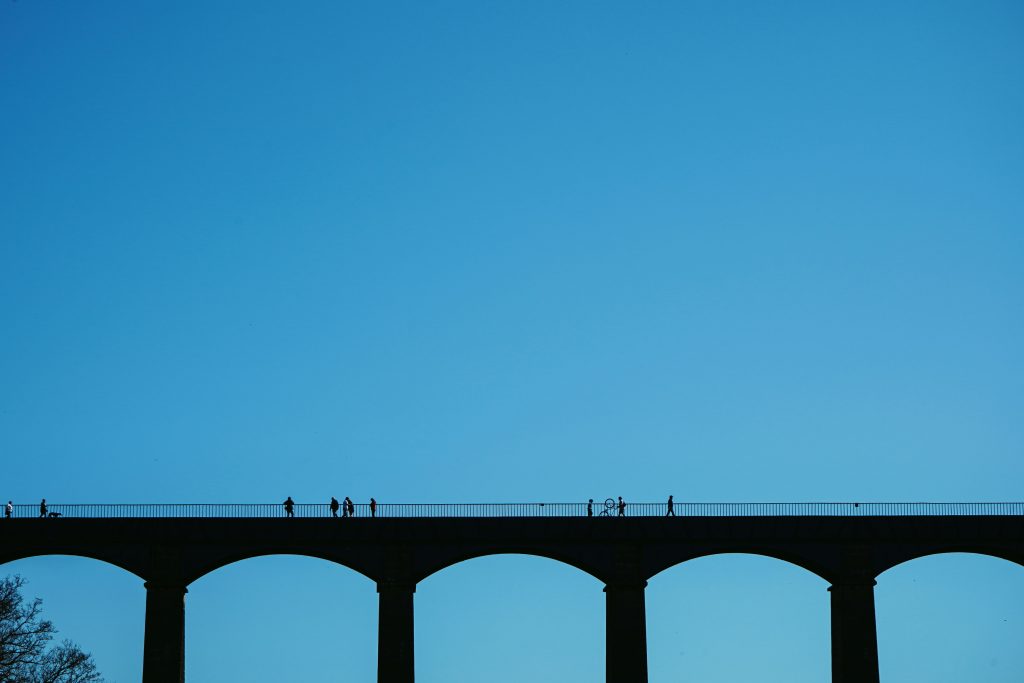
Today the Pontcysyllte Aqueduct is carefully maintained by the Canal & River Trust. You can walk across on a slender towpath, with nothing but a handrail between you and the drop. On windy days, the trough ripples and the whole structure seems to breathe with the elements. For those less fond of heights, the view from below is equally dramatic, with the aqueduct’s 18 stone piers marching across the valley.
Did you know?
The structure was built using 18 stone piers and a cast-iron trough sealed with tar and flannel—a revolutionary method in the early 1800s.
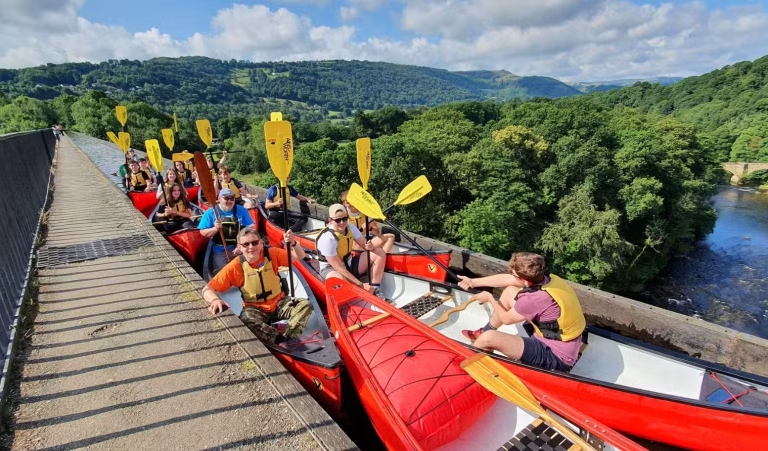
But perhaps the most memorable way to experience it is from the water itself. adventuro lists two guided experiences that let you paddle across in your own craft. The Kayak Aqueduct Cruise in Llangollen offers the chance to glide along the canal before edging out across the aqueduct. The feeling of drifting 38 metres above the Dee is both serene and thrilling. If you prefer a more stable craft, the Canoe Aqueduct Cruise provides the same unforgettable crossing with the option to share paddling duties.
Did you know?
The aqueduct’s name, Pontcysyllte, comes from Welsh and roughly translates to “the bridge that connects.”
Both tours are led by qualified local guides who bring the history to life as you paddle. They point out details you might otherwise miss—the iron joins in the trough, the way the masonry tapers with height, the patterns of currents far below. The pace is unhurried, giving you time to absorb the views of the Dee Valley and the Clwydian Range beyond.
Did you know?
The structure was built using 18 stone piers and a cast-iron trough sealed with tar and flannel—a revolutionary method in the early 1800s.
What makes the aqueduct so special is its blend of the ordinary and extraordinary. At heart it’s just a piece of transport infrastructure, built to carry water from A to B. Yet standing on its narrow path or floating along its iron trough feels like an adventure, a reminder of human ingenuity and the power of landscape. For the industrial workers of the 1800s it was a marvel of engineering. For today’s visitors it’s a place where history and adrenaline meet.
So next time you’re in North Wales, don’t just take a photo from the car park or shuffle nervously across the towpath. Step into a kayak or canoe and experience the Pontcysyllte Aqueduct as it was meant to be used—from the water itself, high above the Dee, in a “stream in the sky.”
Did you know?
When it was built, many locals refused to cross, fearing the cast iron trough would collapse. Two centuries later, it’s still in daily use.
Interesting FAQs:
When was the Pontcysyllte Aqueduct built?
Construction began in 1795 and the aqueduct opened in 1805, making it more than 200 years old.
Who designed the aqueduct?
It was designed by civil engineer Thomas Telford with support from William Jessop. It is often considered Telford’s greatest masterpiece.
How tall and long is it?
The aqueduct is 307 metres (1,007 feet) long and 38 metres (126 feet) tall, making it the longest and highest aqueduct in Britain.
How does it hold water?
The trough is made of cast iron plates, sealed originally with flannel soaked in lead and pitch. It’s an early example of large-scale iron construction.
Is it safe to cross?
Yes. The aqueduct is still in use today, carrying narrowboats and canal traffic across the Dee. Walkers can cross along the towpath, though the height can be intimidating.
Why is it called the “stream in the sky”?
Because from a distance it appears that the canal itself is floating through the air, suspended above the valley.
Is it a UNESCO World Heritage Site?
Yes. It was awarded this status in 2009, joining other world landmarks such as the Taj Mahal and the Great Wall of China.
What’s the best way to experience it?
Walking across gives you an immediate sense of its height, but kayaking or canoeing across on a guided tour (available via adventuro) is perhaps the most memorable way to appreciate its scale and design.
Can you take a boat across?
Yes. Narrowboats cross it daily, and trips are available from Llangollen Wharf.
Why is it historically important?
The aqueduct represents a turning point in engineering, using iron in a way that influenced later bridges and aqueducts. It also played a role in Britain’s Industrial Revolution by linking industries in Wales to wider markets.
Sources for research and fact-checking:
- UNESCO World Heritage Centre – Pontcysyllte Aqueduct and Canal listing: https://whc.unesco.org/en/list/1303
- Canal & River Trust – Pontcysyllte Aqueduct history and visitor information: https://canalrivertrust.org.uk/places-to-visit/pontcysyllte-aqueduct
- CADW (Welsh Government heritage body) – info on Pontcysyllte and Telford’s works: https://cadw.gov.wales
- BBC News feature on the 200th anniversary of the aqueduct (2005): https://www.bbc.co.uk/news/uk-wales
- Engineering Timelines – detailed technical background on the aqueduct: http://www.engineering-timelines.com/scripts/engineeringItem.asp?id=134