
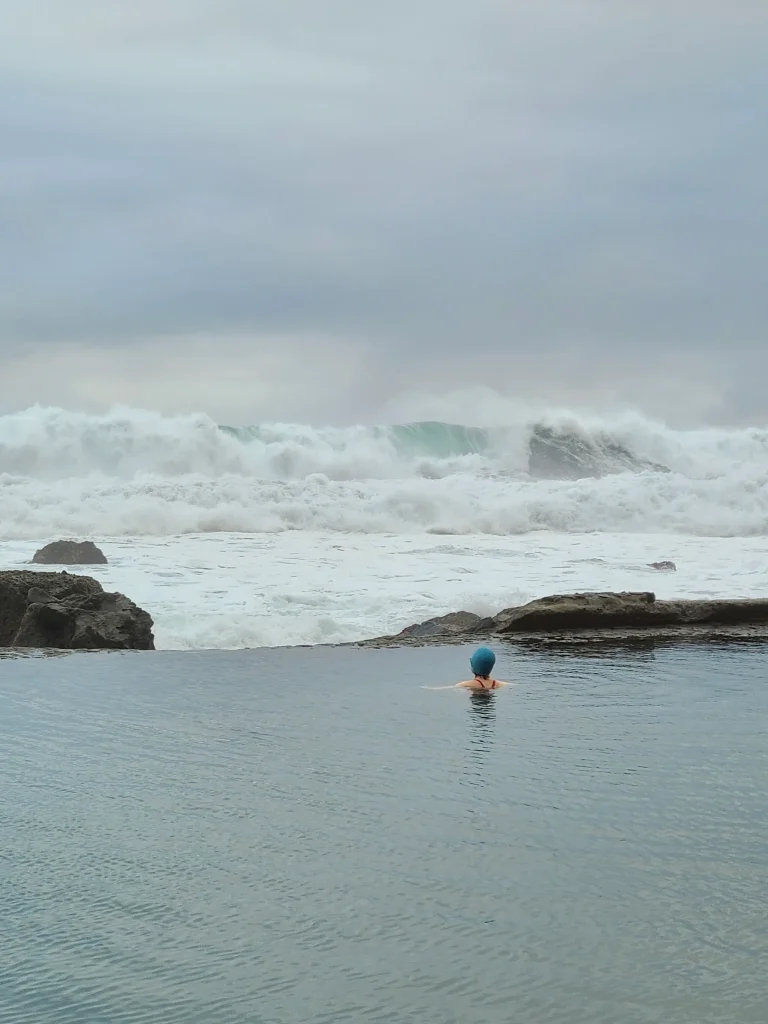
Mental Health in the Wild – A Conversation with Hayley Crawshaw of Little Blue Pootles
For Mental Health Awareness Week 2025, we’re shining a light on the power of the outdoors to support mental wellbeing. We spoke to Hayley Crawshaw, founder of Little Blue Pootles, about how wild swimming and gentle guided walks in nature can offer not just physical benefits – but deep emotional healing and connection.
Hayley works with people of all abilities, body types, and experiences – offering inclusive, trauma-informed wild swimming experiences across Northumberland, the North Pennines, and beyond. Her thoughtful, person-centred approach creates space for healing, reflection, and joy in the outdoors.
Below is our full conversation with Hayley.
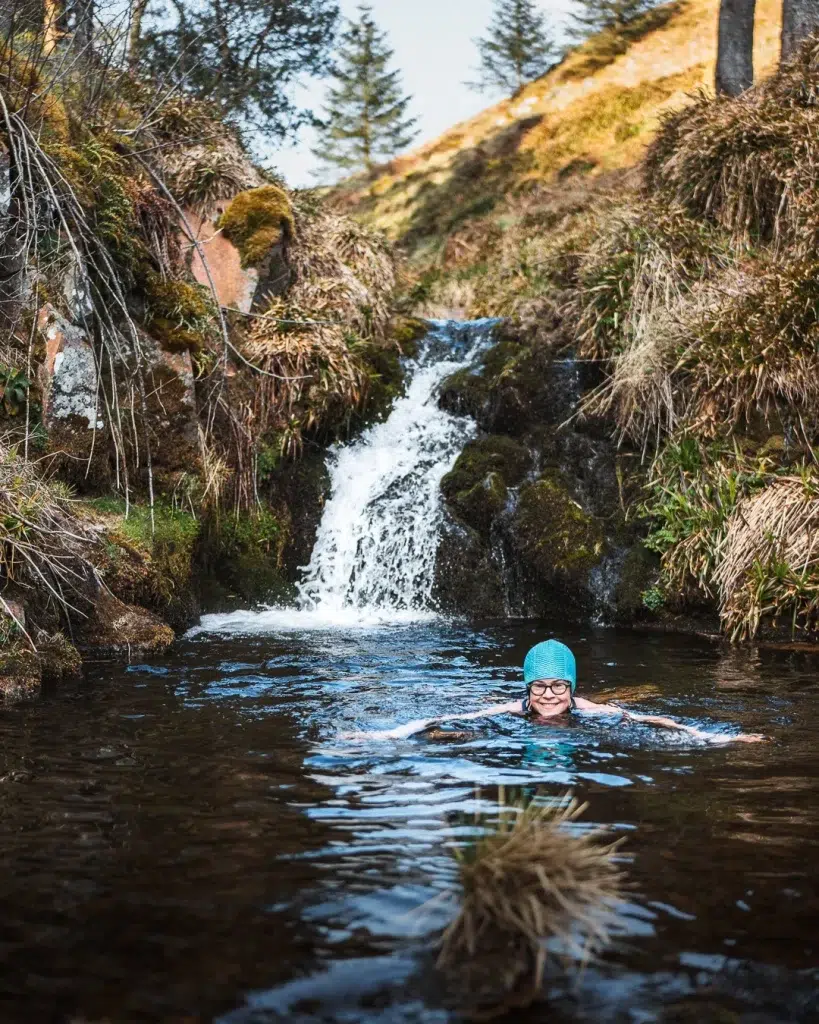
What does wild swimming mean to you – beyond just getting in the water?
Time to immerse, both literally and metaphorically. For me, it’s the ultimate form of mindfulness. When I’m in the water, surrounded by nature, it’s just me and my breath – everything else falls away. Since the death of my husband Rich in 2018 at the age of 37 it’s proved invaluable – in fact for the first year it was a life saver. I was shaking so much from the shock of his death that I figured I may as well make the most of the shaking and get in the cold water too! We’d been wild swimming with wetsuits up to that point, but five weeks after this death I seemed to know instinctively that I must expose my skin, and now I swim all year in just a cossie. That led to me meeting others who’d experienced out of order bereavement and were using wild swimming to manage their grief, or who lived with the after effects of other traumatic experiences such as violence. A few months after Rich’s death I made it my mission to travel the UK to swim with such folks, and haven’t stopped.
How can gentle outdoor experiences like wild swims support mental health?
By their very nature, wild swims gently remove people from their usual environment, and place them somewhere where there’s much less noise from their surroundings. This can sometimes translate to there being less noise inside their heads too, without the need to force a meditative state – it happens much more naturally. Formal meditation isn’t for everyone, and in fact can exacerbate states of anxiety for those who live with certain conditions or personality types, but being outdoors, somewhere lovely, can often induce a feeling of flow that calms, without the woo woo.
You work with a lot of people who feel unsure about their bodies or abilities – what would you say to someone feeling nervous?
That there’s absolutely no pressure to even get changed, let alone get into the water. If we get to the swim spot and it feels too much, we just sit and admire the view. If they feel up to it, we paddle or pilchard. If they approach the water and change their mind, so be it. There’s never an end goal or itinerary. If they don’t want to swim, that’s more than ok. And as a recent client said, having no pressure meant that she felt able to challenge herself more freely, as we moved on her terms. With regards to body image I tell people that they can wear what they feel comfortable in too, and if this is leggings and a t-shirt or shorts, that’s more than ok. Similarly I don’t share photos or videos on social media unless clients explicitly ask me too – as some do because they’re so proud of what they’ve achieved, so again they know that their private moments will stay as just that, and if today wasn’t the day, then we can try again.
Can you describe a powerful or emotional moment you’ve shared on a swim walk?
When a client who had experienced a near drowning incident a few years ago, and not been in the sea since, ended up dipping with me twice, posing for photographs in the water with a huge grin on her face! As we’d approached the entry point she’d said that she wasn’t feeling ready and wasn’t even going to put her wetsuit on, but as she’d started removing clothes so that we could paddle instead, she changed her mind, and I gently led her into the water. After a couple of minutes she decided she’d had enough and would head out, only to turn right back round again and say that no, she needed more! Those moments are priceless, and in fact that client has now signed up for an open water swimming course in her home county! Facilitating transformative experiences like that, even though I don’t advertise them as such, is why I do this work.
What makes wild swimming different to other forms of exercise or therapy?
As a therapy, it’s much more collaborative than conventional forms of talking therapy. Many folks can’t deal with talking to someone sitting opposite them, or even making regular eye contact, but can manage physical activity, specifically outdoors. Oftentimes they don’t realise they’re being ‘therapised’ until the end of the session, when they usually say things like “I was going to cancel, but I’m really glad I didn’t”, or they start the session feeling anxious, and end it by saying that they feel so much better. The difference is visible too – dropped shoulders, a relaxed face, oftentimes a smile. My favourite bit is when they start talking about their plans for the future, and how they can make small changes to their life, that will have a big impact. Seeing that flame of hope reignited, gives me even more of a spring in my step.
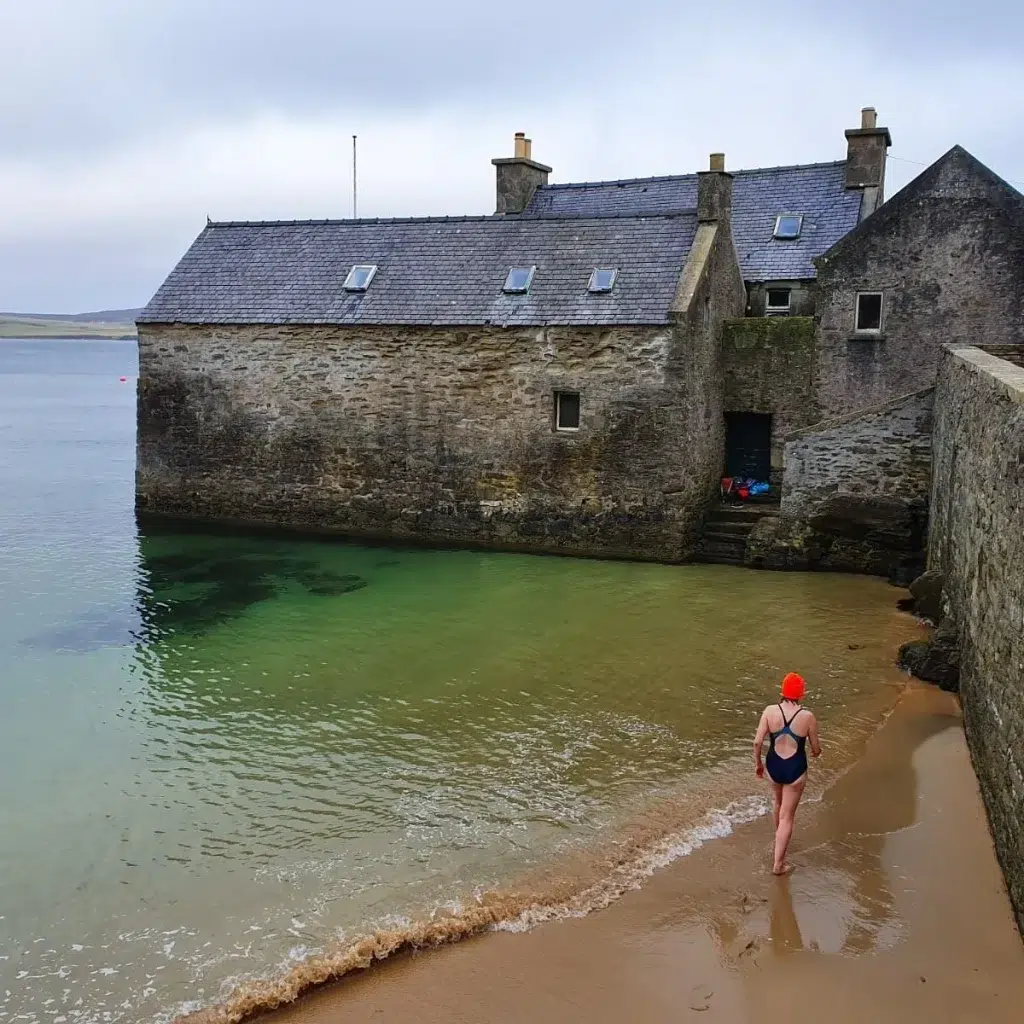
Why is accessibility so important in outdoor experiences?
Because until fairly recently, the outdoors industry hasn’t done as much as it should to open doors to everyone, and there can still unfortunately be a climate where experiences are advertised only to those with certain levels of above average fitness, in a certain age bracket, and with access to certain resources. I have hypermobile Ehlers-Danlos Syndrome and live with chronic daily pain, but I know that I can climb mountains and whatnot, just that it might take me a little bit longer to descend for instance as I have to use walking poles and place my feet accurately, to avoid damage and yet more pain. So it does make me cross when experiences exclude those with physical differences and disabilities. My approach is always to think about how we might do things differently, not that they can’t be done because they’re usually only accomplished in a certain way. The requirement that folks should be able to swim a certain stroke for instance. What happens if they have limited use of their arms, but are more than happy bobbing about in the water, or floating on their backs?


How do you create a space where people can just be?
By meeting them in that moment, exactly as they are, and making it clear that the session is literally a fluid one. If plans need to change, they’ll change. There’s never a strict timetable or tick-box list. There are no expectations at my end, and I make it clear that this is their time, and most importantly a safe space. So if they need to vent, cry, swear, get angry at the world, tell me things they’ve never told anyone else, they can do so, and I’m more than capable of managing the situation, and returning them to a state where they feel at least a little bit more hopeful, and able to face the day.
What role does silence or slowness play in your swim walks?
A very important one! Silence allows us time and space to process. Oftentimes if clients are anxious they will talk non-stop to begin with, but by me making time for silence, they realise that they don’t have to fill that space. That it’s enough for them to be present there, both physically, and emotionally. Then they can relax into the experience even more. The slowness too. All too often we’re rushed through life, but by managing the physical pace I can gently induce a state of physical and emotional regulation that calms others. When clients start sighing loudly, and saying things like “ah I needed this!”, I know that it’s working!
What do you hope people take away after swimming or walking with you?
Exactly that, that they feel a sense of hope for the future. That they feel a bit more able to manage whatever life sends their way. As one client recently said, after working with me she felt a sense of self-worth that she hadn’t felt in a long, long time. She’d overcome fears, and felt a sense of adventure that had been lacking. That, for me, is priceless.
Hayley’s words are a powerful reminder that adventure doesn’t need to be extreme to be transformative – and that real change happens when we make space for every person to be seen, heard, and supported exactly as they are. This Mental Health Awareness Week, let’s work to build outdoor communities that truly care.
You can learn more about Hayley and book a session at: /courses/swim-hikes-wild-swimming-walks/