
Kitesurfing vs. Wingfoiling – Which is Better?
Key Differences Between Kitesurfing and Wingfoiling
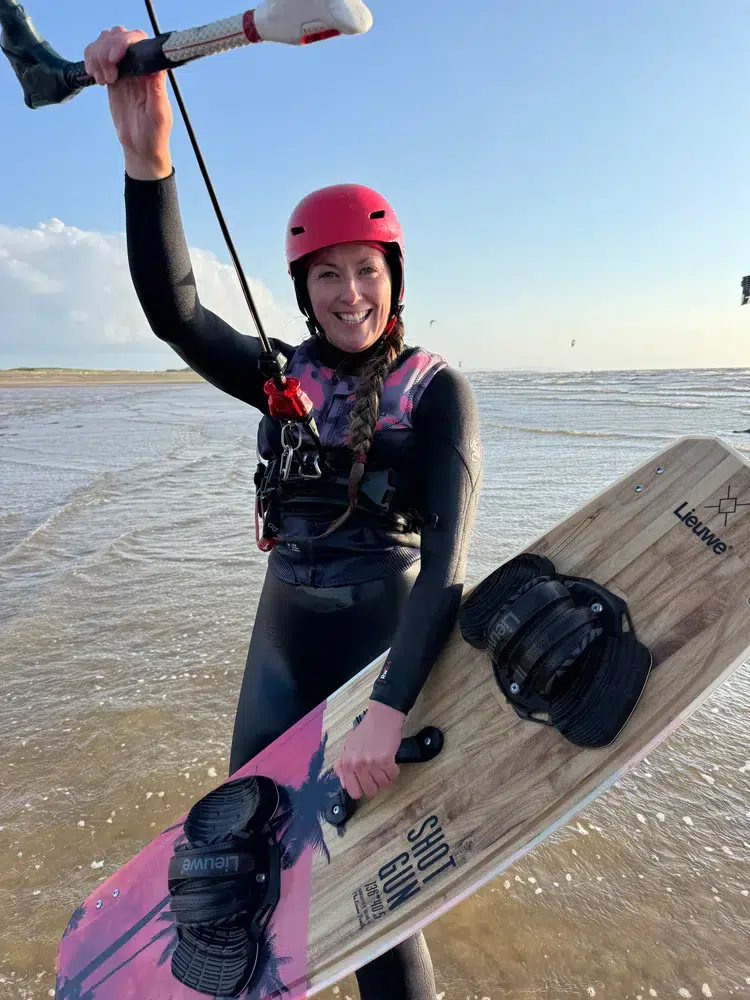
If you’re already deep into the world of wind sports, you’ll know that the kitesurfing vs. wingfoiling debate isn’t just about which is “better”—it’s about what suits your riding style, conditions, and long-term goals. Both sports have their place, but the experience they offer is vastly different. I started with kitesurfing before recently learning to wingfoil, as with many people, and I have to say, I love the smoothness and the lack of faff and lines with wingfoiling compared to the more complex kitesurfing.
Equipment: Kites, Wings, and Foils
Kitesurfing requires a kite, bar, harness, and a board—typically a twin-tip or a surfboard if you’re into wave riding. Wingfoiling is a completely different setup, combining an inflatable wing, a hydrofoil board, and no harness (unless you’re racing or in high winds).
Kites are inherently more powerful and efficient in generating pull. A well-powered kite can keep you going in conditions where a wing might struggle. However, foiling changes the game—because of the reduced drag, a wingfoiler can get going in absurdly light winds. The real challenge is mastering the balance and subtle control required to keep the foil engaged without overloading it.
A big consideration is how each setup handles gusty wind. Kites, especially larger sizes, tend to be sensitive to lulls and gusts, requiring active power management. Wings, on the other hand, depower instantly and aren’t as prone to lofting, making them a solid option for unpredictable conditions.
Setup and Logistics: The Reality of Getting on the Water
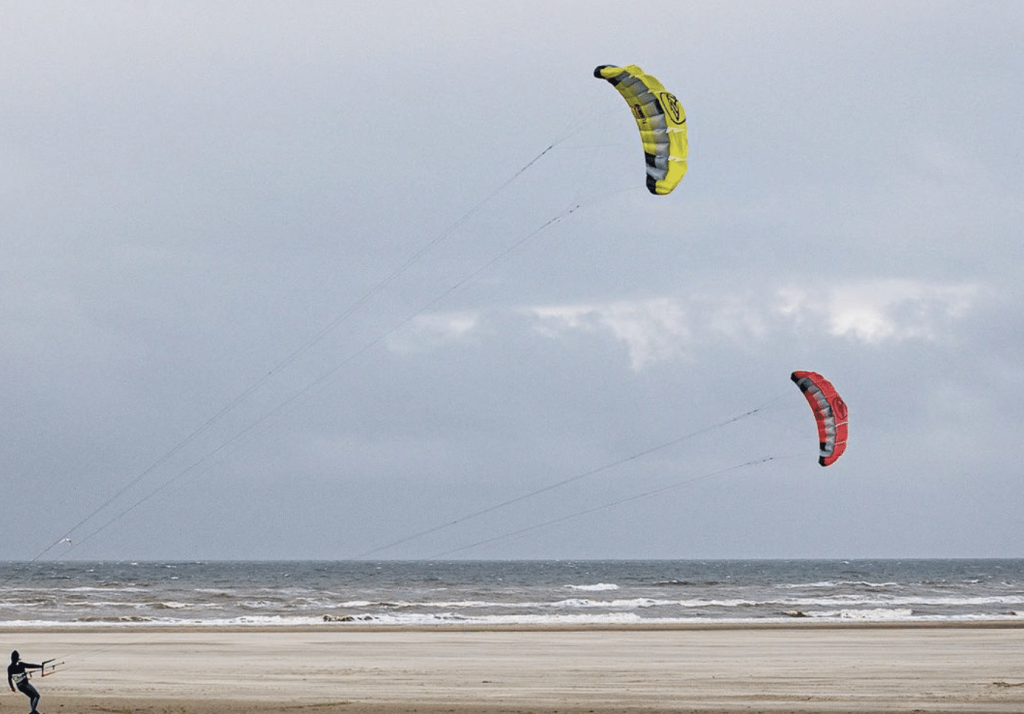
If you’ve been kitesurfing for years, you know the routine: unpack your kite, pump it up, lay out your lines, check for tangles, launch with a buddy (or self-launch if you’re confident), and get moving. It’s a process that, while second nature for experienced riders, is undeniably more involved than wingfoiling.
With a wing, it’s simpler. Unfold it, pump it up, attach your leash, and go. No lines, no launching stress, no need for a beach. The gear is more compact, and travel is easier—you can throw a wing and a foil board in a car without needing a van or board bags.
However, when it comes to packing down, wingfoiling has its own complications. Dealing with a foil—especially a carbon one—requires careful handling as it is an expensive bit of fragile kit. Transporting and storing a hydrofoil setup is more awkward than a kite and twin-tip. Plus, assembling/disassembling a foil before and after every session adds its own layer of faff.
The Learning Curve: What’s Actually Harder?
For an experienced kiter, the initial transition to wingfoiling can be frustrating. It’s not just about handling the wing—it’s about mastering the foil. If you’ve never foiled before, expect some serious falls before you get comfortable balancing, pumping, and managing pitch control. The sensation of lift is addictive but requires precise foot placement and micro-adjustments.
On the flip side, learning to kite is a longer process overall. A strong wind background helps, but even experienced windsurfers or sailors need time to dial in kite control, launching, and relaunching. The commitment to learning kiting is higher—it’s not something you just “dabble in” without proper lessons and safety knowledge.
That said, if you’re already a kiter, learning to wingfoil will take less time than someone starting from scratch. You’ll understand wind dynamics, body positioning, and balance. But expect the foiling aspect to be humbling at first.
Safety Considerations: Which Sport Has More Risk?
Let’s be real—kitesurfing has more inherent risks, especially in strong or gusty conditions. Being lofted, tangled in lines, or dealing with self-rescue scenarios is part of the game. Kiting requires awareness of your surroundings, solid risk management, and respect for conditions.
Wingfoiling, while seemingly safer, has its own dangers—primarily the foil itself. Foot placement, foil control, and understanding how to fall are essential to avoiding injuries.
Self-rescue is another factor. If your kite drops in light wind, you’re looking at a long swim or an awkward body drag back to shore. A wing, however, floats and can be paddled in if needed. That said, in strong offshore winds or heavy currents, a wingfoiler without a plan can still end up in trouble.
Understanding the Foil: How It Works and Why It’s a Game-Changer
Hydrofoiling has transformed wind and water sports, offering an entirely different riding experience compared to traditional planing-based boards. Whether you’re wingfoiling, kitefoiling, or even surf and SUP foiling, the core principle remains the same: reducing drag by lifting out of the water.
How a Hydrofoil Works
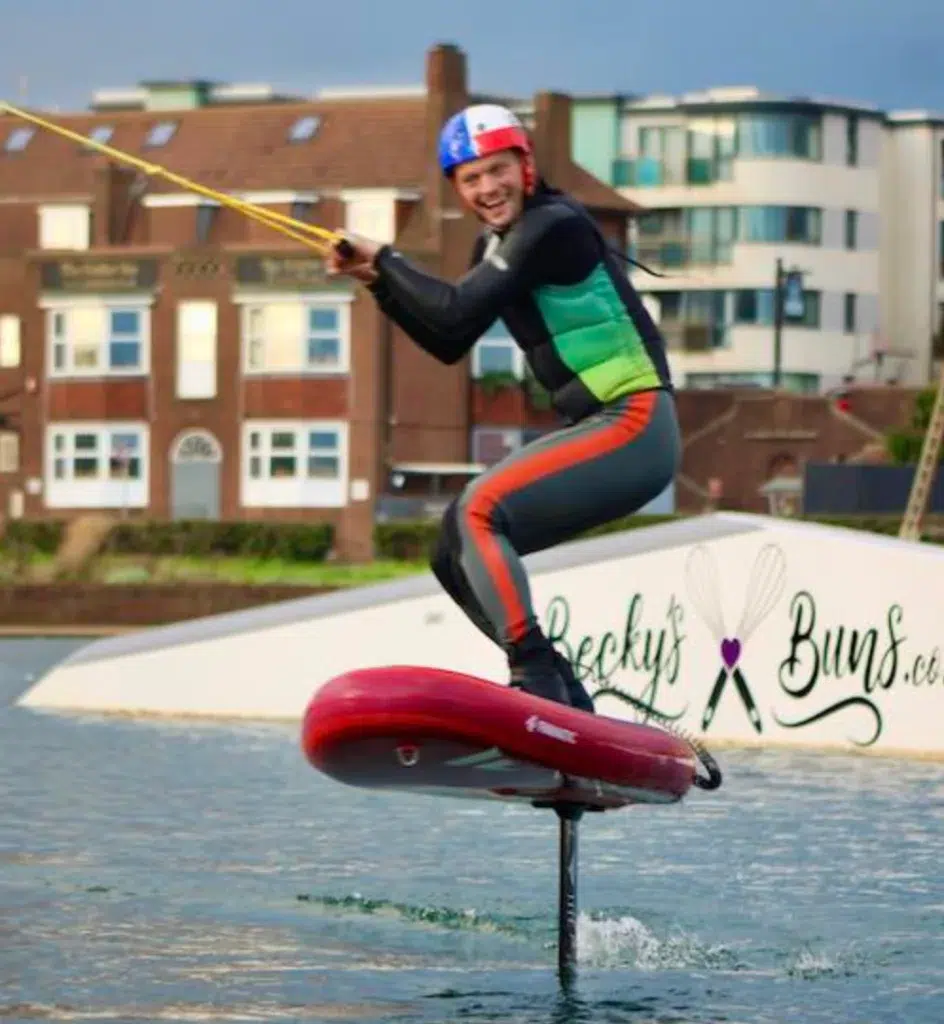
A hydrofoil consists of a mast, fuselage, front wing, and rear stabiliser (sometimes called a tail wing). It functions much like an underwater airplane, generating lift as water moves over the foil. Here’s how it works:
- Lift Generation: The front wing has a curved profile (similar to an aircraft wing) that creates higher pressure underneath and lower pressure on top. This difference generates lift, raising the board and rider out of the water.
- Efficiency & Speed: Once foiling, the reduction in drag is dramatic. Instead of pushing through the water like a standard board, you’re flying above it with only the foil in contact with the surface, which means more speed with less effort.
- Stability & Control: The stabiliser (rear wing) helps maintain balance, preventing the foil from porpoising (oscillating up and down). Larger stabilisers provide more control but slow responsiveness, while smaller ones allow quicker turns and dynamic movement.
- Pitch & Balance: Controlling a foil is all about weight distribution. Shifting your weight forward increases speed but reduces lift, while leaning back lifts the board higher but risks breaching (breaking the surface and stalling). This fine balance is what makes foiling both challenging and rewarding.
Hydrofoil Components and Their Impact
- Mast Length: Shorter masts (50-70cm) are easier to learn on, while longer masts (80cm+) allow more aggressive carving and better performance in choppy conditions.
- Front Wing Shape & Size: Larger, high-aspect wings are designed for efficiency, gliding, and pumping, while smaller, low-aspect wings are more agile and responsive, ideal for high-speed carving and freestyle.
- Fuselage Length: A longer fuselage provides stability but reduces maneuverability, while a shorter fuselage allows for tighter turns and more responsive handling.
Kitefoiling: The Ultimate Blend of Speed and Glide
Can I have the best of both I hear you ask?
Kitefoiling takes the core skills of kitesurfing and combines them with hydrofoiling to create an ultra-efficient, high-speed, and light-wind-friendly experience. It’s a natural progression for experienced kiters looking for a new challenge, particularly those who want to maximise their sessions in marginal conditions.
Why Kitefoiling Is Unique
- Riding in Ultra-Light Wind: One of the biggest draws of kitefoiling is the ability to ride in as little as 6-8 knots. While traditional twin-tip riders are stuck on the beach waiting for more power, kitefoilers can be up and gliding with a small kite and minimal effort.
- Silky-Smooth Ride: Because you’re flying above the surface, chop and waves become almost irrelevant. Unlike a twin-tip, which is constantly slamming into the water, a foil provides an almost frictionless glide.
- Upwind Efficiency: Foils are incredibly efficient at going upwind due to their low drag. Where twin-tip riders might struggle in marginal wind, a kitefoiler can track upwind with minimal resistance.
- Advanced Freestyle & Racing: While kitefoiling started as a light-wind solution, it’s now evolved into high-performance freestyle and racing disciplines. Riders are landing strapless aerials, backflips, and aggressive carving manoeuvres, while hydrofoil racing pushes speeds well over 30 knots.
The Learning Curve: Kiting to Foiling
For experienced kiters, the biggest transition when moving to a foil is mastering balance and micro-adjustments:
- Starting and Waterstarts: Unlike a twin-tip, a foil won’t just plane when you dive the kite. You need to manage lift by gradually applying pressure while keeping your weight balanced over the board.
- Managing Lift: The first few attempts will feel unstable, as small movements have a big impact. Riders often struggle with over-foiling (rising too fast and stalling) or under-foiling (not generating enough lift and sinking).
- Speed Control & Carving: Traditional kitesurfing relies on edging the board to control speed, but on a foil, you use subtle weight shifts and kite control. Carving feels completely different, as the foil’s momentum keeps you gliding smoothly through turns.
Kitefoiling vs. Wingfoiling: How Do They Compare?
If you’re already a kiter, the decision between kitefoiling and wingfoiling depends on what you want from your sessions.
- Wind Range: Kitefoiling wins in ultra-light conditions because of the efficiency of kites. However, wingfoiling thrives in gusty or strong winds due to its instant depower.
- Portability & Setup: Wingfoiling is simpler—no lines, no launching hassle, and no need for a large launch area. Kitefoiling, while more effort to set up, gives more range and speed.
- Riding Style: Kitefoiling is fast and precise, offering high-speed carving and incredible upwind angles. Wingfoiling is more dynamic, allowing for surf-style turns, downwind gliding, and freeride-style manoeuvres.
- Progression & Versatility: If you’re after high-performance, powered-up sessions, kitefoiling offers endless progression. But if you want a lower-risk, more playful experience, wingfoiling provides freedom without the stress of managing lines and relaunching.
Who Should Learn Kitesurfing?
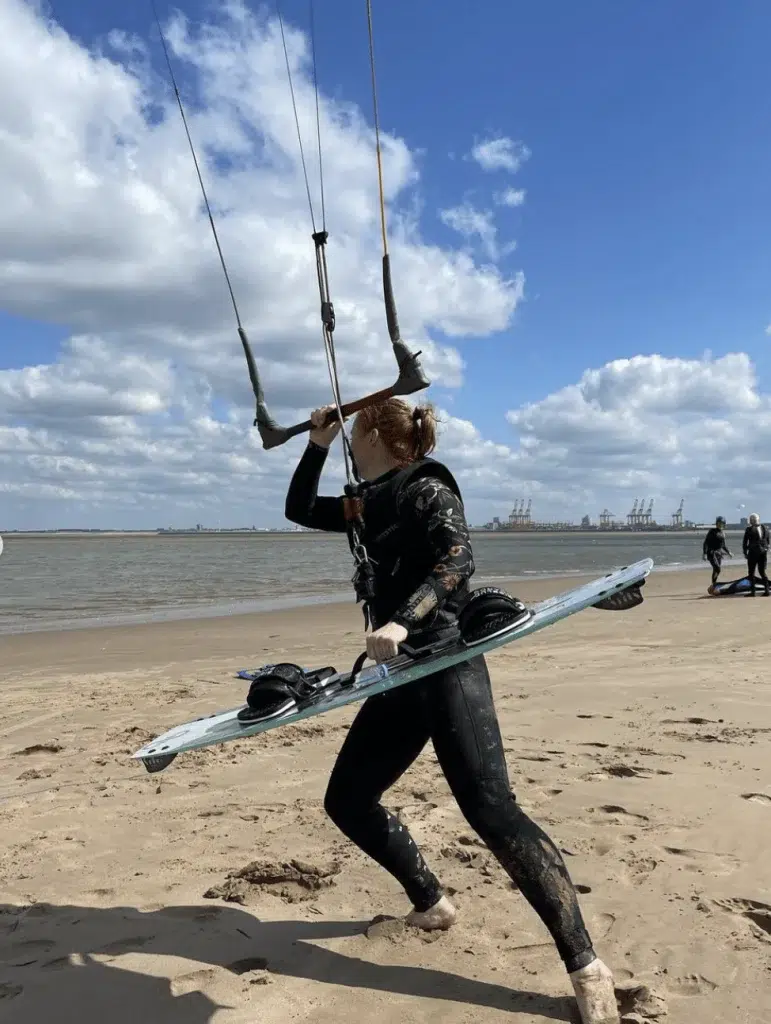
Kitesurfing is one of the most exhilarating wind sports, offering high-speed riding, big jumps, and a huge range of disciplines—from freestyle and wave riding to long-distance cruising. It’s an incredible sport for those who thrive on power, enjoy technical progression, and don’t mind a bit of commitment to get the most out of it.
Ideal Conditions and Locations for Kitesurfing
Kitesurfing is best suited to wide, open beaches with steady wind and plenty of space for launching and landing. Flatwater lagoons are ideal for beginners and freestyle riders, while open-ocean conditions offer waves and the chance for high-performance riding.
- Best Wind Ranges: 12–30 knots (depends on rider weight, kite size, and discipline).
- Best Locations: Sandy beaches with steady wind, warm water, and no major obstacles.
- Problematic Conditions: Gusty wind, offshore winds without rescue support, and confined spaces with obstacles like trees, rocks, or buildings.
If you’re in a location with steady trade winds and good launching spots, kitesurfing is an easy choice. However, if you have more gusty or offshore wind, wingfoiling might be a better bet since it doesn’t require a safe launch area. Check out the best places to learn in the UK here.
Natural Skillsets That Help with Learning Kitesurfing
Kitesurfing has a steeper learning curve than wingfoiling, particularly in the early stages. If you already have experience in any of the following, you’ll have an advantage:
- Windsurfing or Sailing: Understanding wind direction, power control, and upwind angles makes kite control much easier.
- Wakeboarding or Snowboarding: Edge control and board skills transfer well to kitesurfing, making water starts and carving feel more natural.
- Paragliding or Power Kiting: If you’ve flown any kind of kite before, you’ll have a head start in understanding wind window positioning, power strokes, and kite behaviour.
That said, even if you don’t have experience in these sports, kitesurfing is accessible with proper lessons. The key challenge for new riders is handling the kite independently while focusing on board control—once that clicks, progression accelerates quickly.
Why Kitesurfing? The Thrill Factor
For those who love adrenaline, kitesurfing is hard to beat. The feeling of boosting a 10m jump or carving through waves with power from the kite is unlike any other sport. It’s a great choice for:
- Freestyle Riders: If you love tricks, rotations, and powered jumps, kitesurfing is the best option.
- Big Air Enthusiasts: The highest recorded jumps in wind sports come from kiting, and it offers unmatched opportunities for progression in powered conditions.
- Wave Riders: While you can wingfoil in waves, kitesurfing provides more direct power and allows for high-speed, aggressive wave riding.
- Speed Seekers: Race-oriented kitesurfing (including foil racing) can push speeds over 40 knots, making it one of the fastest ways to travel across the water.
The Space Factor: Launching and Riding Areas
One of the biggest drawbacks of kitesurfing is that you need a safe launch area. Unlike wingfoiling, which can be launched from docks, boats, or small beaches, kites require a clear stretch of land to safely set up and take off. This makes kitesurfing less practical in crowded or confined spots.
Additionally, self-launching and self-landing require a higher skill level and aren’t ideal for beginners. While advanced kiters can launch in tight spaces, it’s always safer to have a wide beach with a clean wind flow.
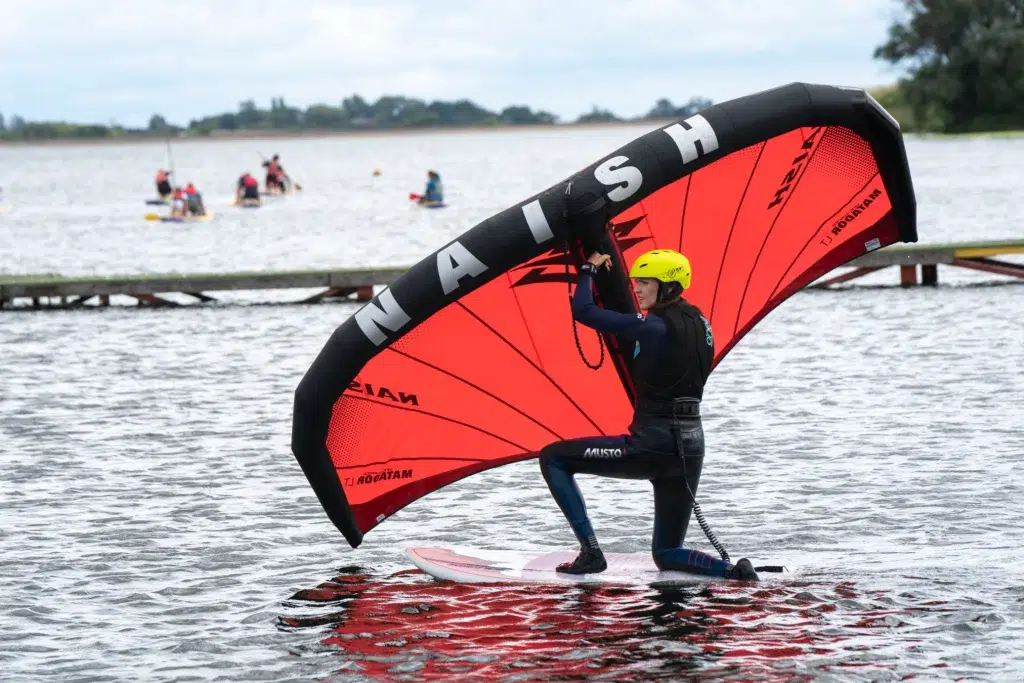
Who Should Learn Wingfoiling?
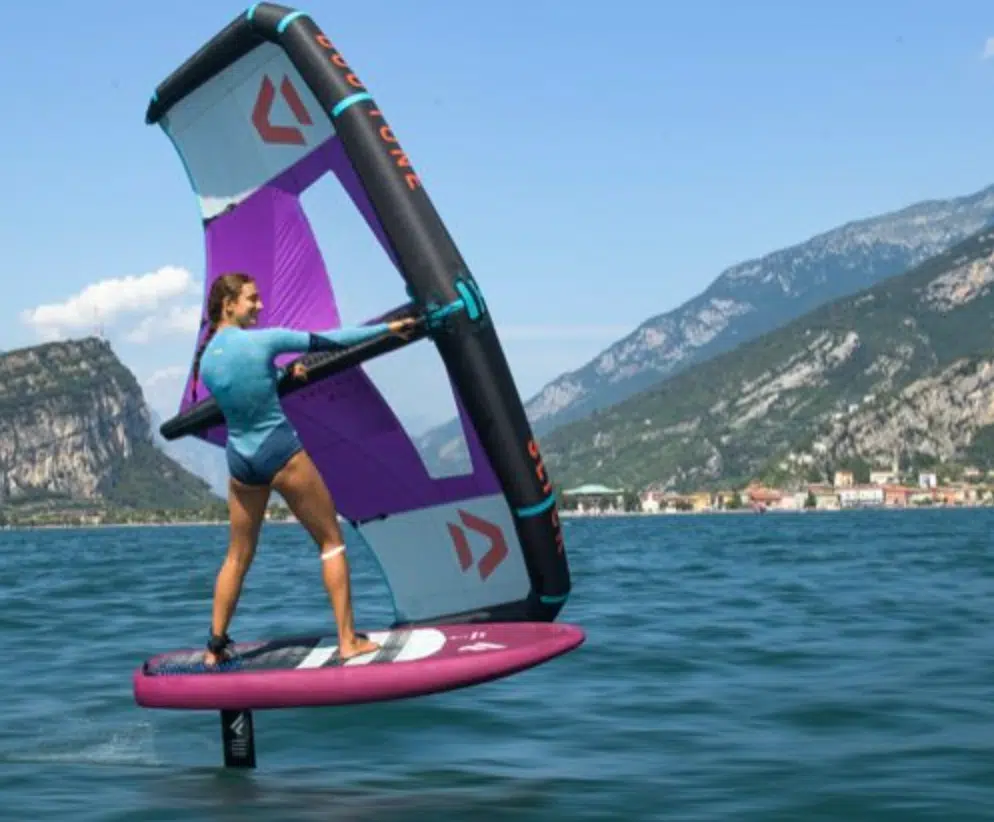
Wingfoiling is the new favourite for wind sports enthusiasts looking for simplicity, versatility, and the ability to ride in a wide range of conditions. It’s less intimidating than kitesurfing, requires minimal space for launching, and is one of the most exciting ways to ride waves and downwinders.
Why Wingfoiling? Freedom, Simplicity, and Versatility
Compared to kitesurfing, wingfoiling offers a more relaxed and adaptable experience. There are no lines to manage, no complex launching procedures, and far fewer risks of tangles or crashes. This makes it a great choice for riders who:
- Want a less intense, more playful wind sport.
- Prefer wave riding and downwind adventures over powered tricks.
- Want to avoid the need for a dedicated launch area.
- Ride in gusty or offshore conditions where kiting might be unsafe.
Additionally, wingfoiling transitions well across different water environments. You can launch from beaches, docks, boats, or even directly from deep water.
Ideal Conditions and Locations for Wingfoiling
One of the biggest advantages of wingfoiling is its wind range. Because hydrofoils are incredibly efficient, wingfoilers can get going in wind as light as 10 knots, while still handling 30+ knots with smaller wings.
- Best Wind Ranges: 10–30 knots (with the right wing and foil setup).
- Best Locations: Open water with enough fetch for swell, coastal areas with rolling waves, lakes with steady wind.
- Problematic Conditions: Extremely light wind (<8 knots) where maintaining flight is difficult, highly turbulent water where balance is harder to control.
Because of the low-impact nature of foiling, wingfoilers can ride longer and in more varied conditions than kitesurfers, who are more dependent on specific wind speeds and launch conditions.
Natural Skillsets That Help with Learning Wingfoiling
Wingfoiling has a different learning curve from kiting. While it’s easier in terms of wind management (since you’re directly holding the wing and can instantly depower), the hydrofoil presents its own challenges. Riders with the following experience will have an advantage:
- Foil Surfing or SUP Foiling: If you’re already comfortable balancing on a foil, wingfoiling will be much easier.
- Windsurfing: Managing sail power and riding with wind awareness makes controlling the wing more intuitive.
- Surfing or Skateboarding: Balance and foot positioning translate well to foiling stance and weight shifts. Although the softness of surfing (compared to say wakeboarding) makes it more comparable to foiling vs. kitesurfing. The movements are much smoother and you ‘dig in’ less to the water.
That said, many complete beginners pick up wingfoiling more quickly than kitesurfing because there’s less risk involved. You’re not dealing with lines, power strokes, or relaunching—just holding the wing and riding.
The Benefits of Hydrofoiling: Smooth, Efficient, and Low-Impact
The biggest advantage of wingfoiling is how smooth and efficient it feels once you’re up on the foil. Unlike kitesurfing, which involves high loads on the body (particularly the knees and lower back), foiling feels light and effortless.
- Low-Impact Riding: No harsh landings, no board slapping against chop, just smooth gliding over the water.
- Upwind Ability: Wingfoilers can point incredibly high upwind, much like windsurfers, without the need for aggressive edging.
- Longer Sessions: Less fatigue means you can stay out longer and make the most of marginal conditions.
Why Wingfoiling Is Taking Over Waves and Downwinders
One of the biggest reasons people are switching to wingfoiling is its potential for wave riding and downwind journeys. Unlike kitesurfing, which requires the kite to generate constant power, wingfoilers can ride ocean swells with little or no wing input, simply using the foil’s efficiency to glide effortlessly.
For anyone who enjoys surfing, downwind SUP, or windsurfing, wingfoiling is a natural progression. It allows riders to catch unbroken swells, link waves, and cover huge distances without needing strong wind.

Final Thoughts: Which Sport Is Right for You?
If you want powered, high-adrenaline sessions with big jumps and technical tricks, kitesurfing is still the king. But if you prefer a low-hassle, ultra-efficient sport that lets you ride waves, explore downwinders, and enjoy a minimalist setup, wingfoiling is a compelling option.
Many riders end up doing both—kitesurfing for strong wind, high jumps, and speed; wingfoiling for light wind, waves, and longer rides. Whatever you choose, both sports will keep you on the water and pushing your skills further.
Check out the beginner courses for kitesurfing and wingfoiling on adventuro and get started.
Send us a message if you want some expert advice.