
Kayaking for Beginners: 20 FAQs You Need to Know
Interested in kayaking and don’t know where to start? Well, you’re in the right place! If you’re new to kayaking, you might have a lot of questions. We’ve compiled answers to the most frequently asked questions to help you get started and make the most out of your kayaking experience.
1. What is kayaking and how is it different from canoeing?
This one’s a very common question! Kayaking is a water sport that involves paddling a small boat, similar to canoeing. The main differences between canoeing and kayaking lie in the boat design, seating positions, and the paddling techniques.
- Boat Design: Kayaks typically have a closed deck with a cockpit where the paddler sits inside. However, some kayaks have sit-on-top designs that are built without the cockpit. On the other hand, canoes have an open top and high sides.
- Seating Position: In a kayak, you sit with your legs extended forward, which lowers your center of gravity and improves stability. In contrast, canoers sit on the bench seats or kneel on the bottom of the boat.
- Paddling Technique: Kayakers use a double-bladed paddle, which allows them to alternate strokes on either side without switching hands. Canoeing involves a single-bladed paddle, which requires alternating sides to keep the canoe moving straight.
2. Is kayaking hard for beginners?
Kayaking is easier than you might think! Modern recreational kayaks are designed with wide, flat-bottomed hulls to be more stable. This makes it less likely for the kayak to tip over and helps beginners feel secure on the water.
The basic paddling technique is straightforward and most beginners quickly learn the forward stroke to move the kayak forward, and the sweep stroke to turn. If you’d like someone to teach you the ropes, many kayaking centers offer beginner courses that provide hands-on instruction and practice.
These introductory classes are designed to build your confidence and teach you the fundamental skills. You can take a private lesson or be in a group class with other beginners and have fun learning together. Whichever option you pick, it’ll be a great learning experience.

3. What type of kayak should I start with?
Choosing the right kayak depends on your intended use and personal preferences. When choosing a kayak, consider factors such as your size, weight, and the type of water you’ll be paddling on. It’s also a good idea to test out different kayaks if possible to find one that feels comfortable and suits your needs.
Here are a few different types of kayaks you can consider:
- Recreational Kayaks: These are ideal for beginners. They are stable, easy to maneuver, and comfortable. They often come in sit-on-top or sit-in designs. Sit-on-top kayaks are great for warm weather and easy entry and exit, while sit-in kayaks offer better protection from the elements and are suitable for cooler conditions.
- Touring Kayaks: If you plan on longer trips, a touring kayak might be a good choice. These kayaks are designed for efficiency and speed, with features like storage compartments for gear. They are often longer and narrower than recreational kayaks, which helps them track better on the water.
- Inflatable Kayaks: If portability and storage are concerns, inflatable kayaks can be a great option. They are lightweight, easy to transport, and are able to be stored conveniently. Modern inflatable kayaks are quite durable and provide good performance on flat water.
4. What should I bring when I go kayaking?
While you don’t need a lot of gear to get started, having the right equipment will improve your safety and comfort. A life jacket is crucial for safety and will keep you afloat in case you capsize. Choose a life jacket that fits you properly and allows for freedom of movement so you’re comfortable. You can also bring along a dry bag to keep your electronics and valuables safe from water exposure. We also recommend putting extra clothes in there and snacks to help keep your energy up.
5. How do I choose the right paddle?
Having the right paddle makes a big difference in your kayaking experience. Look for a paddle that is lightweight and comfortable to hold. How long your paddle should be depends on your height and the width of your kayak.
Generally, a longer paddle is needed for wider kayaks, while a shorter paddle is better for narrower kayaks. Most recreational kayaks require paddles between 86-94 inches (220-240 cm) in length. Adjustable paddles can also be a good option if you want to fine-tune the length.
Paddles come in various materials including aluminum, fiberglass, and carbon fiber. Aluminum paddles are durable and affordable but can be heavy. Fiberglass paddles offer a good balance of weight and strength, while carbon fiber paddles are lightweight and high-performance but tend to be more expensive.
The shape of the blade is also another factor since it affects how the paddle performs. Choose a blade shape based on your paddling style and needs. Wider blades offer more power for each stroke but can be more tiring to use. Narrower blades are lighter and less fatiguing but provide less power.
6. What should I wear while kayaking?
Wear quick-drying clothes made from synthetic fabrics that wick moisture away from your body. Avoid wearing cotton because it holds moisture and can make you cold. If you’re kayaking in cold weather, consider wearing a wetsuit or drysuit. A wetsuit keeps you warm by trapping a thin layer of water that your body heats up, while a drysuit keeps you completely dry and insulated from the water.
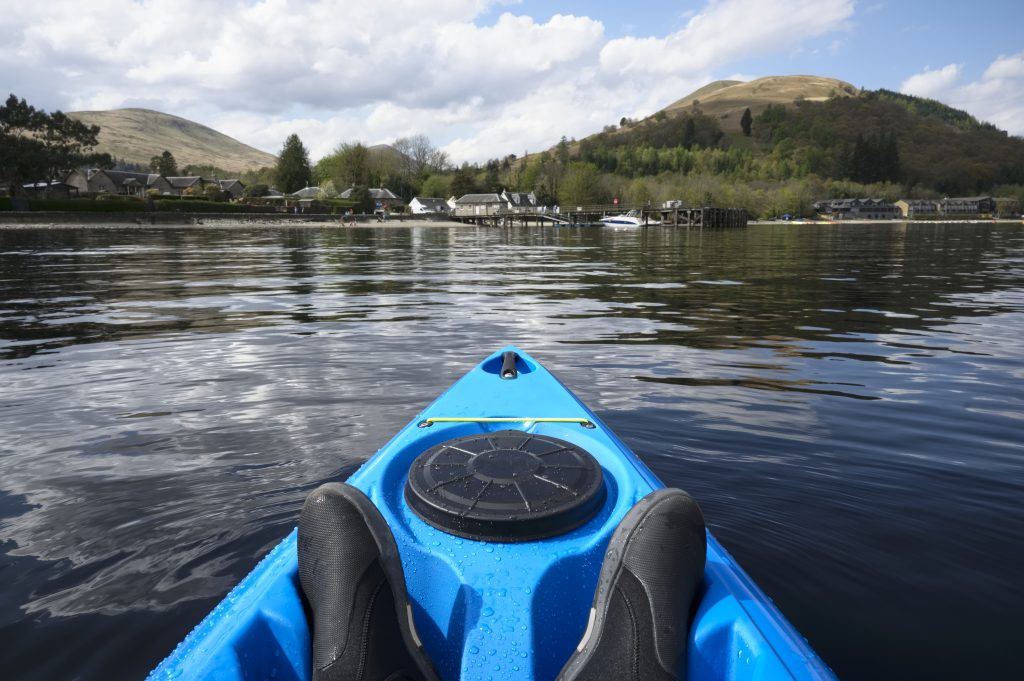
For footwear, we recommend wearing water shoes. Water shoes provide protection for your feet and offer better grip on slippery surfaces. They are also useful for walking in and out of the water. Besides your clothing, make sure to wear a hat and sunscreen since they are essential for protecting yourself from sunburn. Choose a hat that provides a good amount of shade and use a high-SPF sunscreen to protect any exposed skin.
7. How do I get in and out of a kayak?
Getting in and out of a kayak can be a bit tricky at first, but it becomes easier. To get in, position your kayak parallel to the shore or dock. Hold onto the sides of the kayak, sit on the edge, and swing one leg over the kayak. Lower yourself carefully into the seat, keeping your weight balanced to prevent tipping. If you’re using a tandem kayak, coordinate with your partner to keep the kayak stable during entry.
To get out, approach the shore or dock slowly and carefully. Hold onto the kayak to keep it steady, then swing one leg over the side and carefully lift yourself out. It’s important to move slowly and maintain balance to avoid tipping. Practice these maneuvers in shallow water or on land so you can familiarize yourself with the process before heading out to kayak.
8. What’s the best way to maintain balance in a kayak?
Maintaining balance in a kayak involves using proper techniques and body positioning. Sit upright with your back straight and your core engaged. Keep your weight centered over the kayak and avoid leaning too far to one side. Your feet should be firmly planted on the footrests. Use smooth, even strokes on both sides of the kayak to maintain balance. Avoid overreaching with your paddle, since this can cause instability. If you start to feel off-balance, use corrective strokes or adjust your body position to stabilize the kayak.
9. How do I steer a kayak?
Steering a kayak involves using basic paddle strokes to control your direction:
- Forward Stroke: This is the basic stroke that propels your kayak forward. Keep your paddle blade fully submerged and use a smooth, even motion to push the water behind you.
- Sweep Stroke: To turn your kayak, use the sweep stroke. Sweep the paddle in a wide arc from the front to the back of the kayak on one side. To turn left, sweep the paddle on the right side, and to turn right, sweep it on the left side.
- Reverse Stroke: The reverse stroke helps slow down or stop the kayak. Paddle backward with a similar motion to the forward stroke, but in the opposite direction.
- Draw Stroke: For precise maneuvering or moving sideways, use the draw stroke. This involves pulling the paddle blade towards the kayak, which helps move the kayak laterally.

10. How do I handle rough water or waves?
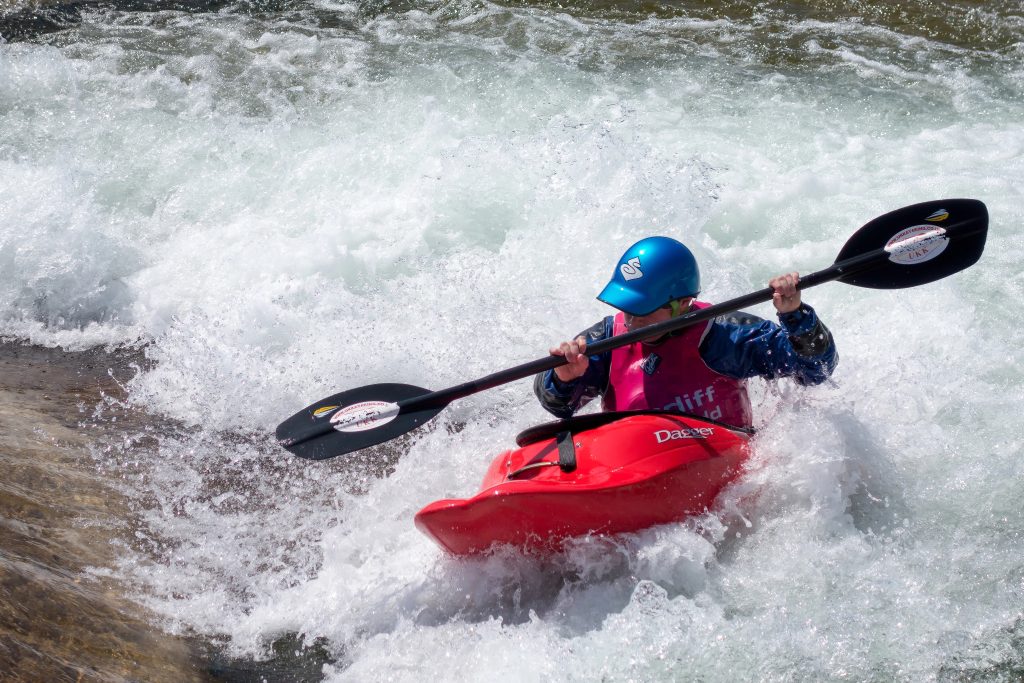
Handling rough water and waves takes practice but it’s important to note that you should avoid any aggressive or erratic paddling because it can lead to you losing balance. In fast currents, positioning your kayak at a 45-degree angle helps maintain control, while smooth, powerful strokes are critical. Use shorter, quicker strokes to navigate through waves and maintain control by engaging your core muscles. Lean into waves to prevent capsizing, and learn techniques like the low brace for stability. Lower your center of gravity by keeping your body low and your weight centered for stability.
11. What’s a J-stroke, and when should I use it?
The J-stroke is useful when you want to maintain a straight course without having to keep switching sides or make adjustments. To perform the J-stroke, start with a forward stroke, then curve the blade outward at the end of the stroke in a “J” shape. This outward curve helps correct the kayak’s direction and keep you on a straight course.
12. How can I improve my paddling technique?
To improve your paddling technique, first focus on maintaining good posture and using your whole body in the paddling motion. Engage your core muscles and use your legs for additional power. It’s important to practice making smooth, continuous strokes. Avoid jerky or erratic movements because it’ll cause you to become fatigued.
Once you develop a consistent paddling rhythm, stick to it! This helps you maintain your forward momentum and reduces the effort needed for each stroke. Regular practice is key to improving your skills so we encourage you to spend time on the water practicing different strokes and techniques to build confidence.
Consider taking a kayaking class where you’ll be able to learn from a professional and gain insight on how to improve your paddling technique. An experienced guide can also help you prevent injuries and make sure that you’re safe while kayaking.
13. How do I stay safe while kayaking?
We recommend creating a float plan before you go as a safety measure to protect yourself on your kayaking adventure. A float plan is essentially a detailed itinerary of your trip that includes information like departure points, route, and expected return time. This is meant to be shared with a trusted person that can notify authorities in case anything happens to you.
Before heading out, check the weather forecast and water conditions. You should avoid kayaking in severe weather or strong currents. It’s recommended to paddle within your skill level and avoid challenging conditions until you’re more experienced. To stay safe while kayaking, always wear a properly fitting life jacket before you get in the water. Make sure you bring essential safety gear, including a whistle and a first aid kit for emergencies.
14. What should I do if my kayak capsizes?
If your kayak capsizes, the first thing you should do is to stay calm and hold onto the kayak. To re-enter the kayak, use the “swim and kick” method. Position the kayak alongside you, kick your legs while pulling yourself onto the kayak, and then swing your legs over the side. If you’re unable to re-enter the kayak, stay with it and use a whistle or other signaling device to attract attention and call for help.
15. How do I properly care for my kayak?
Proper maintenance will help extend the life of your kayak and will ensure it remains in good condition. After each trip, rinse your kayak to remove any salt, sand, and debris. This helps prevent corrosion and damage to the kayak’s surface.
Store your kayak in a cool, dry place away from direct sunlight since UV rays can damage the kayak’s material over time. For added protection, you can use a kayak cover. Regularly check your kayak for signs of wear or damage. Look for cracks, dents, or other issues and repair them promptly to prevent further damage.
16. What are the common mistakes to avoid when kayaking?
The common mistakes to avoid when kayaking revolve around your safety. Don’t neglect safety gear and always wear a life jacket or personal flotation device (PFD). We recommend that you carry essential safety gear with you in case of emergency. Another mistake is ignoring weather conditions. Paddling in adverse weather conditions is dangerous and shouldn’t be attempted. Lastly, using paddling techniques incorrectly can lead to possible injury. Make sure you get the basics down first to increase your safety.
17. How do I read and navigate a waterway?
To read a waterway, observe the water’s surface for changes in flow, currents, and obstacles. Look for ripples, eddies, and areas of turbulence to assess water conditions. Be aware of any potential hazards such as rocks, logs, or shallow areas.
To make navigating easier, plan your route before heading out and be prepared to adjust if needed. For your safety, choose a route that matches your skill level and experience. Make sure to familiarize yourself with the route beforehand and memorize any landmarks.

18. What are portages, and how do I handle them?
Portages involve carrying your kayak and gear overland to bypass any obstacles, such as rapids, weirs or canal locks. You can plan your portages ahead of time while you are familiarizing yourself with your intended route. To make portaging easier, you can use a kayak cart or trolley. If you’re carrying the kayak manually, lift with your legs and keep it balanced to avoid injury. Keep your essential items easily accessible to you and secure your gear in dry bags to prevent loss or damage during portages.
19. How do I plan a kayaking trip?
To plan a kayaking trip, first select a route that matches your skill level and interests. Research the waterway, including its conditions, hazards, and points of interest. Then, outline your trip itinerary, including start and end points, rest stops, and campsites if applicable. Consider the distance, weather conditions, and time required for each segment of the trip.
Ensure that you have all the necessary gear and supplies, including a kayak, paddle, life jacket, and safety equipment. Pack food, water, and other essentials to last you for the duration of your trip. Lastly, tell a friend or family member of your trip plans and when you expect to return.
20. What are the ideal conditions to go kayaking?
For beginners, choosing the right water and weather conditions is important for a safe and enjoyable kayaking experience. Gentle winds and mild temperatures are preferable weather conditions for paddling and calm waters are the ideal setting. Lakes, slow-moving rivers, and sheltered bays provide a stable environment that lowers the risk of capsizing and is more friendly for beginners.
Did we miss anything?
We hope you learned a few new things about kayaking and that you feel excited to get out on the water. Did we miss any questions you might have? If we did, feel free to reach out and let us know! If you need inspiration on where to go kayaking, check out our courses here on adventuro.